Non Profit Statement For Self Employed
Description
Get your form ready online
Our built-in tools help you complete, sign, share, and store your documents in one place.
Make edits, fill in missing information, and update formatting in US Legal Forms—just like you would in MS Word.
Download a copy, print it, send it by email, or mail it via USPS—whatever works best for your next step.
Sign and collect signatures with our SignNow integration. Send to multiple recipients, set reminders, and more. Go Premium to unlock E-Sign.
If this form requires notarization, complete it online through a secure video call—no need to meet a notary in person or wait for an appointment.
We protect your documents and personal data by following strict security and privacy standards.

Make edits, fill in missing information, and update formatting in US Legal Forms—just like you would in MS Word.

Download a copy, print it, send it by email, or mail it via USPS—whatever works best for your next step.

Sign and collect signatures with our SignNow integration. Send to multiple recipients, set reminders, and more. Go Premium to unlock E-Sign.

If this form requires notarization, complete it online through a secure video call—no need to meet a notary in person or wait for an appointment.

We protect your documents and personal data by following strict security and privacy standards.
Looking for another form?






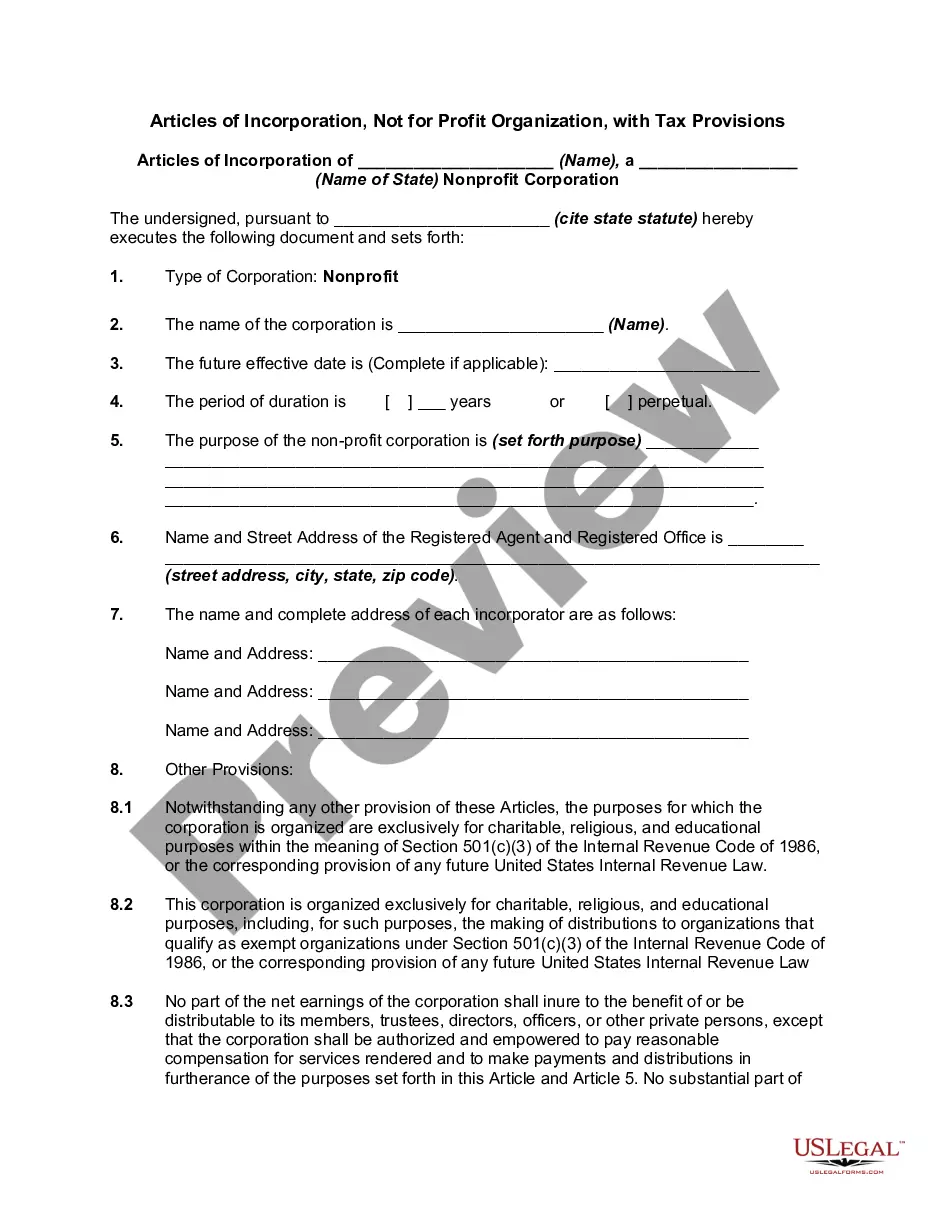
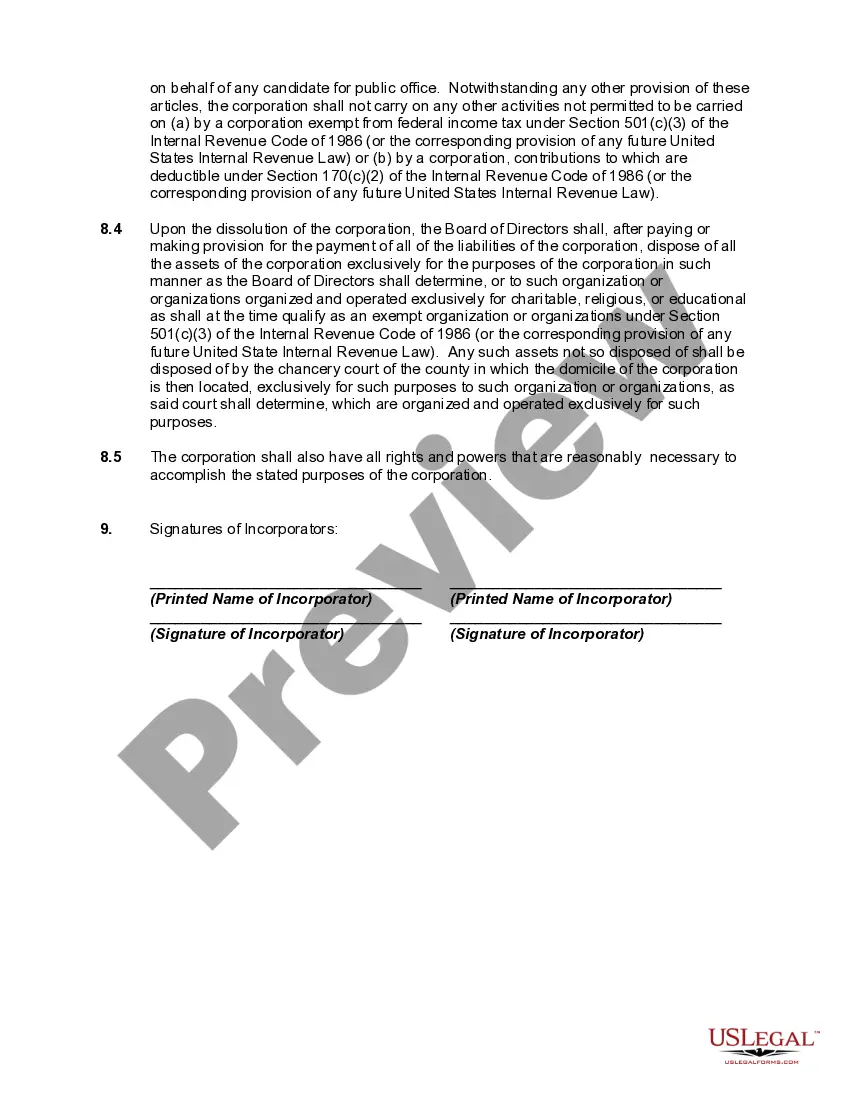
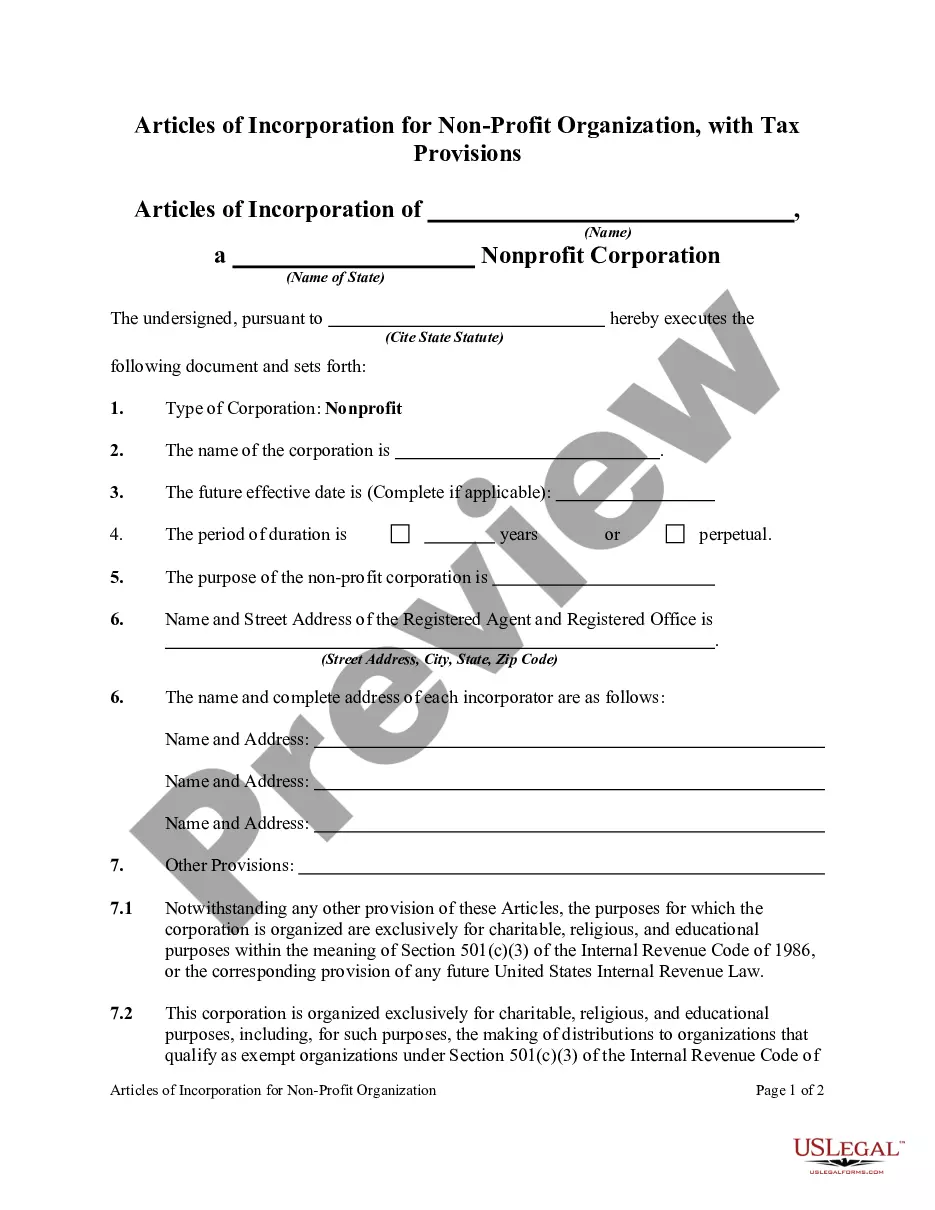
How to fill out Articles Of Incorporation, Not For Profit Organization, With Tax Provisions?
Legal documents management can be daunting, even for the most seasoned professionals.
When you are in search of a Non-Profit Statement for Self-Employed and lack the time to dedicate to finding the appropriate and current version, the process can be stressful.
US Legal Forms accommodates all your requirements, from personal to business documentation, all in one location.
Utilize advanced tools to complete and manage your Non-Profit Statement for Self-Employed.
Here are the steps to follow after acquiring the form you require: Verify that this is the correct document by previewing it and examining its details.
- Access a comprehensive resource library filled with articles, guidelines, and materials pertinent to your circumstances and requirements.
- Save time and effort searching for the documents you need, and leverage US Legal Forms' sophisticated search and Review tool to obtain and download your Non-Profit Statement for Self-Employed.
- If you have a subscription, Log In to your US Legal Forms account, search for the form, and download it.
- Check your My documents tab to review the documents you have previously saved and manage your folders as desired.
- If this is your first experience with US Legal Forms, create an account for unlimited access to all platform features.
- A comprehensive online form repository can be a transformative resource for anyone looking to navigate these circumstances efficiently.
- US Legal Forms stands as a prominent provider in the realm of online legal documentation, featuring over 85,000 state-specific legal forms accessible at any time.
- With US Legal Forms, you can access legal and business forms specific to your state or county.
Form popularity
FAQ
While there's no legal requirement stating you must file a profit and loss statement with any regulatory agency, you should still consider compiling one so you know exactly what's happening with your small business's finances.
Some ways to prove self-employment income include: Annual Tax Return (Form 1040) 1099 Forms. Bank Statements. Profit/Loss Statements. Self-Employed Pay Stubs.
How to Write a Profit and Loss Statement Step 1 ? Track Your Revenue. ... Step 2 ? Determine the Cost of Sales. ... Step 3 ? Figure Out Your Gross Profit. ... Step 4 ? Add Up Your Overhead. ... Step 5 ? Calculate Your Operating Income. ... Step 6 ? Adjust for Other Income and/or Expenses. ... Step 7 ? Net Profit: The Bottom Line.
Independent contractors report their income on Schedule C (Form 1040), Profit or Loss from Business (Sole Proprietorship). Also file Schedule SE (Form 1040), Self-Employment Tax if net earnings from self-employment are $400 or more.
In addition to being required by the IRS, as a self-employed individual, you may also find it useful to prepare a profit and loss statement for your business if you've applied for financing. Potential creditors can use your P&L statement to conduct a profit and loss statement analysis.