Sample Bylaws For Nonprofit Without Members
Description
Get your form ready online
Our built-in tools help you complete, sign, share, and store your documents in one place.
Make edits, fill in missing information, and update formatting in US Legal Forms—just like you would in MS Word.
Download a copy, print it, send it by email, or mail it via USPS—whatever works best for your next step.
Sign and collect signatures with our SignNow integration. Send to multiple recipients, set reminders, and more. Go Premium to unlock E-Sign.
If this form requires notarization, complete it online through a secure video call—no need to meet a notary in person or wait for an appointment.
We protect your documents and personal data by following strict security and privacy standards.

Make edits, fill in missing information, and update formatting in US Legal Forms—just like you would in MS Word.

Download a copy, print it, send it by email, or mail it via USPS—whatever works best for your next step.

Sign and collect signatures with our SignNow integration. Send to multiple recipients, set reminders, and more. Go Premium to unlock E-Sign.

If this form requires notarization, complete it online through a secure video call—no need to meet a notary in person or wait for an appointment.

We protect your documents and personal data by following strict security and privacy standards.
Looking for another form?
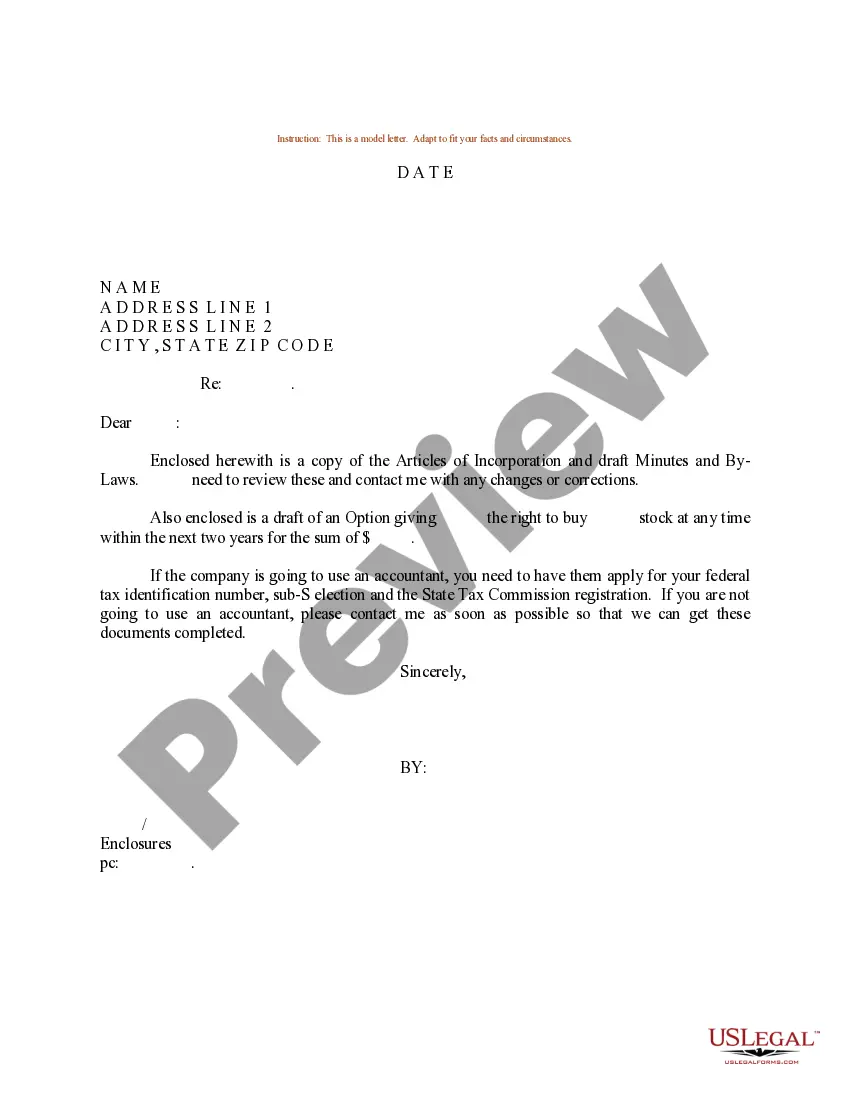
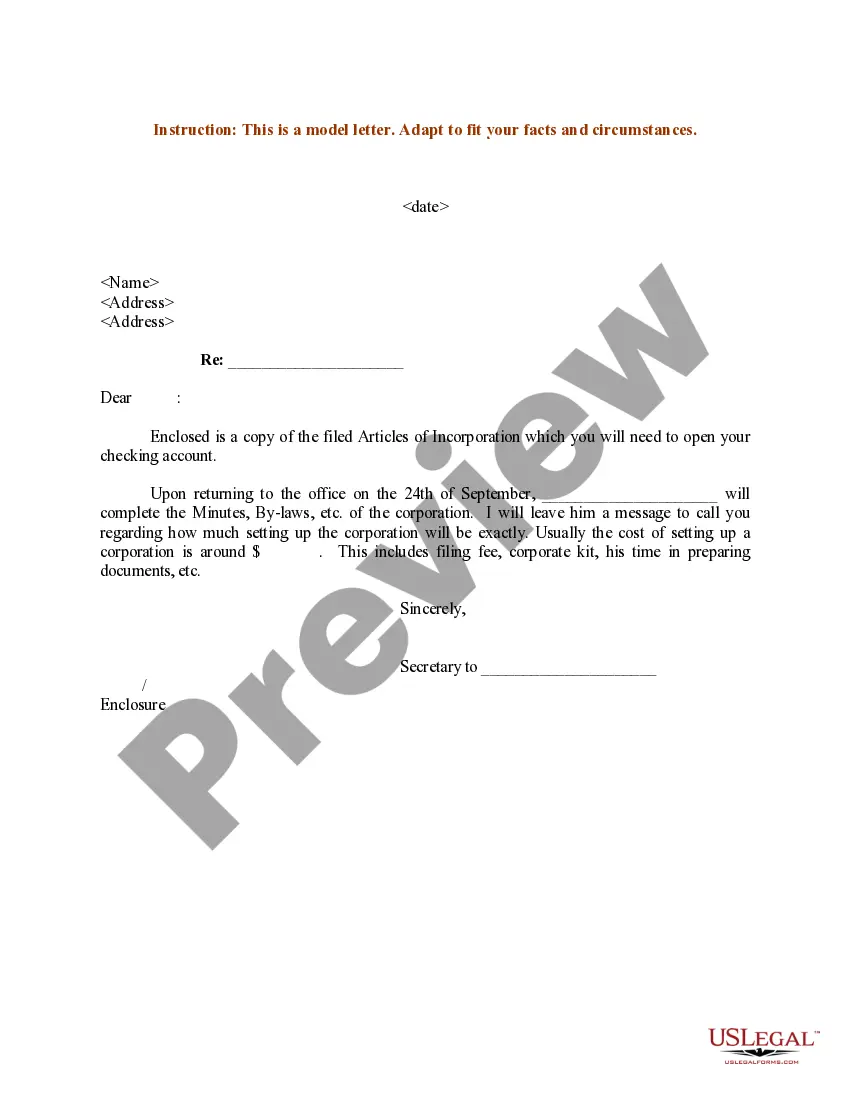
How to fill out Sample Letter For Articles Of Incorporation And Draft Minutes And Bylaws?
It’s widely acknowledged that you cannot swiftly transition into a legal profession, nor can you easily learn to promptly create Sample Bylaws For Nonprofit Without Members without prior specialized knowledge. Compiling legal documents is a lengthy process that demands specific education and expertise. So why not entrust the development of the Sample Bylaws For Nonprofit Without Members to the experts.
With US Legal Forms, one of the most comprehensive legal template collections available, you can find everything from court paperwork to templates for internal office communications. We recognize the importance of complying with federal and state laws and regulations. That’s why, on our platform, all forms are tailored for specific locations and are current.
Here’s how you can initiate your journey on our platform and obtain the document you require in just a few minutes.
You can regain access to your documents from the My documents section at any time. If you are a returning customer, you can simply Log In, and find and download the template from the same section.
Regardless of the intention behind your forms—whether financial and legal, or personal—our platform has your needs covered. Explore US Legal Forms today!
- Locate the document you need by utilizing the search tool at the top of the page.
- Preview it (if this option is available) and review the accompanying description to determine if Sample Bylaws For Nonprofit Without Members fits your requirements.
- Restart your search if you need a different template.
- Create a free account and select a subscription plan to purchase the template.
- Click Buy now. Once the payment is processed, you can download the Sample Bylaws For Nonprofit Without Members, fill it out, print it, and deliver it to the relevant individuals or organizations.
Form popularity
FAQ
The primary difference between a nonprofit with members and one without lies in governance. Nonprofits with members involve them in decision-making and often have members who vote on key issues. In contrast, a nonprofit without members typically relies on a board of directors to make decisions, which can streamline governance. Sample bylaws for a nonprofit without members should reflect this distinct structure and clarify the roles of the board.
Writing nonprofit bylaws can be straightforward, especially with sample bylaws for a nonprofit without members as a reference. Begin by outlining the organization's purpose and structure, then detail the roles and responsibilities of the governing board. Finally, ensure you include guidelines for meetings, decision-making, and amendments to the bylaws, keeping the language clear and accessible.
How to probate a will in California Step 1: File the petition. ... Step 2: Publication of the notice of hearing. ... Step 3: First probate hearing. ... Step 4: Be prepared to post a bond. ... Step 5: Proving the will. ... Step 6: Collection of assets. ... Step 7: Designation of probate referee. ... Step 8: Payment to creditors.
Step 1 Petition for Probate (Form DE-111, Judicial Council), and all attachments, Original Will (if there is one) Notice of Petition to Administer Estate (Form DE-121, Judicial Council) Duties and Liabilities of Personal Representative (Form DE-147, Judicial Council) Order for Probate (Form DE-140, Judicial Council)
When you file a lawsuit, you will usually file a petition or a complaint. You also will almost always need a summons. And, in most civil cases, you will need a Civil Case Cover Sheet (Form CM-010).
Take the will and petition to the probate court clerk's office. Within 30 days of the decedent's death, go to the county probate clerk's office and file for probate. This is done by submitting the completed petition for probate form, the Will, and the decedent's death certificate.
You can obtain copies of the original probate records (such as wills and estate files) by writing to the county clerk. Many records of Humboldt, Marin, Mendocino, Nevada, Sonoma, and Sutter counties are at the California State Archives.
States the courts decision (order) appointing the personal representative of an estate (the executor of the deceased person's will or the administrator appointed by the court to manage the estate of a deceased person who did not have a will) and listing powers and responsibilities of the representative.
The assets which must typically go through probate in California include: All the assets that are the deceased's separate property, including property registered in their name alone, acquired outside of marriage, or inherited during the marriage.
You can complete probate on your own, but an attorney can make the process easier.