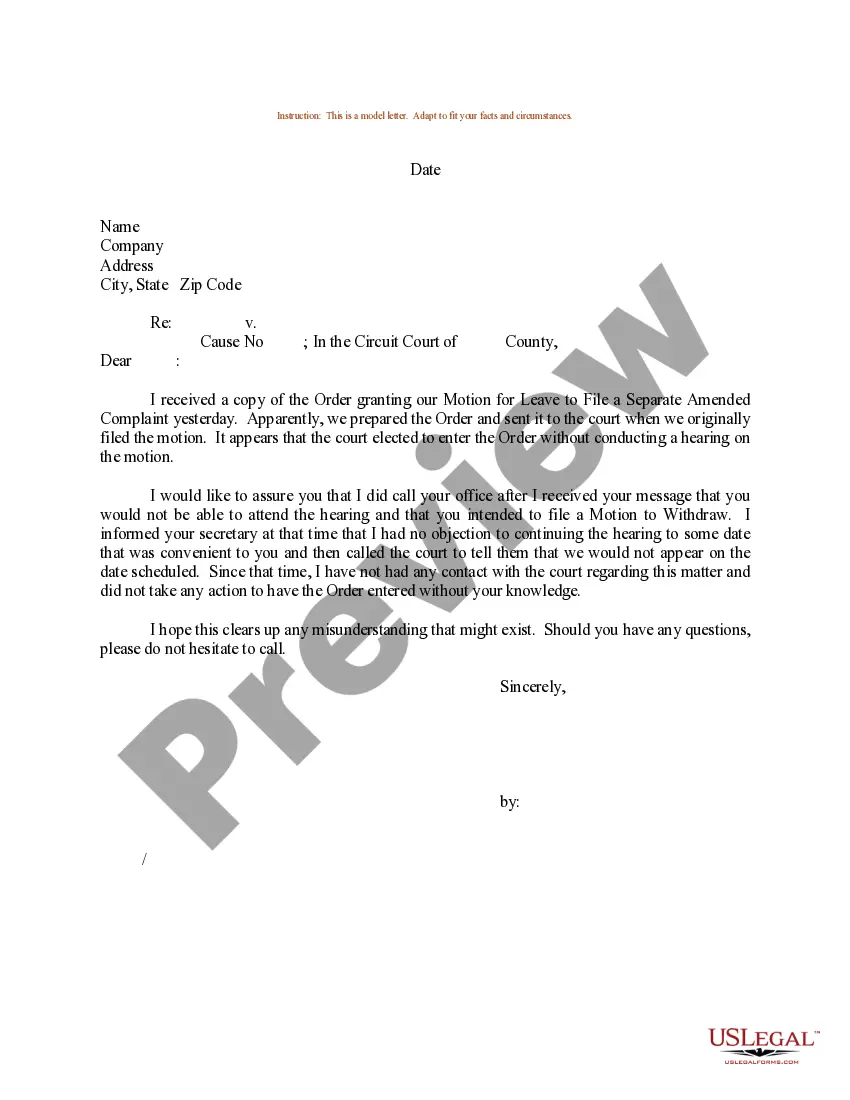
Court Hearing Date For Restraining Order
Description
Get your form ready online
Our built-in tools help you complete, sign, share, and store your documents in one place.
Make edits, fill in missing information, and update formatting in US Legal Forms—just like you would in MS Word.
Download a copy, print it, send it by email, or mail it via USPS—whatever works best for your next step.
Sign and collect signatures with our SignNow integration. Send to multiple recipients, set reminders, and more. Go Premium to unlock E-Sign.
If this form requires notarization, complete it online through a secure video call—no need to meet a notary in person or wait for an appointment.
We protect your documents and personal data by following strict security and privacy standards.

Make edits, fill in missing information, and update formatting in US Legal Forms—just like you would in MS Word.

Download a copy, print it, send it by email, or mail it via USPS—whatever works best for your next step.

Sign and collect signatures with our SignNow integration. Send to multiple recipients, set reminders, and more. Go Premium to unlock E-Sign.

If this form requires notarization, complete it online through a secure video call—no need to meet a notary in person or wait for an appointment.

We protect your documents and personal data by following strict security and privacy standards.
Looking for another form?
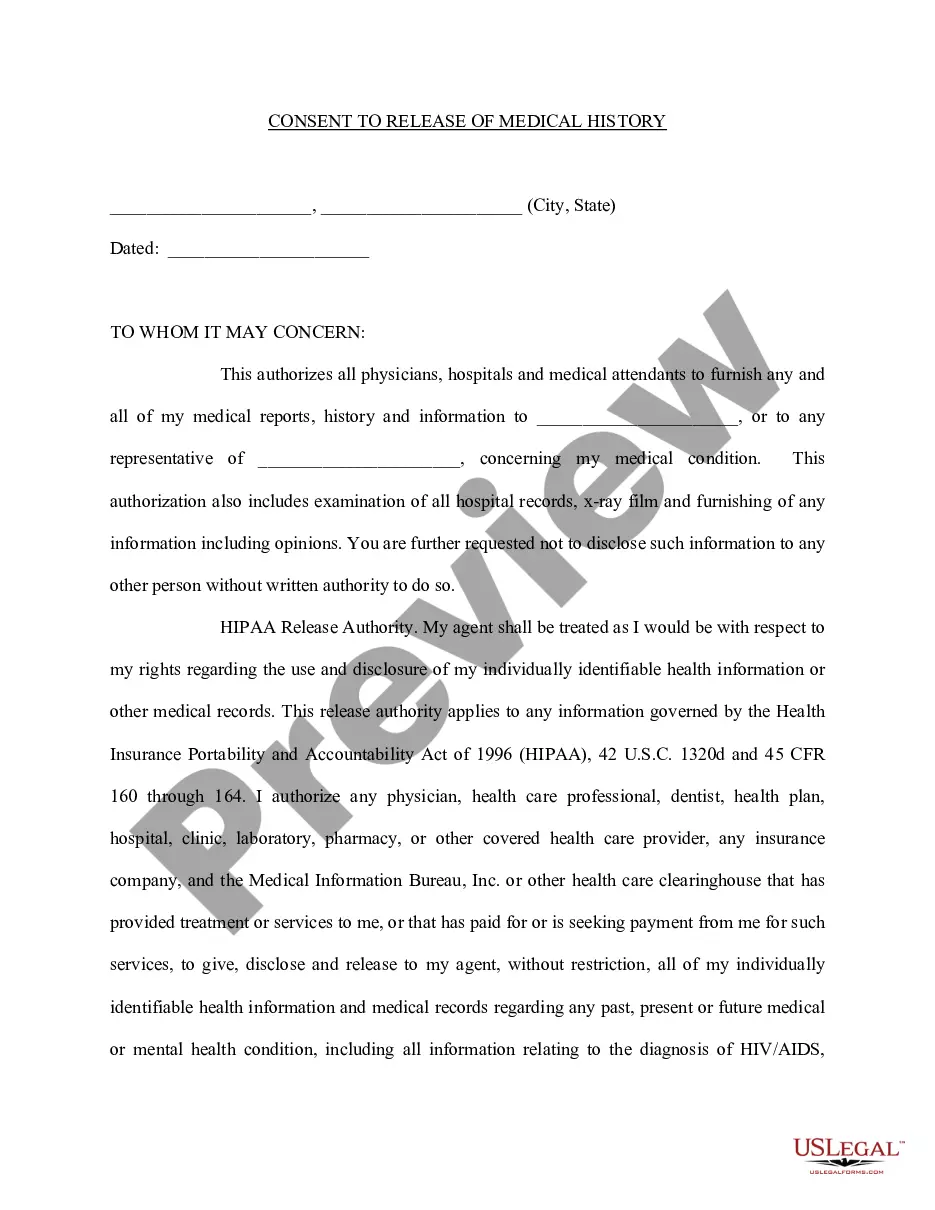

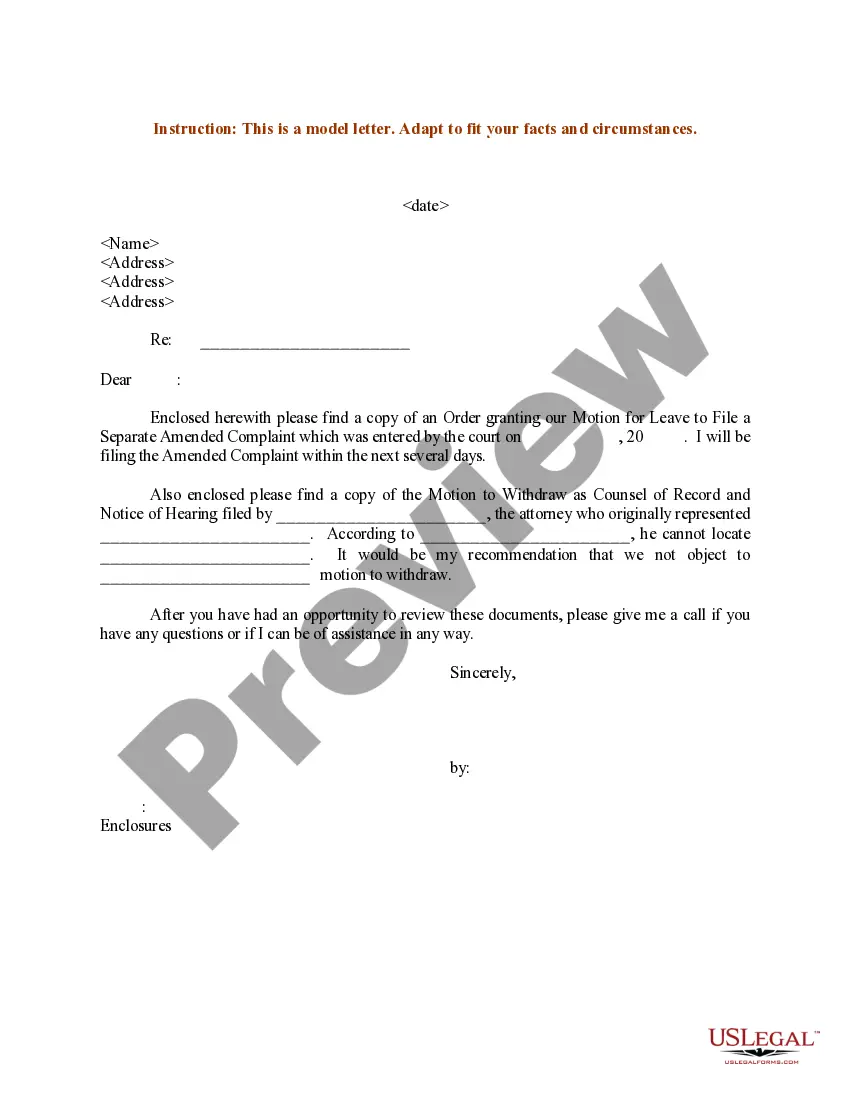
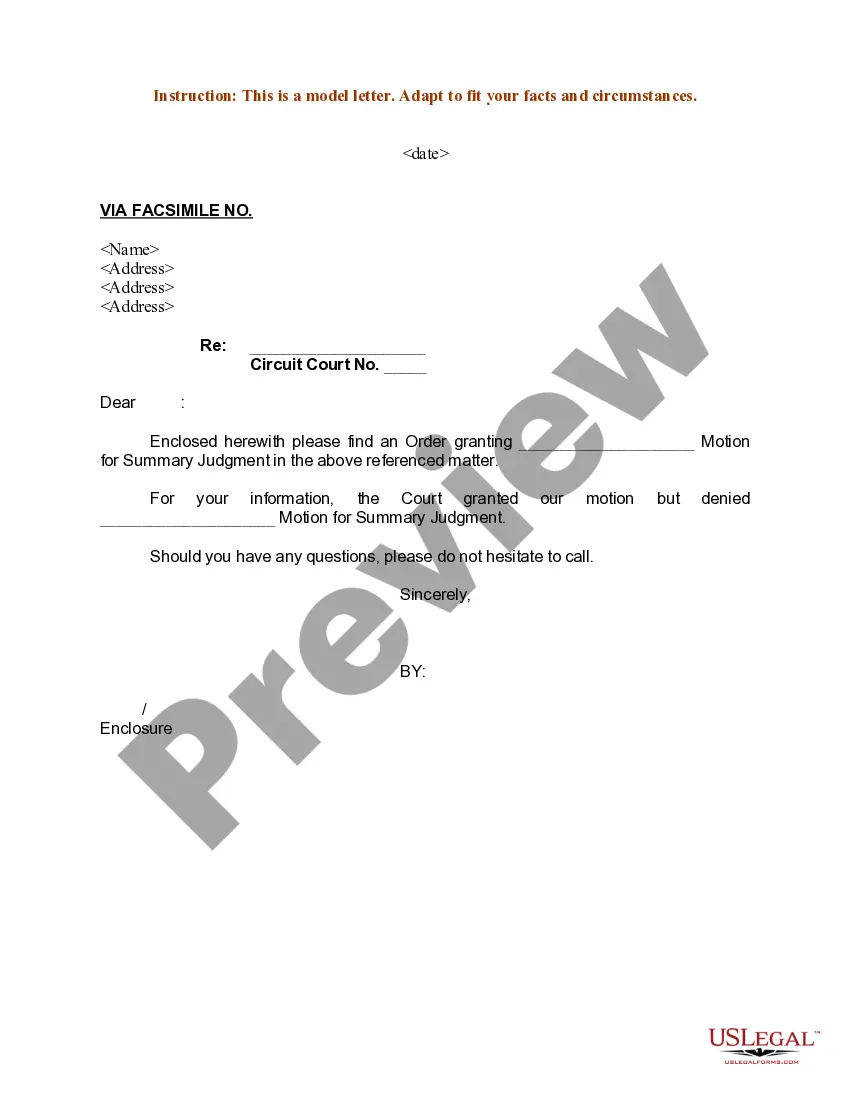
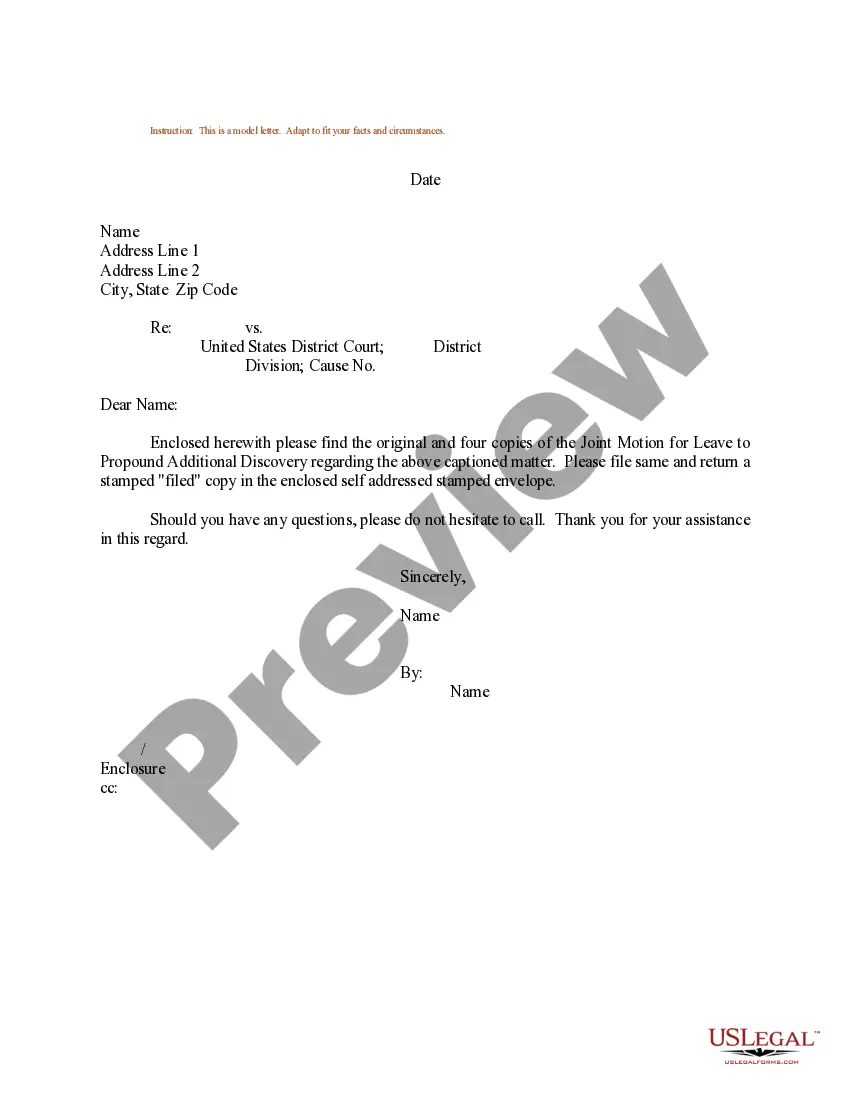
How to fill out Sample Letter For Order Granting A Motion For Leave To File A Separate Amended Complaint?
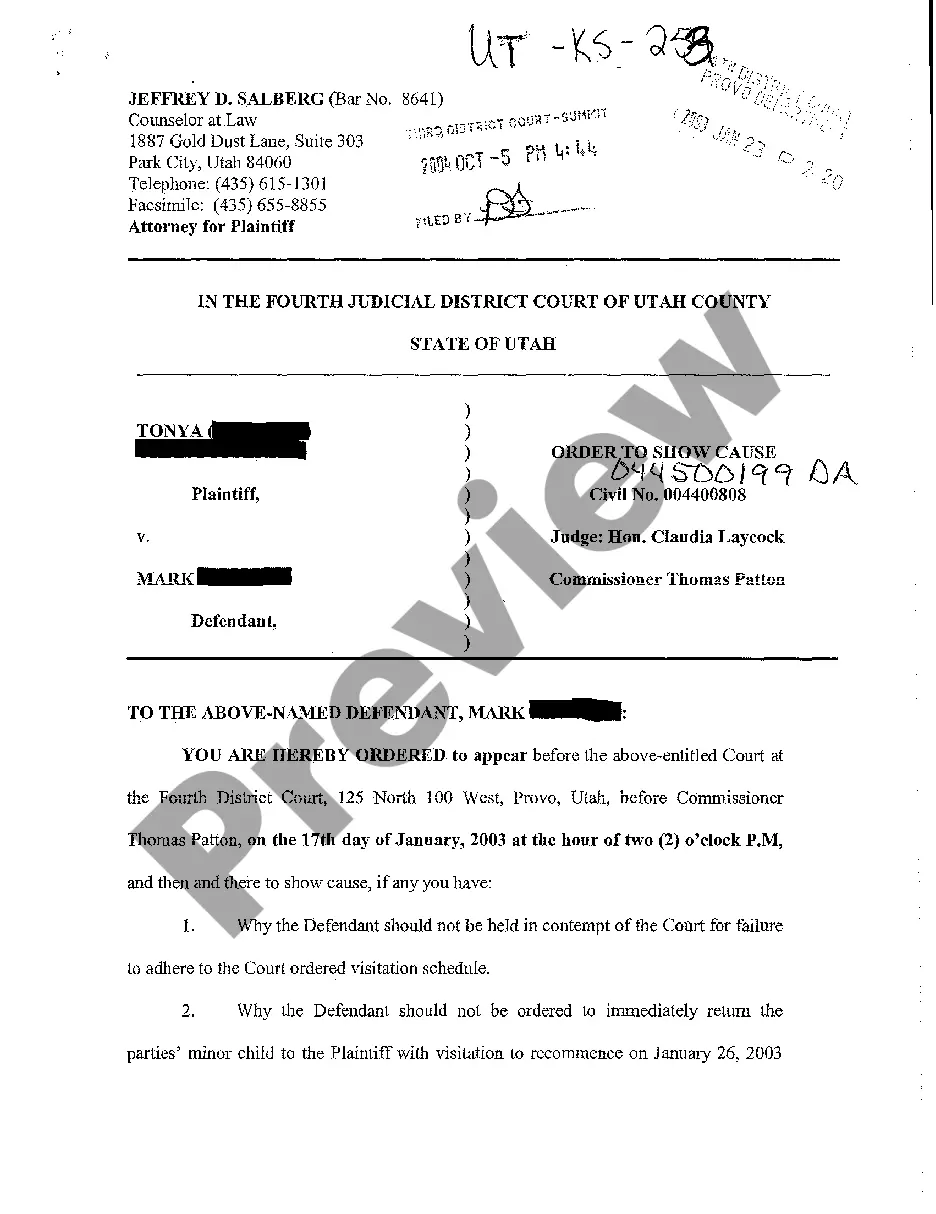
The Court Hearing Date For Restraining Order displayed on this page is a versatile legal template created by experienced attorneys in accordance with federal and state laws and guidelines.
For over 25 years, US Legal Forms has offered individuals, organizations, and lawyers more than 85,000 validated, state-specific documents for various business and personal scenarios. It’s the fastest, easiest, and most dependable method to secure the paperwork you require, as the service promises bank-level data protection and anti-malware safeguards.
Subscribe to US Legal Forms to have validated legal templates for all of life's situations readily available.
- Search for the document you need and review it. Browse through the sample you searched and preview it or check the form description to ensure it meets your requirements. If it does not, use the search bar to find the appropriate one. Click Buy Now once you have identified the template you need.
- Subscribe and Log In. Select the pricing plan that fits you and create an account. Use PayPal or a credit card for a quick payment. If you already possess an account, Log In and verify your subscription to continue.
- Obtain the fillable template. Choose the format you prefer for your Court Hearing Date For Restraining Order (PDF, DOCX, RTF) and save the document on your device.
- Fill out and sign the document. Print the template to complete it manually. Alternatively, use an online multi-functional PDF editor to swiftly and accurately fill out and sign your form with a valid signature.
- Download your papers one more time. Reuse the same document whenever necessary. Access the My documents section in your profile to redownload any previously saved forms.
Form popularity
FAQ
You can go to court and file a Motion to Modify or a Motion to Terminate your Order of Protection. A Motion to Modify will change the order. A Motion to Terminate will end the order. The clerk will set a court date, and you will have to mail a copy of the motion to the abuser.
Usually, the judge decides whether to grant or deny a restraining order on the day of your hearing. If the judge feels like more information or time is needed, the judge may ask you to come back another day. If the judge denies (does not grant) the request for restraining order, the restraining order case is done.
Gather evidence in preparation for trial ? Talk with any friends or family members who might be used as your witnesses, and make sure you have a clear defense planned with your attorney. Anything that can be used in your case, like photos or emails, should be entered as evidence in support of your defense.
Go to your court hearing. Take your copies of all your papers to your court hearing, including a copy of your proof of service. At the hearing, the judge will decide whether or not to change or end the restraining orders. See Going to Court to read more information about how to prepare for your court hearing.
Generally speaking, restraining orders are public record in California. Unless they have been sealed for some reason, like any other court order or document, a restraining order, or protective order as they are otherwise known, are a matter of public record.