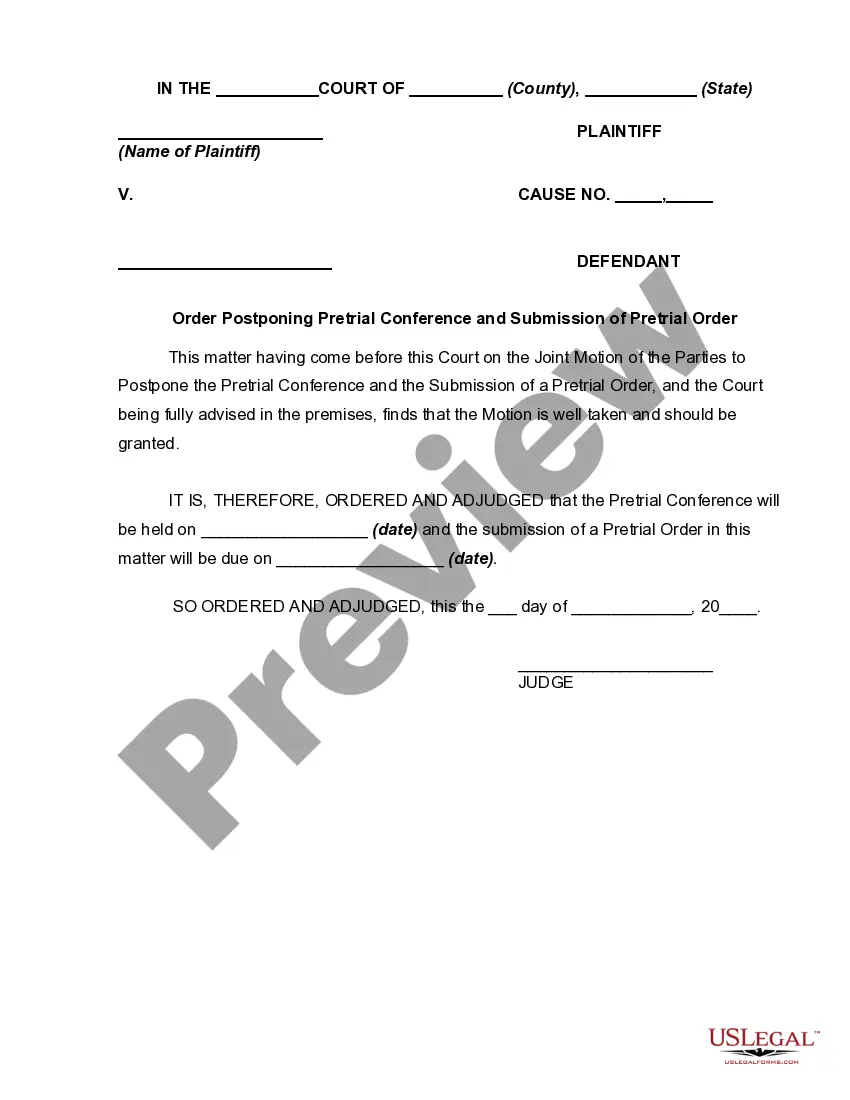
Pretrial Court Motion Without A Hearing
Description
Get your form ready online
Our built-in tools help you complete, sign, share, and store your documents in one place.
Make edits, fill in missing information, and update formatting in US Legal Forms—just like you would in MS Word.
Download a copy, print it, send it by email, or mail it via USPS—whatever works best for your next step.
Sign and collect signatures with our SignNow integration. Send to multiple recipients, set reminders, and more. Go Premium to unlock E-Sign.
If this form requires notarization, complete it online through a secure video call—no need to meet a notary in person or wait for an appointment.
We protect your documents and personal data by following strict security and privacy standards.

Make edits, fill in missing information, and update formatting in US Legal Forms—just like you would in MS Word.

Download a copy, print it, send it by email, or mail it via USPS—whatever works best for your next step.

Sign and collect signatures with our SignNow integration. Send to multiple recipients, set reminders, and more. Go Premium to unlock E-Sign.

If this form requires notarization, complete it online through a secure video call—no need to meet a notary in person or wait for an appointment.

We protect your documents and personal data by following strict security and privacy standards.
Looking for another form?





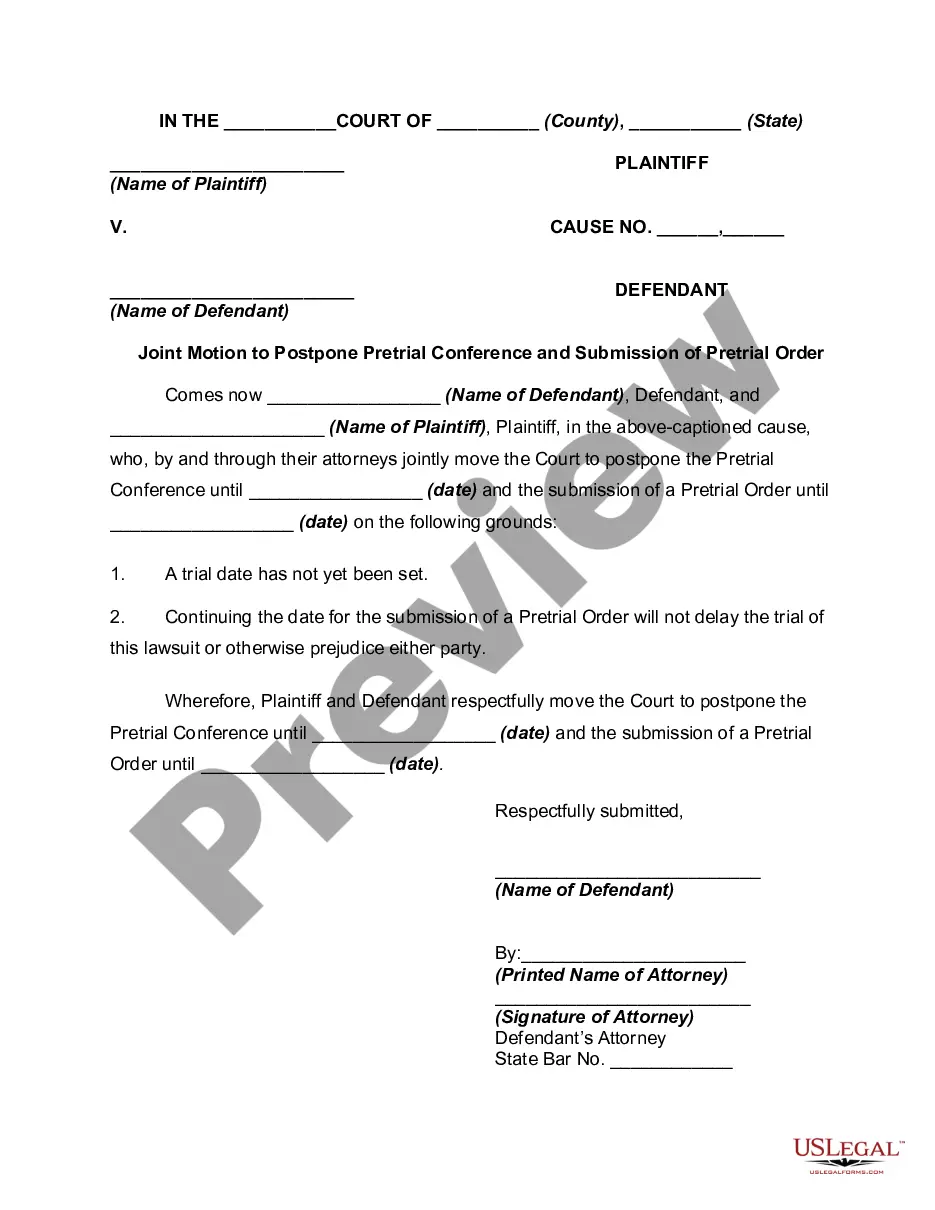
How to fill out Order Postponing Pretrial Conference And Submission Of Pretrial Order?
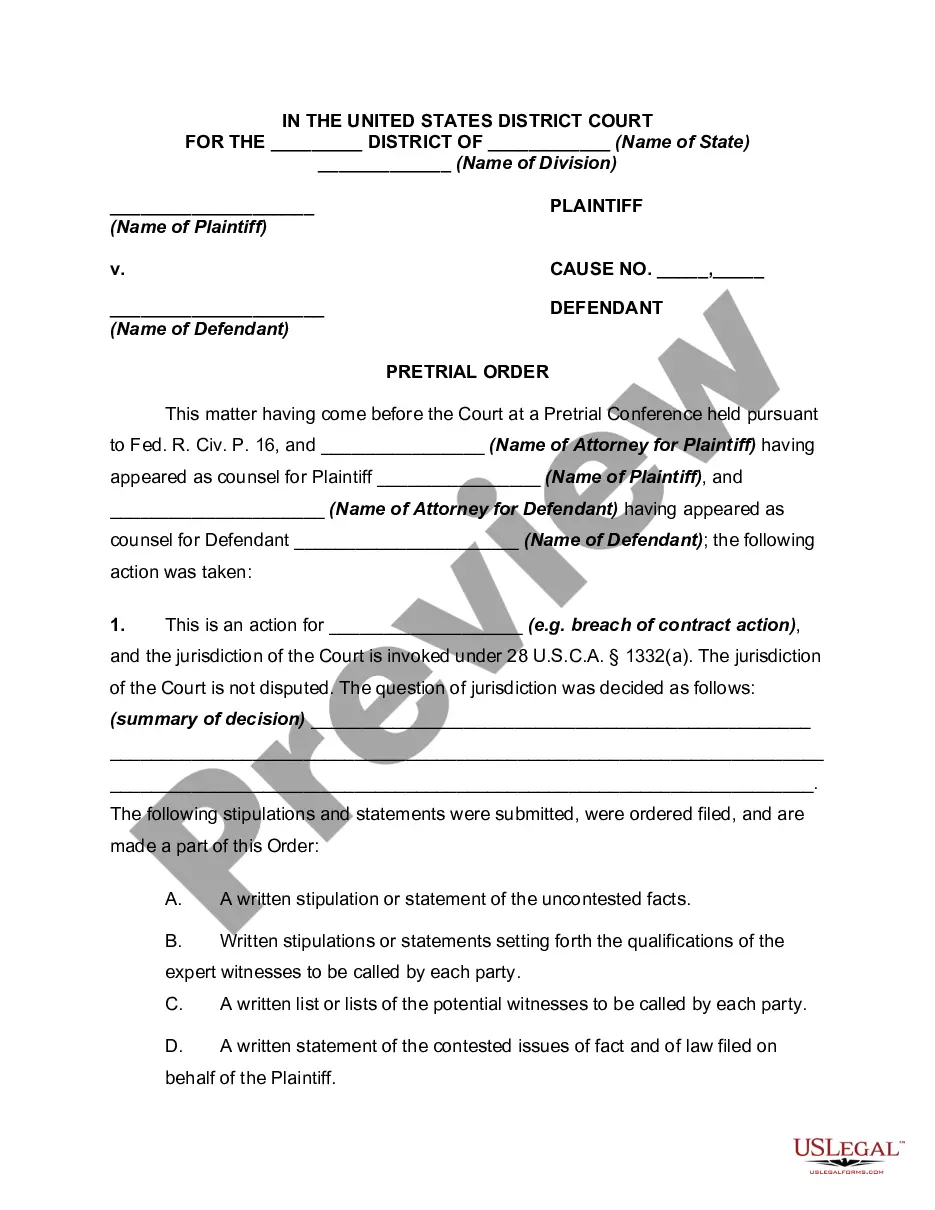
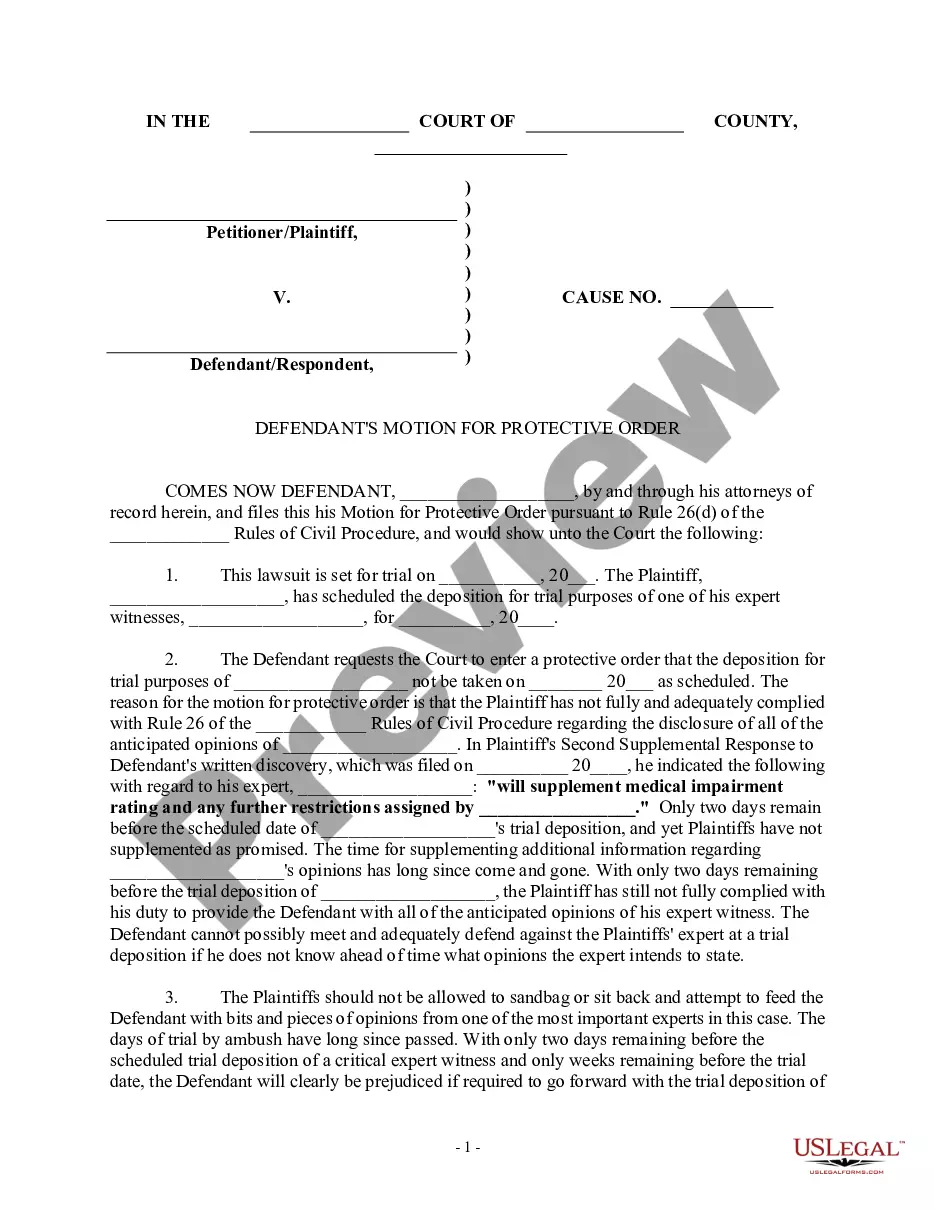
The Pretrial Court Motion Without A Hearing you observe on this page is a reusable official template crafted by skilled attorneys in accordance with federal and state statutes and regulations.
For over 25 years, US Legal Forms has delivered individuals, businesses, and lawyers with more than 85,000 confirmed, state-specific documents for any commercial and personal circumstance. It’s the fastest, simplest, and most dependable approach to secure the paperwork you require, as the service assures the utmost level of data protection and anti-virus safeguards.
Enroll in US Legal Forms to have authenticated legal templates for all of life’s situations at your fingertips.
- Search for the document you require and verify it.
- Browse through the sample you requested and preview it or review the form description to ensure it meets your needs. If it does not, use the search feature to find the appropriate one. Click Buy Now when you have located the template you need.
- Register and sign in.
- Select the payment plan that fits you and create an account. Use PayPal or a credit card to make an immediate payment. If you already possess an account, Log In and check your subscription to proceed.
- Obtain the editable template.
- Choose the format you desire for your Pretrial Court Motion Without A Hearing (PDF, Word, RTF) and store the sample on your device.
- Fill out and endorse the document.
- Print the template to complete it manually. Alternatively, use an online versatile PDF editor to swiftly and accurately fill out and sign your form.
- Redownload your paperwork as needed.
- Utilize the same document anytime necessary. Access the My documents tab in your profile to retrieve any previously purchased forms.
Form popularity
FAQ
Generally, a motion requires a written document that includes the title of the case, the relief sought, and the legal basis for the motion. It should also include any supporting evidence or documentation that strengthens your argument. Remember, a pretrial court motion without a hearing relies heavily on the quality of written submissions. Utilizing USLegalForms can help ensure your motion meets all required criteria.
Pretrial motions are requests made to the court before a trial begins, often to resolve issues that may affect the case. These motions can include requests for evidence, dismissals, or rulings on applicable laws. A pretrial court motion without a hearing can expedite the process, allowing the court to decide based on written submissions. You can leverage resources from USLegalForms to better understand and navigate these motions.
To request a pretrial court motion without a hearing, you must first prepare a written motion that clearly states the relief you seek and the reasons for your request. Next, you can file the motion with the court clerk, ensuring you follow local court rules regarding formatting and filing procedures. After filing, it’s essential to provide a copy to the opposing party. You may also want to consider using platforms like USLegalForms to guide you through the process effectively.
Yes, a motion can be denied without a hearing, particularly in the framework of a pretrial court motion without a hearing. If the submitted documents do not provide persuasive arguments or necessary information, the judge may issue a denial quickly. It is essential to ensure that your motion is clear, factual, and compelling to avoid this outcome.
A judge may deny a motion to stay for various reasons, such as finding no legitimate grounds for the request. In a pretrial court motion without a hearing, a prompt denial can occur if the judge believes that the case should proceed without delay. Being prepared and understanding the judge's perspective can help you craft a stronger motion if needed.
The three most common pretrial motions include motions to dismiss, motions for summary judgment, and motions to compel discovery. Each serves a unique purpose and can significantly impact the direction of your case. Understanding these motions can enhance your legal strategy, especially when dealing with a pretrial court motion without a hearing.
Filling out a motion for court requires careful attention to detail. Begin by clearly stating the purpose of your motion and include all relevant facts supporting your request. It is beneficial to use resources such as the US Legal Forms platform to obtain templates and guidance tailored for pretrial court motions without a hearing.
A motion is a formal request made to the court, while a hearing is a proceeding where parties present their positions orally. In a pretrial court motion without a hearing, the judge reviews the motion based solely on written documents. Understanding this distinction can help you better navigate the legal process and prepare effectively.
A judge can indeed deny a motion without holding a hearing, especially in the context of a pretrial court motion without a hearing. If the submitted documents do not persuade the judge or if they lack sufficient grounds, a denial may occur promptly. It is crucial to present a well-argued motion to maximize the chances of a favorable ruling.
Yes, a judge can make a decision without a hearing in certain circumstances. When dealing with a pretrial court motion without a hearing, the judge may review the motion and provide a ruling based on the written submissions. This process can streamline the resolution of issues, saving time for everyone involved in the case.