Adverse Possessor With A Will
Description
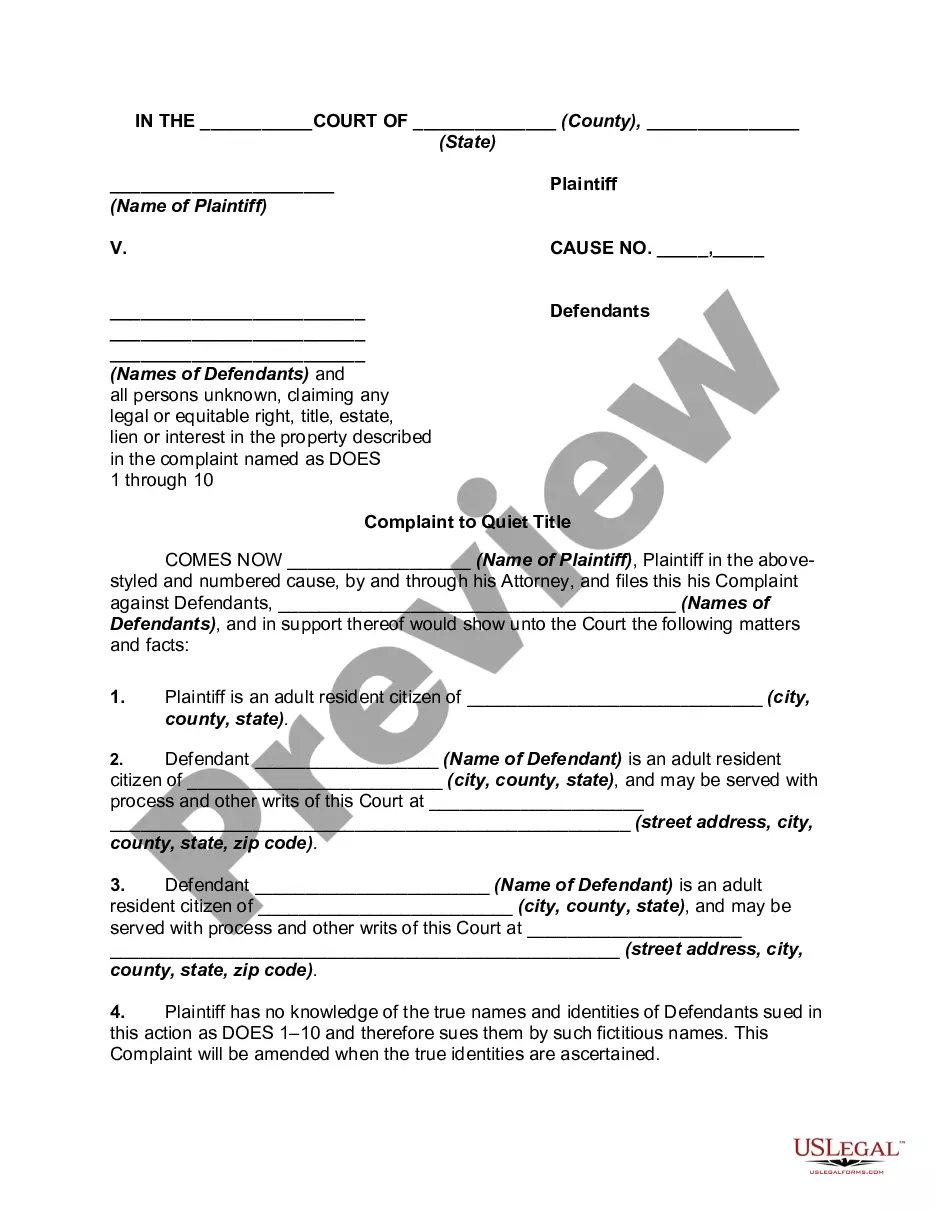
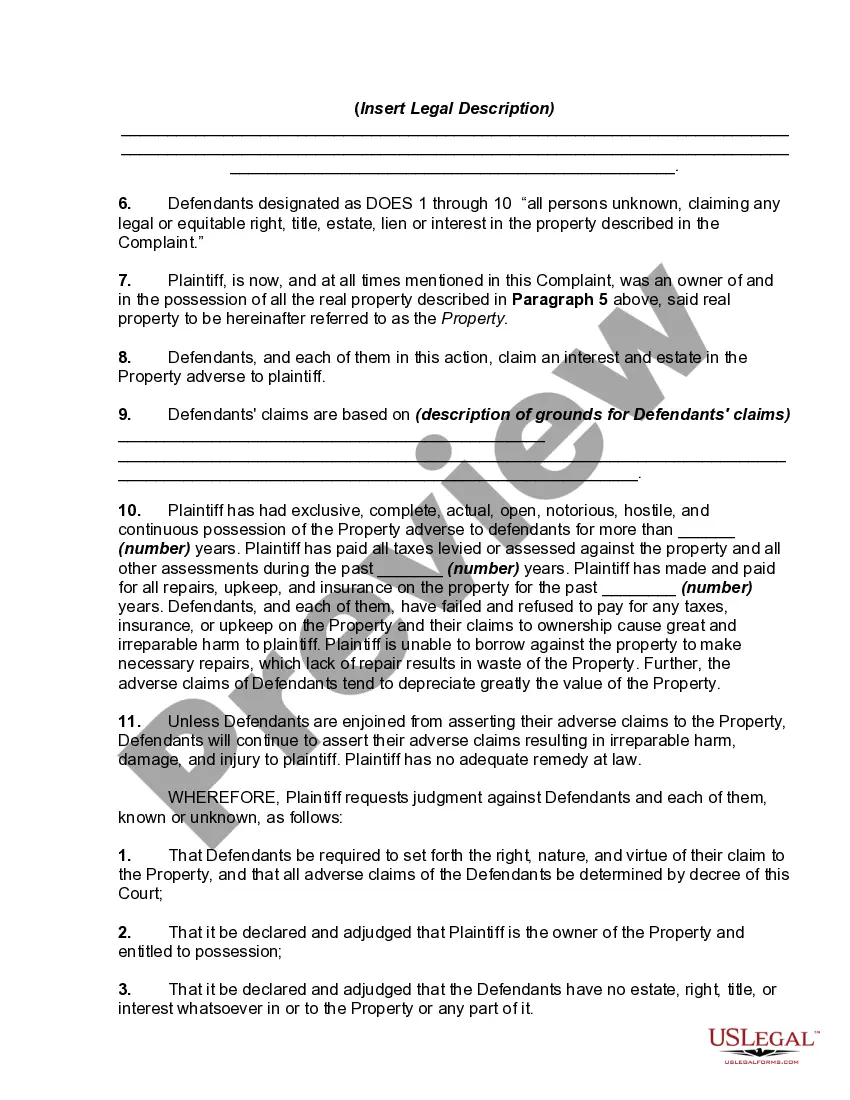
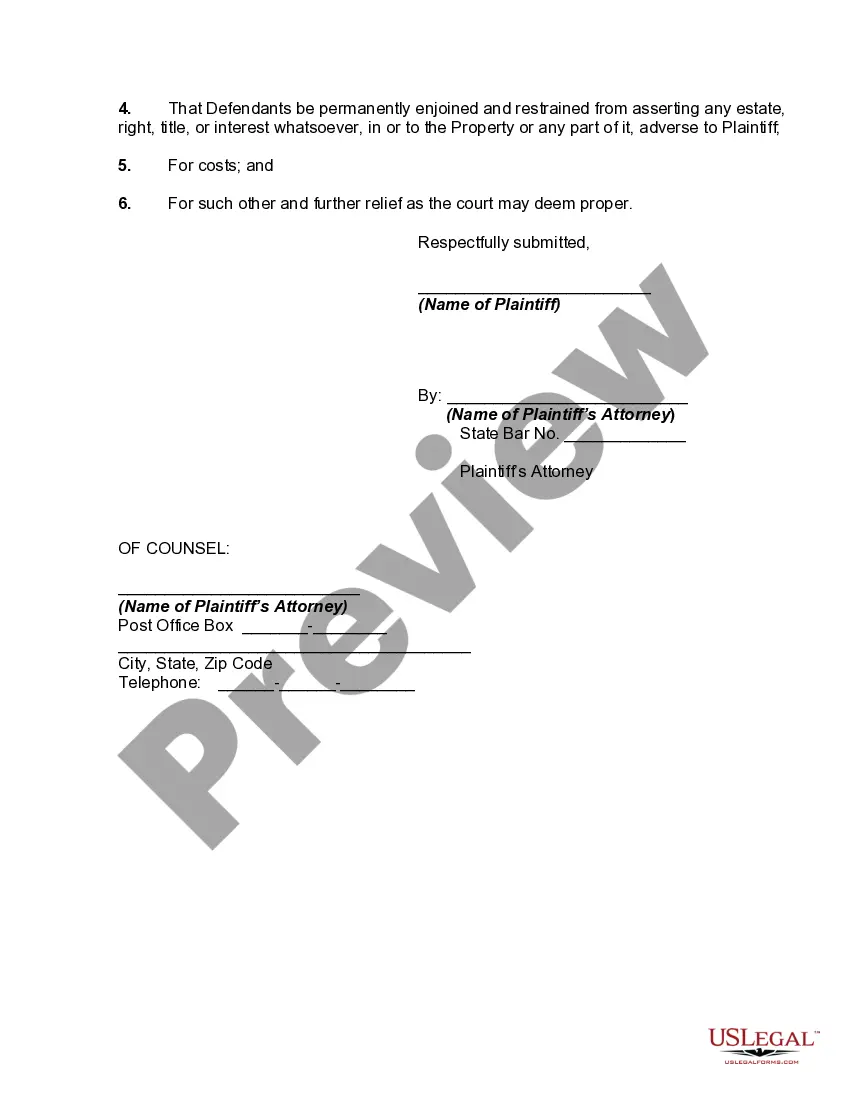
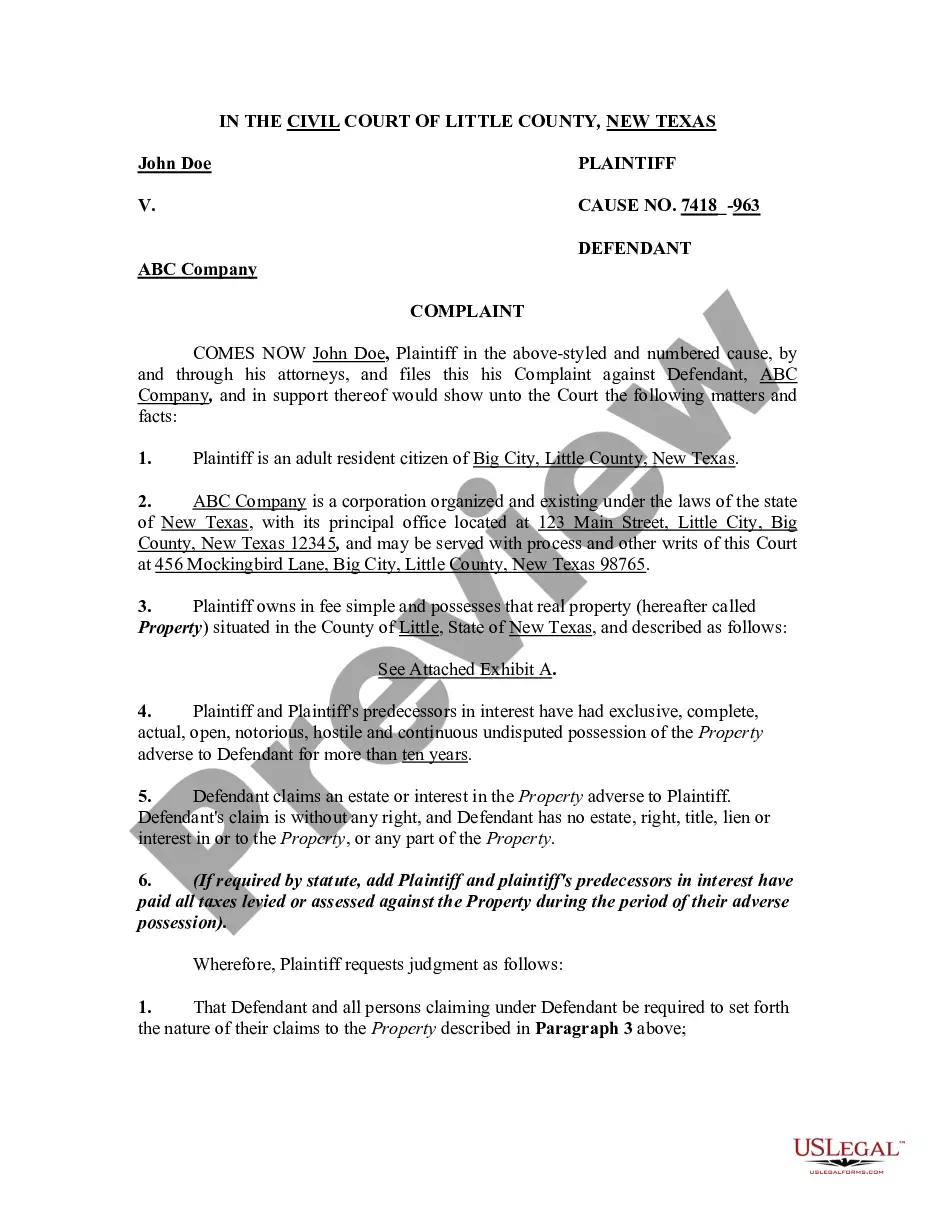
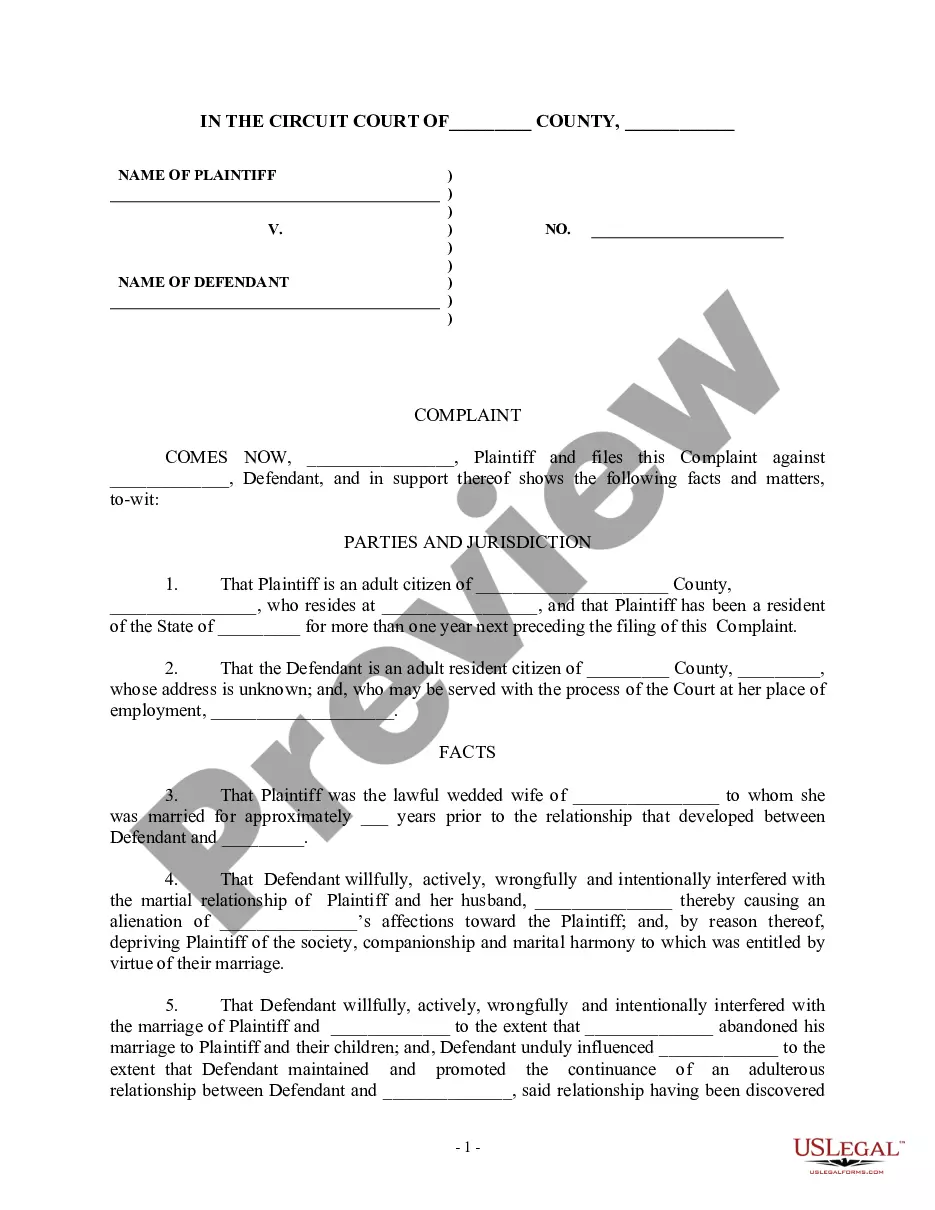
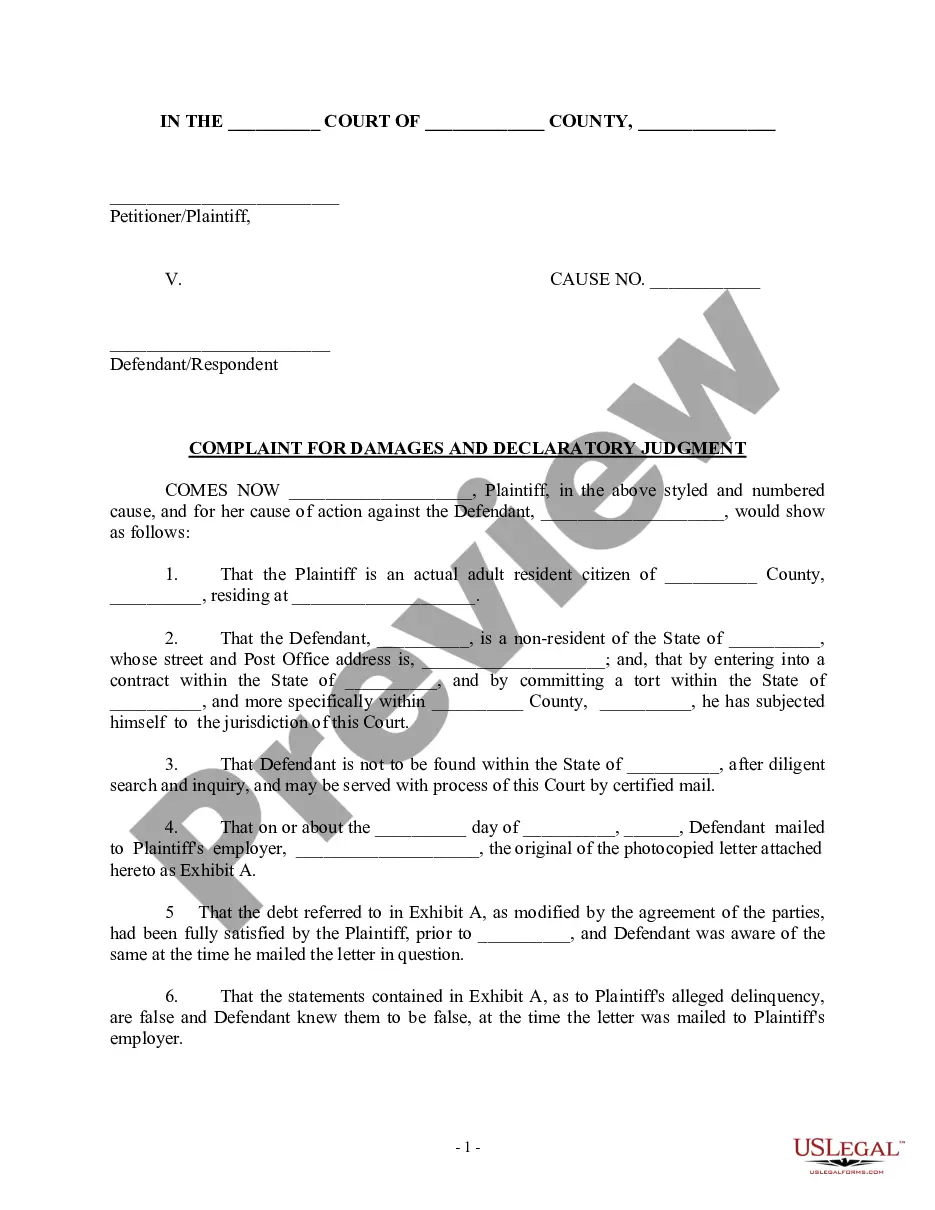
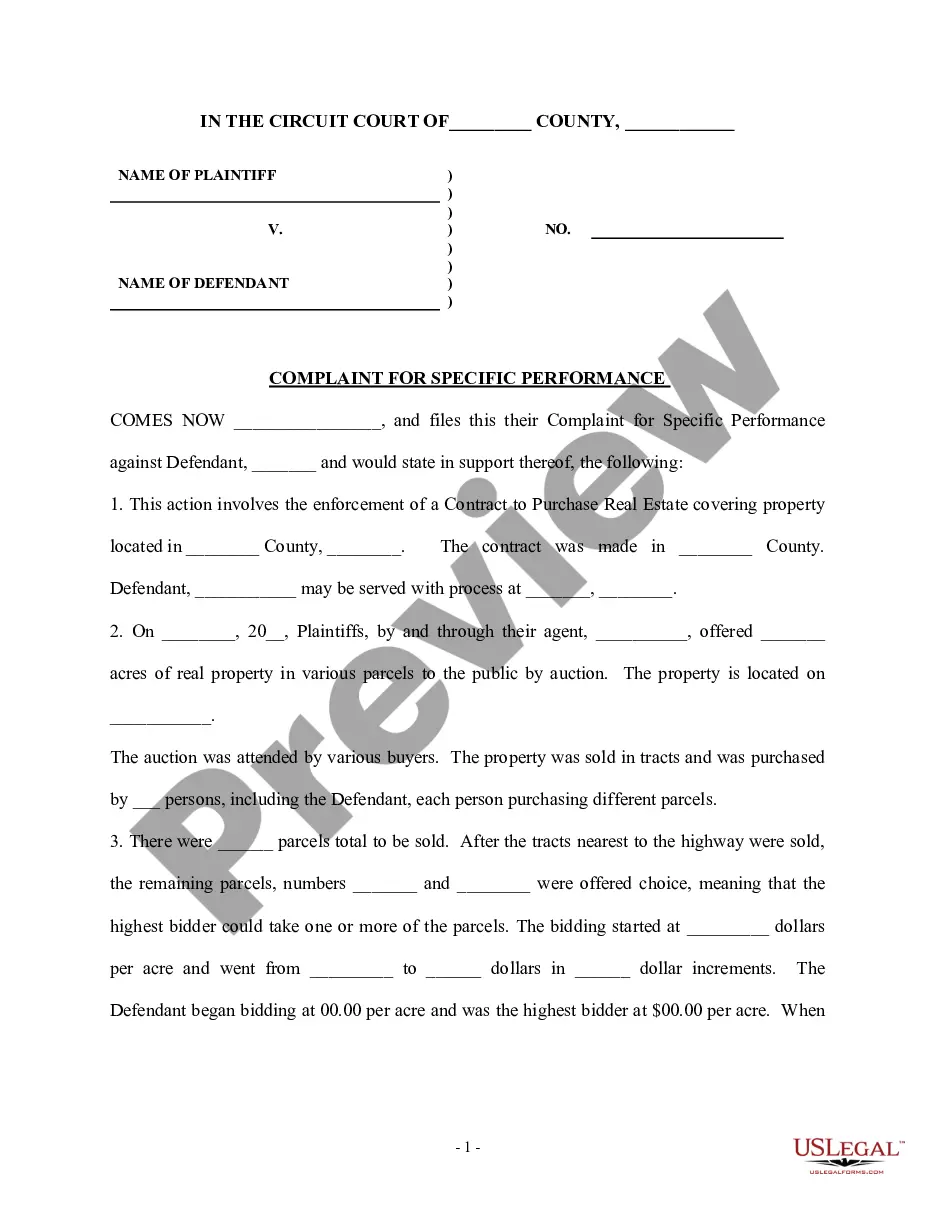
How to fill out Complaint To Quiet Title By Adverse Possessor With Unknown Defendants?
- If you've previously used US Legal Forms, log into your account and access the document by clicking the Download button. Ensure your subscription remains active, or renew it as necessary.
- For first-time users, start by reviewing the form description and preview mode. Check that the chosen template meets your local jurisdiction's requirements.
- If you identify any discrepancies, utilize the search function to locate a suitable alternative. Once the correct template is found, you can move forward.
- Select the appropriate subscription plan by clicking the Buy Now button and create an account to access the extensive library.
- Complete your purchase by entering your payment details or using a PayPal account to finalize your subscription.
- Download the template to your device. You can also find it later in the My Forms section of your profile for future reference.
In conclusion, US Legal Forms provides a robust and comprehensive library to help you effortlessly complete your legal documentation. With access to more forms than any competitor, users can ensure their documents are precise and legally sound.
Start your journey today and make legal processes easier by signing up for US Legal Forms!
Form popularity
FAQ
While states vary in their adverse possession laws, some find that California offers more accessible routes for adverse possessors with a will. California has relatively shorter time requirements and clearer guidelines compared to other states. However, many factors affect each case, so understanding local laws is crucial. For comprehensive insights and to streamline the process, you can explore UsLegalForms, which simplifies property law inquiries.
Mowing your lawn adjacent to a neighbor’s land does not, on its own, give that neighbor a claim as an adverse possessor with a will in Minnesota. Adverse possession requires continuous and intentional use of the land without your consent. If your neighbor only mows the land occasionally, they do not establish a valid claim. It's essential to keep clear boundaries and consult resources from UsLegalForms if you suspect disputes over property lines.
To qualify as an adverse possessor with a will in Minnesota, you must meet specific criteria. You generally need to possess the property openly, continuously, and without permission for at least 15 years. Additionally, your possession must be exclusive and actual, meaning you actively use the property as your own. Understanding these requirements can be intricate, so consider utilizing platforms like UsLegalForms to navigate the legalities easily.
The finders keepers law in Texas refers to the idea that if you find a lost item belonging to someone else, you may have rights to it under certain conditions. However, this principle does not replace the legal framework surrounding property ownership and adverse possession. It's important to understand that having a claim as an adverse possessor with a will involves meeting specific legal criteria, rather than simply claiming 'finders keepers.'
In Texas, the period to acquire real property by adverse possession typically spans ten years of continuous and open occupation. This duration is vital for building a strong claim as an adverse possessor with a will. During this time, you should maintain clear and visible use of the property to support your case if challenged.
In New York, an individual must possess the property openly, exclusively, and continuously for at least ten years to qualify as an adverse possessor with a will. You must show that your use of the property has been adverse to the interests of the true owner. Additionally, any use must be actual and notorious, solidifying your claim to the property.
In Texas, the five key requirements to become an adverse possessor with a will include continuous possession for ten years, exclusive possession, open and notorious possession, actual possession, and hostile possession. These elements ensure your claim is legitimate and recognized by the law. It's crucial to document your use of the property to support your claim effectively.
To qualify as an adverse possessor with a will in Texas, you must occupy the property continuously for a certain period, usually ten years. You must also possess the property openly, without permission from the true owner. Additionally, your possession must be exclusive and adverse, meaning you treat the property as your own, not just as a casual user.
A common real-life example of adverse possession is when a homeowner builds a fence that encroaches on a neighbor's property line. If the neighbor allows this encroachment to persist for several years, the homeowner may later claim ownership of that land. This situation illustrates how an adverse possessor with a will can exert rights over property inadvertently or through passivity. Familiarity with such scenarios can inform property rights and disputes.
An example of an adverse possession claim occurs when someone occupies a vacant parcel of land without the owner's permission. If this person openly uses the land exclusively for a set period, they may file a claim to gain legal ownership. This could happen if a neighbor begins using a portion of your land for gardening or other personal use. Understanding the implications of being an adverse possessor with a will can help you protect your rights.