Adverse Possession With Color Of Title
Description
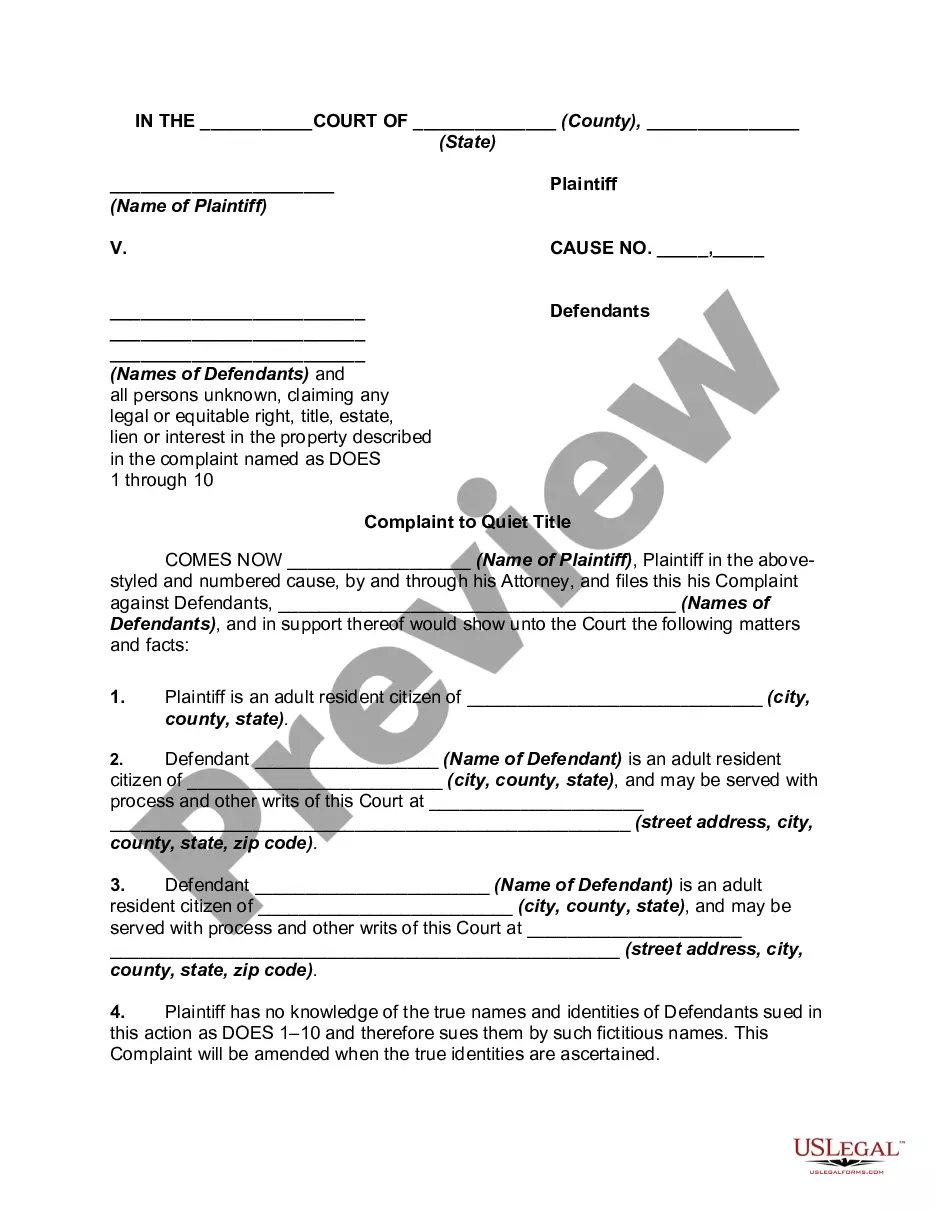
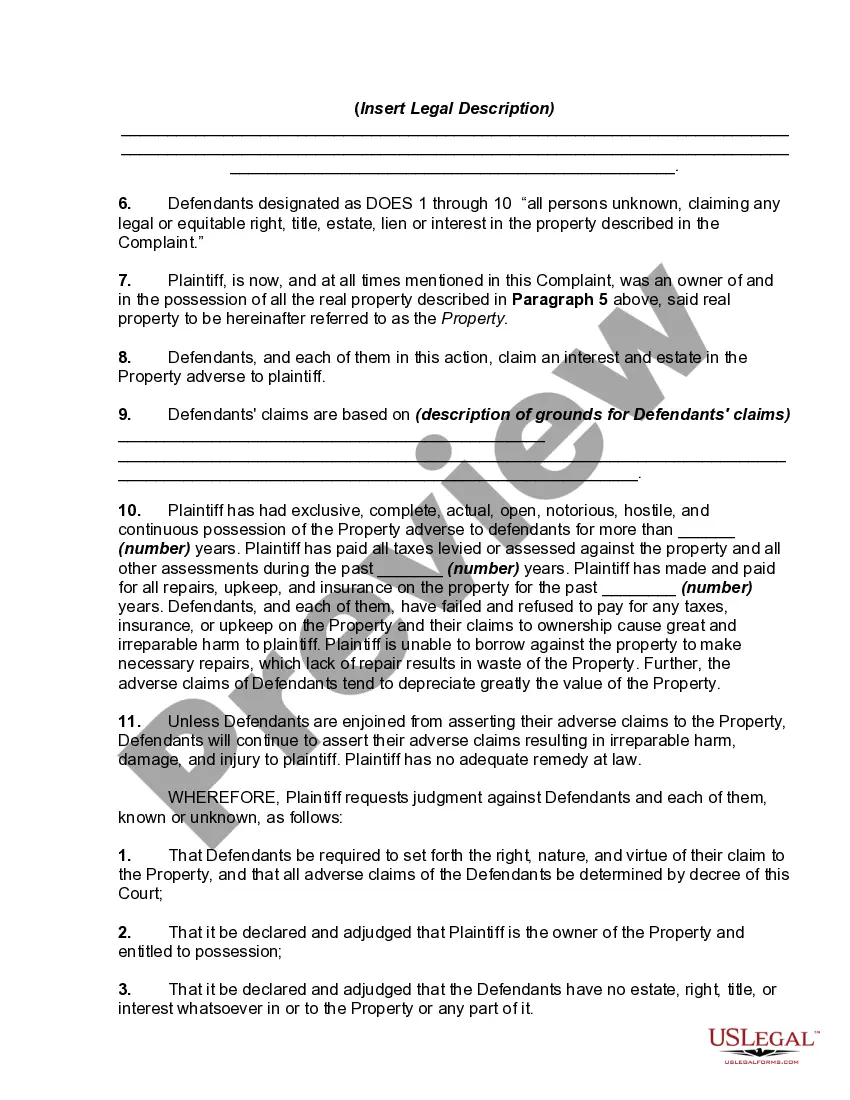
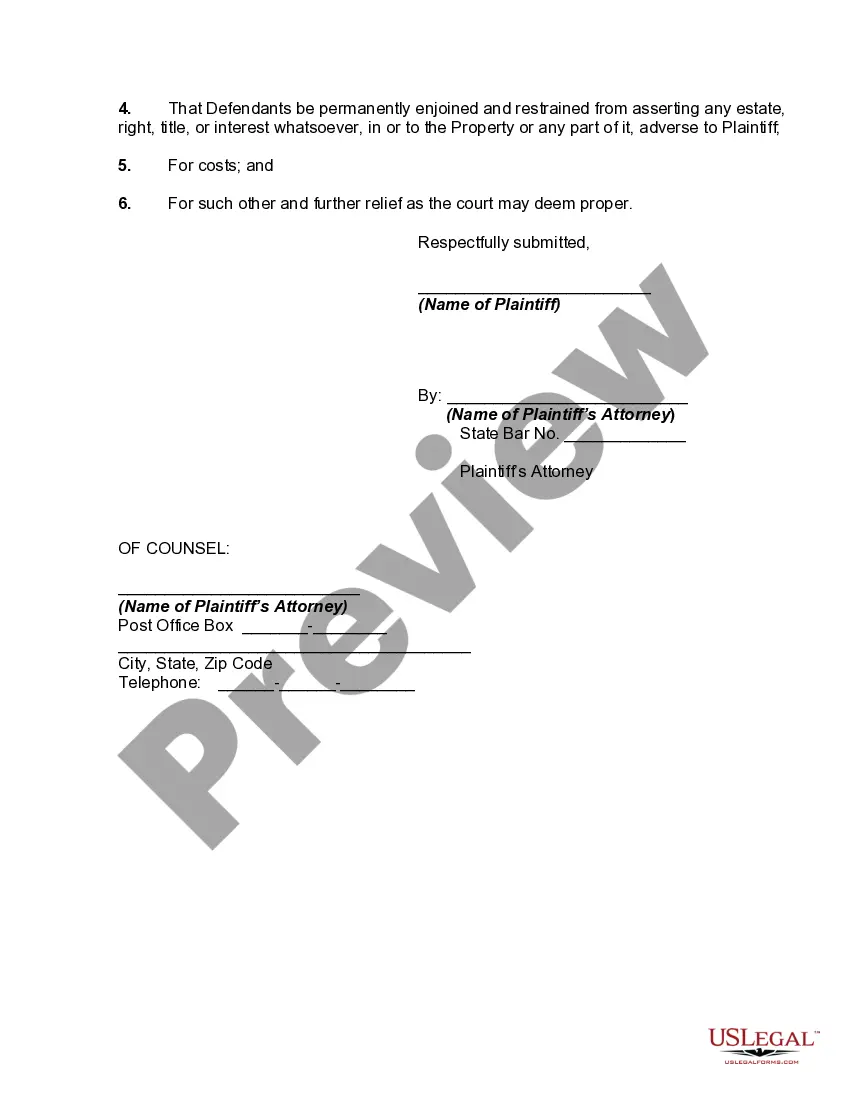
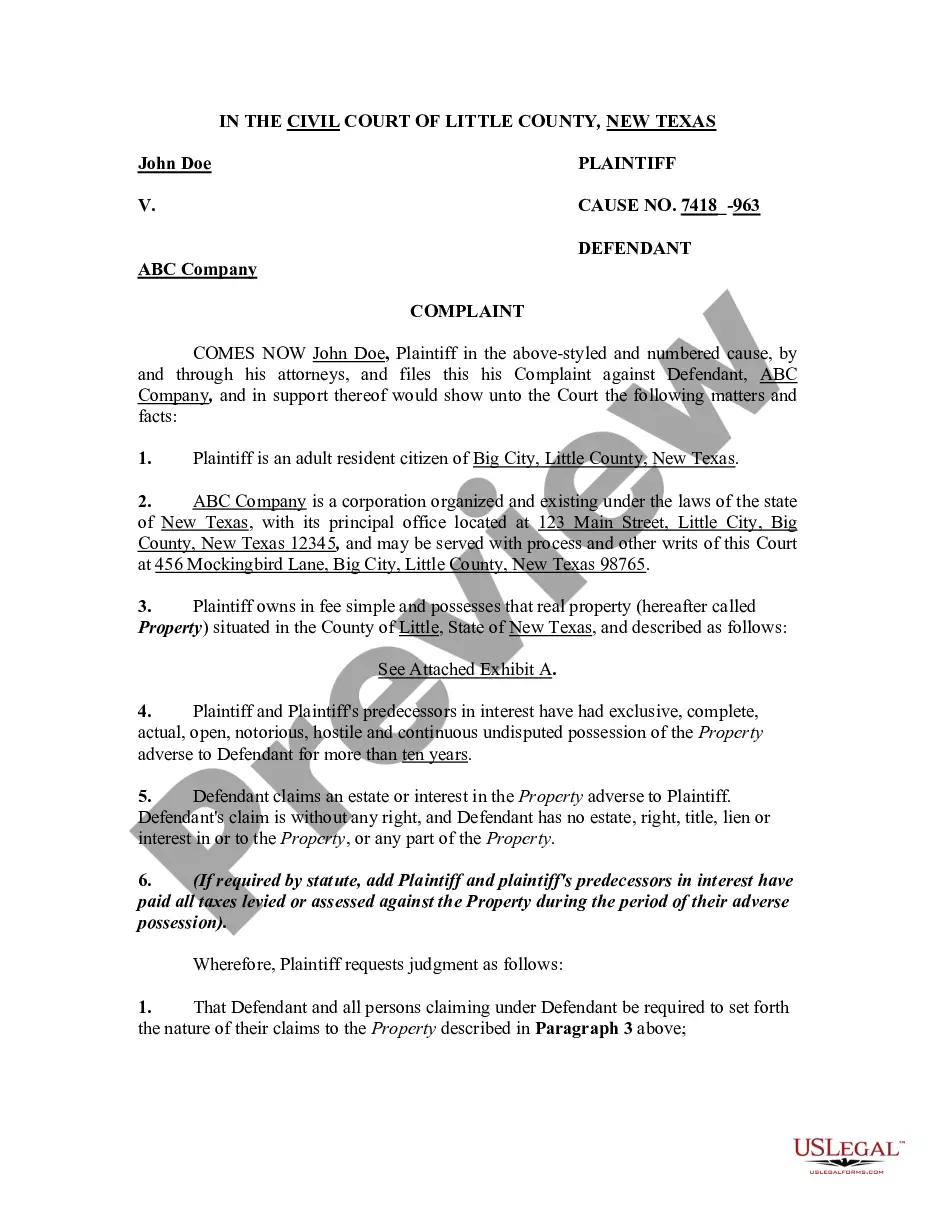

Get your form ready online
Our built-in tools help you complete, sign, share, and store your documents in one place.
Make edits, fill in missing information, and update formatting in US Legal Forms—just like you would in MS Word.
Download a copy, print it, send it by email, or mail it via USPS—whatever works best for your next step.
Sign and collect signatures with our SignNow integration. Send to multiple recipients, set reminders, and more. Go Premium to unlock E-Sign.
If this form requires notarization, complete it online through a secure video call—no need to meet a notary in person or wait for an appointment.
We protect your documents and personal data by following strict security and privacy standards.

Make edits, fill in missing information, and update formatting in US Legal Forms—just like you would in MS Word.

Download a copy, print it, send it by email, or mail it via USPS—whatever works best for your next step.

Sign and collect signatures with our SignNow integration. Send to multiple recipients, set reminders, and more. Go Premium to unlock E-Sign.

If this form requires notarization, complete it online through a secure video call—no need to meet a notary in person or wait for an appointment.

We protect your documents and personal data by following strict security and privacy standards.
Looking for another form?


How to fill out Complaint To Quiet Title By Adverse Possessor With Unknown Defendants?
Managing legal documentation and tasks can be a lengthy addition to your routine.
Adverse Possession With Color Of Title and similar forms usually necessitate that you search for them and grasp how to fill them out correctly.
Consequently, whether you are addressing financial, legal, or personal issues, possessing an extensive and user-friendly online library of documents at your disposal will significantly benefit you.
US Legal Forms stands as the premier online platform for legal templates, providing over 85,000 state-specific documents and various resources to assist you in completing your paperwork swiftly.
Eager to try US Legal Forms for the first time? Register and establish a complimentary account in just a few minutes to gain access to the document library and Adverse Possession With Color Of Title. Then, adhere to the steps below to complete your document.
- Explore the collection of relevant documents available with just a single click.
- US Legal Forms offers state- and county-specific documents available for download at any time.
- Protect your document management processes by utilizing a reliable service that enables you to create any document in minutes without any extra or concealed charges.
Form popularity
FAQ
Color of title refers to a claim on property based on a document that appears legitimate but may not be legally valid. This can include outdated deeds or incorrect property descriptions. Despite its flaws, color of title can still support a claim for adverse possession, especially when combined with continuous possession. If you're navigating these legal waters, our platform at US Legal Forms offers resources to help clarify your rights concerning adverse possession with color of title.
Constructive adverse possession occurs when a person occupies a property under the belief they are the rightful owner, using color of title. For example, if an individual builds a fence on a property they think they own due to an old deed, they may claim constructive adverse possession. Their actions, coupled with the belief in ownership, can strengthen their claim. Thus, in adverse possession with color of title, perceptions and actions play a crucial role.
The three types of possession are actual possession, constructive possession, and exclusive possession. Actual possession occurs when someone physically occupies a property. Constructive possession refers to a legal claim without physical occupancy, while exclusive possession means that only one person has control over the property, excluding others. Understanding these types is essential when dealing with adverse possession with color of title, as they establish different legal grounds.
Constructive possession occurs when someone has legal ownership but does not physically occupy the property. For example, a person might inherit land but live in another state. If they maintain the property by paying taxes and managing it, this can establish constructive possession. In the context of adverse possession with color of title, such actions can help bolster claims to the property.
To successfully claim adverse possession with color of title in New York, there are five essential requirements you must meet. First, you need to possess the property openly and notoriously, so your claim is visible to others. Second, your possession must be exclusive, meaning you are the only person using the land. Third, your occupation must be continuous for a specified period, usually ten years. Fourth, you must occupy the property without the permission of the original owner, establishing a hostile claim. Finally, you should hold color of title, which gives you a legal document that outlines your belief that you have a valid claim to the land, further strengthening your position. If you need support navigating these requirements, USLegalForms can provide you with the necessary legal resources to assist you in claiming adverse possession.
You can use color of title in a sentence by stating something like, 'After ten years of occupancy, I am pursuing adverse possession with color of title to secure ownership of the land.' This phrase indicates that you believe you have a claim to the property based on some legal reason, even if the actual title has not been formally established. Understanding how to articulate this concept is essential, especially when dealing with legal matters regarding property rights.
Acquiring real property through adverse possession with color of title in Texas typically takes ten years. This duration reflects the necessity for long-term, continuous occupation of the land. During this time, your possession must meet specific requirements such as being actual, open, and notorious. If you believe you qualify, consider using platforms like US Legal Forms to navigate the process effectively and ensure all legal steps are properly followed.
In Texas, to successfully claim adverse possession with color of title, you must meet five key requirements. First, you need to occupy the property continuously for a specific duration, usually ten years. Second, your possession must be actual, meaning you physically use the property. Third, it should be open and notorious, indicating your presence is visible to others. Fourth, your possession must be exclusive; you cannot share control with others. Finally, it must be hostile, meaning you do not have permission from the legal owner.
Constructive possession under color of title allows a claimant to be considered in possession of a property even if they do not physically occupy it. This legal principle supports adverse possession claims by providing a means to establish ownership rights based on the color of title. When a claimant has valid documents, they may be empowered to assert their rights effectively. Legal platforms like uslegalforms can assist you in understanding these concepts and navigating the complexities of property law.
The color of title property refers to an ownership claim based on a piece of documentation that suggests a right to the property, even if the claim is not fully valid. In the case of adverse possession with color of title, it implies an assertion of ownership that holds potential legal significance. This concept impacts how property disputes are resolved. Therefore, understanding its implications is crucial for potential claimants.