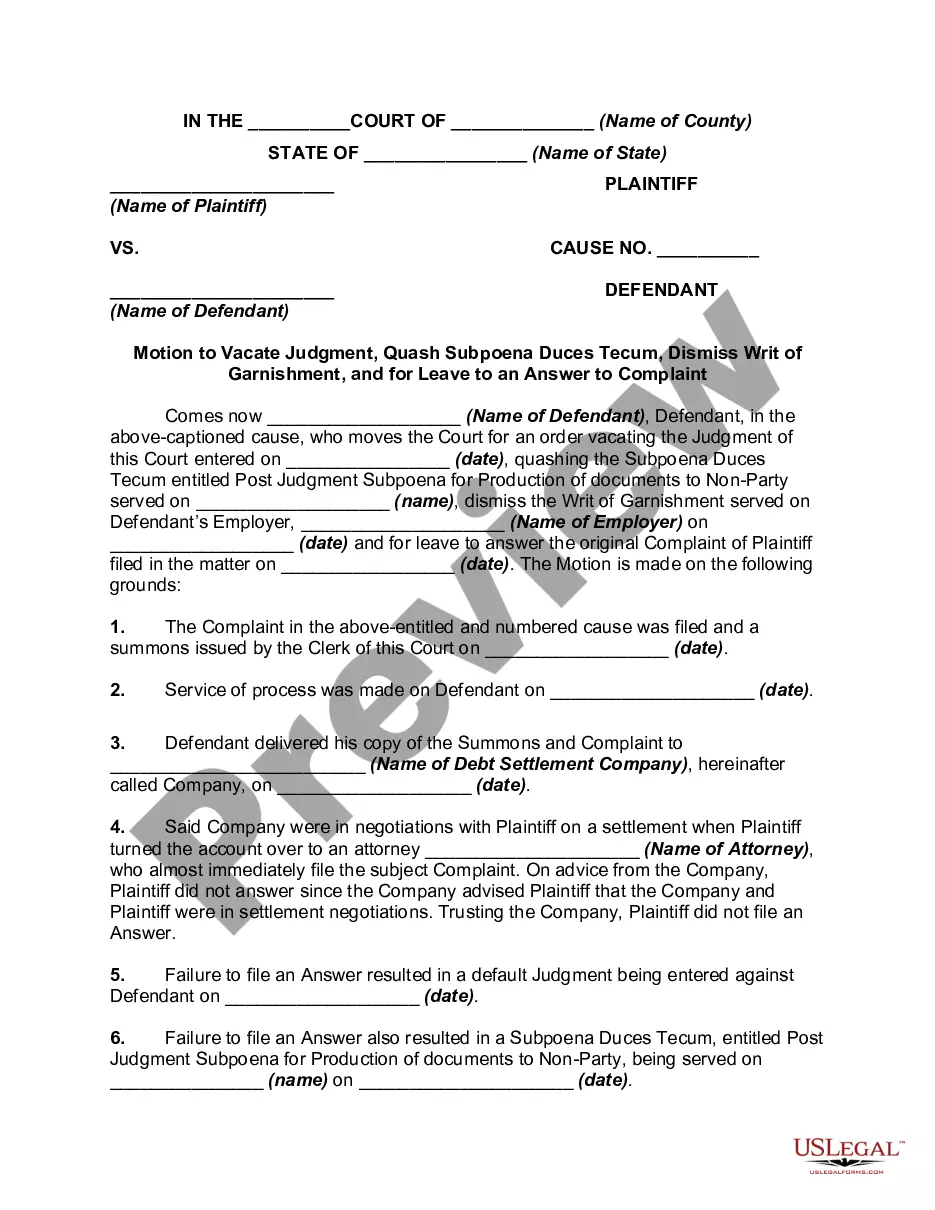
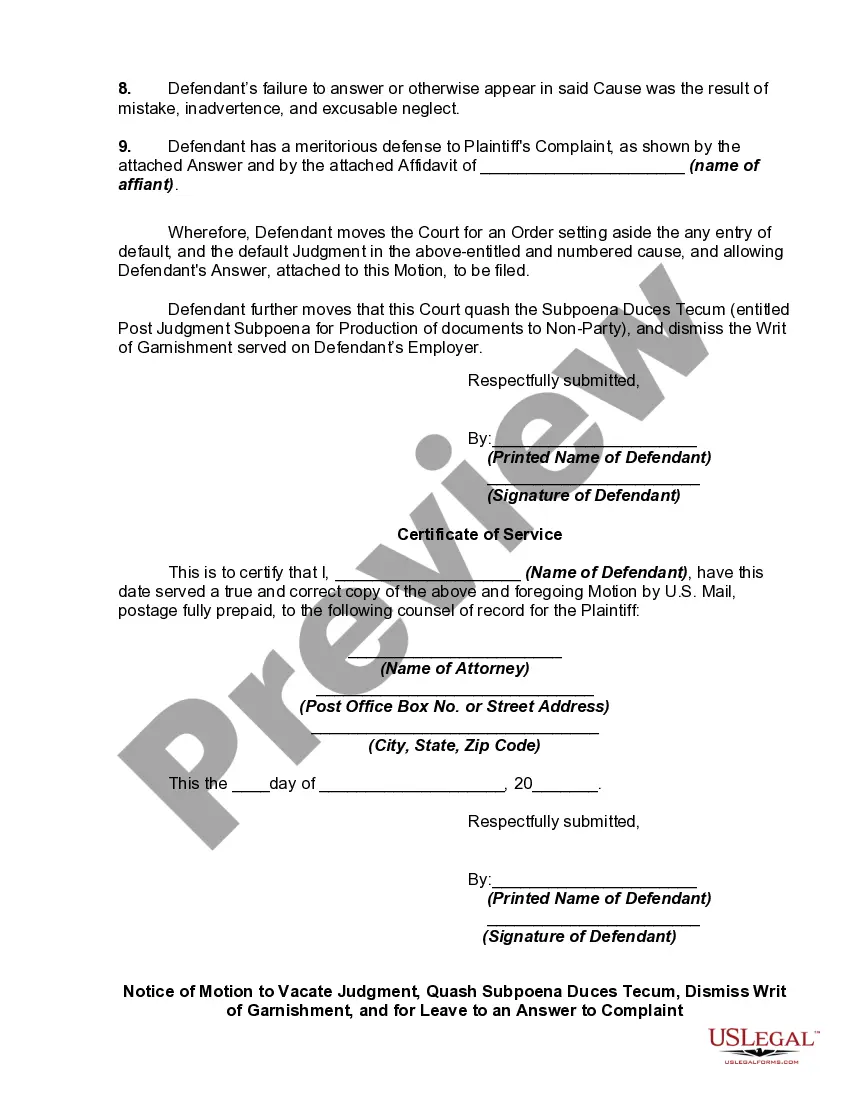
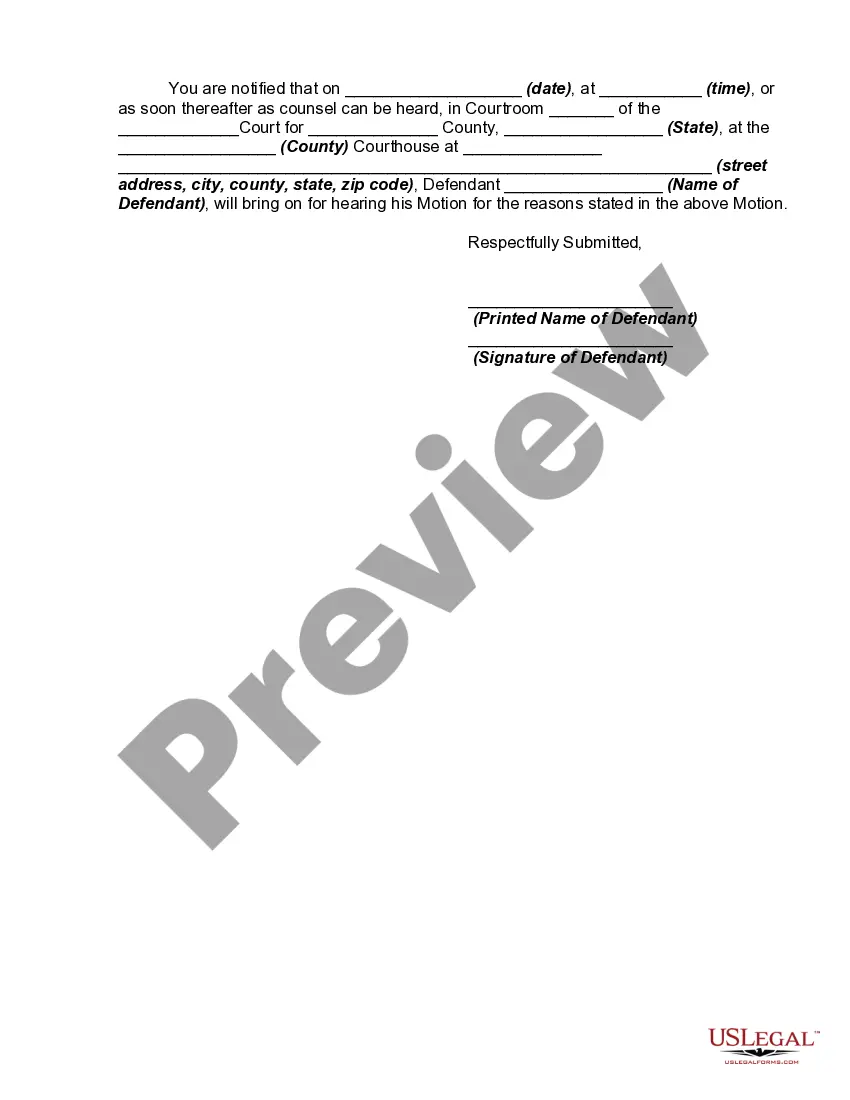
Sample Motion To Vacate Default Without Notice
Description
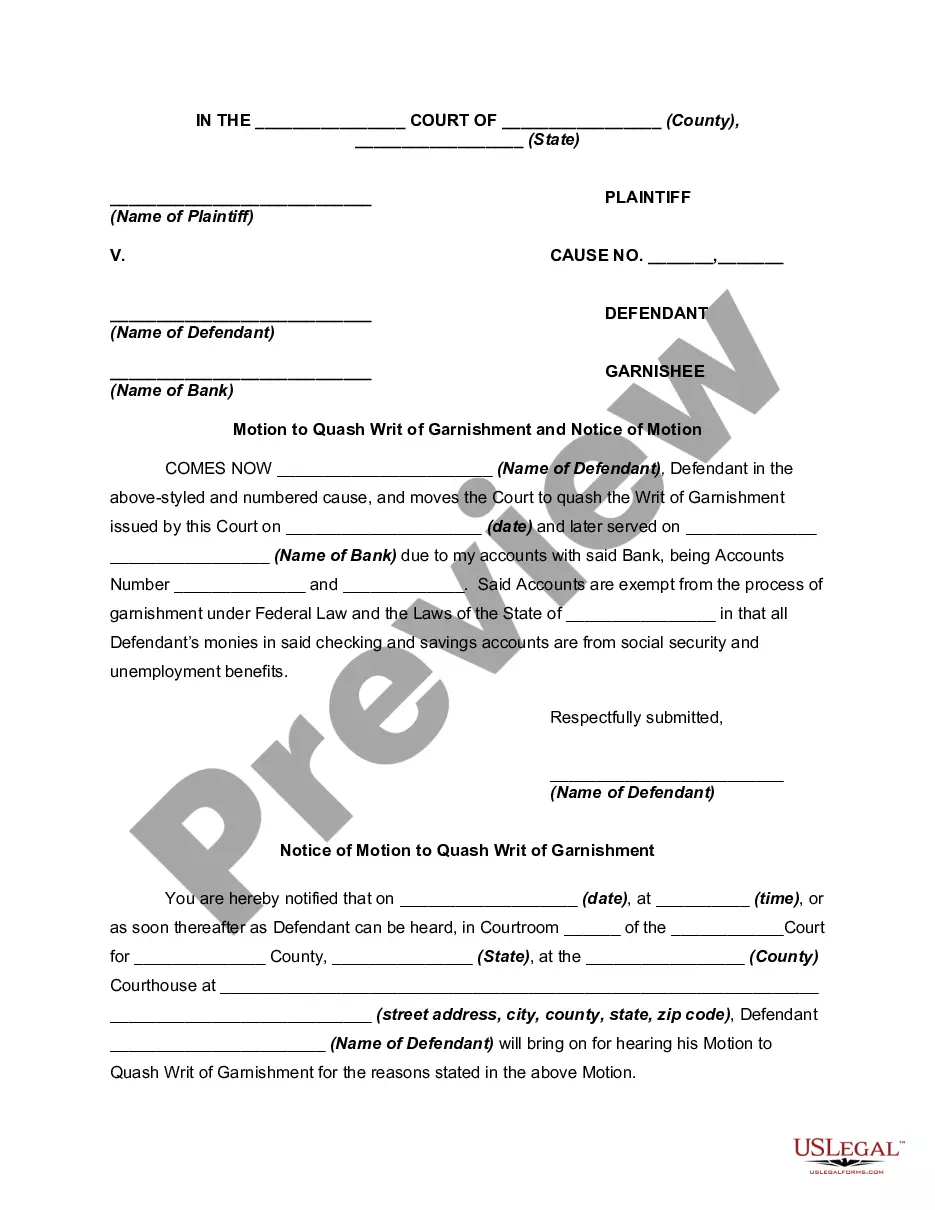
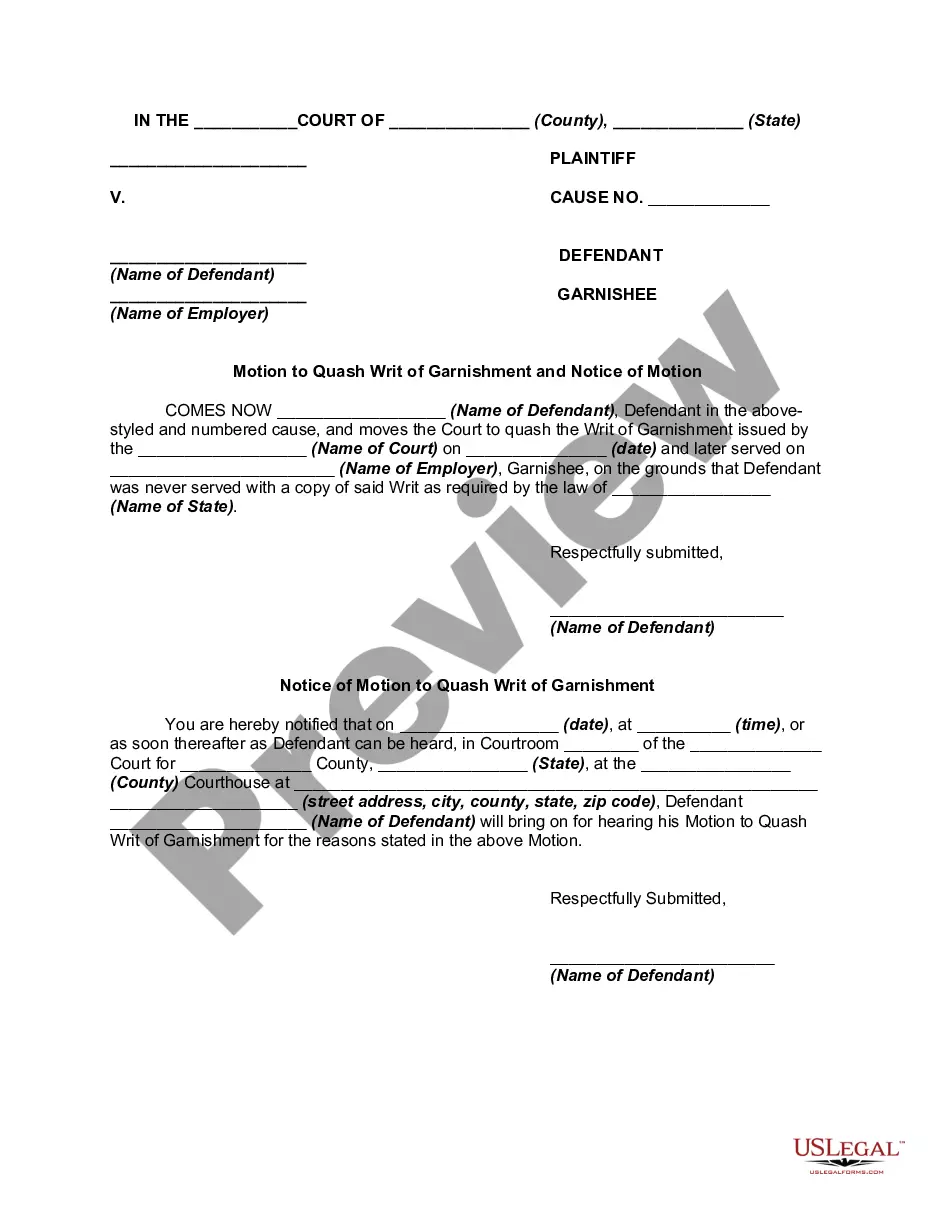
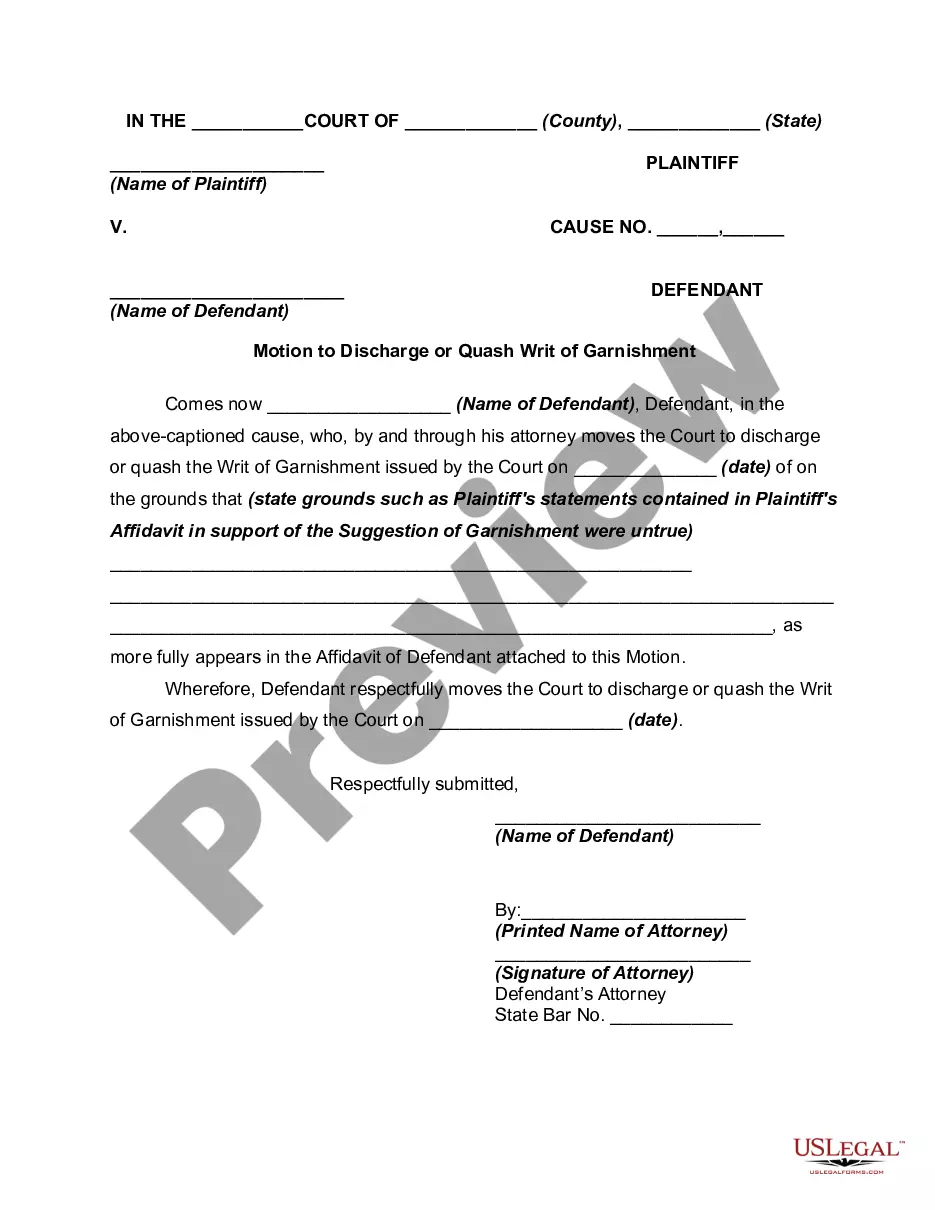
Get your form ready online
Our built-in tools help you complete, sign, share, and store your documents in one place.
Make edits, fill in missing information, and update formatting in US Legal Forms—just like you would in MS Word.
Download a copy, print it, send it by email, or mail it via USPS—whatever works best for your next step.
Sign and collect signatures with our SignNow integration. Send to multiple recipients, set reminders, and more. Go Premium to unlock E-Sign.
If this form requires notarization, complete it online through a secure video call—no need to meet a notary in person or wait for an appointment.
We protect your documents and personal data by following strict security and privacy standards.

Make edits, fill in missing information, and update formatting in US Legal Forms—just like you would in MS Word.

Download a copy, print it, send it by email, or mail it via USPS—whatever works best for your next step.

Sign and collect signatures with our SignNow integration. Send to multiple recipients, set reminders, and more. Go Premium to unlock E-Sign.

If this form requires notarization, complete it online through a secure video call—no need to meet a notary in person or wait for an appointment.

We protect your documents and personal data by following strict security and privacy standards.
Looking for another form?





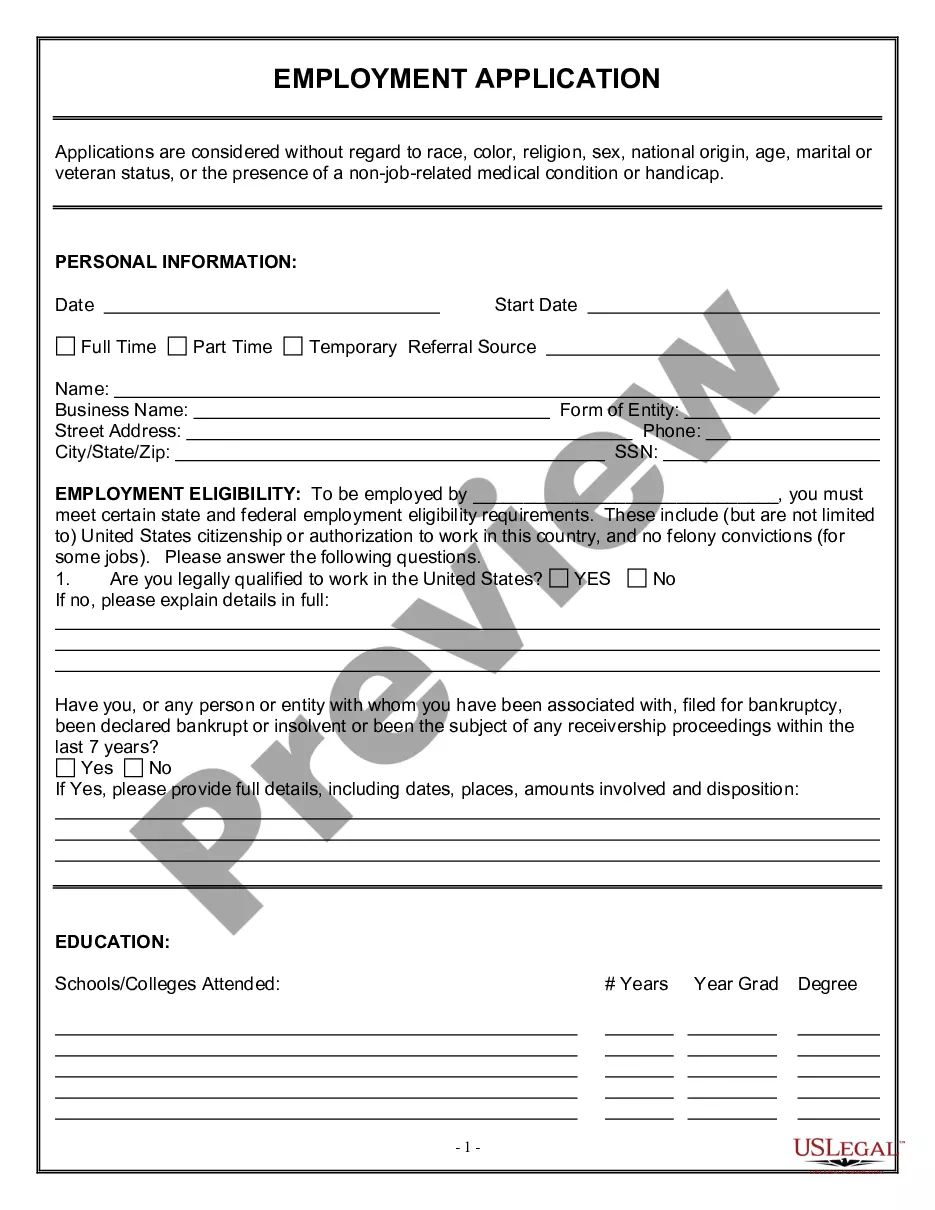
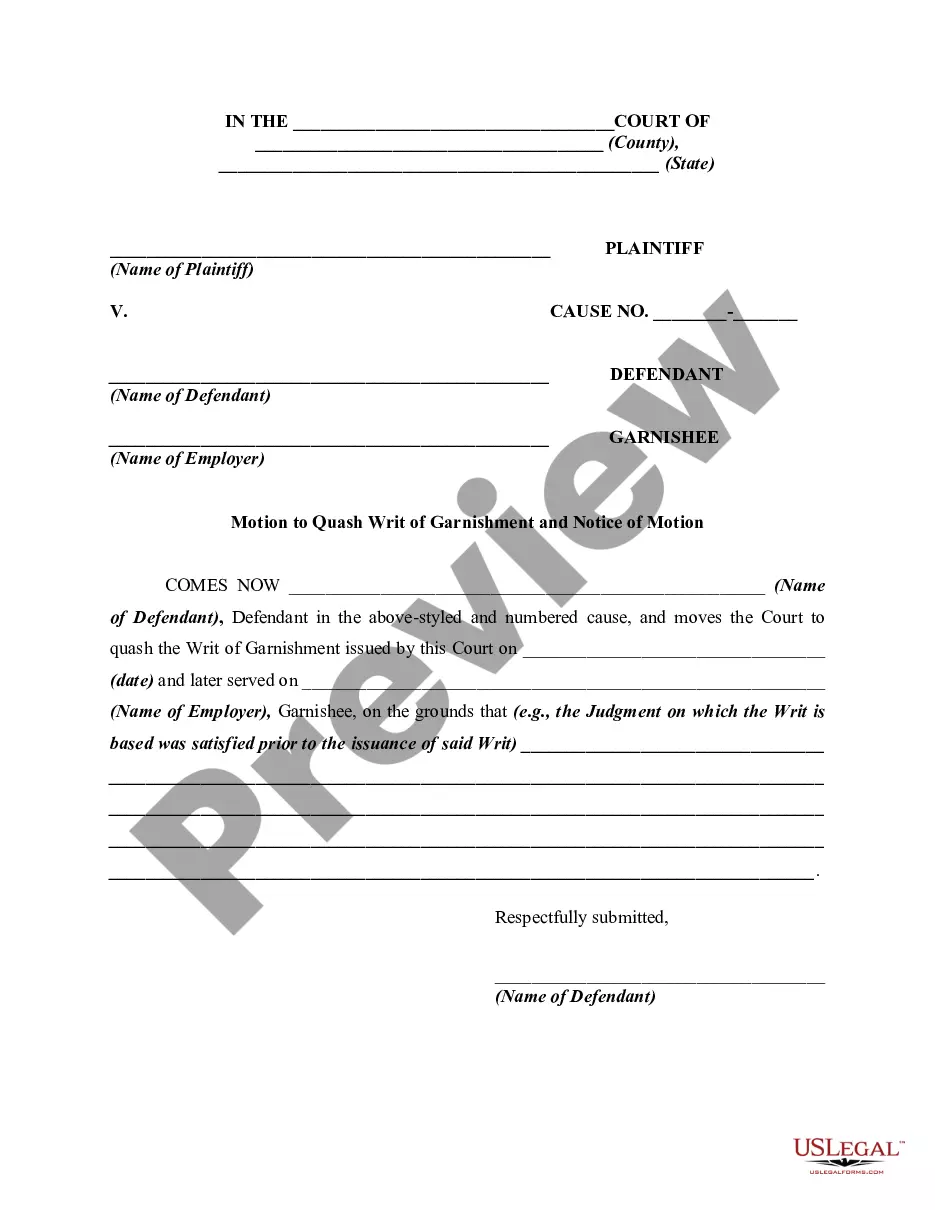
How to fill out Motion To Vacate Judgment, Quash Subpoena Duces Tecum, Dismiss Writ Of Garnishment, And For Leave To File An Answer To Complaint?
Regardless of whether for corporate reasons or personal matters, everyone encounters legal circumstances at some stage in their lifetime.
Completing legal documents requires meticulous care, beginning with choosing the appropriate form template. For example, if you select an incorrect version of the Sample Motion To Vacate Default Without Notice, it will be denied upon submission.
With an extensive US Legal Forms catalog accessible, you will never need to waste time searching for the correct sample across the web. Take advantage of the library’s user-friendly navigation to find the suitable template for any scenario.
- Obtain the template you require by using the search bar or catalog browsing.
- Review the form’s details to ensure it corresponds with your case, jurisdiction, and area.
- Click on the form’s preview to examine it.
- If it is the wrong document, return to the search tool to locate the Sample Motion To Vacate Default Without Notice template you need.
- Acquire the template if it satisfies your requirements.
- If you already possess a US Legal Forms account, simply click Log in to access previously stored documents in My documents.
- In case you do not have an account yet, you may purchase the form by clicking Buy now.
- Choose the appropriate payment option.
- Fill out the registration form.
- Choose your payment method: use a credit card or PayPal account.
- Select the file format you desire and download the Sample Motion To Vacate Default Without Notice.
- Once saved, you can complete the form using editing software or print it out to fill it out manually.
Form popularity
FAQ
Some Vermont Probate records are available through the subscription service Ancestry.com. Vermont residents can research and print Vermont probate for free on Ancestry.com through an account on MyVermont.gov.
No, in Vermont, you do not need to notarize your will to make it legal. However, Vermont allows you to make your will "self-proving" and you'll need to go to a notary if you want to do that. A self-proving will speeds up probate because the court can accept the will without contacting the witnesses who signed it.
You may file your will for safekeeping with the probate court in the county in which you reside. You may also file any amendments to the original will (codicils). There is a fee to file your will with the court.
Do All Estates Have to Go Through Probate in Vermont? Most estates in Vermont will need to go through probate. Unless they are included in a living trust, they will need to go through a legal process to have the assets transferred to the heirs.
Creating a Will in Vermont There are certain requirements which must be met for a will made in Vermont to be considered legal. The law requires that: The maker of the will (called the testator) be at least eighteen (18) years old and of sound mind. The will must be written.
You can contact the court by phone, in writing, in person, or by sending an email to JUD.VJB@vermont.gov. A motion is a request in writing asking the court to consider doing something specific in your case. All motions must identify the request and give specific reasons for the request.
Visit the Vermont Judiciary website at judiciary.vermont.gov. Look for the "Public Portal" or "Case Search" option on the website's homepage and click on it.