Dismiss Writ For Eviction
Description
Get your form ready online
Our built-in tools help you complete, sign, share, and store your documents in one place.
Make edits, fill in missing information, and update formatting in US Legal Forms—just like you would in MS Word.
Download a copy, print it, send it by email, or mail it via USPS—whatever works best for your next step.
Sign and collect signatures with our SignNow integration. Send to multiple recipients, set reminders, and more. Go Premium to unlock E-Sign.
If this form requires notarization, complete it online through a secure video call—no need to meet a notary in person or wait for an appointment.
We protect your documents and personal data by following strict security and privacy standards.

Make edits, fill in missing information, and update formatting in US Legal Forms—just like you would in MS Word.

Download a copy, print it, send it by email, or mail it via USPS—whatever works best for your next step.

Sign and collect signatures with our SignNow integration. Send to multiple recipients, set reminders, and more. Go Premium to unlock E-Sign.

If this form requires notarization, complete it online through a secure video call—no need to meet a notary in person or wait for an appointment.

We protect your documents and personal data by following strict security and privacy standards.
Looking for another form?

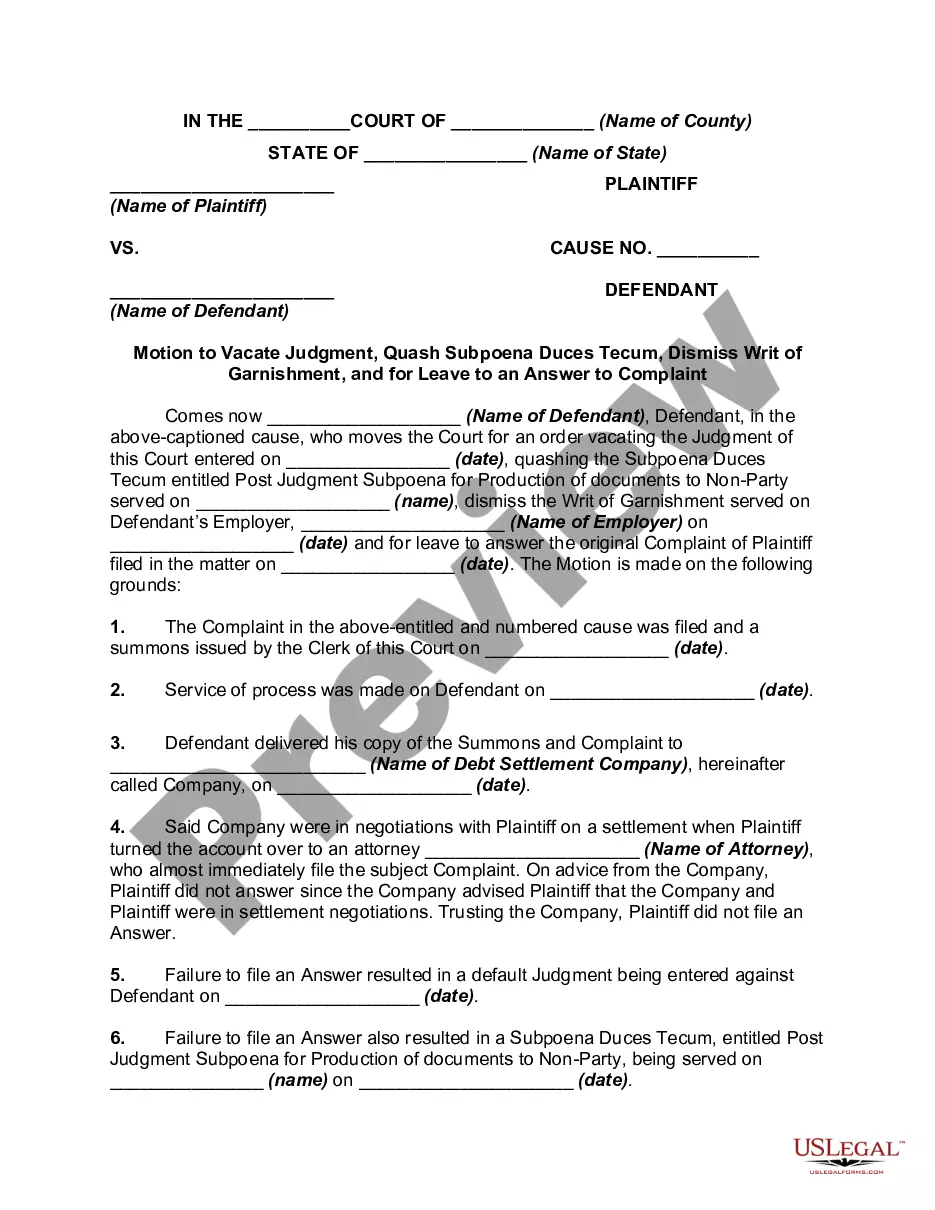
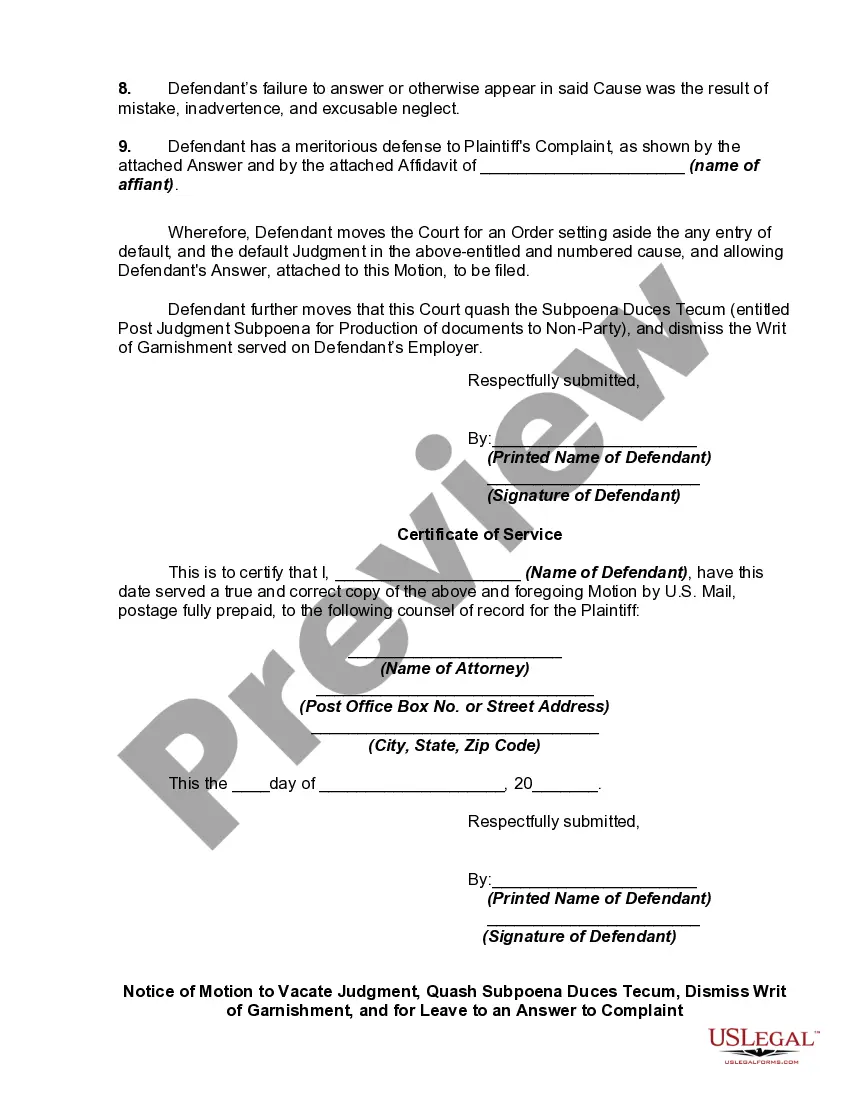
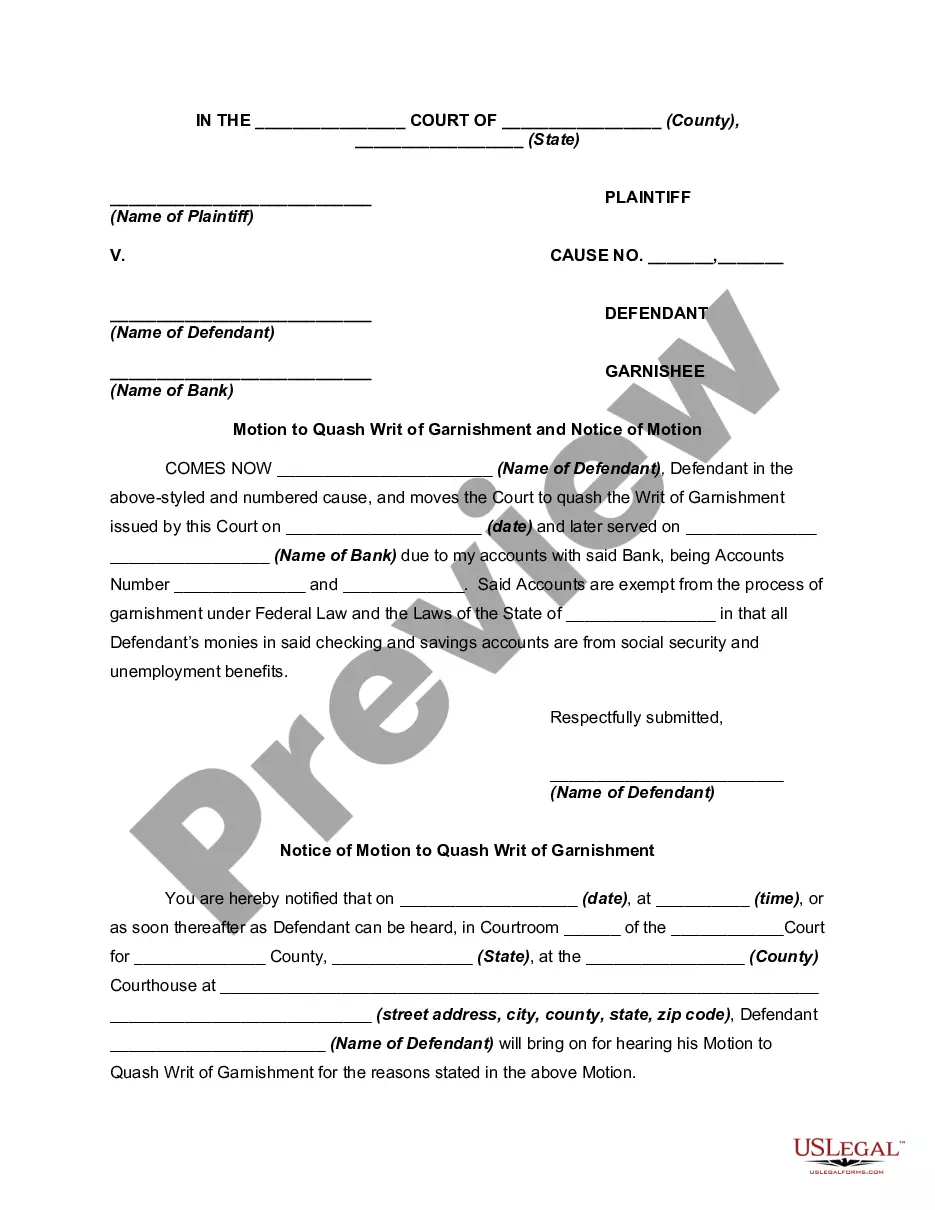
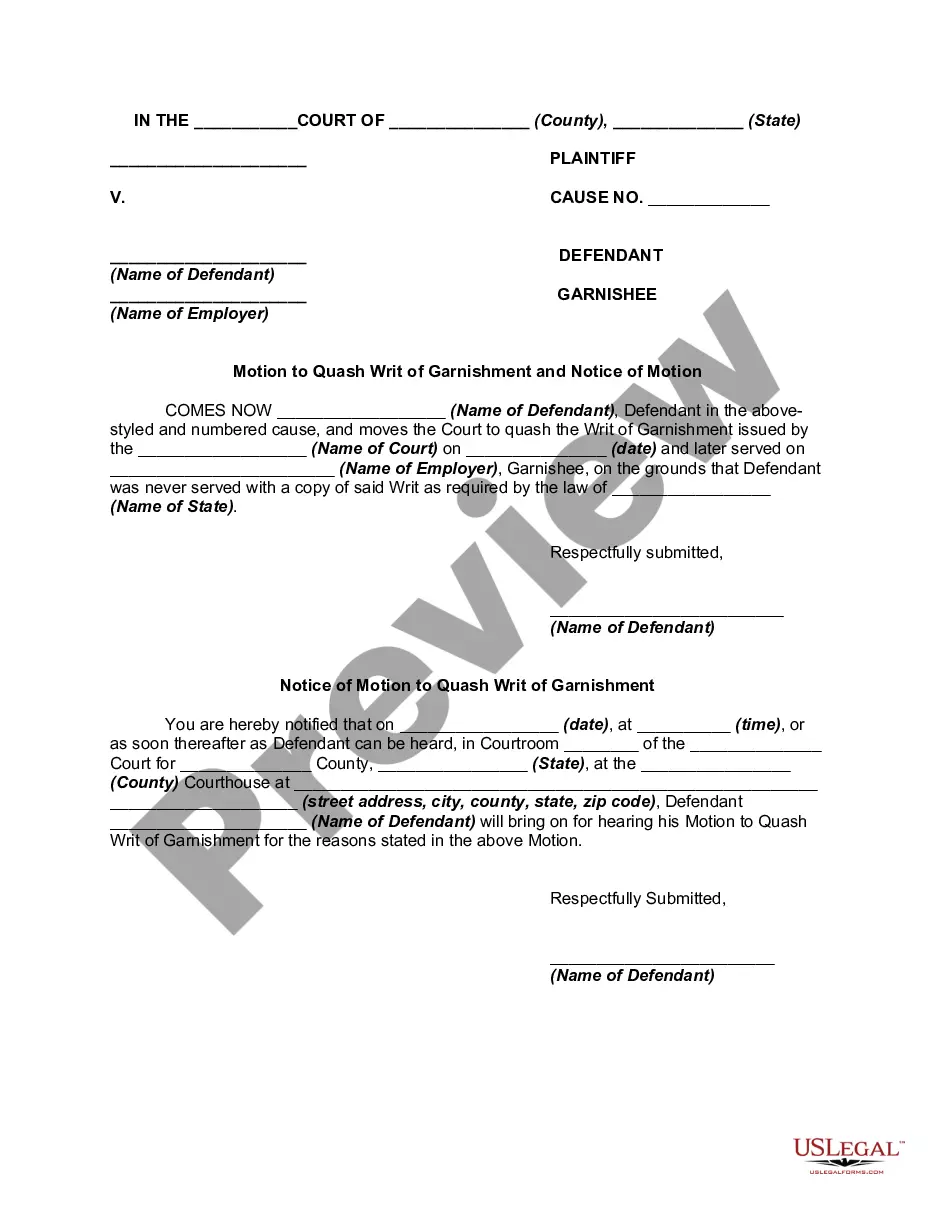
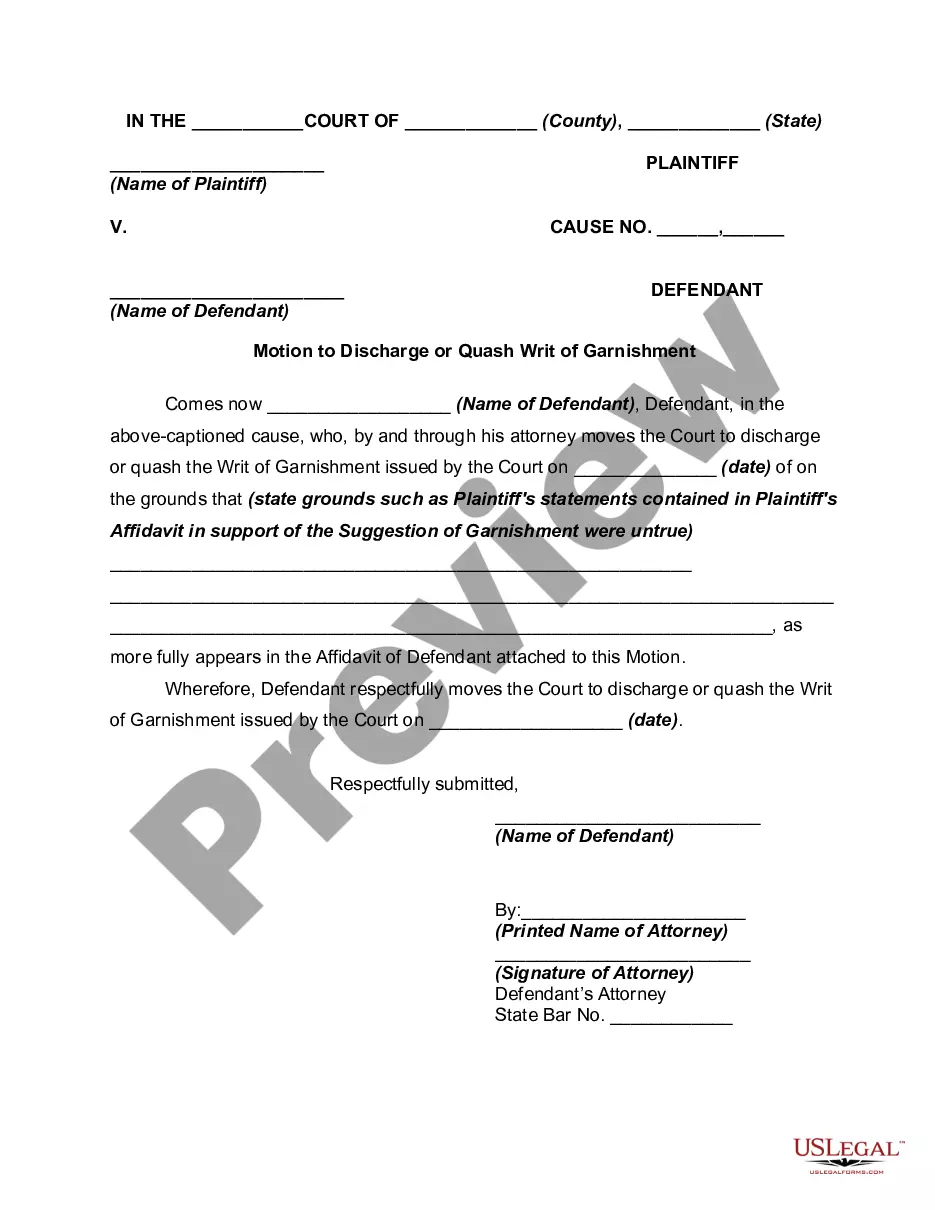
How to fill out Motion To Vacate Judgment, Quash Subpoena Duces Tecum, Dismiss Writ Of Garnishment, And For Leave To File An Answer To Complaint?
Regardless of whether for corporate reasons or personal affairs, every individual must confront legal circumstances at some point in their existence.
Completing legal documents requires meticulous consideration, beginning with selecting the appropriate form template.
With a vast US Legal Forms repository at your disposal, you won’t need to waste time searching for the correct template across the internet. Use the library’s user-friendly navigation to find the right document for any situation.
- Locate the template you require by leveraging the search bar or directory navigation.
- Review the document’s description to ensure it aligns with your circumstances, state, and locality.
- Select the document’s preview to inspect it.
- If it is the incorrect document, return to the search option to find the Dismiss Writ For Eviction template you require.
- Obtain the form once it satisfies your criteria.
- If you already possess a US Legal Forms account, simply click Log in to access previously stored documents in My documents.
- In case you do not have an account yet, you can acquire the document by clicking Buy now.
- Select the suitable pricing alternative.
- Complete the account registration form.
- Choose your payment method: either use a credit card or a PayPal account.
- Select the file format you prefer and download the Dismiss Writ For Eviction.
- Once saved, you can complete the form using editing software or print it and finish it manually.
Form popularity
FAQ
The procedure followed is as under: The landlord who seeks to evict his tenant files an ejectment petition before the Rent Controller (RC), based on grounds mentioned in the Act. If the Rent Controller is satisfied that there is sufficient cause to entertain the landlord's petition, he issues summons to the tenant.
The procedure followed is as under: The landlord who seeks to evict his tenant files an ejectment petition before the Rent Controller (RC), based on grounds mentioned in the Act. If the Rent Controller is satisfied that there is sufficient cause to entertain the landlord's petition, he issues summons to the tenant.
Any such lawsuit would cost few lakhs. It depends on the lawyer you hire and depends on how much the tenant is will be pay his lawyer. The lawyer fees vary from Rs 500 per hour to Rs 50,000 or even higher.
In India, eviction of a tenant without a court order is illegal. ... Here are the steps involved in evicting a tenant through the legal process: Serve a legal notice: The first step is to serve a legal notice to the tenant stating the reason for eviction and giving a reasonable time to vacate the property.
Evicting a tenant is only possible when the lease ends or when the landlord cancels the lease by providing a formal notice under Section 106 of the Transfer of Property Act, 1882, and if the tenant still refuses to vacate, the landlord will have to file a lawsuit and get an order from the court.