Foreclosure Redemption Period Without
Description
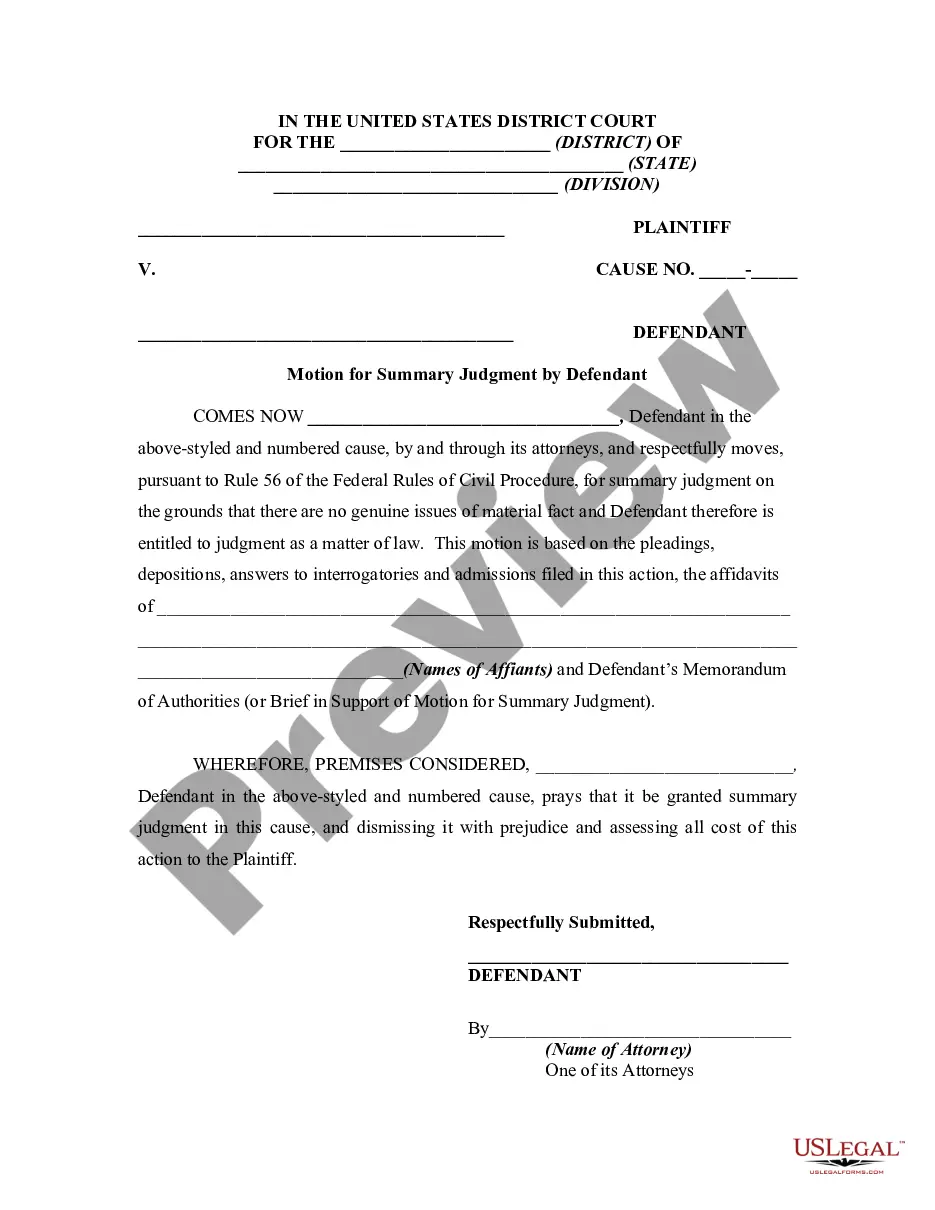
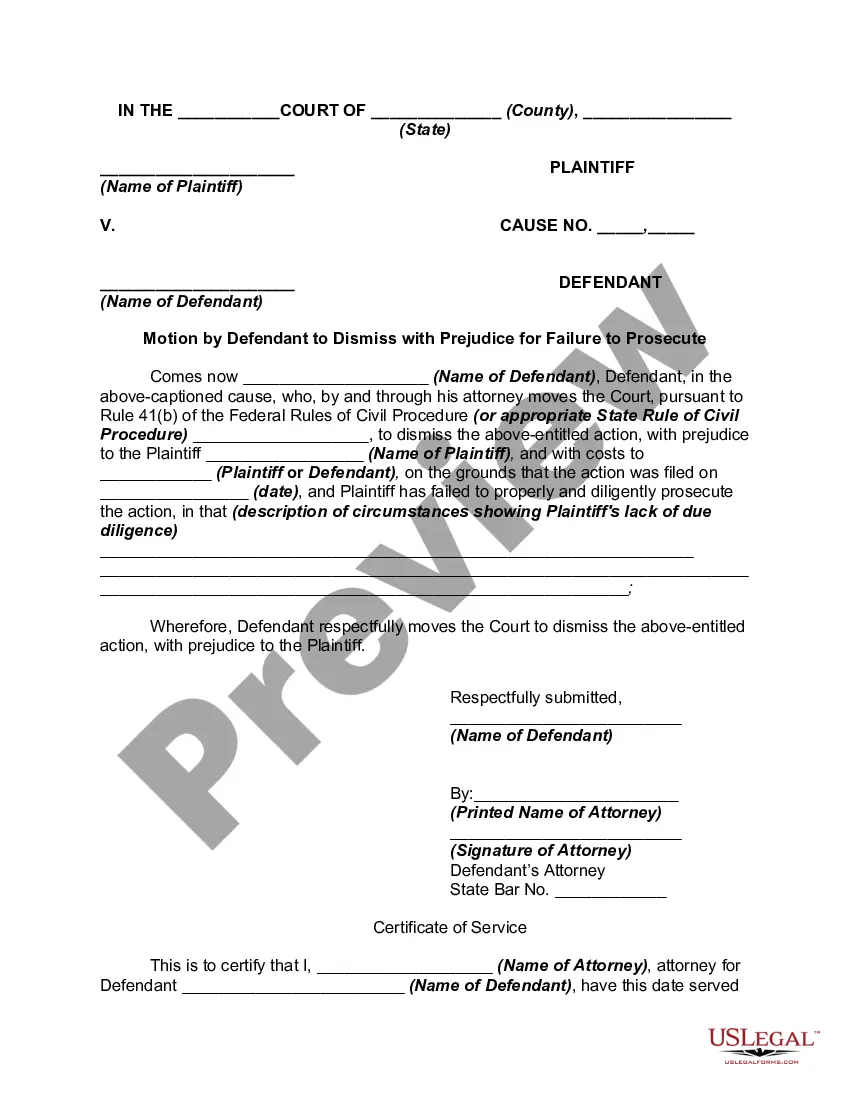
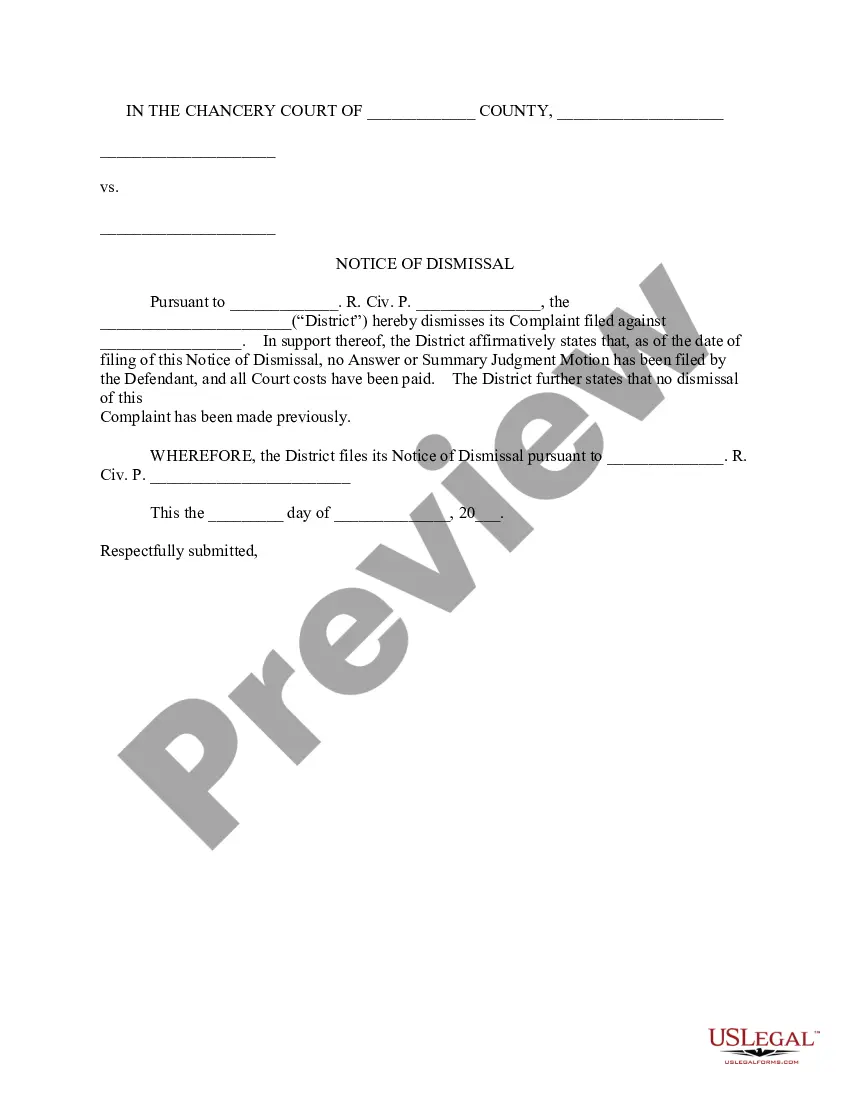
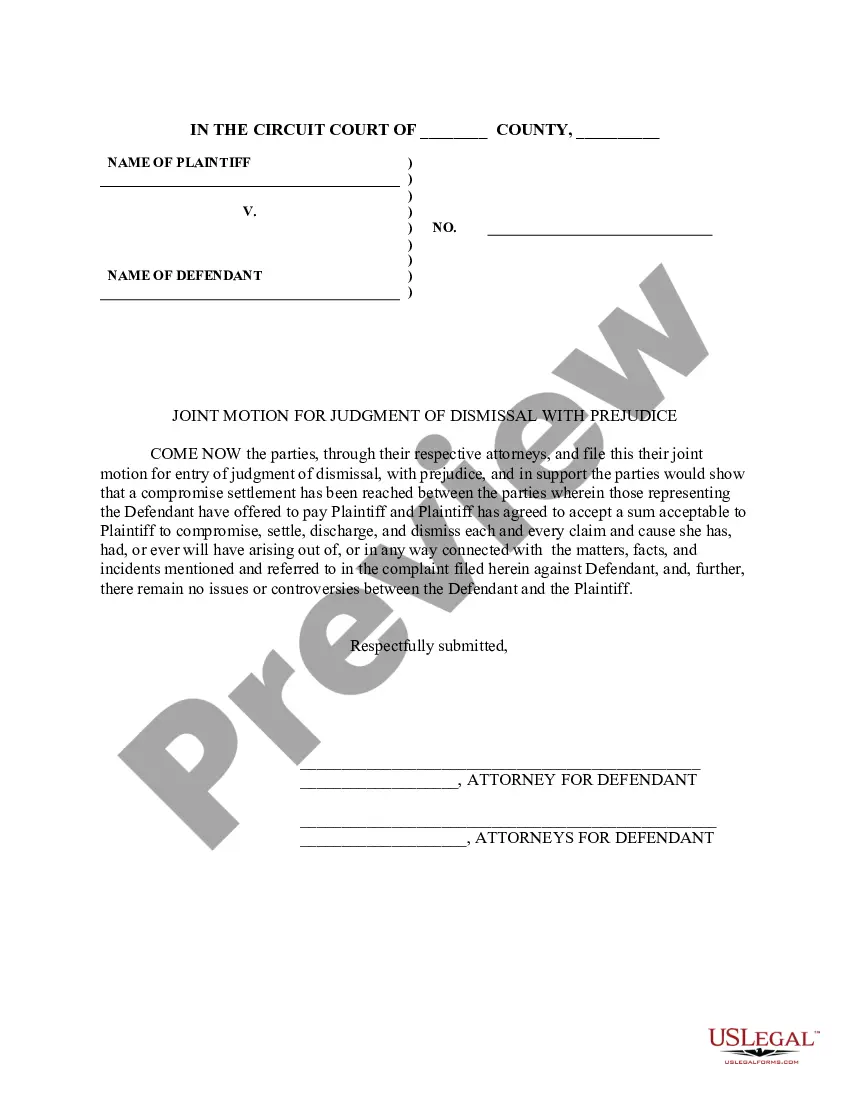
Get your form ready online
Our built-in tools help you complete, sign, share, and store your documents in one place.
Make edits, fill in missing information, and update formatting in US Legal Forms—just like you would in MS Word.
Download a copy, print it, send it by email, or mail it via USPS—whatever works best for your next step.
Sign and collect signatures with our SignNow integration. Send to multiple recipients, set reminders, and more. Go Premium to unlock E-Sign.
If this form requires notarization, complete it online through a secure video call—no need to meet a notary in person or wait for an appointment.
We protect your documents and personal data by following strict security and privacy standards.

Make edits, fill in missing information, and update formatting in US Legal Forms—just like you would in MS Word.

Download a copy, print it, send it by email, or mail it via USPS—whatever works best for your next step.

Sign and collect signatures with our SignNow integration. Send to multiple recipients, set reminders, and more. Go Premium to unlock E-Sign.

If this form requires notarization, complete it online through a secure video call—no need to meet a notary in person or wait for an appointment.

We protect your documents and personal data by following strict security and privacy standards.
Looking for another form?
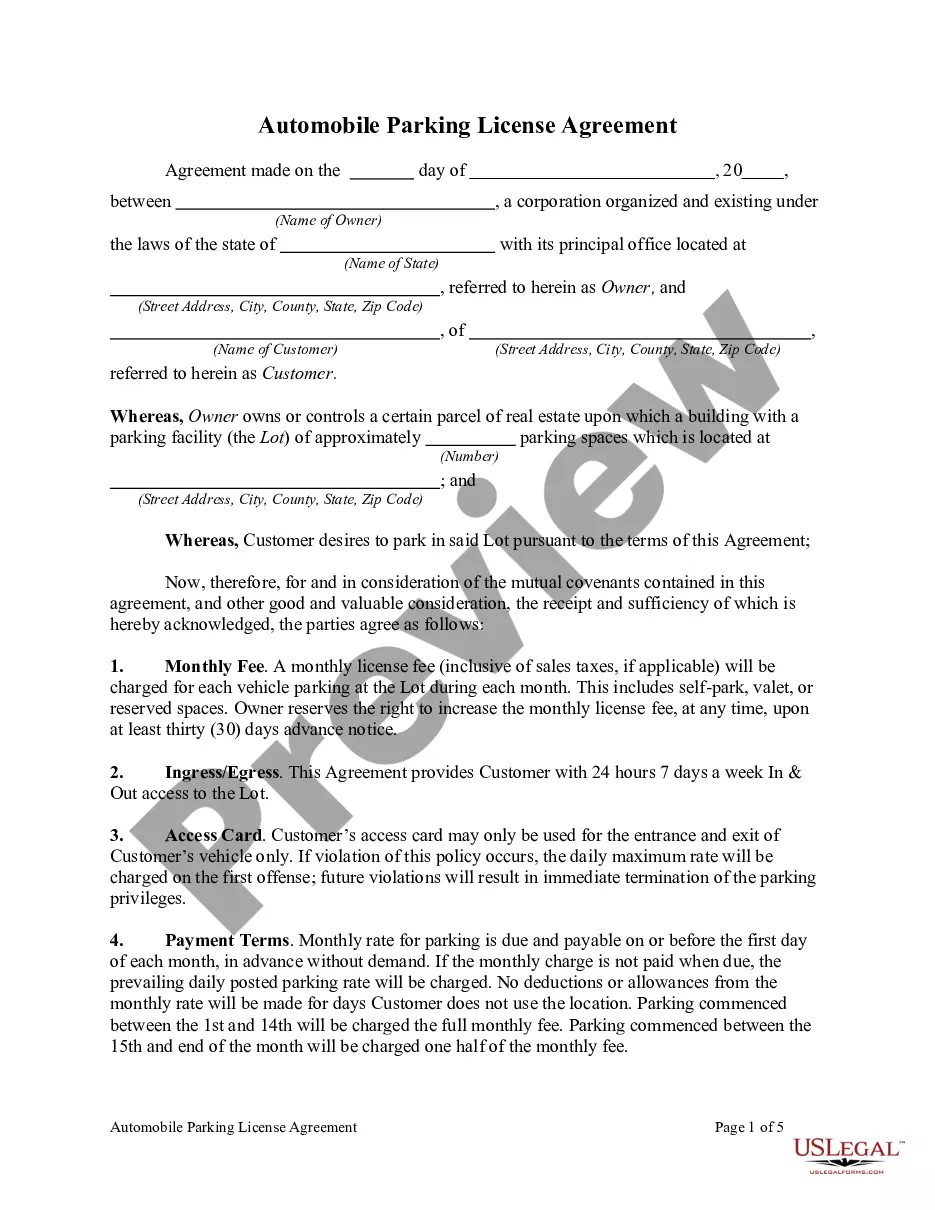

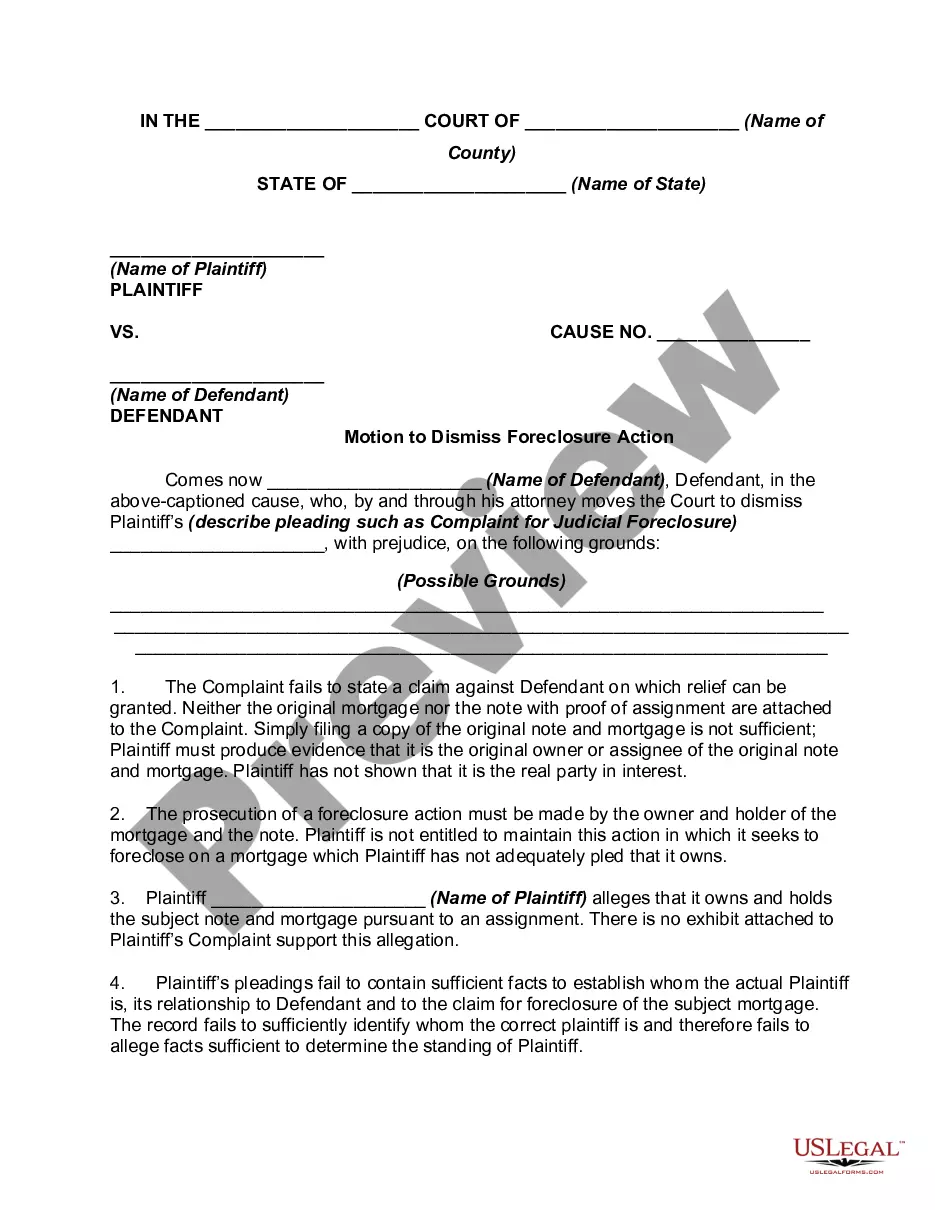
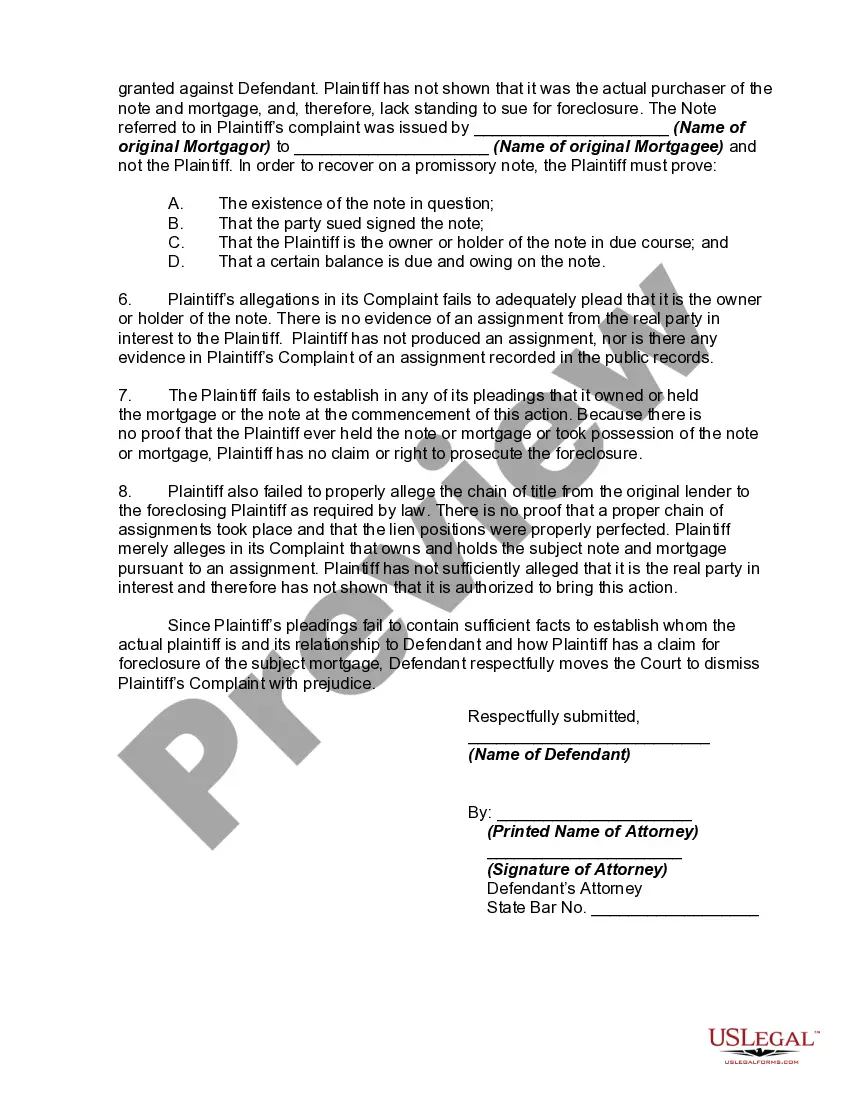
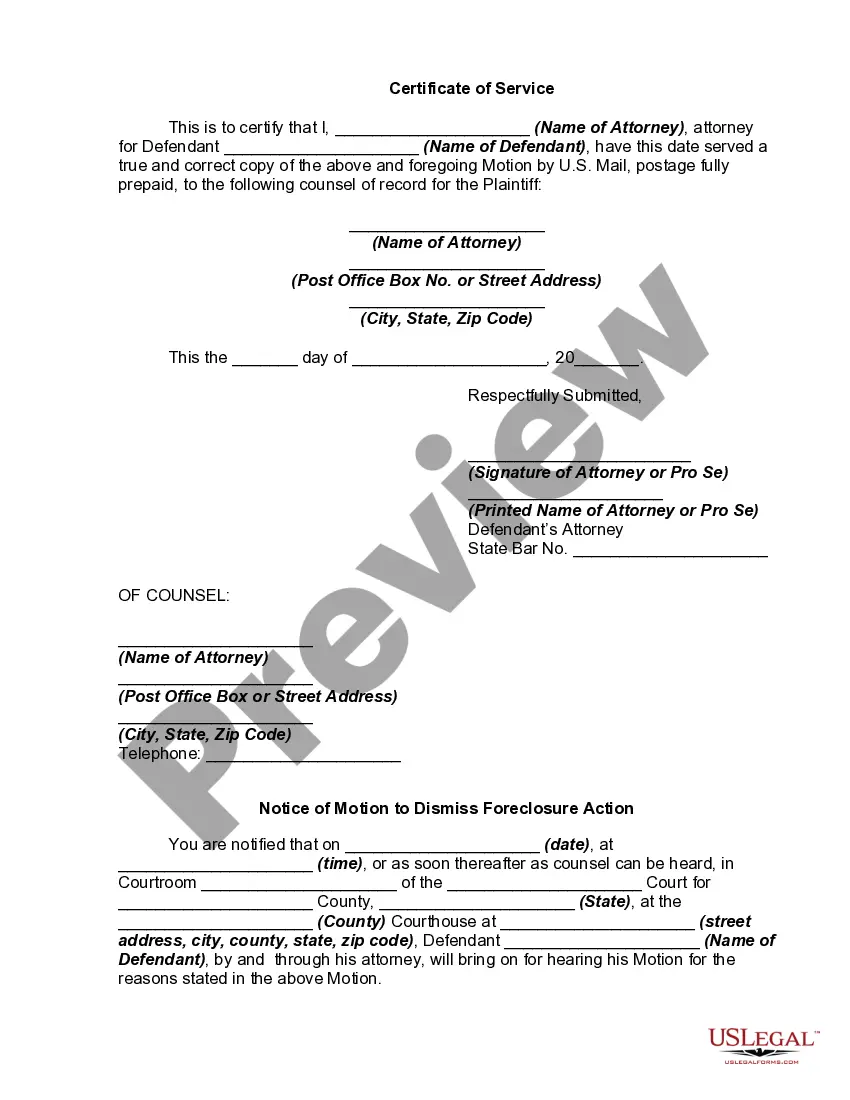
How to fill out Motion To Dismiss Foreclosure Action And Notice Of Motion?
Creating legal documents from the ground up can frequently be overwhelming.
Certain situations may require extensive research and significant expenses.
If you’re seeking a more straightforward and economical method for generating Foreclosure Redemption Period Without or other documents without unnecessary complications, US Legal Forms is readily available to assist you.
Our online collection of over 85,000 current legal forms covers nearly every facet of your financial, legal, and personal affairs. With just a few clicks, you can swiftly obtain state- and county-compliant templates expertly assembled by our legal professionals.
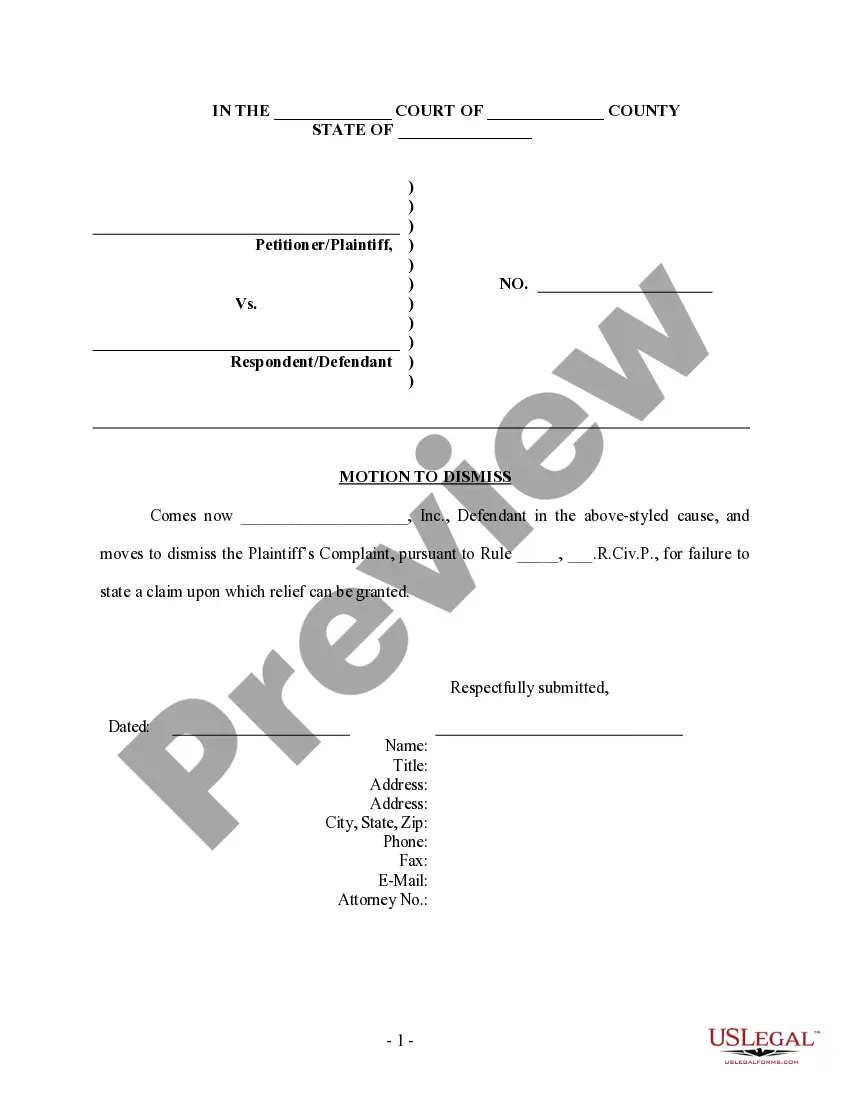
Review the form preview and descriptions to confirm that you are looking at the desired form. Ensure the selected form meets the specifications of your state and county. Choose the most appropriate subscription option to acquire the Foreclosure Redemption Period Without. Download the file, then complete, sign, and print it. US Legal Forms enjoys a solid reputation and over 25 years of expertise. Join us now and simplify your document execution process!
- Utilize our platform whenever you require dependable services to easily locate and download the Foreclosure Redemption Period Without.
- If you’ve previously registered with us, simply Log In to your account, find the form, and download it or re-download it anytime in the My documents section.
- Not signed up yet? No worries. Registering takes minimal time and facilitates browsing through the library.
- Before proceeding to download Foreclosure Redemption Period Without, follow these suggestions.
Form popularity
FAQ
Yes, you can sell your property during the foreclosure redemption period without any issues. However, it is important to have the sale proceeds cover your mortgage debt to complete the redemption successfully. This option can provide a viable way to manage your financial situation while avoiding losing your property. Additionally, understanding local regulations can help streamline the selling process during this critical time.
The period of redemption typically spans a set duration following a foreclosure sale, where a homeowner can reclaim their property. This period can last anywhere from a few weeks to several months, depending on state laws. During this time, homeowners should take action to settle outstanding debts and reclaim ownership. Understanding the foreclosure redemption period without knowing your rights can lead to missed opportunities.
Certain exceptions to the 120-day foreclosure rule may exist, depending on specific circumstances such as property types or borrower conditions. For example, some states may allow shorter redemption periods for certain properties, like vacant homes or investment properties. Additionally, if a borrower has made arrangements with the lender, this could also impact the timeline. It's crucial to review the foreclosure redemption period without overlooking these exceptions.
The five stages of a foreclosure action include pre-foreclosure, filing the notice of default, judicial proceedings, foreclosure auction, and redemption. Understanding these stages helps you navigate the process effectively. You can utilize resources like US Legal Forms to gather information and find assistance in managing your foreclosure redemption period without confusion.
Not all states offer a foreclosure redemption period without restrictions. Some states permit borrowers to redeem their property before the foreclosure sale, while others have strict guidelines. Familiarizing yourself with your state's laws can empower you to make informed decisions during this critical time.
Exceptions to the 120-day foreclosure rule often include specific circumstances where the lender may bypass this waiting period. Situations like bankruptcy filings or properties with vacant status may alter this timeline. Knowing these exceptions can assist you in managing your foreclosure redemption period without unnecessary delays.
The 37-day rule for foreclosure is a specific guideline that indicates how long you have to respond or make payments before your lender can begin the foreclosure process. During this time, it's essential to explore your options for avoiding foreclosure. Addressing the situation promptly may influence the foreclosure redemption period without losing your property.
The 37-day foreclosure rule refers to the time frame in which a borrower must take action to prevent foreclosure. Within this period, you can generally find options to address missed payments or negotiate a solution with your lender. Taking timely action can be crucial, especially as the foreclosure redemption period without proper intervention may lead to losing your home.
The right of redemption can typically be terminated by the mortgage lender or the court, depending on the state laws. Once the foreclosure process is completed and the property is sold, the borrower’s right to redeem is lost unless specific conditions apply. Understanding who has the authority to terminate this right is significant for a borrower dealing with foreclosure, especially regarding the foreclosure redemption period without.
You can indeed waive your right to redemption; however, this decision should not be taken lightly. Waiving this right means you forfeit your chance to reclaim your property after a foreclosure sale has occurred. Understanding the legal process and potential consequences is essential, and platforms like US Legal Forms can guide you through your options regarding the foreclosure redemption period without regret.