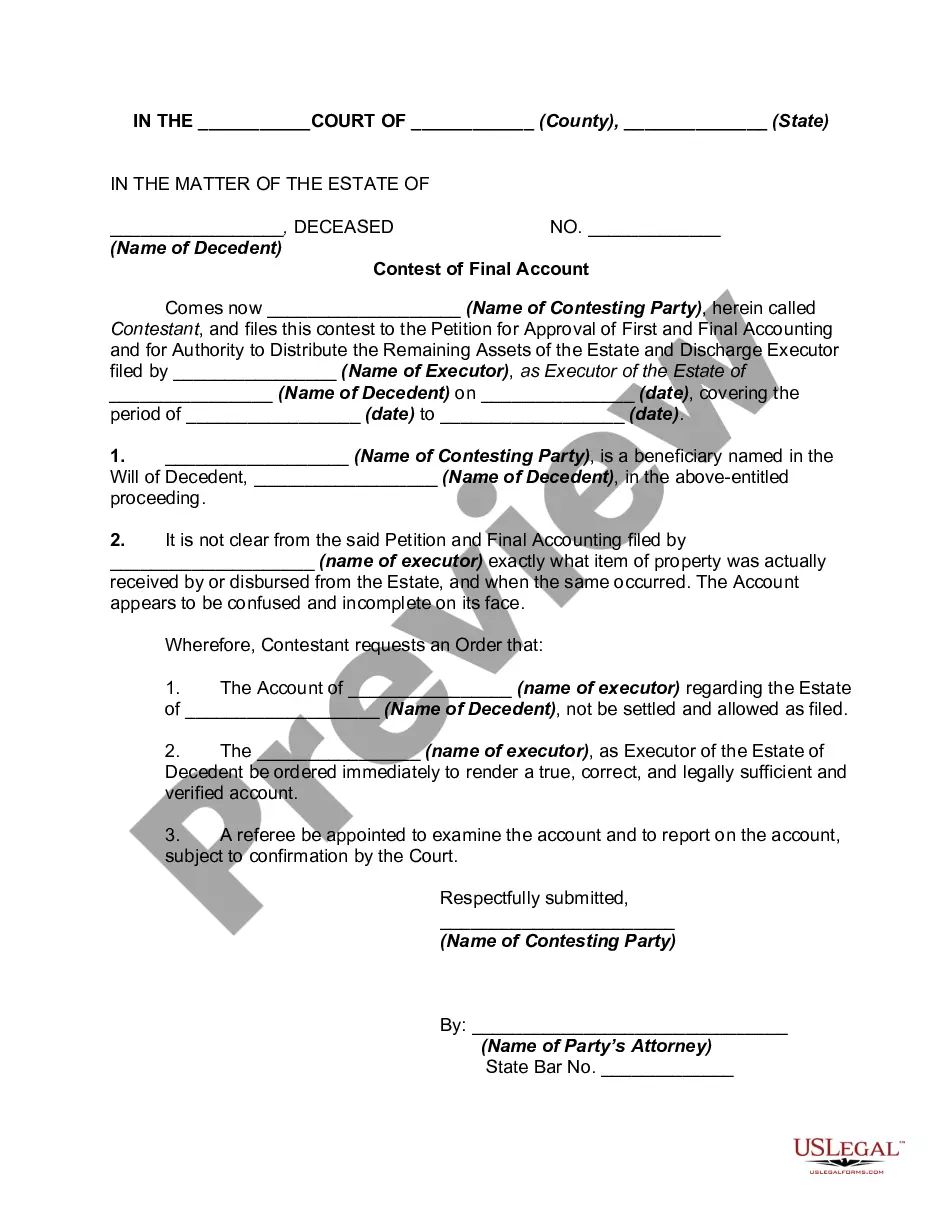
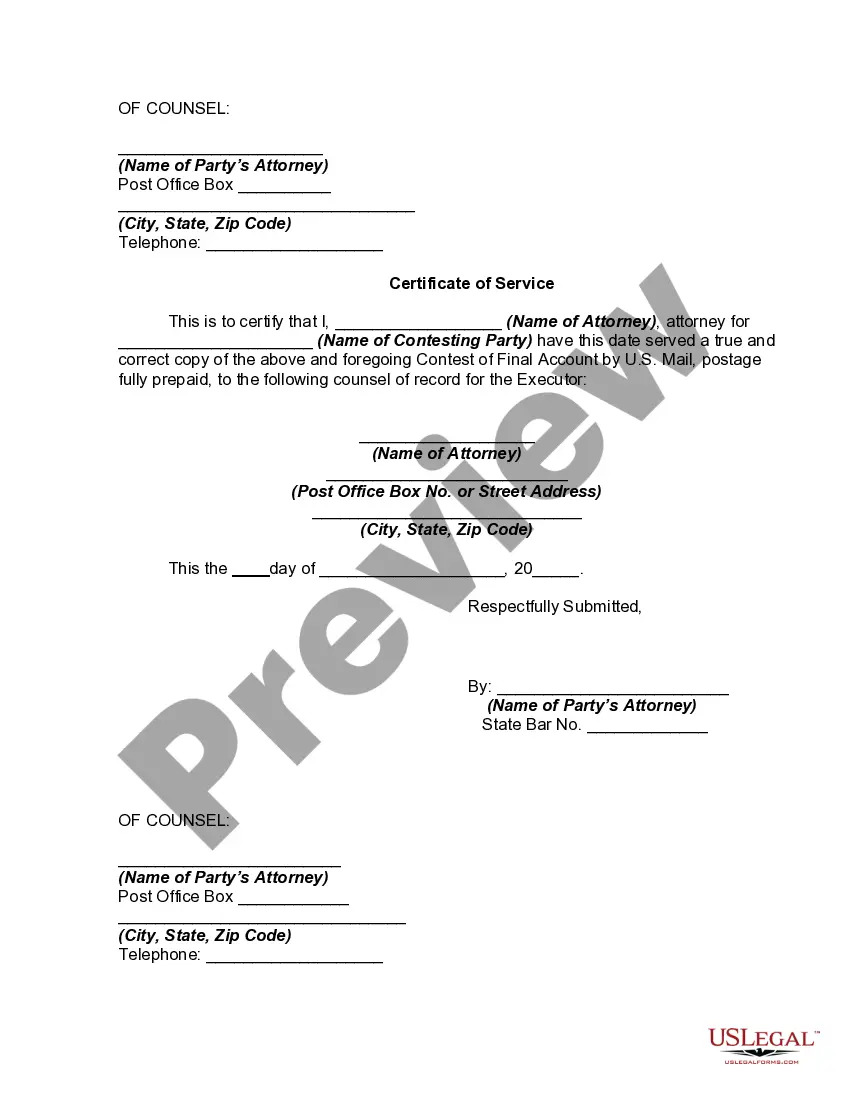
Final Account Probate Estate Form Ny
Description
Get your form ready online
Our built-in tools help you complete, sign, share, and store your documents in one place.
Make edits, fill in missing information, and update formatting in US Legal Forms—just like you would in MS Word.
Download a copy, print it, send it by email, or mail it via USPS—whatever works best for your next step.
Sign and collect signatures with our SignNow integration. Send to multiple recipients, set reminders, and more. Go Premium to unlock E-Sign.
If this form requires notarization, complete it online through a secure video call—no need to meet a notary in person or wait for an appointment.
We protect your documents and personal data by following strict security and privacy standards.

Make edits, fill in missing information, and update formatting in US Legal Forms—just like you would in MS Word.

Download a copy, print it, send it by email, or mail it via USPS—whatever works best for your next step.

Sign and collect signatures with our SignNow integration. Send to multiple recipients, set reminders, and more. Go Premium to unlock E-Sign.

If this form requires notarization, complete it online through a secure video call—no need to meet a notary in person or wait for an appointment.

We protect your documents and personal data by following strict security and privacy standards.
Looking for another form?

How to fill out Contest Of Final Account And Proposed Distributions In A Probate Estate?
Getting a go-to place to take the most current and relevant legal templates is half the struggle of handling bureaucracy. Finding the right legal papers demands precision and attention to detail, which is the reason it is very important to take samples of Final Account Probate Estate Form Ny only from trustworthy sources, like US Legal Forms. A wrong template will waste your time and delay the situation you are in. With US Legal Forms, you have very little to worry about. You may access and check all the details concerning the document’s use and relevance for the situation and in your state or county.
Consider the listed steps to finish your Final Account Probate Estate Form Ny:
- Use the catalog navigation or search field to locate your template.
- View the form’s description to ascertain if it matches the requirements of your state and area.
- View the form preview, if available, to ensure the form is definitely the one you are interested in.
- Go back to the search and find the correct document if the Final Account Probate Estate Form Ny does not match your needs.
- If you are positive regarding the form’s relevance, download it.
- If you are an authorized user, click Log in to authenticate and gain access to your picked templates in My Forms.
- If you do not have a profile yet, click Buy now to obtain the form.
- Choose the pricing plan that fits your requirements.
- Go on to the registration to complete your purchase.
- Complete your purchase by choosing a payment method (credit card or PayPal).
- Choose the file format for downloading Final Account Probate Estate Form Ny.
- When you have the form on your gadget, you may alter it using the editor or print it and complete it manually.
Get rid of the hassle that comes with your legal paperwork. Explore the comprehensive US Legal Forms library where you can find legal templates, examine their relevance to your situation, and download them on the spot.
Form popularity
FAQ
Ing to New York state law, all estates worth over $50,000 are subject to go through probate. However, there are some instances where certain assets like: Insurance policies, joint accounts, assets in a living trust, assets held in joint tenancy are all not subject to probate in New York.
New York state probate law determines that estates that fall under the value of $50,000 don't need to enter into this process. These amounts can vary based on the county and will also increase based on whether the person is married or has children.
Different stages of final account of a company are: Prepare trial balance. Adjusting the trial balance. Preparing adjusted trial balance. Prepare financial statements. Closing the books.
An executor of a deceased person's estate typically has to show an accounting of the estate to the beneficiaries and heirs unless the beneficiaries and heirs waive their privilege. The accounting is a way to prove the executor settled the estate legally and as the deceased intended.
An informal accounting for an estate is a document that outlines the financial activities of the estate. This type of accounting is often used to prepare financial statements of affairs. It includes details about assets and liabilities, income and expenses, donations or transfers from the estate, and tax information.