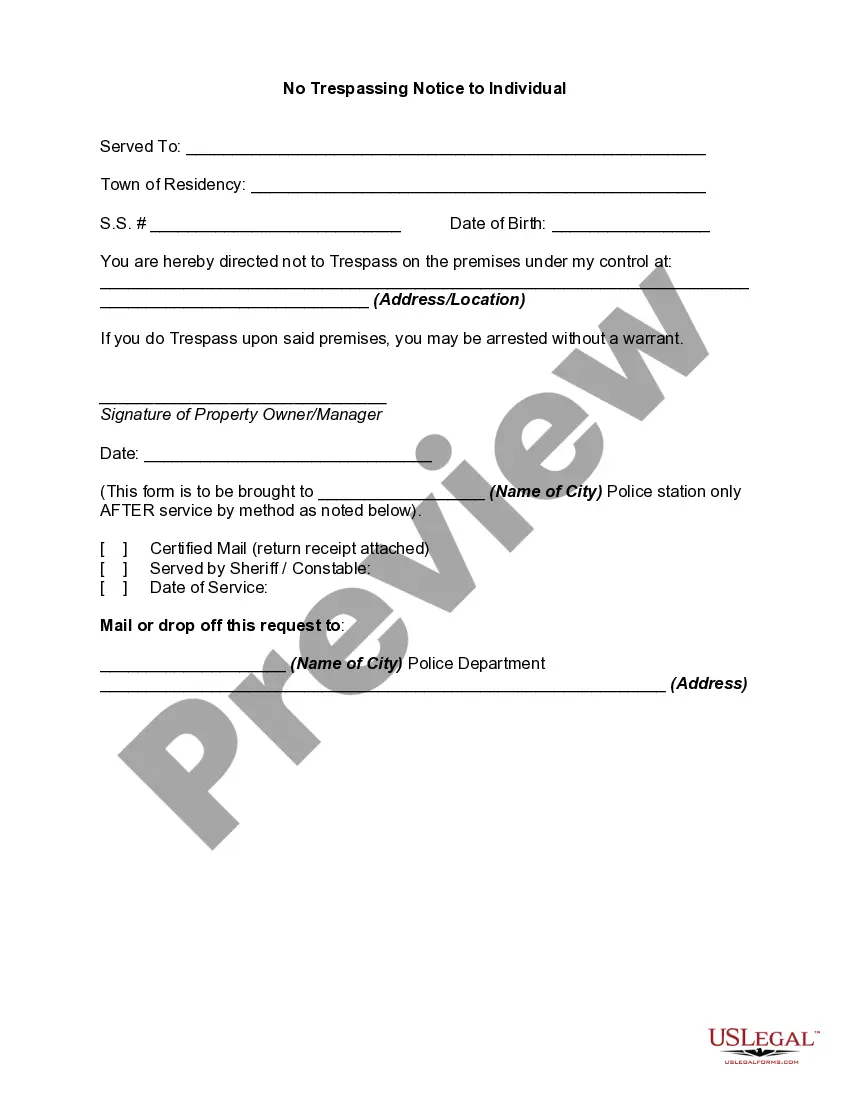
No Trespassing Order In Virginia
Description
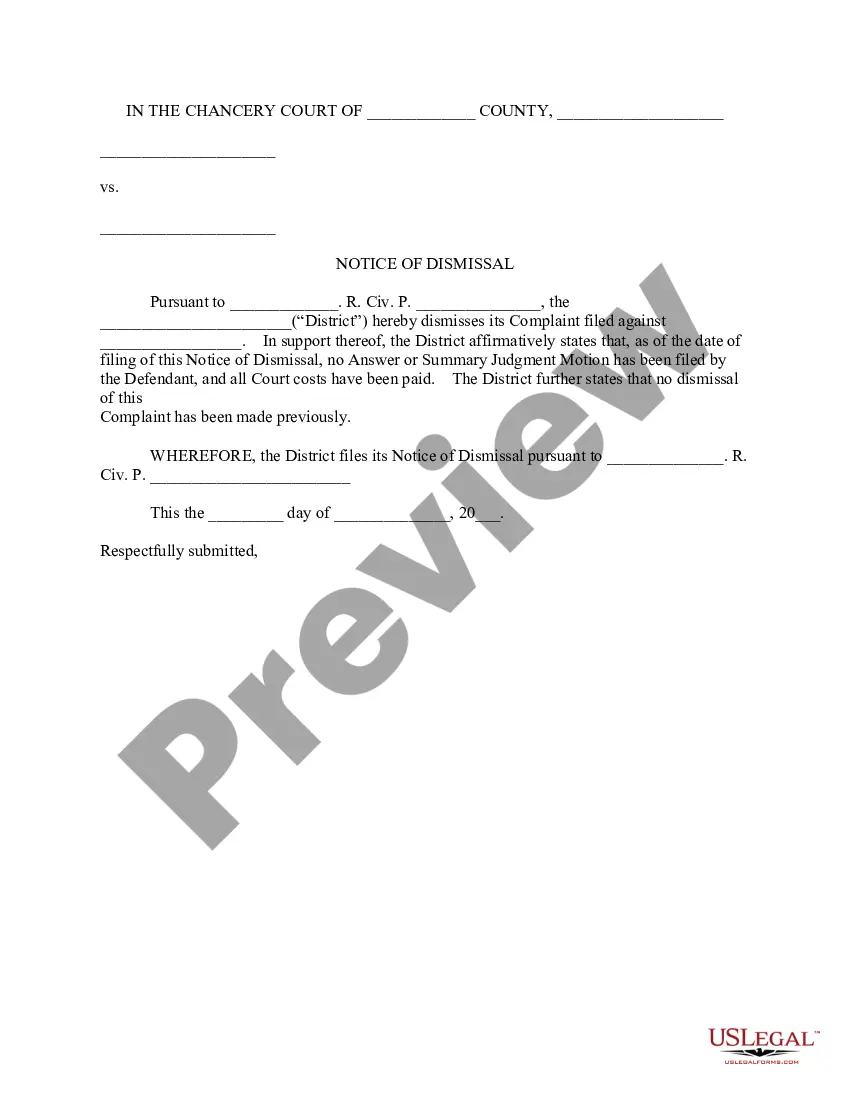
Get your form ready online
Our built-in tools help you complete, sign, share, and store your documents in one place.
Make edits, fill in missing information, and update formatting in US Legal Forms—just like you would in MS Word.
Download a copy, print it, send it by email, or mail it via USPS—whatever works best for your next step.
Sign and collect signatures with our SignNow integration. Send to multiple recipients, set reminders, and more. Go Premium to unlock E-Sign.
If this form requires notarization, complete it online through a secure video call—no need to meet a notary in person or wait for an appointment.
We protect your documents and personal data by following strict security and privacy standards.

Make edits, fill in missing information, and update formatting in US Legal Forms—just like you would in MS Word.

Download a copy, print it, send it by email, or mail it via USPS—whatever works best for your next step.

Sign and collect signatures with our SignNow integration. Send to multiple recipients, set reminders, and more. Go Premium to unlock E-Sign.

If this form requires notarization, complete it online through a secure video call—no need to meet a notary in person or wait for an appointment.

We protect your documents and personal data by following strict security and privacy standards.
Looking for another form?
How to fill out No Trespassing Notice To Individual?
Acquiring legal document examples that conform to federal and state regulations is crucial, and the web presents numerous choices to consider.
However, what is the benefit of spending time searching for the properly drafted No Trespassing Order In Virginia sample online when the US Legal Forms digital library already provides such templates gathered in one location.
US Legal Forms is the most extensive online legal catalog featuring over 85,000 fillable templates created by attorneys for various business and personal situations.
Review the template using the Preview function or via the text outline to verify it fulfills your requirements.
- They are easy to navigate with all files categorized by state and intended use.
- Our specialists keep up with legislative updates, ensuring that your form is current and compliant when obtaining a No Trespassing Order In Virginia from our site.
- Acquiring a No Trespassing Order In Virginia is straightforward and quick for both existing and new users.
- If you possess an account with a valid subscription, Log In and save the document sample you need in the appropriate format.
- If you are a newcomer to our website, follow the steps outlined below.
Form popularity
FAQ
In Virginia, a no trespassing order typically remains in effect until the property owner revokes it or until there is a change in circumstance. To maintain its effectiveness, it is beneficial to renew the notice if you continue to experience issues. Keeping your records updated and accessible ensures clarity on the enforcement of your rights.
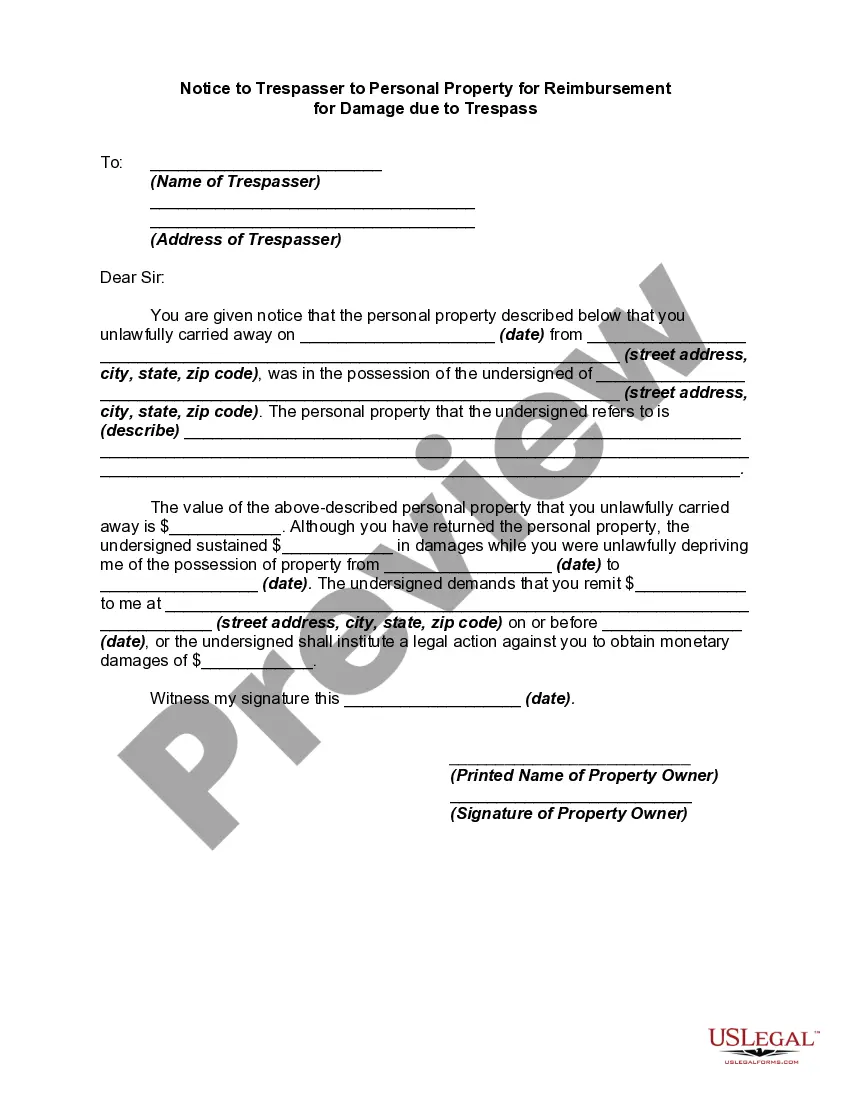
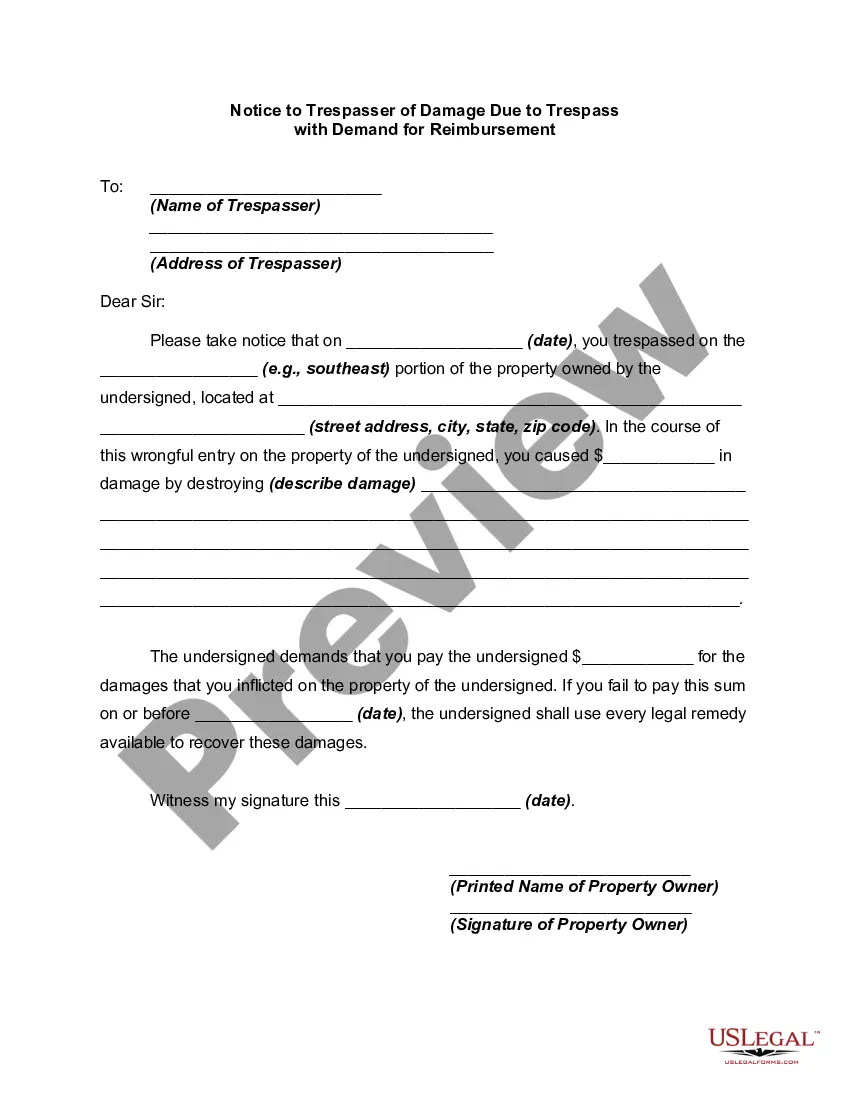
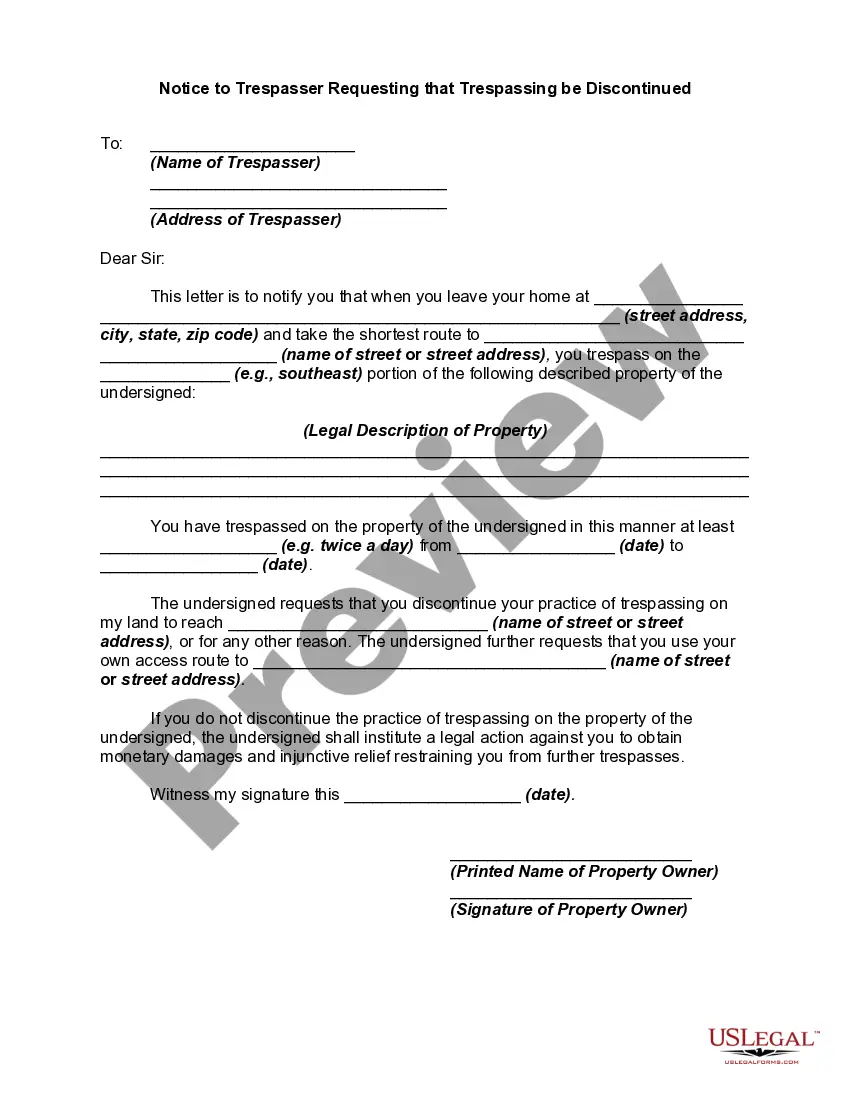
An example of a trespassing letter includes a clear statement of the trespassing situation, details about the property in question, and a polite but firm request for the person to stay off your property. This letter should also cite the consequences of continued violations of your no trespassing order in Virginia.
Filing a no trespass order in Virginia typically involves the completion of a documented notice and delivery to the individual involved. Additionally, you may want to keep copies for your records and consider notifying local law enforcement. In case you need guidance, platforms like US Legal Forms can assist you in this process.
To put someone on no trespass in Virginia, you should draft a no trespass order that outlines the individual's name and your property details. After writing it, make sure you deliver the order to the individual, either personally or by mail. Document the delivery method for your records, as this helps establish legitimacy.
When writing a certified letter for trespassing in Virginia, ensure you include your name and address, the recipient's name, and a clear statement about the trespassing incident. Detail the specific area where trespassing occurred and assert your demand that they cease and desist all unauthorized access. Send the letter via certified mail to have proof of delivery.
To write up a no trespassing order in Virginia, start with a formal heading indicating it is a no trespassing order. Next, outline the reasons for the order, include the recipient's name, and specify the prohibited areas clearly. Ending the document with your signature makes it official and enforceable.
In Virginia, no trespassing laws allow property owners to restrict access to their land. Under Virginia Code, individuals can post signs or give written notice to inform others that they are not welcome. Violating these laws can lead to legal repercussions, including fines or criminal charges.
To write a no trespass order in Virginia, begin by clearly stating your intention to prohibit someone from entering your property. Include the name of the individual you are addressing, the date, and your contact information. You should also specify the location you are protecting and any relevant details about past incidents, if applicable.
A no trespass order in Virginia can last as long as the court specifies or until it is dismissed by the judge. If it is a temporary order, it usually has a set expiration date. For permanent orders, they remain effective indefinitely unless there is a valid reason to terminate them. To ensure clarity and compliance, seeking assistance from US Legal Forms can streamline your legal journey.
In Virginia, the duration of a no trespassing order can differ based on the circumstances of the case. Generally, a court may set the order for a specific period, or it may remain in effect indefinitely until a judge decides otherwise. If you need more information on keeping your property secure over time, US Legal Forms can provide resources to help you manage or extend your order effectively.