Creditor Write Off With Example
Description
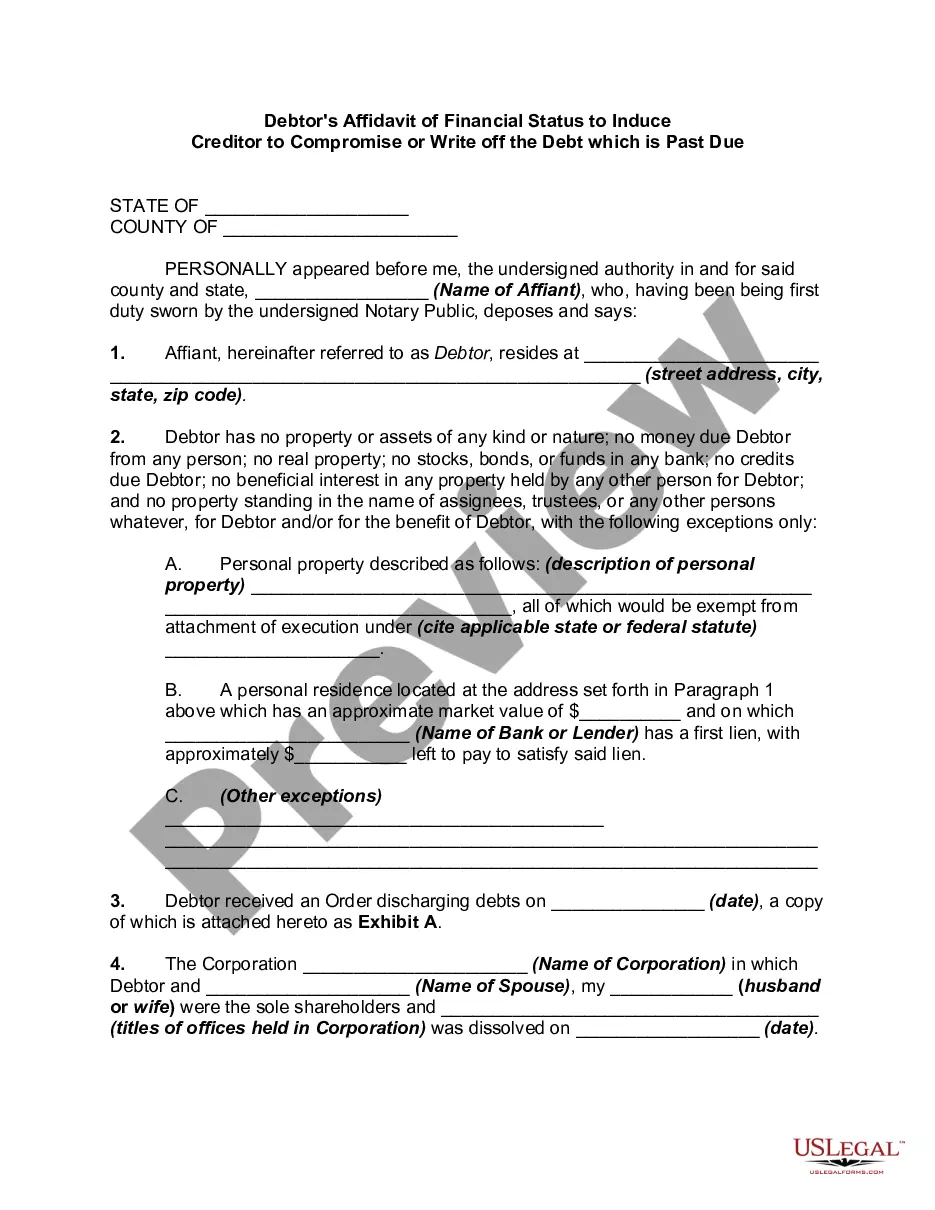
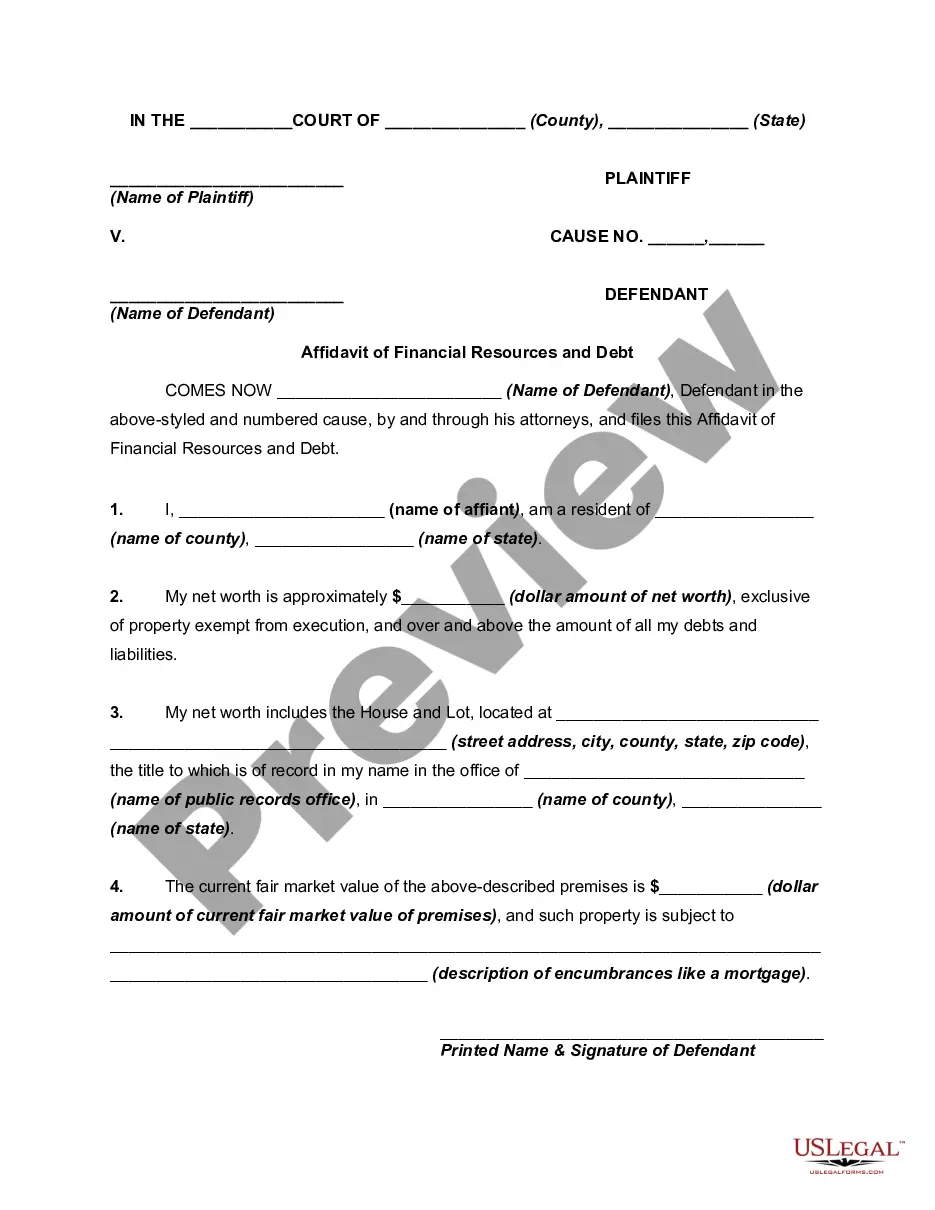



How to fill out Debtor's Affidavit Of Financial Status To Induce Creditor To Compromise Or Write Off The Debt Which Is Past Due - Assets And Liabilities?
Accessing legal document samples that comply with federal and state regulations is essential, and the internet provides numerous options to select from.
However, what’s the benefit of spending time searching for the appropriate Creditor Write Off With Example template online when the US Legal Forms digital library already has such forms compiled in one location.
US Legal Forms is the premier online legal repository with over 85,000 editable templates created by lawyers for various business and personal scenarios.
Review the template using the Preview option or through the text description to confirm it meets your requirements. Search for another sample using the search feature at the top of the page if necessary. Click Buy Now when you’ve identified the correct form and choose a subscription plan. Create an account or Log In and process the payment via PayPal or a credit card. Choose the most suitable format for your Creditor Write Off With Example and download it. All documents you find through US Legal Forms are reusable. To re-download and complete previously purchased forms, access the My documents tab in your account. Take advantage of the most comprehensive and user-friendly legal document service!
- They are easy to navigate with all documents categorized by state and intended use.
- Our experts stay updated on legislative changes, ensuring your documents are always current and compliant when obtaining a Creditor Write Off With Example from our site.
- Acquiring a Creditor Write Off With Example is quick and easy for both existing and new users.
- If you already possess an account with an active subscription, Log In and download the required document sample in your desired format.
- If you are new to our platform, follow the steps below.
Form popularity
FAQ
Creditors can agree to a reduced payment over a limited period, with the rest of the balance written off in some circumstances. This is often done using legal procedures but might be agreed by an individual creditor on your request.
Unfortunately, my circumstances are unlikely to improve in the foreseeable future and I have no assets to sell to help clear my debt. I am therefore asking you to consider writing off my debt as I can see no way of ever repaying it. If you are unable to agree to this, please explain your reasons.
Accounts Written Off Journal Entry For proper recording of accounts that get written off, one has to make the following standard journal entries in their accounts book: Debit the bad debts expense concerning the uncollectible amount. Credit the accounts receivables with the uncollectible amount.
off primarily refers to a business accounting expense reported to account for unreceived payments or losses on assets. Three common scenarios requiring a business writeoff include unpaid bank loans, unpaid receivables, and losses on stored inventory.
You will normally have to convince a creditor that writing off the debt is in their best interest as well as in yours. Usually, this means showing them why there is no likelihood of them getting enough money back to make it worth pursuing you for the debt any longer.