Performance Appraisal With Kpi
Description
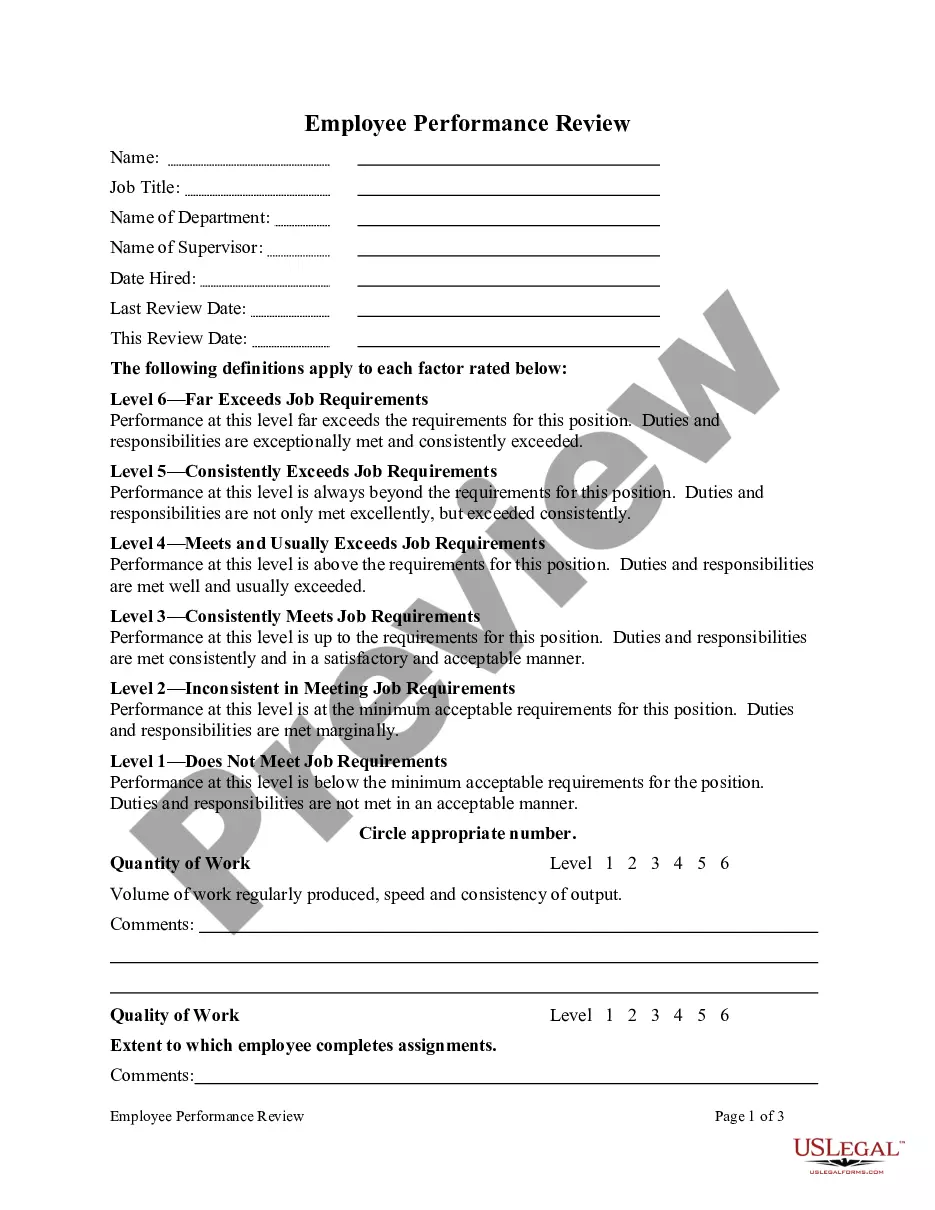
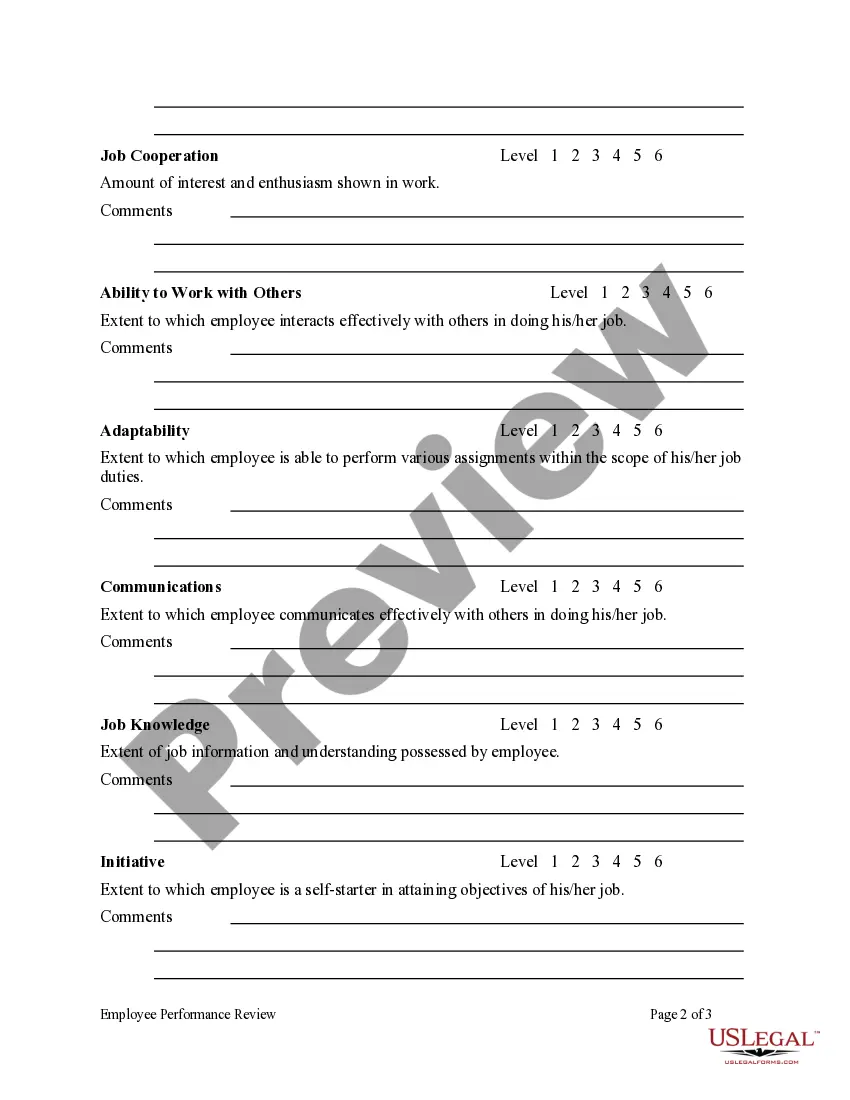
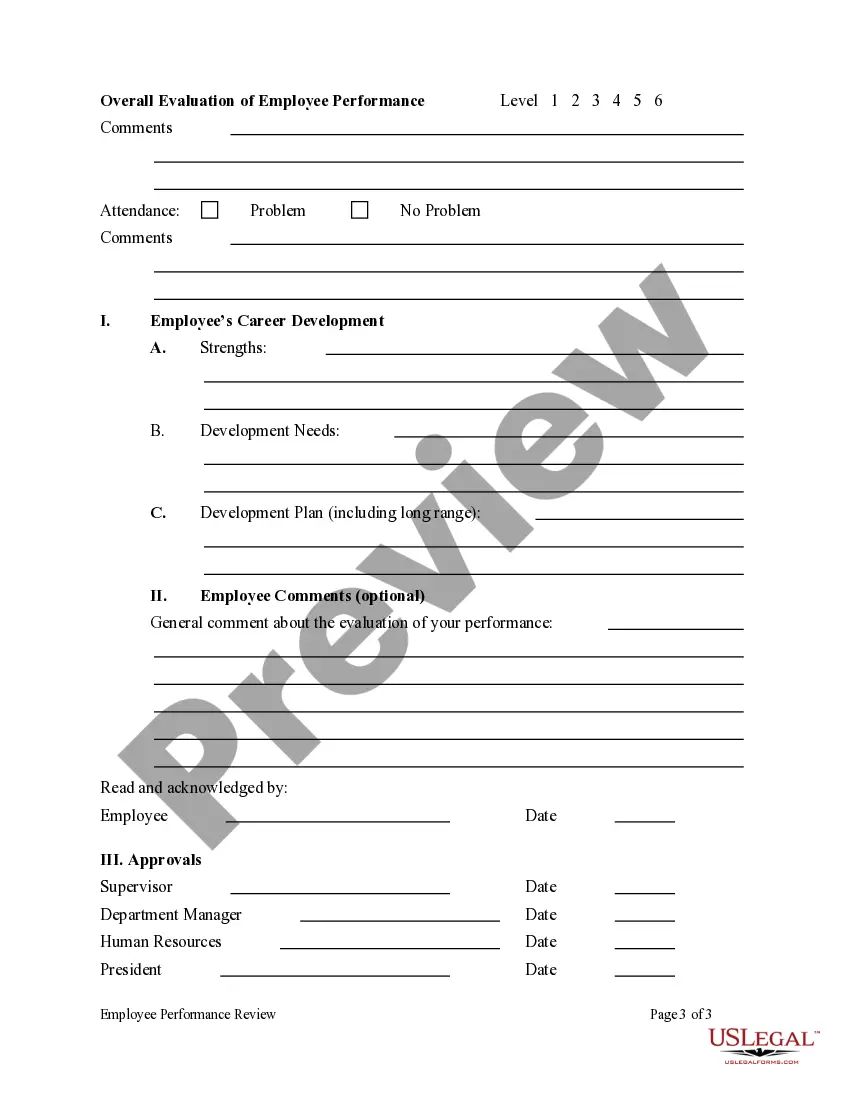
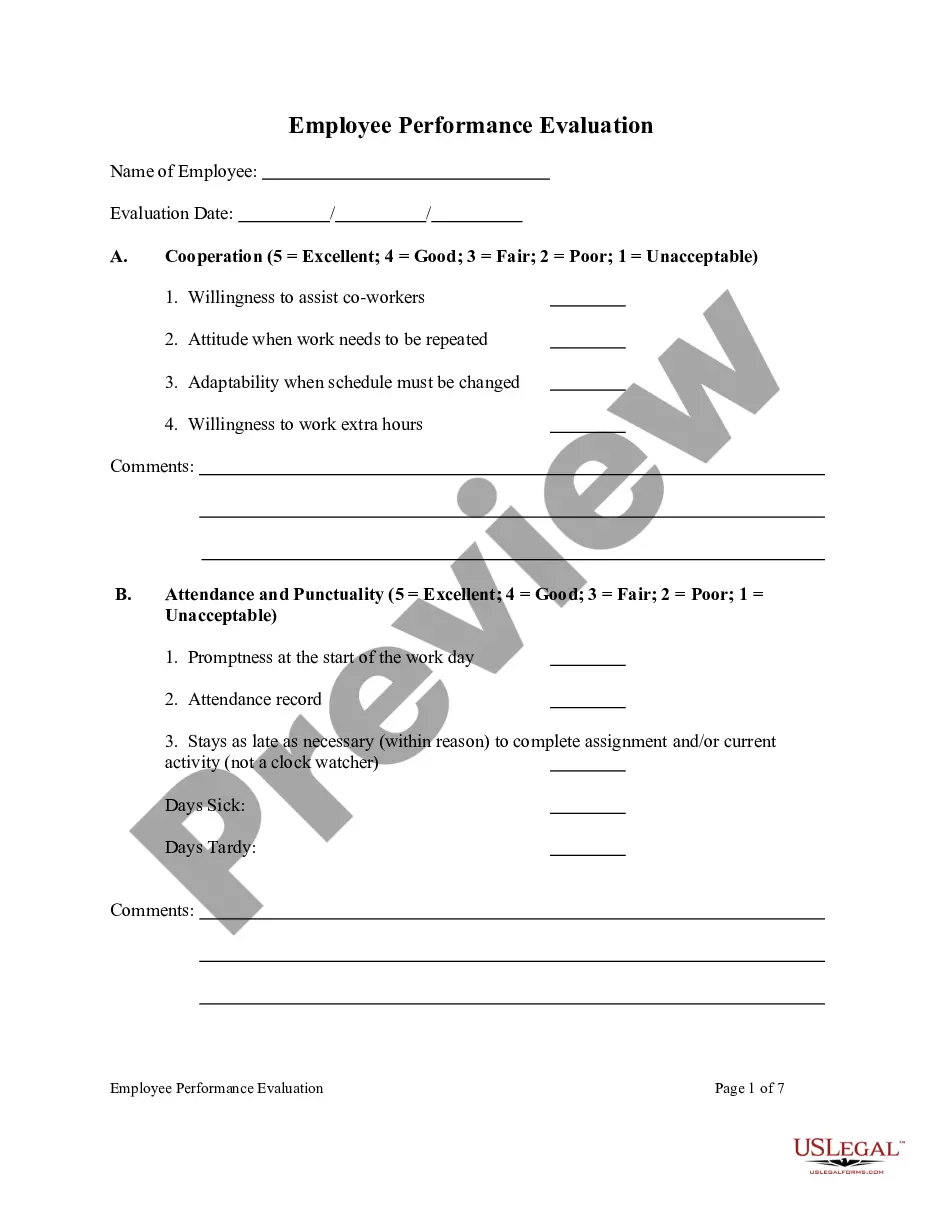
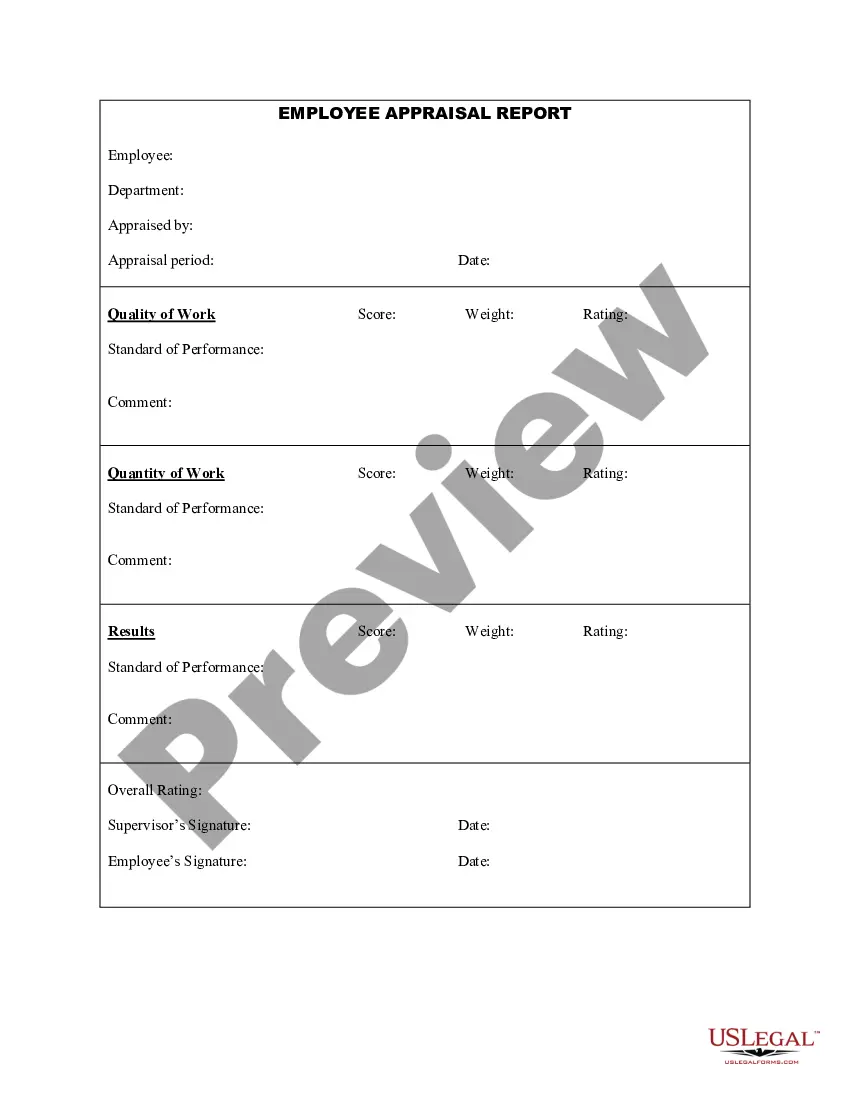



How to fill out Employee Performance Review?
- Log into your US Legal Forms account if you are a returning user. Ensure your subscription is active to access the needed documents.
- For first-time users, start by browsing the extensive library. Check the preview mode and description to confirm the form meets your local jurisdiction requirements.
- Utilize the search feature if you can’t find the appropriate template. Searching can help identify forms that are tailored to your specific needs.
- Proceed to purchase the document by clicking the Buy Now button and selecting your preferred subscription plan. Creating an account will grant you access to a wealth of legal resources.
- Complete your payment using a credit card or PayPal. Finalize your transaction to gain access to the desired form.
- Download the performance appraisal form directly to your device. You can always revisit your saved templates in the My Forms section of your profile.
Using US Legal Forms not only streamlines the process of obtaining legal documents but also ensures that your forms are accurate and compliant with current laws. With over 85,000 templates available, you’re equipped with the resources needed for effective performance management.
Don’t hesitate! Start utilizing US Legal Forms today for your legal documentation needs.
Form popularity
FAQ
To track performance in KPIs effectively, first, establish a reliable method for data collection, such as surveys or software tools. Regularly monitor the KPIs to identify trends and areas needing improvement. Tools like US Legal Forms can streamline this process, providing templates that facilitate performance appraisal with KPI and ensure you stay on top of your goals.
A key performance indicator, or KPI, is a measurable value that demonstrates how effectively an organization achieves its objectives. Examples of KPIs include net profit, sales revenue, or customer retention rates. Incorporating these elements into your performance appraisal with KPI can help you focus on what matters most and drive continuous improvement.
The term '5 KPI' often refers to five critical indicators that help evaluate an organization's success. While the exact KPIs may vary by industry, common examples include sales growth, customer satisfaction, employee turnover, profit margin, and market share. Incorporating these KPIs into your performance appraisal with KPI can provide a comprehensive view of performance.
KPI standards for performance focus on clarity, relevance, and adaptability. Effective KPIs should be specific, measurable, achievable, relevant, and time-bound (SMART). By adhering to these standards, you can ensure that your performance appraisal with KPI yields actionable insights that drive progress.
To create effective key performance indicators for performance appraisal with KPI, start by identifying your organization's goals. Next, align the KPIs with those goals, ensuring they are measurable and relevant. Involve stakeholders in the process, as their insights can lead to more robust KPIs that truly reflect performance.
The four perspectives of KPI are financial, customer, internal processes, and learning and growth. These perspectives allow organizations to have a balanced view of performance across different areas. Implementing performance appraisal with KPI enables organizations to track these diverse aspects effectively, ensuring a holistic approach to performance improvement.
KPI focuses on quantifiable metrics that gauge business performance over time, while a performance review is typically a qualitative assessment of an employee's work. In other words, performance appraisal with KPI offers a data-driven framework, whereas performance reviews often involve personal feedback and employee development discussions.
The 4 P's of KPI consist of Purpose, Process, People, and Performance. Each element plays a vital role in ensuring that performance appraisal with KPI is effective and aligns with organizational objectives. Identifying these aspects can aid in refining your approach to performance management.
The four key performance indicators typically include revenue growth, profitability, customer satisfaction, and employee engagement. These metrics help organizations measure their performance and guide their strategies. By focusing on these indicators, you can enhance your performance appraisal with KPI processes, improving overall workforce effectiveness.
To fill key achievements in an appraisal form, list accomplishments that significantly impacted team or company goals. Use quantitative data to highlight success, such as 'led a project that increased revenue by 15%.' In a performance appraisal with KPI, showcasing such achievements paints a clear picture of the employee's contributions and strengths.