Retail Installment Contract With A Partner
Description

Get your form ready online
Our built-in tools help you complete, sign, share, and store your documents in one place.
Make edits, fill in missing information, and update formatting in US Legal Forms—just like you would in MS Word.
Download a copy, print it, send it by email, or mail it via USPS—whatever works best for your next step.
Sign and collect signatures with our SignNow integration. Send to multiple recipients, set reminders, and more. Go Premium to unlock E-Sign.
If this form requires notarization, complete it online through a secure video call—no need to meet a notary in person or wait for an appointment.
We protect your documents and personal data by following strict security and privacy standards.

Make edits, fill in missing information, and update formatting in US Legal Forms—just like you would in MS Word.

Download a copy, print it, send it by email, or mail it via USPS—whatever works best for your next step.

Sign and collect signatures with our SignNow integration. Send to multiple recipients, set reminders, and more. Go Premium to unlock E-Sign.

If this form requires notarization, complete it online through a secure video call—no need to meet a notary in person or wait for an appointment.

We protect your documents and personal data by following strict security and privacy standards.
Looking for another form?



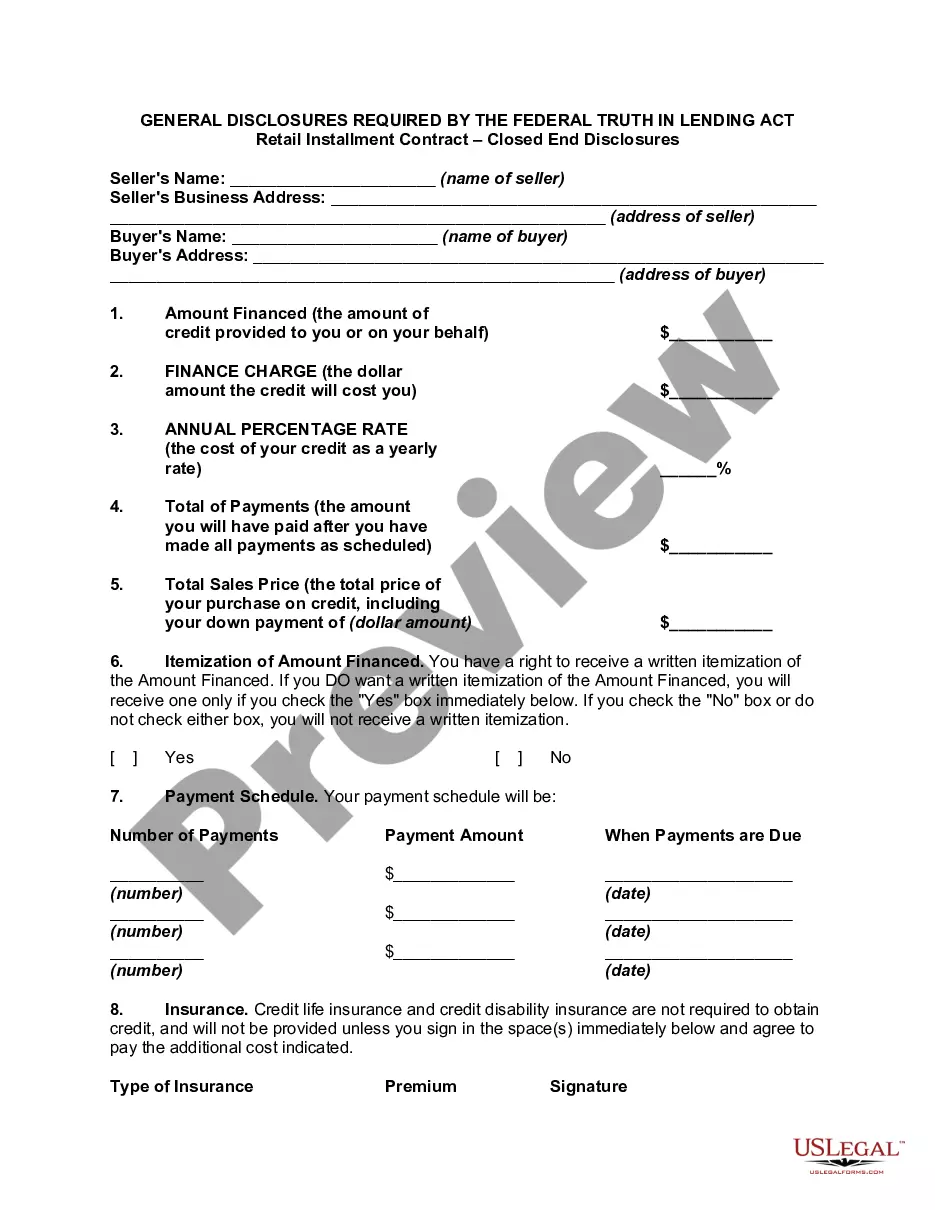
How to fill out General Disclosures Required By The Federal Truth In Lending Act - Retail Installment Contract - Closed End Disclosures?
- Log in to your US Legal Forms account. Ensure that your subscription is current; if not, renew it according to your payment plan.
- Preview the desired form template to confirm it fits your needs and complies with local jurisdiction requirements.
- Use the Search feature to find an alternate form if necessary to address any inconsistencies.
- Click the 'Buy Now' button and select your preferred subscription plan to begin the purchase process.
- Complete your transaction by entering your payment details via credit card or your PayPal account.
- Download the form to your device and easily access it from the 'My Forms' section of your profile whenever you need it.
US Legal Forms offers a robust collection of over 85,000 editable legal documents, ensuring that users are equipped with the right forms for their specific situations.
With access to premium experts and a user-friendly interface, US Legal Forms empowers you to create accurate and legally sound agreements. Start simplifying your legal paperwork today!
Form popularity
FAQ
The four types of contracts include express, implied, unilateral, and bilateral contracts. Each type has specific characteristics but ultimately serves to clarify the understanding between parties involved. In retail settings, a retail installment contract with a partner often falls under express contracts, where terms are clearly stated and agreed upon by both parties.
Yes, you can conduct an installment sale to a related party, but special rules often apply. The applicable tax laws may impose restrictions or reporting requirements that could affect the sale's terms. Therefore, when structuring a retail installment contract with a partner in this context, make sure to consult legal resources to ensure everything aligns with regulations and avoids pitfalls.
Eligible items for an installment sale typically include tangible personal property, real estate, and certain intangible assets. This means many varieties of goods and interests in property can qualify under a retail installment contract with a partner. However, to ensure compliance, it's essential to verify specific eligibility criteria with insights from US Legal Forms. This way, you can navigate any complexities more easily.
Yes, a partnership can engage in an asset sale. In this scenario, the partnership sells specific business assets rather than transferring ownership of the entire business. Utilizing a retail installment contract with a partner during this sale can help structure payments effectively, allowing for better financial management. It’s wise to consult with legal experts to tailor the agreement properly.
The assignee on a retail contract is the party to whom the rights and obligations are transferred. This could be a lender or a financial institution that offers credit terms within the retail installment contract with a partner. By assigning the contract, the original seller can receive immediate payment and pass on the payment collection responsibilities. This process simplifies transactions and provides flexibility for all parties involved.
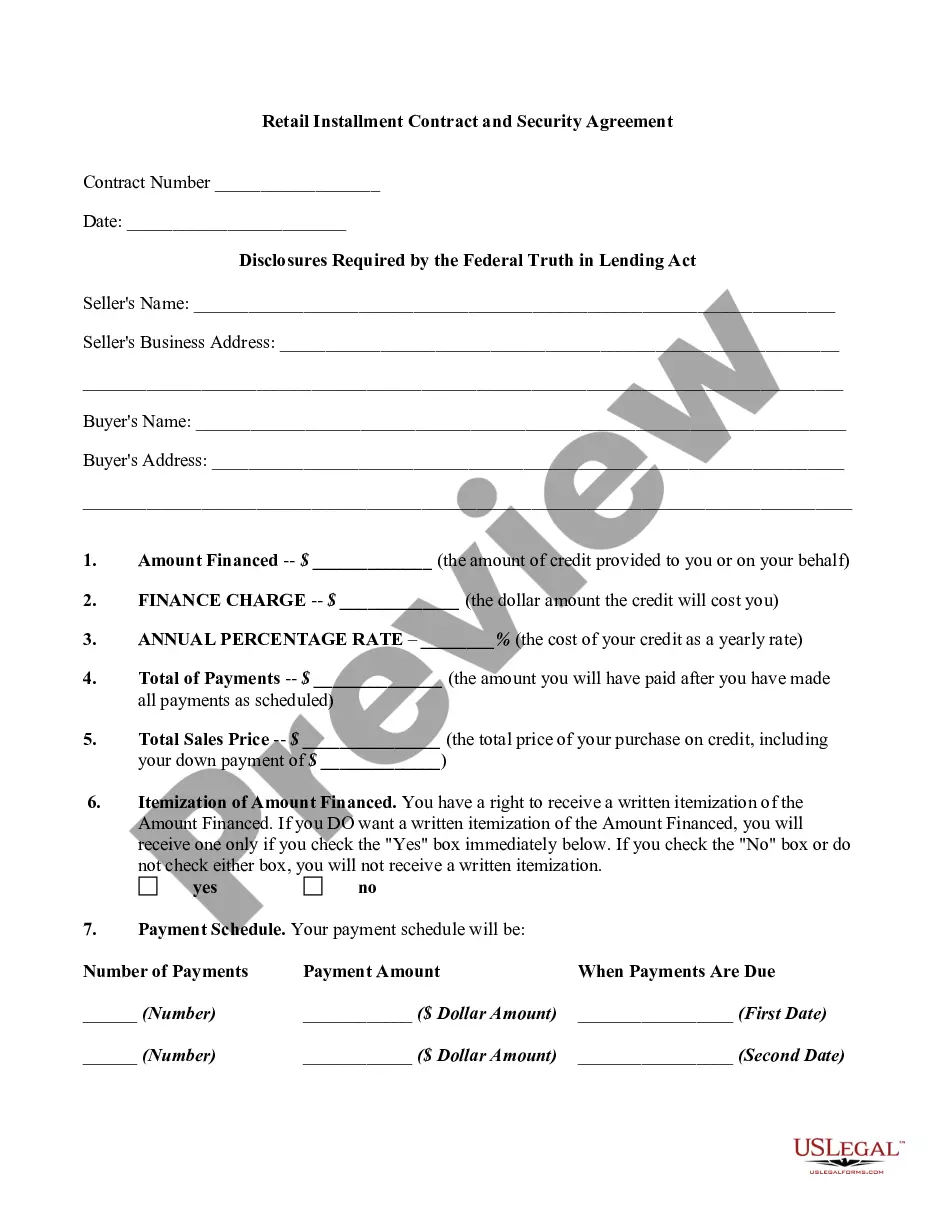
A retail installment sale contract is not the same as a bill of sale. The retail installment contract with a partner outlines the payment schedule and financing terms, while a bill of sale simply documents the transfer of ownership of an item. The two documents serve distinct purposes; the retail installment contract provides clarity on payments over time. Recognizing these differences is crucial for proper financial planning and obligation fulfillment.
In a wholesale contract, the assignee is the entity that receives the rights to collect payments from the buyer. This party takes over the responsibilities associated with the retail installment contract with a partner, ensuring the terms are met. Typically, retailers or finance companies act as assignees in these contracts, facilitating a smoother transaction process. Understanding the role of the assignee can help you navigate your agreements more confidently.
The main difference between a lease and an installment contract lies in ownership. A lease enables you to use an item for a specific time without ownership rights, while an installment contract with a partner allows you to own the item outright once payments are complete. This distinction can influence your financial decisions, depending on whether you prefer ownership or temporary use.
No, a retail installment contract is not the title. The contract outlines your payment plan and obligations, while the title is the legal document that establishes ownership of the purchased item. Once you fulfill your retail installment contract with a partner, you may receive the title as proof of ownership.
The assignee on a retail installment contract is typically a financial institution or third-party lender who purchases the right to receive payments under the contract. When you enter into this arrangement, the seller may assign the contract to a lender, allowing them to handle the financing. Knowing the assignee's role helps you understand who you’ll be making your payments to throughout the contract's term.