Required Disclosures For Related Party Transactions
Description

Get your form ready online
Our built-in tools help you complete, sign, share, and store your documents in one place.
Make edits, fill in missing information, and update formatting in US Legal Forms—just like you would in MS Word.
Download a copy, print it, send it by email, or mail it via USPS—whatever works best for your next step.
Sign and collect signatures with our SignNow integration. Send to multiple recipients, set reminders, and more. Go Premium to unlock E-Sign.
If this form requires notarization, complete it online through a secure video call—no need to meet a notary in person or wait for an appointment.
We protect your documents and personal data by following strict security and privacy standards.

Make edits, fill in missing information, and update formatting in US Legal Forms—just like you would in MS Word.

Download a copy, print it, send it by email, or mail it via USPS—whatever works best for your next step.

Sign and collect signatures with our SignNow integration. Send to multiple recipients, set reminders, and more. Go Premium to unlock E-Sign.

If this form requires notarization, complete it online through a secure video call—no need to meet a notary in person or wait for an appointment.

We protect your documents and personal data by following strict security and privacy standards.
Looking for another form?






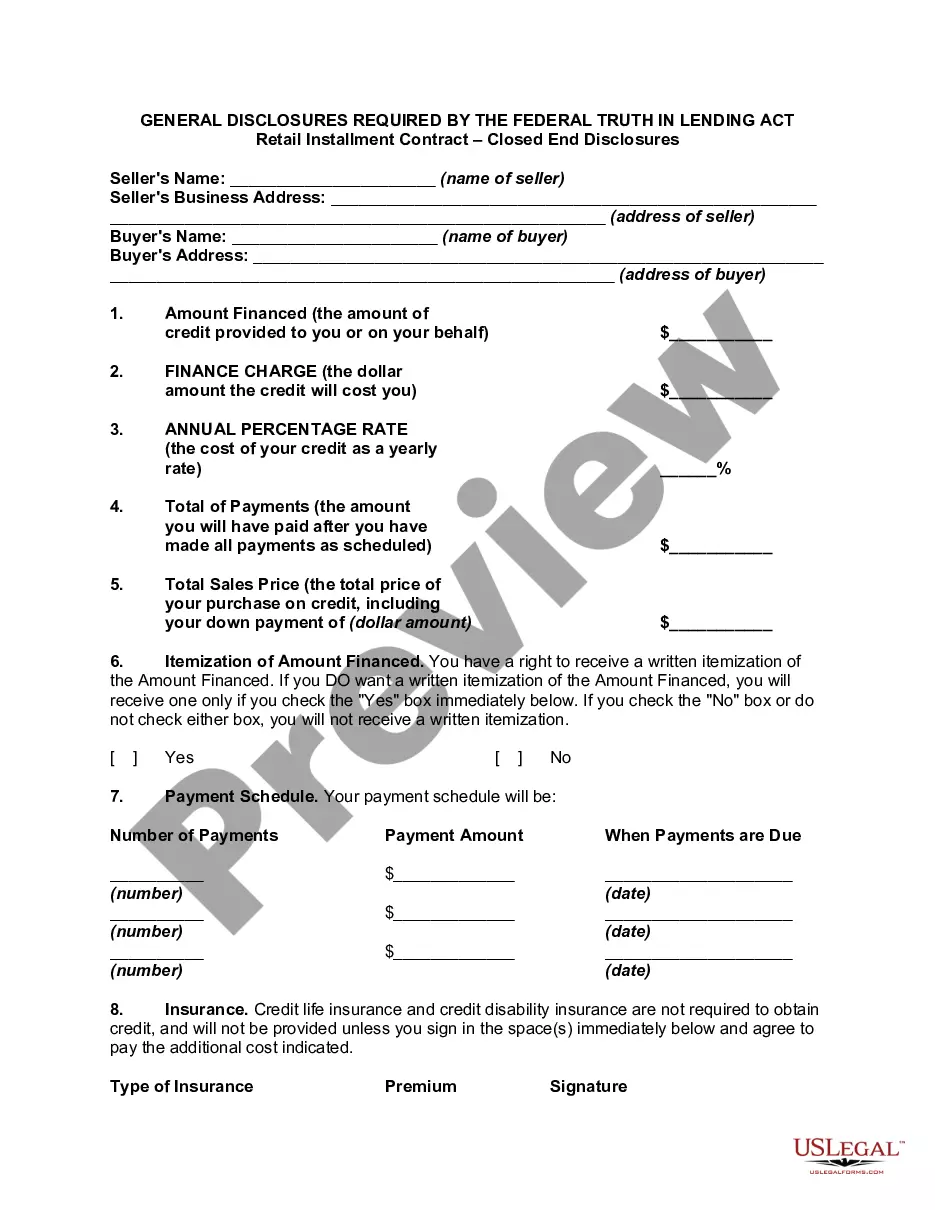
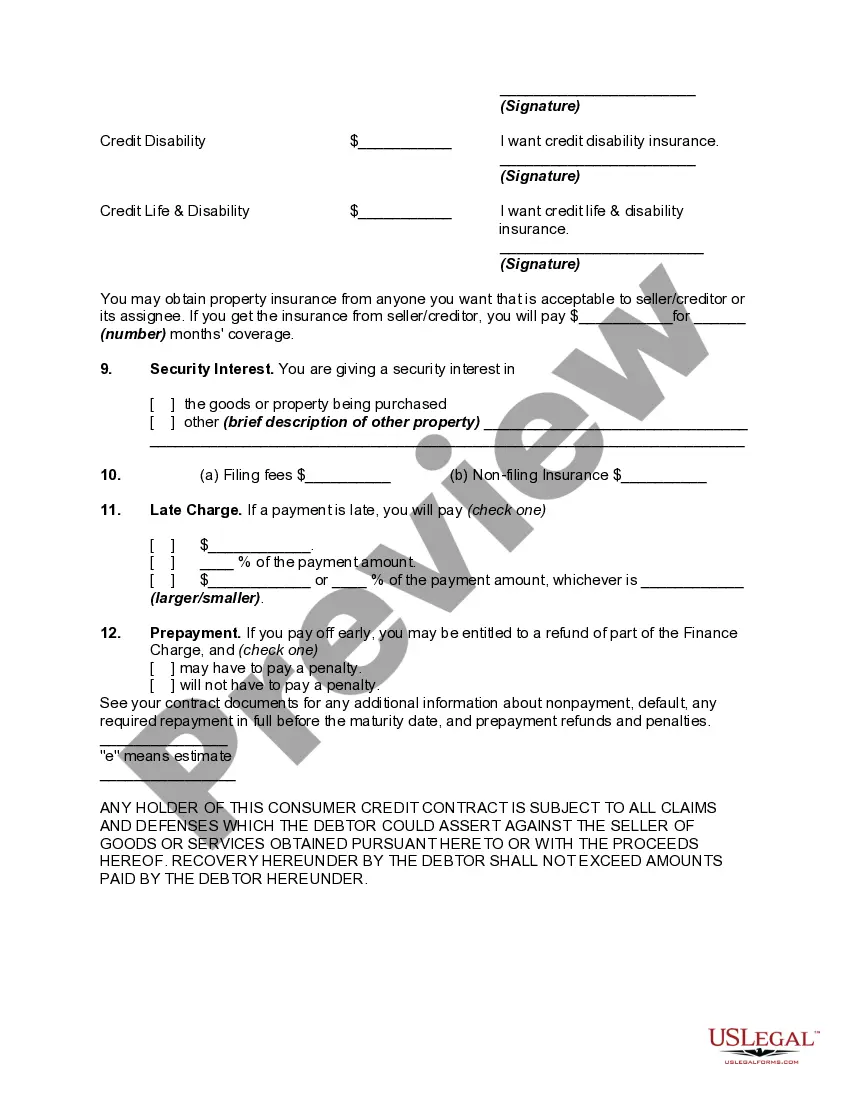
How to fill out General Disclosures Required By The Federal Truth In Lending Act - Retail Installment Contract - Closed End Disclosures?
There's no longer a need to squander time searching for legal documents to meet your local state laws.
US Legal Forms has gathered all of them in a single location and made their access simpler.
Our website provides over 85,000 templates for various business and individual legal situations, organized by state and purpose of use.
Utilize the search bar above to find another template if the previous one did not suit you. Click Buy Now next to the template title once you identify the correct one. Choose your preferred pricing plan and create an account or Log In. Pay for your subscription using a credit card or PayPal to proceed. Select the file format for your Required Disclosures For Related Party Transactions and download it to your device. Print your form to complete it by hand or upload the template if you prefer to do so in an online editor. Preparing legal documentation in accordance with federal and state laws and regulations is quick and straightforward with our library. Try US Legal Forms now to maintain your records organized!
- All forms are expertly drafted and confirmed for accuracy, so you can trust you're obtaining an up-to-date Required Disclosures For Related Party Transactions.
- If you are acquainted with our service and already possess an account, ensure your subscription is active before retrieving any templates.
- Log In to your account, select the document, and click Download.
- You can also access all previously acquired documentation whenever necessary by navigating to the My documents tab in your profile.
- If this is your first experience with our service, the procedure will require additional steps to finalize.
- Here’s how new clients can find the Required Disclosures For Related Party Transactions in our collection.
- Examine the page content thoroughly to ensure it displays the sample you require.
- To do so, employ the form description and preview options if available.
Form popularity
FAQ
Material-related party transactions requiring disclosure include those that significantly influence the operations or financial health of the company. This can encompass large loans, asset sales, or any substantial agreements with related parties. Timely and accurate required disclosures for related party transactions not only comply with regulations, but also strengthen the credibility of the organization.
To disclose a related party transaction, you first need to gather all pertinent information regarding the transaction. Then, report this information clearly in the company's financial statements, typically in the notes section. These required disclosures for related party transactions enhance clarity and foster trust among investors and regulators.
Common examples of related party transactions include loans or sales between a business and its owners, transactions with affiliates, or agreements with close family members of key management personnel. Identifying these transactions is crucial, as required disclosures for related party transactions help stakeholders understand the potential impact on financial results and decision-making.
When reporting related party transactions, it is essential to disclose the nature of the relationship, the amount of the transaction, and any terms that differ from those that might apply to transactions with unrelated parties. These required disclosures for related party transactions ensure transparency and allow stakeholders to assess the impact of such dealings on the organization’s financial statements.
Examples of related-party transactions include loans, sales, leases, or services provided between a company and its owners or family members of executives. Each of these transactions should be disclosed in financial statements to clarify relationships and terms. By documenting these interactions, you can ensure compliance with required disclosures for related party transactions.
Related parties disclosure requirements focus on providing comprehensive information on relationships that could influence decision-making. This typically includes details about the parties involved and the specific transactions executed. Maintaining these disclosures not only complies with regulations but also fosters accountability.
Disclosure requirements for related party transactions (RPT) involve detailing each transaction's nature, reason, and financial effects on the organization. This includes clarifying how the relationships may impact the company's operations or financial health. Staying informed about these requirements enhances overall transparency.
Requirements for related party transactions necessitate full transparency regarding any dealings that could influence financial reporting. This generally means disclosing the economic substance of the transaction and any terms that differ from those that would be agreed upon by unrelated parties. Complying with these requirements protects both your organization and its stakeholders.
Proper disclosure should include a clear description of the related party's role and the nature of the transaction. You should also include relevant monetary values and any impact on the organization's financial statements. This level of detail helps stakeholders understand the implications of related party transactions.
Disclosure requirements for related party transactions include identifying the related parties and describing the related party relationships. Additionally, any transactions between parties must include the terms and conditions. It is important to adhere to these requirements to maintain trust and open communication with stakeholders.
