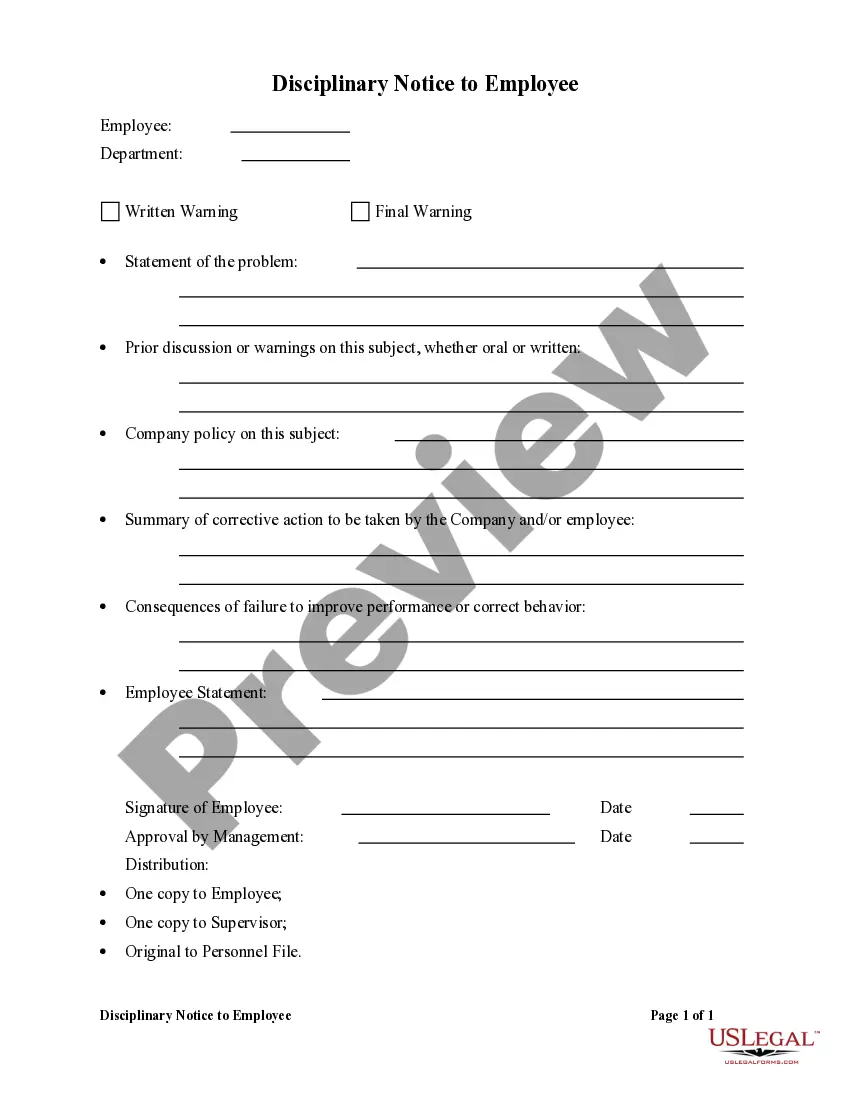
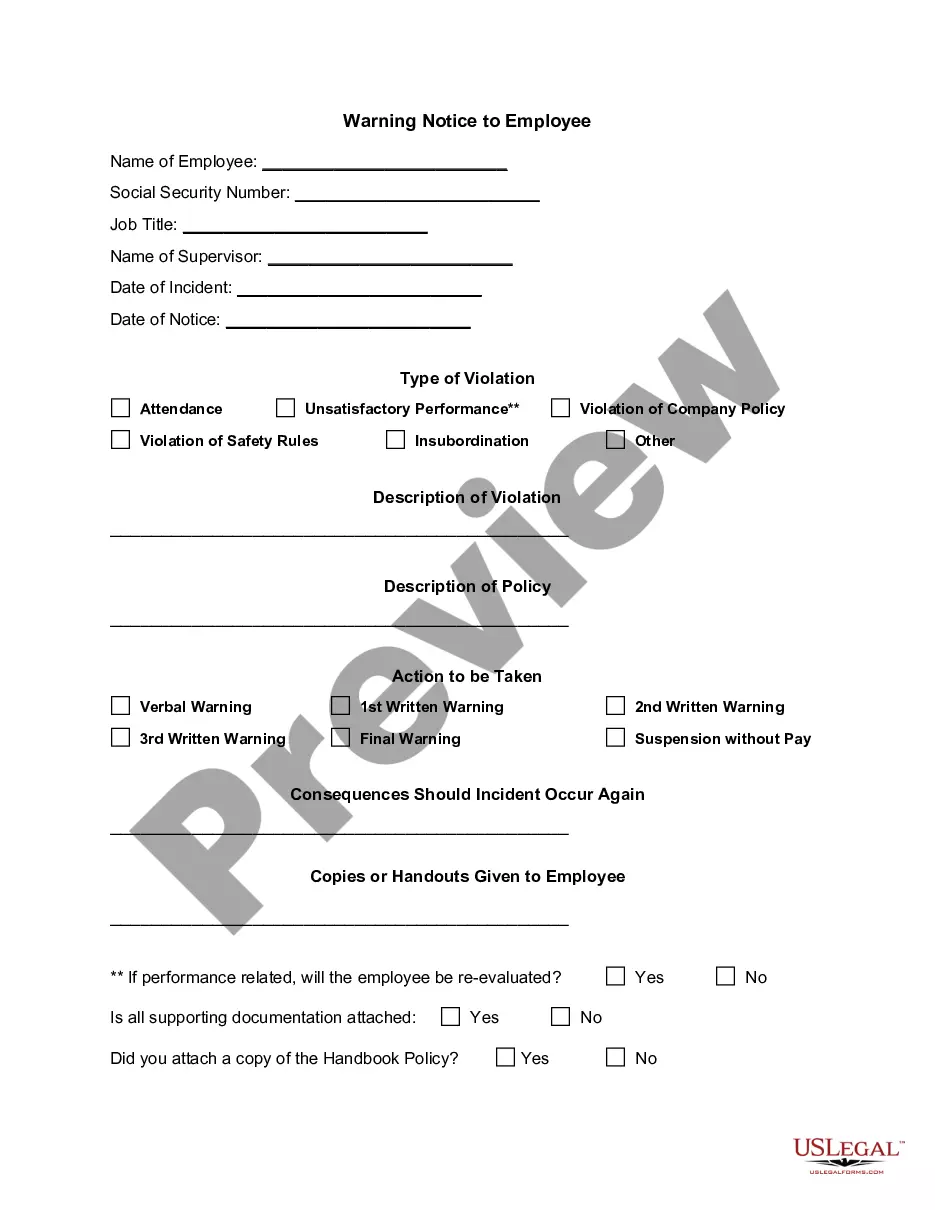
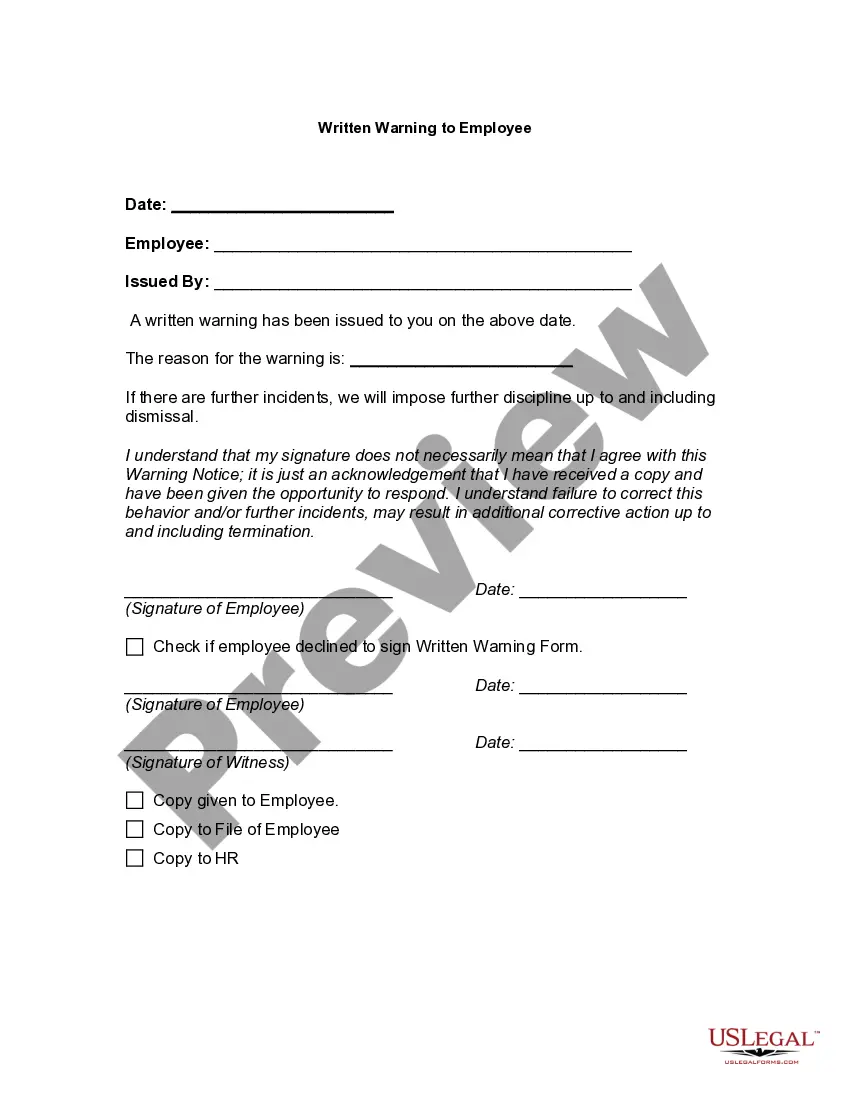
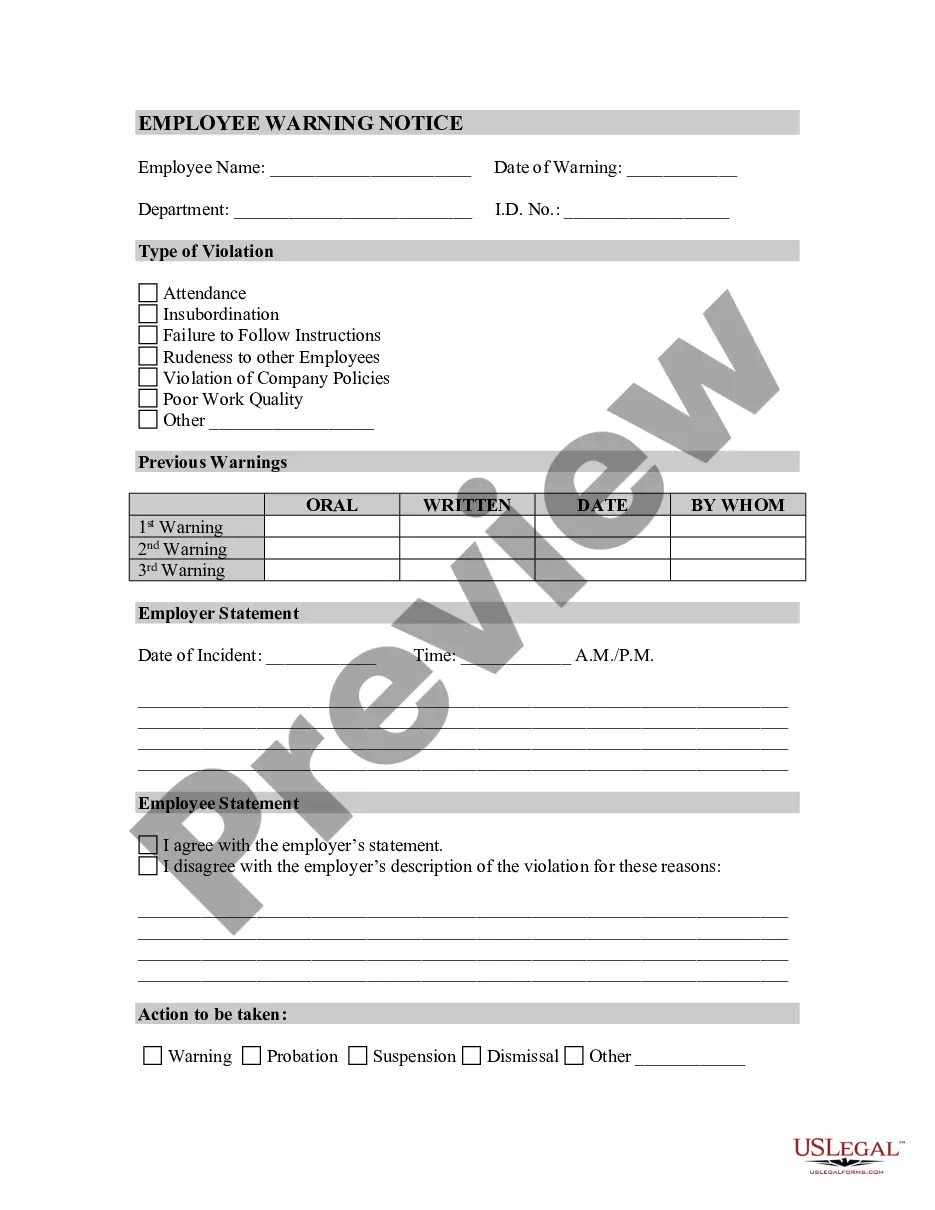
Warning Letter Employee Absent Without Information
Description
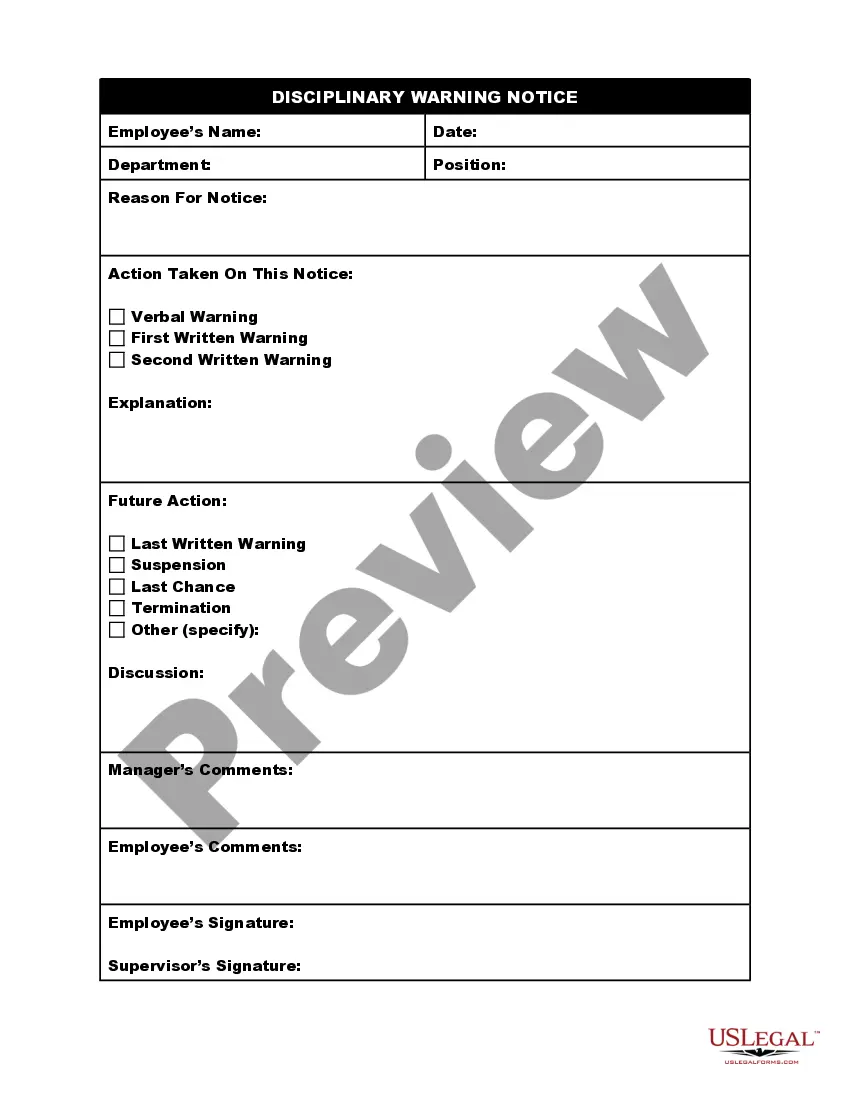
Get your form ready online
Our built-in tools help you complete, sign, share, and store your documents in one place.
Make edits, fill in missing information, and update formatting in US Legal Forms—just like you would in MS Word.
Download a copy, print it, send it by email, or mail it via USPS—whatever works best for your next step.
Sign and collect signatures with our SignNow integration. Send to multiple recipients, set reminders, and more. Go Premium to unlock E-Sign.
If this form requires notarization, complete it online through a secure video call—no need to meet a notary in person or wait for an appointment.
We protect your documents and personal data by following strict security and privacy standards.

Make edits, fill in missing information, and update formatting in US Legal Forms—just like you would in MS Word.

Download a copy, print it, send it by email, or mail it via USPS—whatever works best for your next step.

Sign and collect signatures with our SignNow integration. Send to multiple recipients, set reminders, and more. Go Premium to unlock E-Sign.

If this form requires notarization, complete it online through a secure video call—no need to meet a notary in person or wait for an appointment.

We protect your documents and personal data by following strict security and privacy standards.
Looking for another form?





How to fill out Disciplinary Notice To Employee?
Whether for corporate reasons or for personal matters, everyone must handle legal scenarios sooner or later in their lifetime. Completing legal documents requires meticulous care, starting from choosing the correct form template.
For example, if you select the incorrect version of a Warning Letter Employee Absent Without Information, it will be declined upon submission. Therefore, it is essential to have a trustworthy source of legal documents like US Legal Forms.
Once saved, you can fill out the form using editing software or print it and complete it manually. With a comprehensive US Legal Forms catalog available, you never have to waste time searching for the correct template online. Utilize the library’s intuitive navigation to find the perfect form for any situation.
- Locate the template you require by using the search box or browsing the catalog.
- Review the document’s description to ensure it aligns with your case, state, and locality.
- Click on the form’s preview to inspect it.
- If it is the wrong document, return to the search tool to find the Warning Letter Employee Absent Without Information template you need.
- Obtain the template if it satisfies your requirements.
- If you already possess a US Legal Forms account, simply click Log in to access saved documents in My documents.
- If you do not yet have an account, you can download the form by clicking Buy now.
- Choose the appropriate pricing plan.
- Complete the account registration form.
- Select your payment method: a credit card or PayPal account can be used.
- Choose the document format you prefer and download the Warning Letter Employee Absent Without Information.
Form popularity
FAQ
To write a warning letter to an employee not following instructions, begin with a clear statement of the issue, including specific instances where instructions were not followed. Reference any prior communications regarding these concerns to provide context. It's important to reaffirm the importance of following directives for everyone’s success. Offer guidance on how the employee can improve moving forward to ensure a better outcome.
In a letter explaining a warning, start by clearly stating the purpose of the communication. Outline the specific behavior that led to the warning, and include any evidence or previous discussions. It’s essential to express a willingness to support the employee in making necessary improvements. End on a note of encouragement, inviting the employee to discuss the matter further if they have concerns.
When writing a warning for absenteeism, include the employee’s name, the dates of unexcused absences, and reference any previous warnings or discussions. Clearly outline the company’s stance on absenteeism and how it affects the organization. Specify what actions the employee needs to take to improve their attendance. A polite yet firm tone reinforces the seriousness of the issue while remaining professional.
In a warning letter for absence at work, begin with the employee’s details and the specific dates they were absent. Clearly mention any previous discussions or warnings related to attendance. Highlight the importance of notifying management in case of absence, and reiterate the policies in place. Conclude the letter by indicating the potential consequences if the behavior does not change.
To write a warning letter for absent without informing, clearly state the employee's name, the dates of absence, and the reasons why this behavior is unacceptable. It’s crucial to mention any prior conversations about attendance policies. Use a tone that is respectful yet firm, and offer a chance for the employee to respond. This approach helps maintain a professional relationship while addressing the issue directly.
When writing an absence letter to an employee without permission, start with a clear subject line and date. In the body, state the employee’s absence dates and emphasize that the absence was unauthorized. Address the potential impact of unapproved absences on the team and workflow. Closing with a reminder of the company’s policies can reinforce the seriousness of the situation.
To notice an employee for absence without information, first review your company's absence policy. Then, draft a document that outlines the dates of absence and the lack of communication from the employee. Include specific examples of company policies that were violated. It’s essential to ensure that the warning letter employee absent without information is clear and direct.
To write a letter of termination due to absence without information, begin by stating the employee's name and the reason for the termination clearly. Include specific details about their absences to highlight the issue. In the letter, mention the warning letters previously issued regarding their attendance, emphasizing the seriousness of their behavior. Additionally, you can utilize resources like US Legal Forms to find templates for a warning letter for an employee absent without information, ensuring you follow legal protocols.