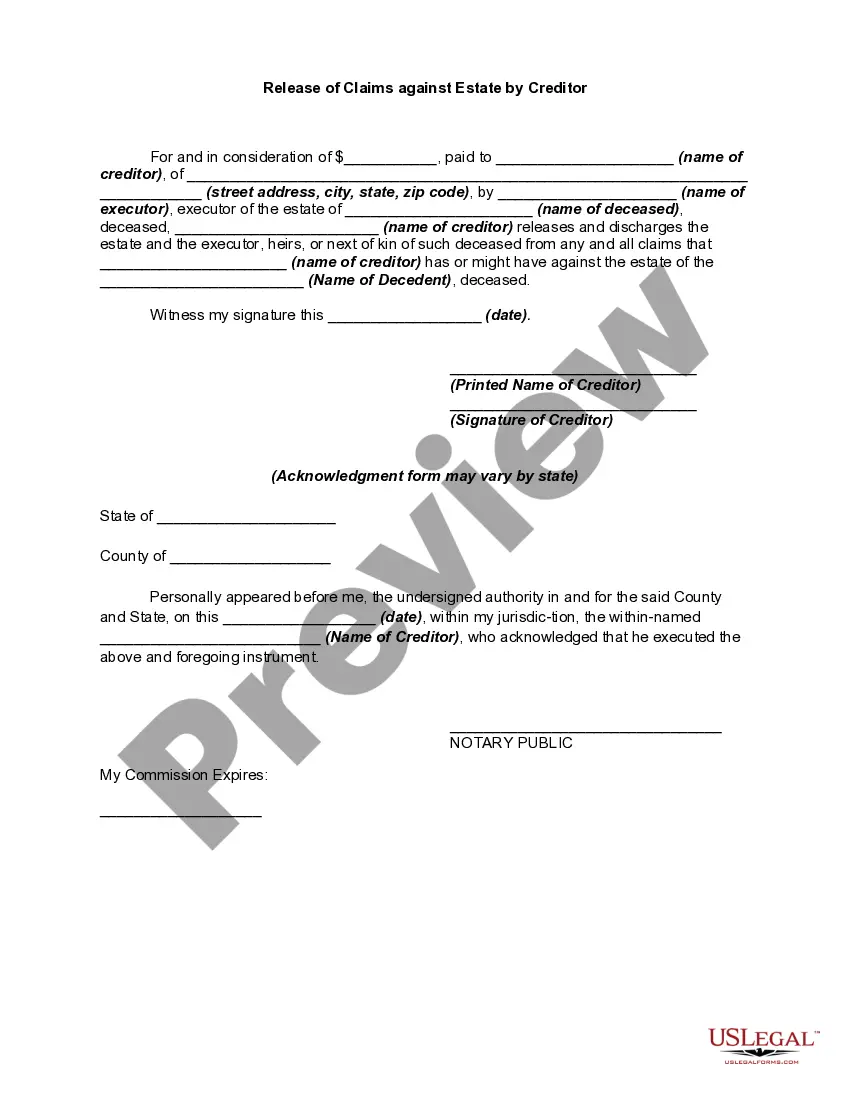
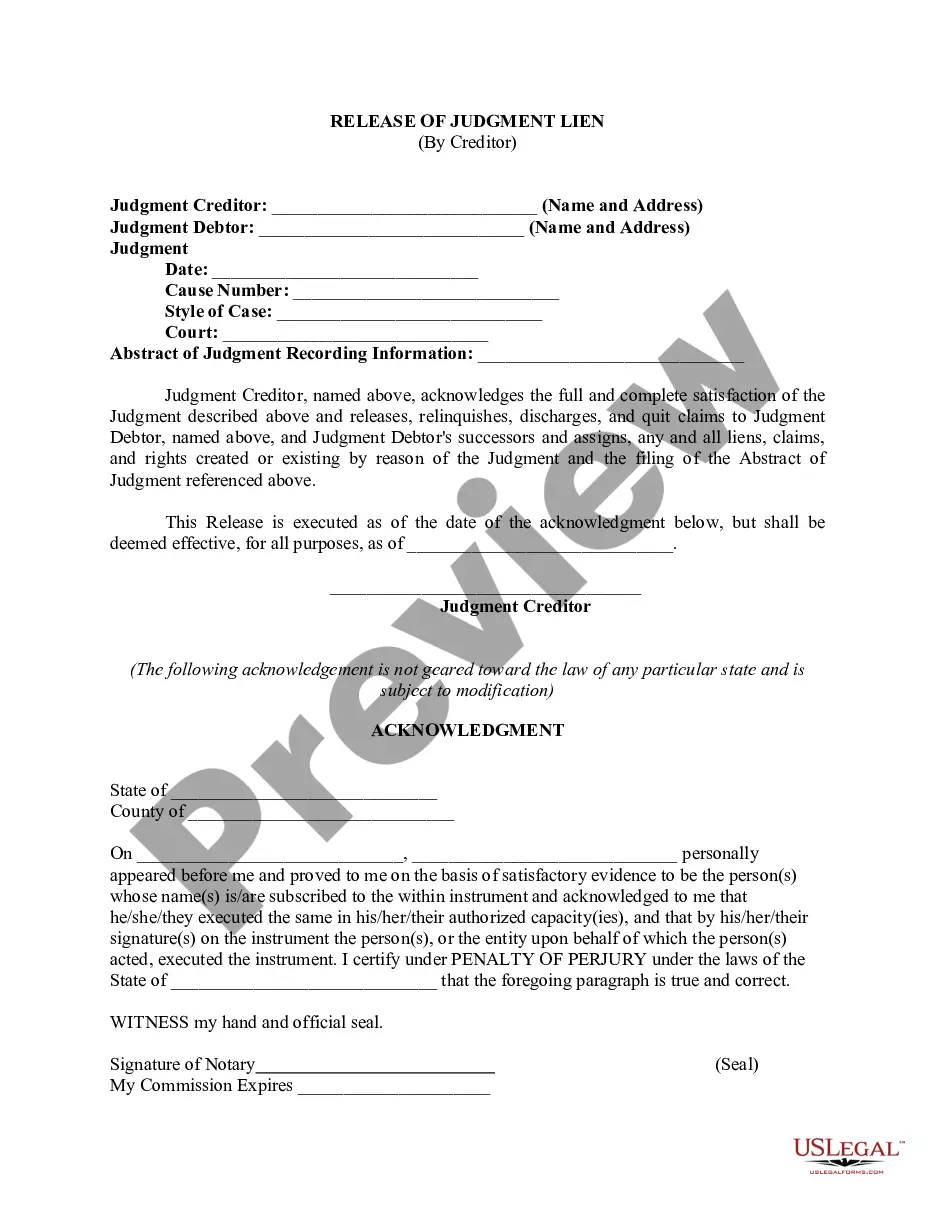
Release Claims Against Agreement Without Cause
Description
Get your form ready online
Our built-in tools help you complete, sign, share, and store your documents in one place.
Make edits, fill in missing information, and update formatting in US Legal Forms—just like you would in MS Word.
Download a copy, print it, send it by email, or mail it via USPS—whatever works best for your next step.
Sign and collect signatures with our SignNow integration. Send to multiple recipients, set reminders, and more. Go Premium to unlock E-Sign.
If this form requires notarization, complete it online through a secure video call—no need to meet a notary in person or wait for an appointment.
We protect your documents and personal data by following strict security and privacy standards.

Make edits, fill in missing information, and update formatting in US Legal Forms—just like you would in MS Word.

Download a copy, print it, send it by email, or mail it via USPS—whatever works best for your next step.

Sign and collect signatures with our SignNow integration. Send to multiple recipients, set reminders, and more. Go Premium to unlock E-Sign.

If this form requires notarization, complete it online through a secure video call—no need to meet a notary in person or wait for an appointment.

We protect your documents and personal data by following strict security and privacy standards.
Looking for another form?
How to fill out Release Of Claims Against Estate By Creditor?
Regardless of whether for commercial objectives or personal matters, everyone must navigate legal circumstances at some stage in their life.
Completing legal documentation requires meticulous focus, starting with selecting the correct form template.
Select your payment method: use a credit card or PayPal account. Choose the file format you prefer and download the Release Claims Against Agreement Without Cause. Once downloaded, you can complete the form using editing software or print it out and fill it in by hand. With a vast US Legal Forms catalog available, you never have to waste time searching for the right sample online. Utilize the library’s user-friendly navigation to discover the suitable form for any occasion.
- For example, if you choose an incorrect edition of the Release Claims Against Agreement Without Cause, it will be denied upon submission.
- Thus, it is vital to obtain a trustworthy source of legal documents like US Legal Forms.
- If you wish to acquire a Release Claims Against Agreement Without Cause template, follow these straightforward instructions.
- Retrieve the sample you require by utilizing the search bar or catalog exploration.
- Review the form’s details to confirm it matches your situation, state, and county.
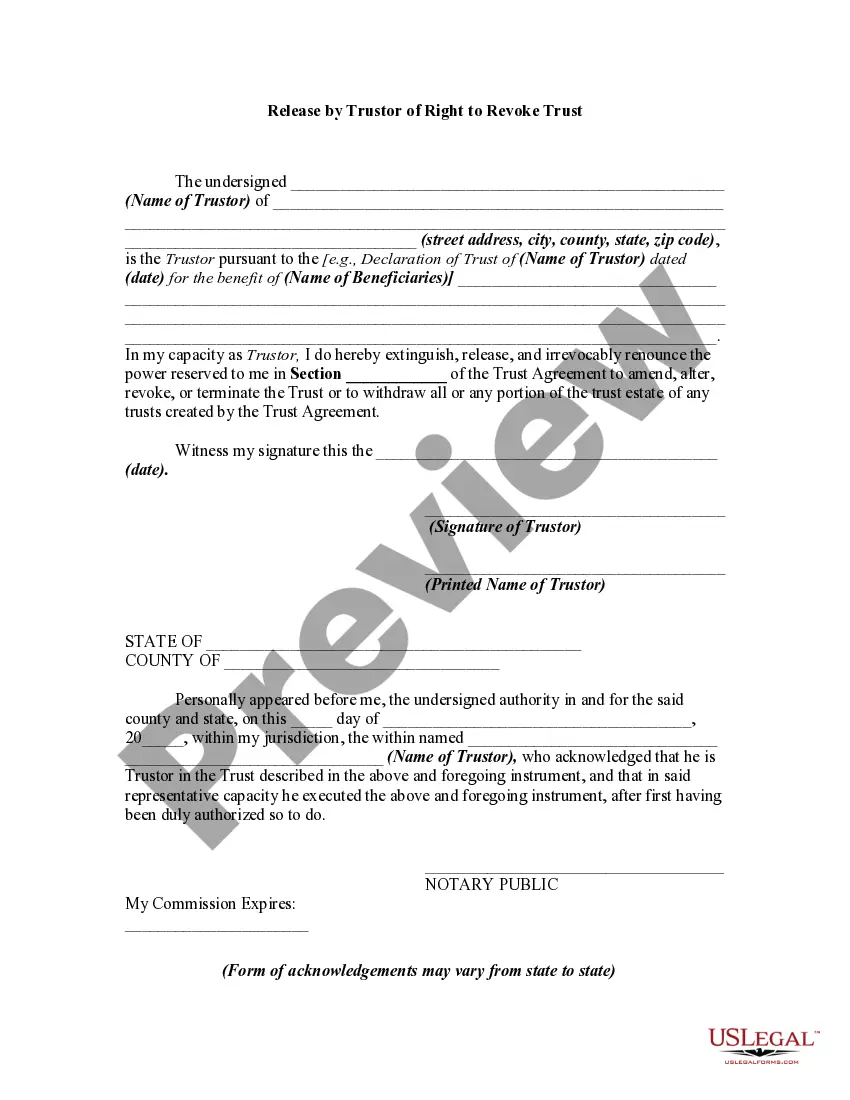
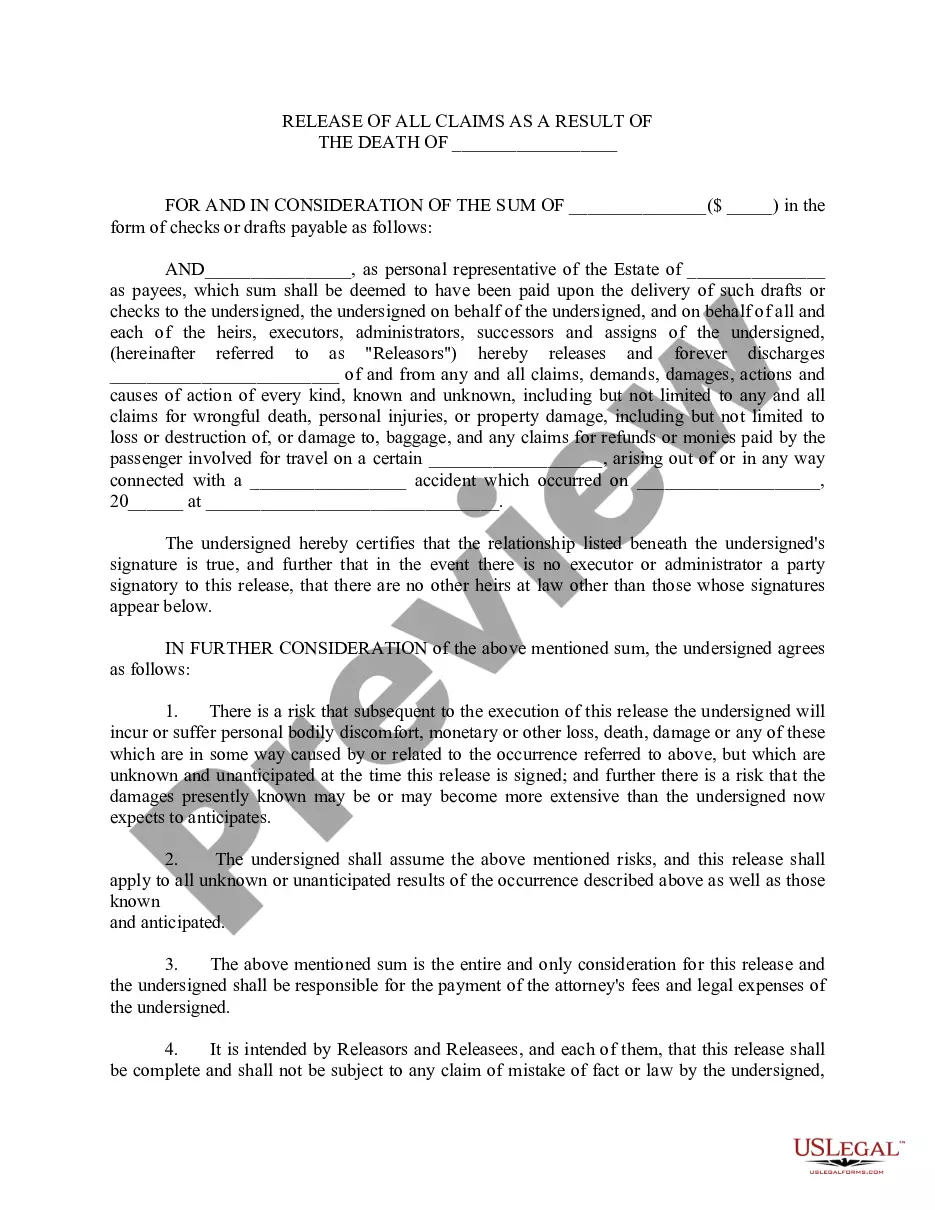
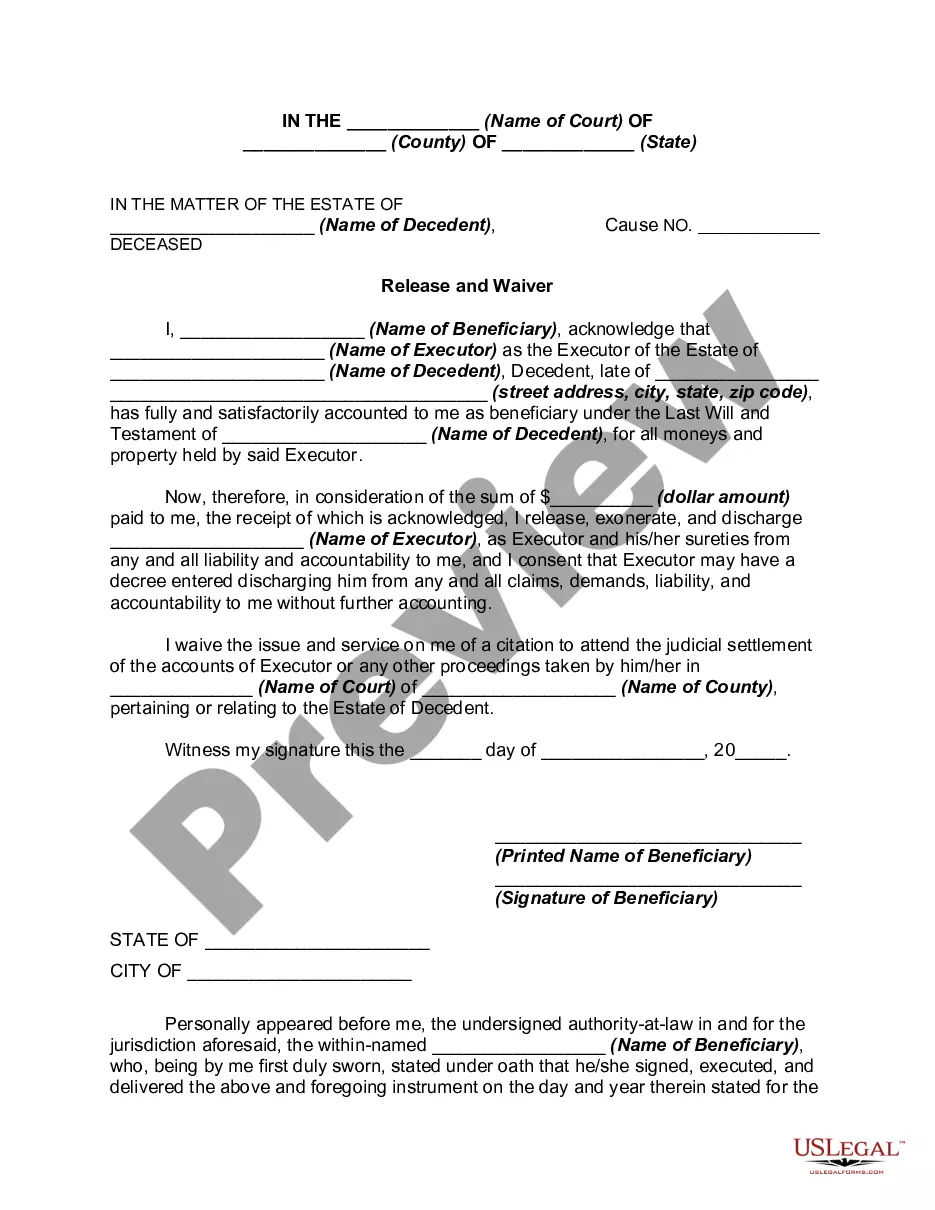
- Click on the form’s preview to analyze it.
- If it is the wrong document, return to the search function to find the Release Claims Against Agreement Without Cause template you need.
- Download the file if it aligns with your specifications.
- If you already possess a US Legal Forms account, click Log in to access previously saved documents in My documents.
- In the case you do not have an account yet, you can acquire the form by clicking Buy now.
- Choose the appropriate pricing option.
- Complete the account registration form.
Form popularity
FAQ
Generally, a release requires consideration to be enforceable, meaning something of value must be exchanged between the parties. Without consideration, a release may not hold up in court. However, there are exceptions depending on the jurisdiction and specific circumstances. If you're unsure about the enforceability of your release, consulting with uslegalforms can provide you with valuable insights and assistance.
In some cases, you can terminate a contract without providing a reason, particularly if the contract includes a termination clause that allows for such action. However, if no such clause exists, terminating without cause may lead to potential legal repercussions. It's crucial to review the terms of your contract to understand your rights and obligations fully. For clarity on how to release claims against an agreement without cause, consider resources available through uslegalforms.
To bring a claim for breach of contract, you first need to demonstrate that a valid contract exists between you and the other party. You must then show that the other party failed to fulfill their obligations under that contract, causing you harm. It's essential to gather evidence, such as emails or written agreements, that support your claim. If you need guidance, platforms like uslegalforms can help you draft the necessary documents to pursue your claim.
A release of claims occurs when one party agrees to relinquish any legal rights to pursue claims against the other party. For instance, if an employee signs a release after leaving a company, they may agree not to file claims against the employer related to their employment. This release helps both parties move forward without the threat of litigation. Using a clear release can effectively address how to release claims against an agreement without cause.
To establish a breach of contract claim, four key elements must be present. First, there must be a valid contract that both parties have acknowledged. Second, one party must have failed to perform their obligations under the contract. Third, the non-breaching party must demonstrate that they suffered damages due to the breach. Finally, the non-breaching party must show a direct link between the breach and the damages incurred. Understanding these elements helps you navigate situations where you may need to release claims against an agreement without cause.
Yes, you can release unknown claims in certain circumstances. When you enter into an agreement, you may include a clause that expressly states the release of all claims, known or unknown, thus allowing you to release claims against the agreement without cause. However, it's crucial to understand the implications of such a release, as it can limit your ability to pursue claims that you may discover later. Consulting with a legal professional can help clarify these matters.
A contract can be discharged in several ways. First, it can be fulfilled through performance by both parties. Second, mutual agreement can lead to discharge, allowing both parties to release claims against the agreement without cause. Third, a contract may be discharged by operation of law, such as when a statute of limitations expires. Fourth, a breach by one party can also result in the contract's discharge. Finally, a party may be discharged due to impossibility or frustration of purpose.
Filling out a release of claims requires careful attention to detail. Start by clearly identifying the parties involved and outlining the specific claims being released. You can find templates on platforms like uslegalforms that provide step-by-step guidance. By ensuring all necessary information is included, you effectively facilitate the release claims against the agreement without cause, creating a legally binding document.
Sufficient consideration for a release of claims often involves something of value exchanged between the parties. This could include monetary compensation, a severance package, or other benefits that incentivize the release. By ensuring that both parties receive something tangible, you create a valid agreement that supports the release claims against the agreement without cause, making it enforceable in a legal context.
A termination without cause clause allows one party, often an employer, to end an agreement without stating a specific reason. For example, a contract may include language that permits an employer to dismiss an employee with notice but without any justification. This gives the employer flexibility while protecting the employee’s rights by outlining the process, particularly relevant when considering release claims against the agreement without cause.