Legal Contention Interrogatories
Description
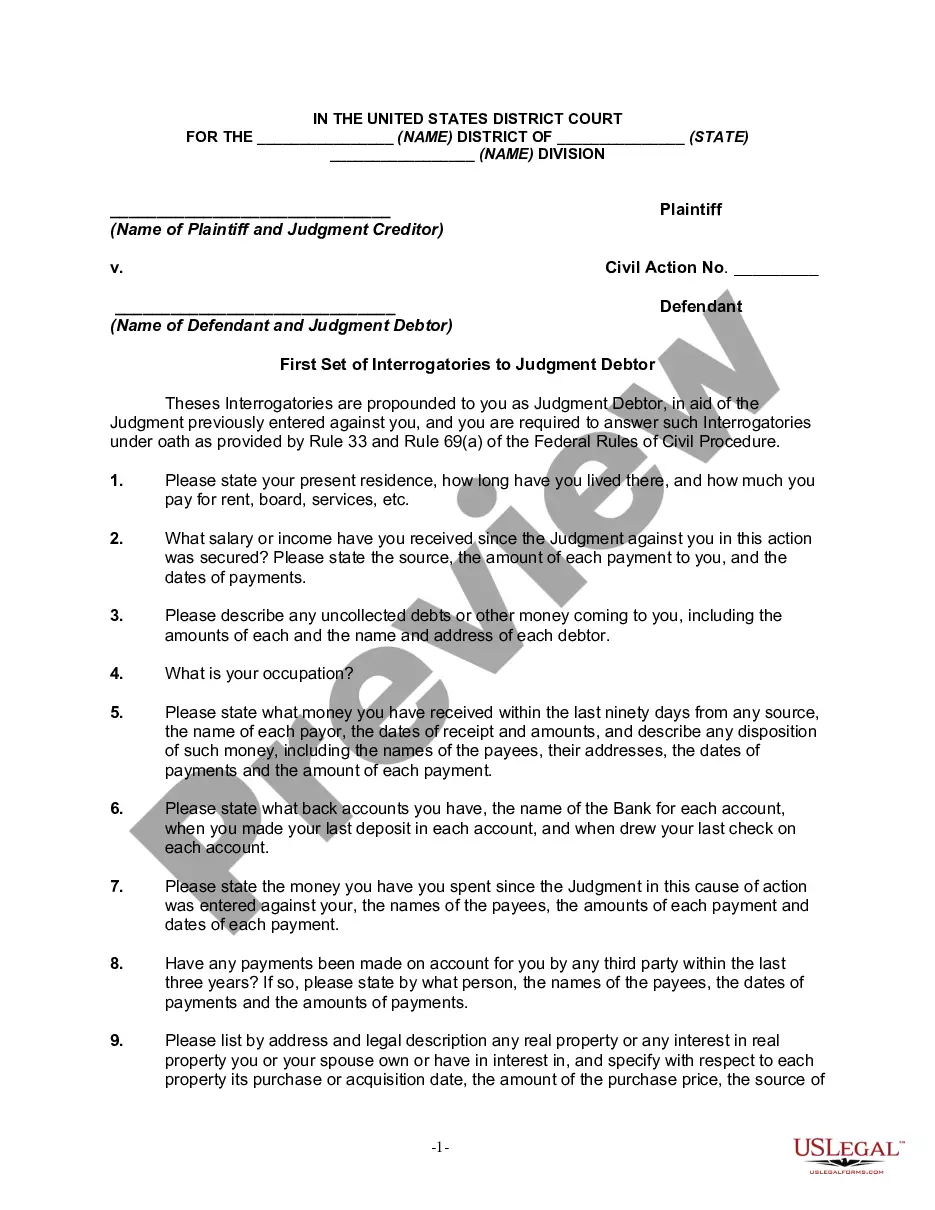
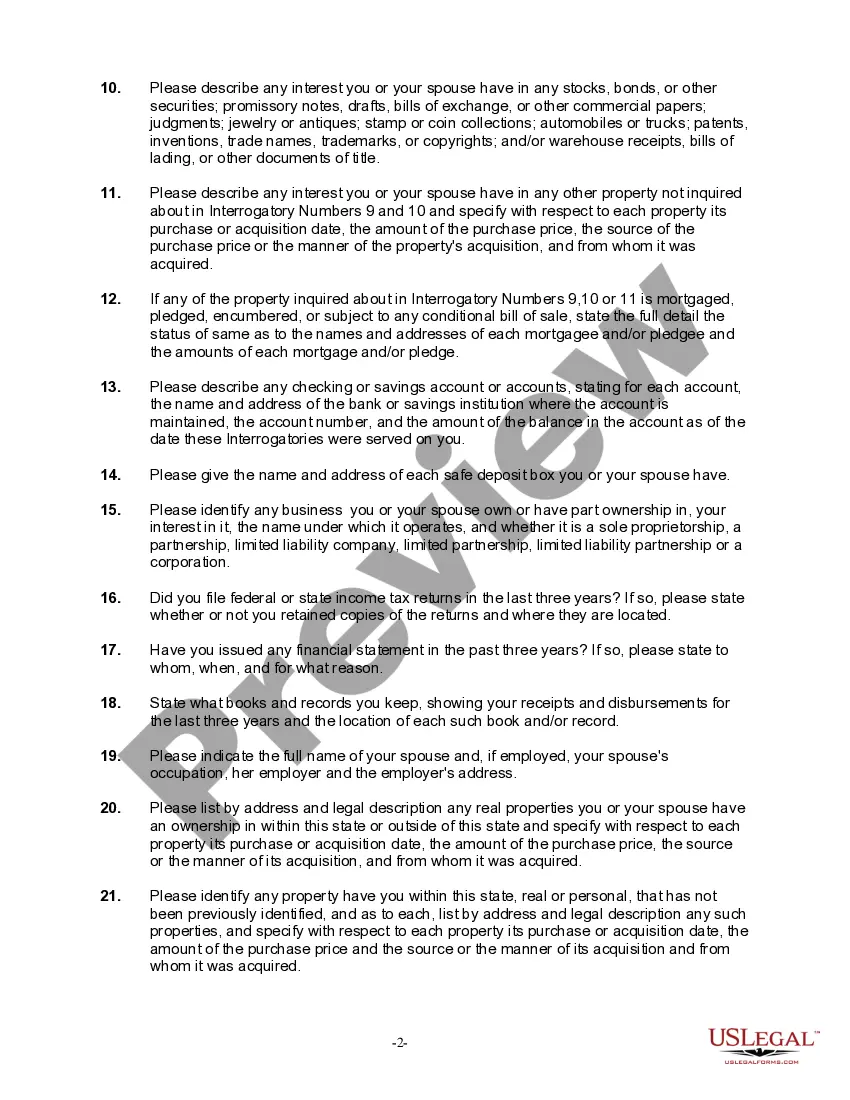
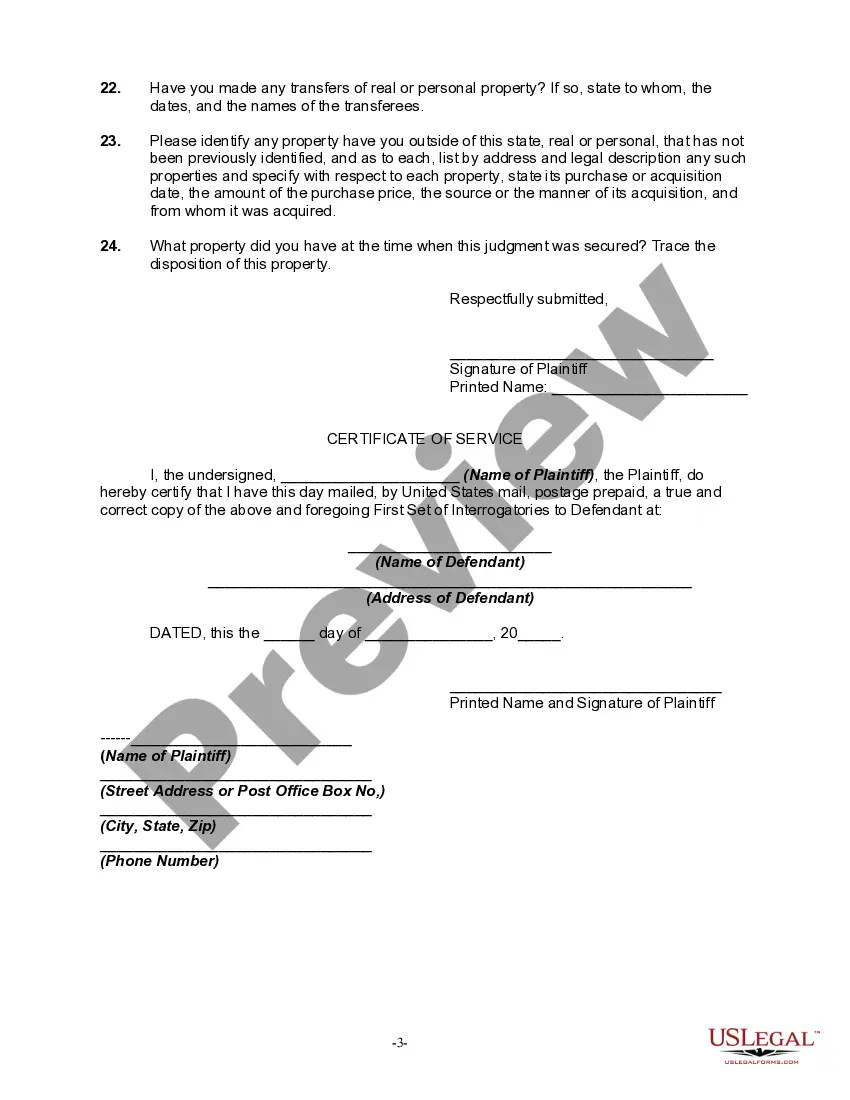
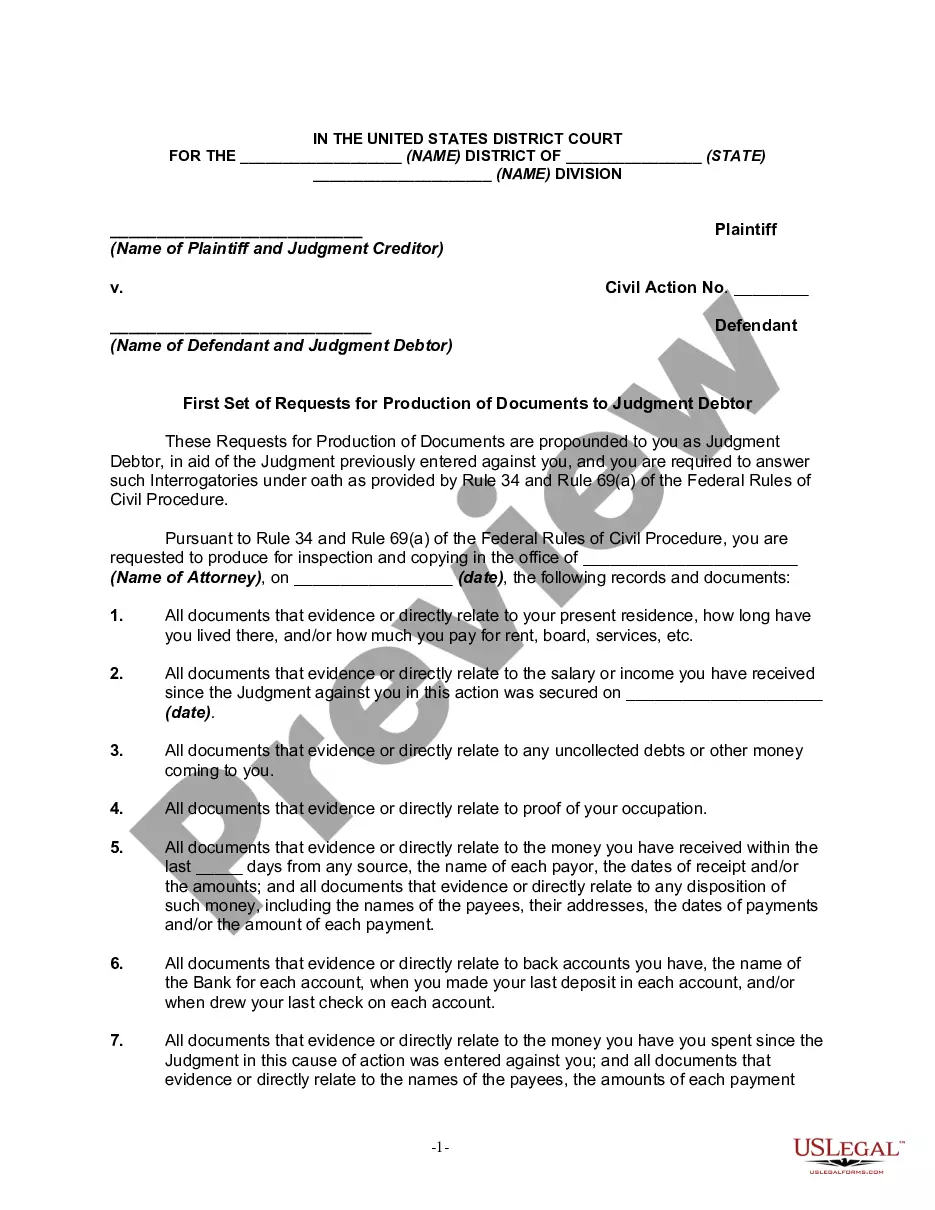





How to fill out Interrogatories In Federal Court To Judgment Debtor In General And?
- If you are a returning user, simply log in to your account and check your subscription status to ensure it is active. Click the Download button to save the form template.
- For first-time users, start by reviewing the Preview mode and description of the form. Make sure it aligns with your legal needs and complies with your local jurisdiction.
- If you find discrepancies, utilize the Search tab to find the correct form template that fits your requirements.
- When you've identified the appropriate template, click on the Buy Now button and choose a subscription plan that suits you. Note that you'll need to create an account to access the full library.
- Complete your purchase by entering your payment details via credit card or PayPal, ensuring secure transactions.
- Once purchased, download your form directly to your device. You can always access it later from the My Forms menu in your profile.
By using US Legal Forms, you are empowered with a wide selection of forms, surpassing what competitors offer at comparable prices. With over 85,000 fillable and editable legal documents available, you're sure to find exactly what you need.
Get started today and streamline your legal document process with US Legal Forms. Ensure your documents are accurate and legally binding with the help of premium experts.
Form popularity
FAQ
To effectively deal with interrogatories, first, ensure you understand the context of the legal contention interrogatories you are facing. Follow the guidelines set forth in Rule 33, which includes drafting clear and concise questions. Respond promptly and accurately to all interrogatories to avoid potential sanctions. For further assistance in streamlining this process, consider platforms like US Legal Forms, which provide templates and resources to help you navigate interrogatories with ease.
Rule 33 refers to the legal framework governing interrogatories in civil procedures. It allows one party to ask questions to another, providing clarity on legal contention interrogatories. This mechanism is vital for both preparation and strategy in litigation. Familiarizing yourself with the meaning of Rule 33 is essential for effective legal practice.
In court, Rule 33 outlines the procedures for submitting and responding to interrogatories. Legal contention interrogatories are particularly important as they focus on the basis for a party's claims or defenses. Through these interrogatories, parties can uncover crucial information that might otherwise remain hidden. Mastering Rule 33 can significantly improve your chances of success in civil litigation.
The '33 rule' typically refers to Rule 33 concerning interrogatories in civil cases. Legal contention interrogatories fall under this rule, facilitating the discovery process by enabling parties to ask questions that require detailed answers. This process helps narrow down the facts in dispute and can enhance your case's clarity. Using interrogatories efficiently can be a game-changer in litigation.
Rule 33 in the South Carolina Rules of Civil Procedure (SCRCP) specifically addresses interrogatories. Legal contention interrogatories allow a party to seek information about the other party's claims or defenses. They are essential for clarifying disputed issues before trial. Understanding this rule can help you adequately prepare your legal strategy.
Generally, interrogatories should focus on facts rather than legal conclusions. While you can ask parties to explain their reasoning, they might resist providing outright legal conclusions. However, legal contention interrogatories can effectively probe underlying facts that lead to such conclusions.
A legal contention question asks a party to clarify a legal issue or assertion they have made in the case. These questions aim to outline each party's position regarding legal issues, which can significantly impact the resolution of the dispute. Legal contention interrogatories are instrumental in framing these questions effectively.
Rule 33 of the Federal Rules of Civil Procedure governs interrogatories, including those regarding legal contentions. This rule allows a party to request that the opposing side disclose their legal contentions clearly and concisely. Utilizing legal contention interrogatories under Rule 33 helps to streamline the litigation process and focuses both parties on the critical issues.
A legal question in a court case refers to an issue that requires interpretation of the law. These questions can shape the direction of the case and influence the judge or jury's decision. Legal contention interrogatories often address these questions to clarify the parties' legal interpretations and positions.
Contention questions are inquiries designed to elicit specific information regarding the facts or legal theories each party supports. These questions often focus on the essential elements of the case, helping to refine the issues for trial. Legal contention interrogatories frequently include these types of questions to build a comprehensive understanding of the dispute.