Attorney Law Information With Third Parties
Description

Get your form ready online
Our built-in tools help you complete, sign, share, and store your documents in one place.
Make edits, fill in missing information, and update formatting in US Legal Forms—just like you would in MS Word.
Download a copy, print it, send it by email, or mail it via USPS—whatever works best for your next step.
Sign and collect signatures with our SignNow integration. Send to multiple recipients, set reminders, and more. Go Premium to unlock E-Sign.
If this form requires notarization, complete it online through a secure video call—no need to meet a notary in person or wait for an appointment.
We protect your documents and personal data by following strict security and privacy standards.

Make edits, fill in missing information, and update formatting in US Legal Forms—just like you would in MS Word.

Download a copy, print it, send it by email, or mail it via USPS—whatever works best for your next step.

Sign and collect signatures with our SignNow integration. Send to multiple recipients, set reminders, and more. Go Premium to unlock E-Sign.

If this form requires notarization, complete it online through a secure video call—no need to meet a notary in person or wait for an appointment.

We protect your documents and personal data by following strict security and privacy standards.
Looking for another form?










How to fill out Authorization To Release Medical And Hospital Information To Attorney?
It’s widely acknowledged that you cannot instantly become a legal expert, nor can you promptly understand how to draft Attorney Law Details With Third Parties without possessing a particular skill set.
Producing legal documents is a lengthy endeavor that necessitates specialized training and expertise.
So, why not entrust the creation of the Attorney Law Details With Third Parties to the professionals.
You can regain entrance to your documents from the My documents section at any time. If you are an existing customer, you may simply Log In and find and download the template from the same section.
Regardless of the aim of your documentation—whether financial and legal, or personal—our site has you catered for. Explore US Legal Forms today!
- Discover the necessary form using the search function at the upper section of the site.
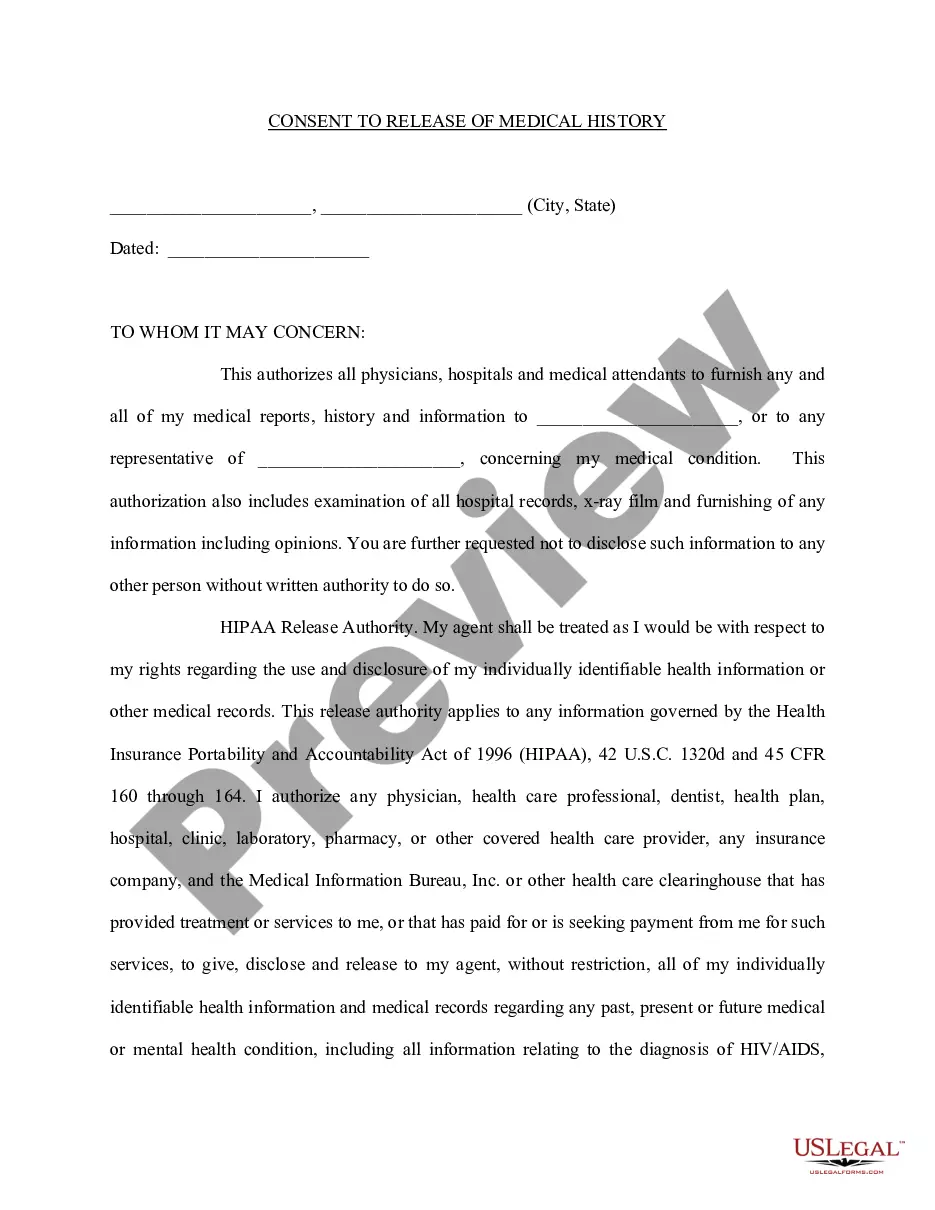
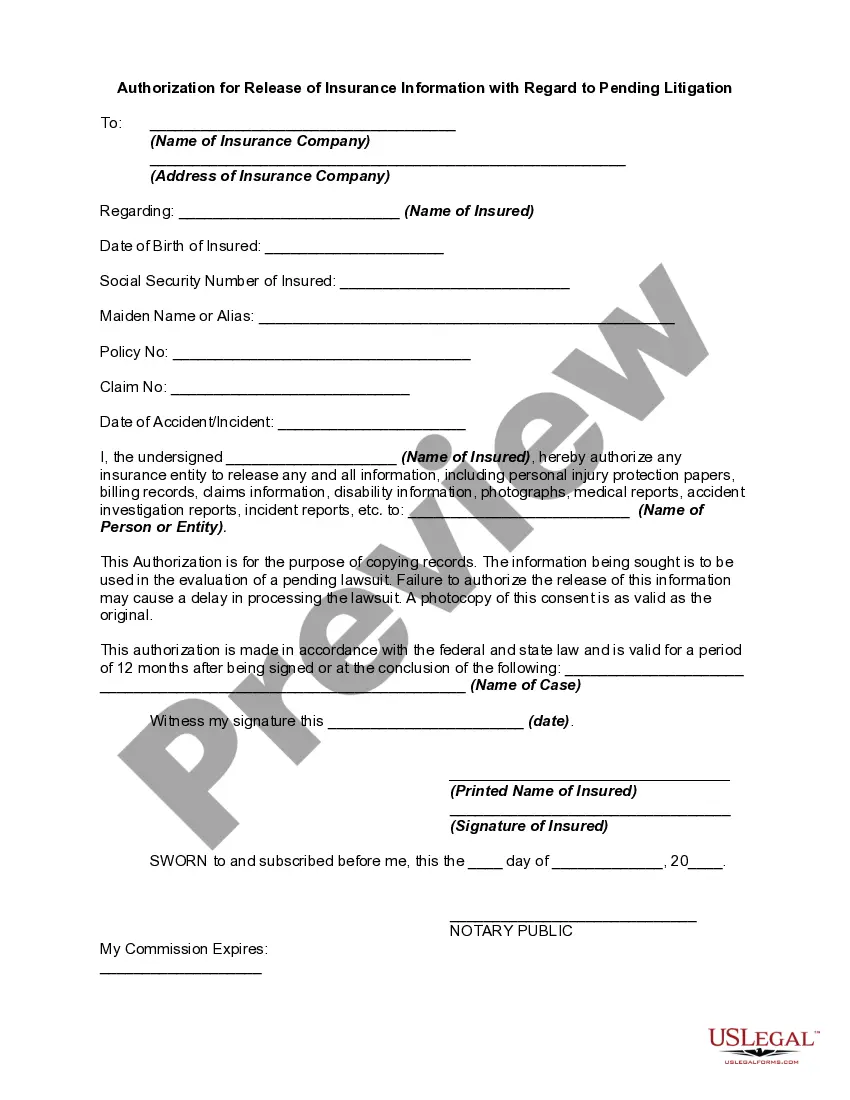
- Preview it (if available) and examine the accompanying description to ascertain if Attorney Law Details With Third Parties is what you need.
- Restart your search if you require a different document.
- Create a complimentary account and choose a subscription option to buy the form.
- Select Buy now. Once the payment is processed, you will be able to obtain the Attorney Law Details With Third Parties, fill it out, print it, and send or deliver it to the appropriate parties or organizations.
Form popularity
FAQ
Withdrawing from Representation A variety of circumstances constitute sufficient reason for a lawyer to withdraw from representation, including: If there has been a serious loss of confidence between a lawyer and their client.
Yes, your lawyer can communicate with the opposing party or their attorney, but it's typically done through formal channels and with proper legal procedures. This communication is often part of the legal process, such as negotiations, settlement discussions, or discovery in a lawsuit.
Third Party Information means confidential or proprietary information subject to a duty on the Company's and its affiliates' part to maintain the confidentiality of such information and to use it only for certain limited purposes.
Any ownership rights which inure in the file belong to the client who has presumably paid for the professional services and preparations made by the attorney. . . .
Withdrawal from representation, in United States law, occurs where an attorney terminates a relationship of representing a client. There are two types of withdrawal: mandatory and voluntary.