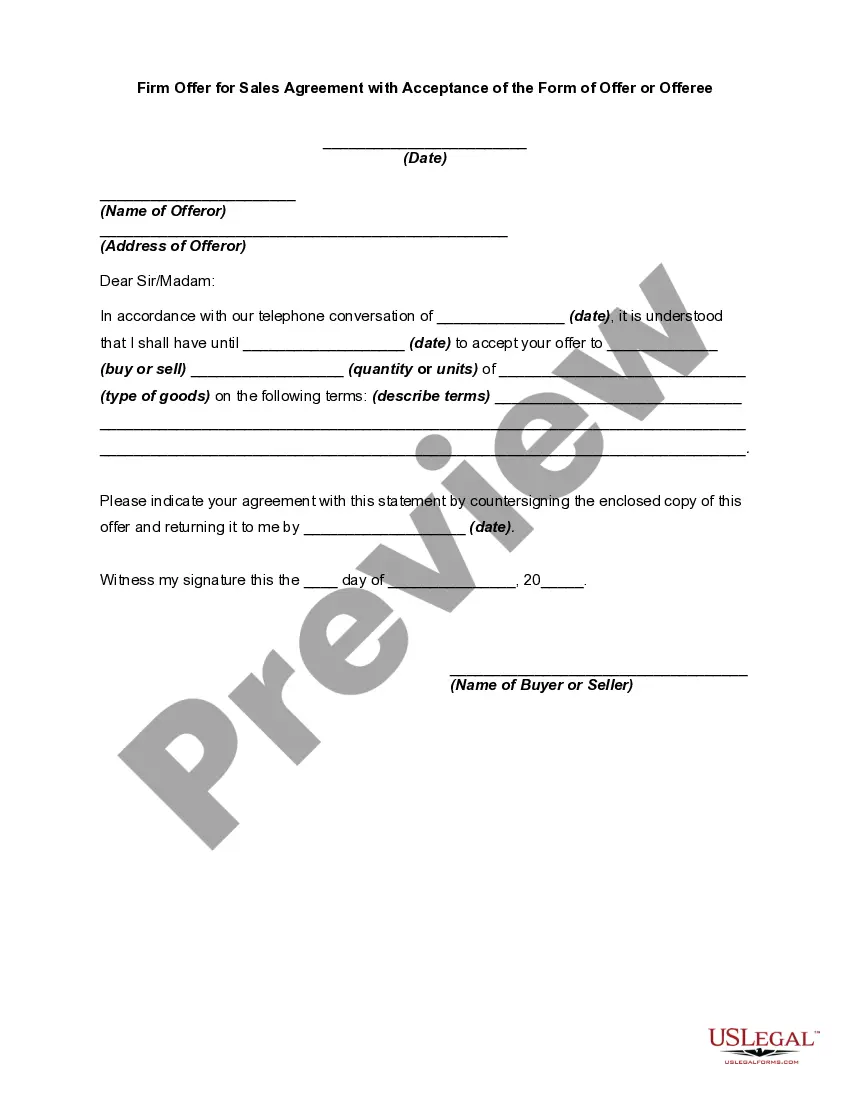
Acceptance Vs Binding Acceptance
Description
Get your form ready online
Our built-in tools help you complete, sign, share, and store your documents in one place.
Make edits, fill in missing information, and update formatting in US Legal Forms—just like you would in MS Word.
Download a copy, print it, send it by email, or mail it via USPS—whatever works best for your next step.
Sign and collect signatures with our SignNow integration. Send to multiple recipients, set reminders, and more. Go Premium to unlock E-Sign.
If this form requires notarization, complete it online through a secure video call—no need to meet a notary in person or wait for an appointment.
We protect your documents and personal data by following strict security and privacy standards.

Make edits, fill in missing information, and update formatting in US Legal Forms—just like you would in MS Word.

Download a copy, print it, send it by email, or mail it via USPS—whatever works best for your next step.

Sign and collect signatures with our SignNow integration. Send to multiple recipients, set reminders, and more. Go Premium to unlock E-Sign.

If this form requires notarization, complete it online through a secure video call—no need to meet a notary in person or wait for an appointment.

We protect your documents and personal data by following strict security and privacy standards.
Looking for another form?

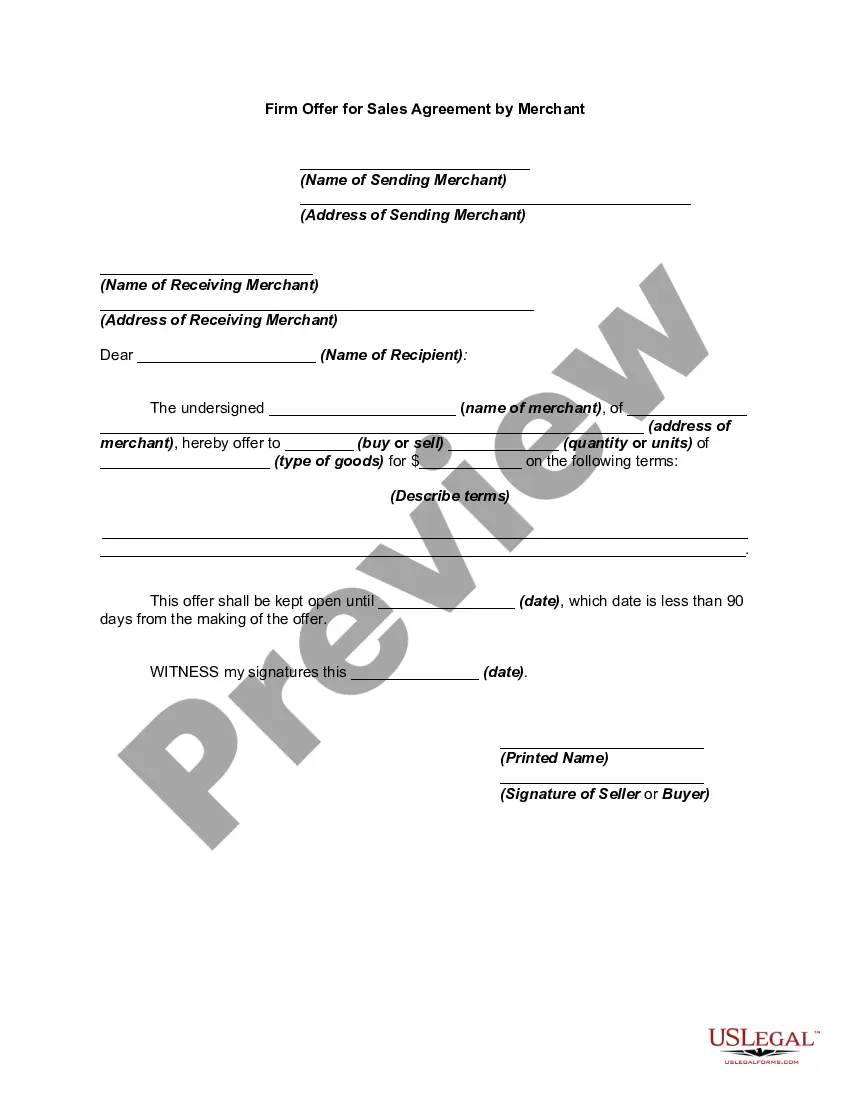
How to fill out Firm Offer For Sales Agreement With Acceptance Of The Form Of Offer Or Offeree?
Legal administration can be daunting, even for the most proficient professionals.
When you are looking for a Acceptance Vs Binding Acceptance and lack the time to invest in finding the correct and current version, the procedures can be overwhelming.
Access legal and business forms specific to your state or county.
US Legal Forms addresses any requirements you may have, ranging from personal to corporate documents, all in one location.
If this is your first experience with US Legal Forms, create an account and gain unlimited access to all the benefits of the library. Here are the steps to follow after obtaining the form you need: Validate it is the correct form by previewing it and reviewing its details. Confirm that the template is accepted in your state or county. Select Buy Now when you are prepared. Choose a subscription plan. Select the format you prefer, and Download, complete, eSign, print, and submit your document. Leverage the US Legal Forms web library, backed by 25 years of experience and trustworthiness. Streamline your everyday document management into a seamless and user-friendly process today.
- Utilize advanced tools to complete and oversee your Acceptance Vs Binding Acceptance.
- Access a repository of articles, tutorials, and guides relevant to your circumstances and needs.
- Save time and effort searching for the documents you require, and use US Legal Forms' enhanced search and Preview tool to locate Acceptance Vs Binding Acceptance and obtain it.
- If you hold a monthly subscription, Log In to your US Legal Forms account, search for the form, and download it.
- Check your My documents tab to review the documents you have previously saved and to organize your folders as desired.
- A comprehensive web form library can be a transformative solution for anyone who seeks to handle these matters effectively.
- US Legal Forms is a leading provider of online legal documents, with more than 85,000 state-specific legal forms accessible at any moment.
- With US Legal Forms, you can.
Form popularity
FAQ
An example of acceptance of a contract can be seen when one party sends a written offer, and the other party responds with a signed agreement that mirrors the original offer. This action signifies acceptance and indicates mutual consent to the terms laid out. However, if the response includes additional terms, it may shift the conversation towards binding acceptance. For practical assistance in understanding contracts, consider exploring US Legal Forms for comprehensive resources.
Acceptance refers to the agreement to the terms of a contract, while binding acceptance indicates that the acceptance creates a legal obligation. In the context of acceptance vs binding acceptance, the key difference lies in the enforceability of the agreement. Binding acceptance occurs when the acceptance meets all legal criteria, thus making the contract legally enforceable. This distinction is crucial for anyone entering into a contract.
The three types of acceptance are express acceptance, implied acceptance, and conditional acceptance. Express acceptance occurs when a party explicitly agrees to the terms of a contract. Implied acceptance happens through behavior that suggests agreement, while conditional acceptance means agreeing to terms only if certain conditions are met. Understanding these types can clarify the nuances in the discussion of acceptance vs binding acceptance.
When a contract is labeled as 'accepted as binding,' it means that all parties involved have agreed to the terms, and the contract is now enforceable by law. This acceptance transitions the agreement from a mere discussion to a legally binding commitment. It's essential to grasp this concept, especially in real estate transactions, where stakes are high. Using resources like USLegalForms can help you draft and understand these agreements, ensuring clarity regarding acceptance vs binding acceptance.
The 3-3-3 rule in real estate suggests that buyers should have three financial documents, three inspections, and three discussions with their realtor before making an offer. This rule helps ensure that you are fully prepared and informed before entering into a binding agreement. By following this guideline, you can reduce the likelihood of misunderstandings later on. Integrating this approach can also clarify the concepts of acceptance vs binding acceptance.
Acceptance is the initial agreement between parties, while binding acceptance signifies that the agreement is legally enforceable. In other words, binding acceptance means that both parties cannot back out without facing potential legal consequences. This distinction is important in real estate transactions, as it ensures that your commitments are recognized. Knowing the difference between acceptance vs binding acceptance can empower you in your negotiations.
When you hear the term 'binding' in real estate transactions, it refers to an agreement that is legally enforceable. In the context of buying a house, a binding contract means both parties are obligated to adhere to the terms laid out in the agreement. This is crucial because it protects your interests as a buyer. Understanding acceptance vs binding acceptance can help you navigate these agreements effectively.