Covenant Not To Sue Vs Release
Description
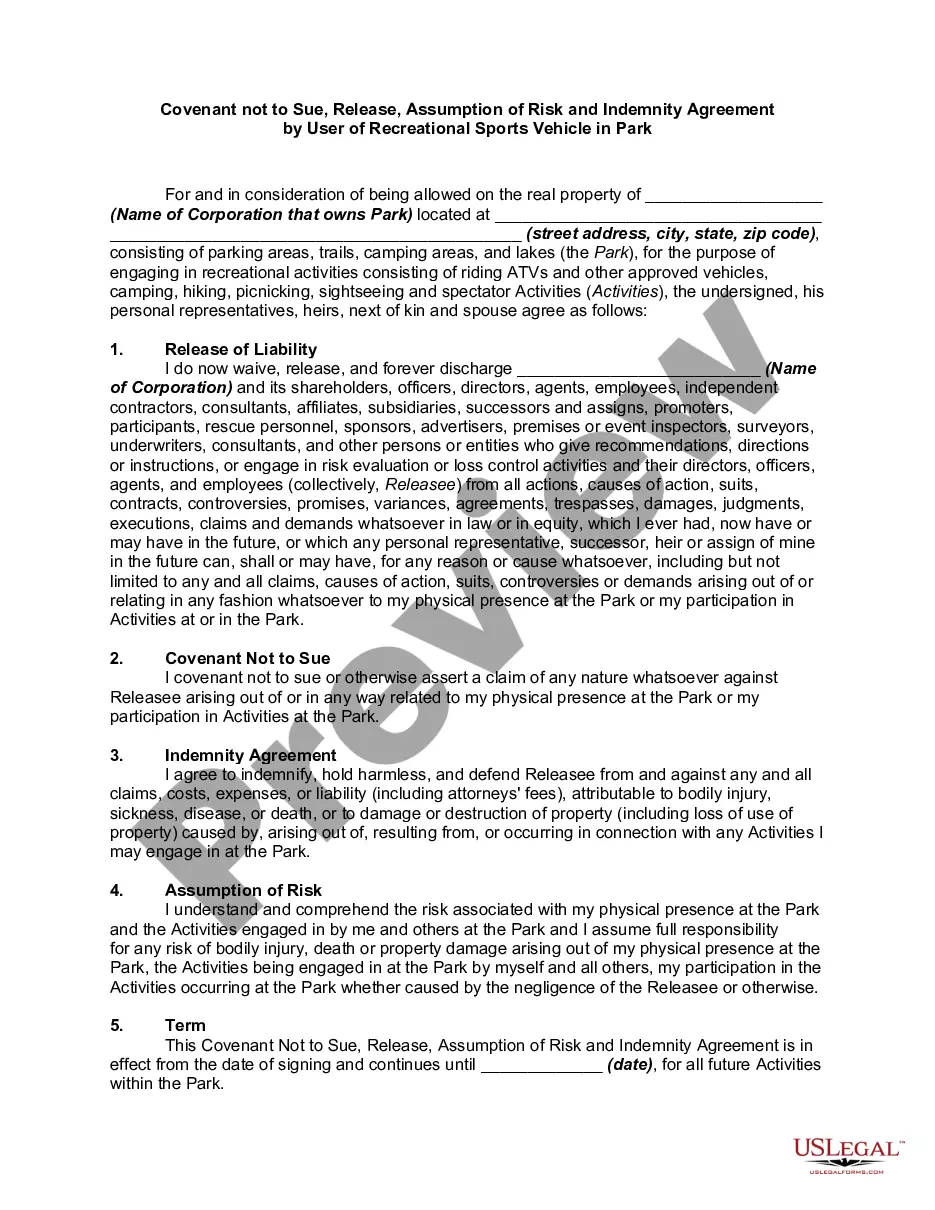

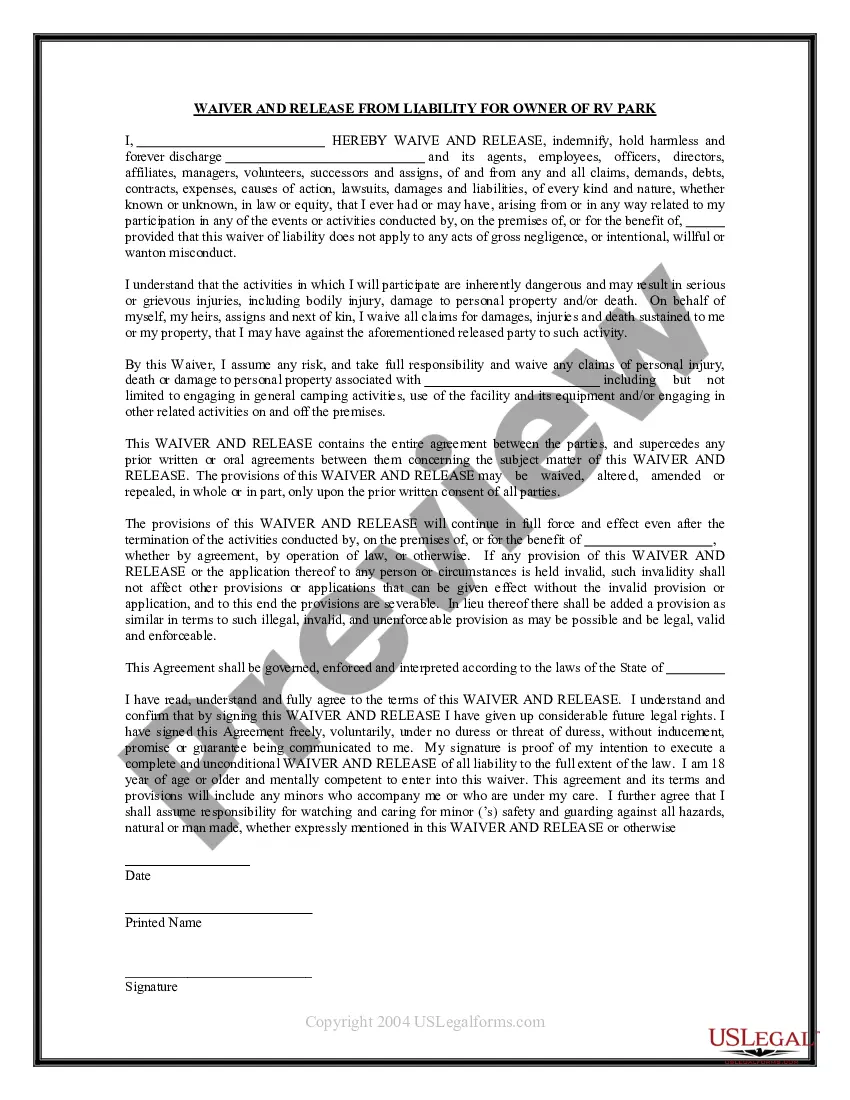
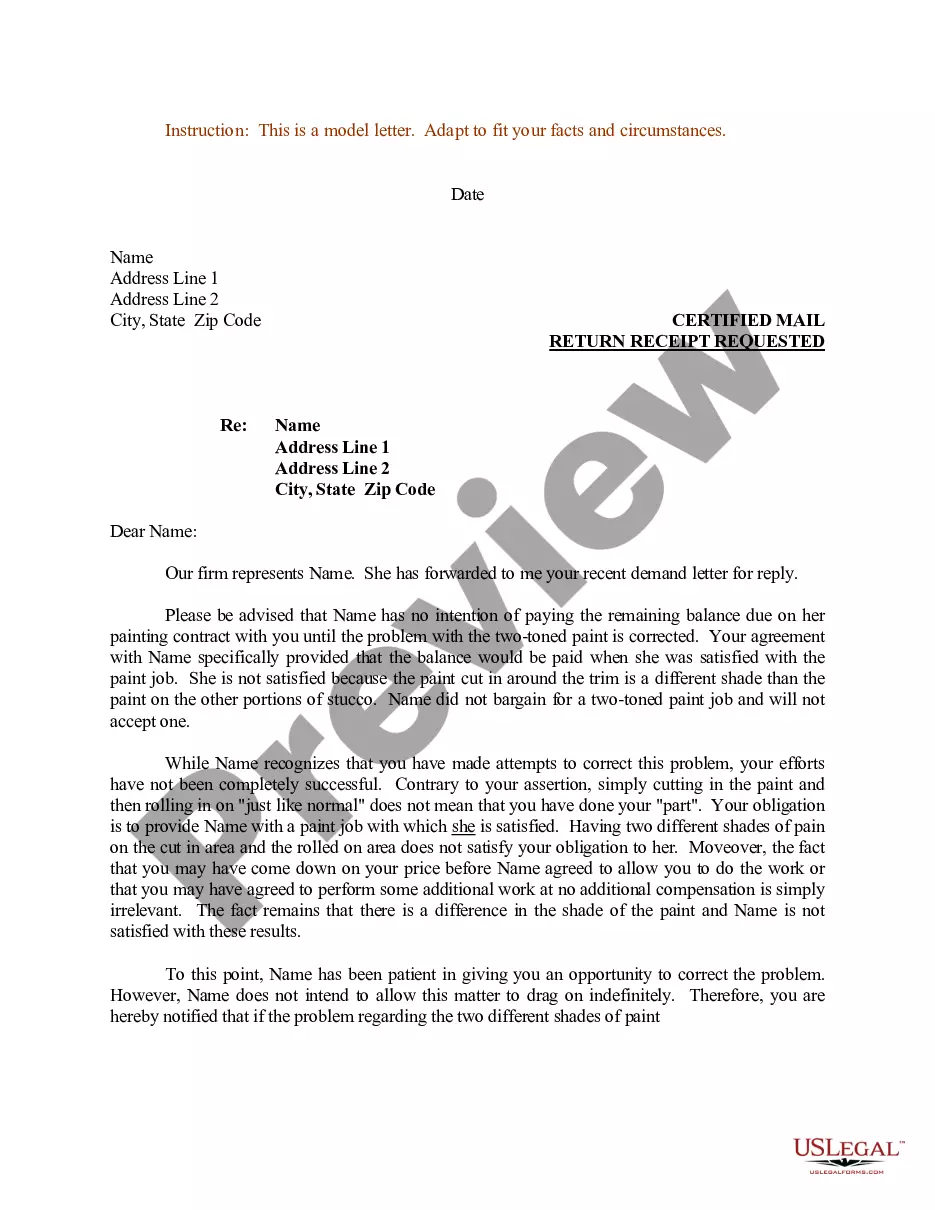

How to fill out Covenant Not To Sue, Release, Assumption Of Risk And Indemnity Agreement By User Of Recreational Sports Vehicle In Park?
It’s widely acknowledged that you cannot instantly qualify as a legal expert, nor can you quickly learn to draft a Covenant Not To Sue vs. Release without a specialized education.
Drafting legal documents is a lengthy process that necessitates particular training and expertise.
So why not entrust the creation of the Covenant Not To Sue vs. Release to the professionals.
Select Buy now. After the purchase is finalized, you can download the Covenant Not To Sue vs. Release, complete it, print it, and send or deliver it to the relevant parties or organizations.
You can regain access to your documents from the My documents section whenever you wish. If you’re a returning client, you can simply Log In and locate and download the template from the same section.
No matter the intention behind your documents—be it financial, legal, or personal—our platform has everything you need. Explore US Legal Forms today!
- Access our platform and find the document you need in just a few minutes.
- Utilize the search field at the top of the site to locate the form you require.
- If available, preview it and review the accompanying description to determine if the Covenant Not To Sue vs. Release is what you're looking for.
- If you need a different form, restart your search.
- Create a free account and choose a subscription plan to acquire the form.
Form popularity
FAQ
A covenant not to sue is a contractual agreement that restricts one or more parties from filing claims against another.
I covenant and agree never, individually or with any person or in any way, to commence, aid in any way, prosecute or cause or permit to be commenced or prosecuted against any Employer Affiliate any action or other proceeding, including, without limitation, an arbitration or other alternative dispute resolution ...
A covenant not to sue legally obliges a party that could initiate a lawsuit not to do so. The covenant is made explicitly between two parties, and any third party that wants to make a claim is legally allowed to do so. Covenants not to sue are used to settle specific legal issues outside of the court system.
Covenant Not to Sue and Indemnification: The Releasor knowingly, intentionally, and voluntarily covenants and agrees it will not now or in the future bring any action in law or equity in any court, forum, or arbitration proceeding (whether by original process, counterclaim, cross-claim, third-party process, impleader, ...
A covenant not to sue is quite different from a release of liability. A release is a waiver or relinquishment of a known right. A release of liability will relinquish or destroy the injured party's cause of action.