Tenant Moving Out Without Notice
Description
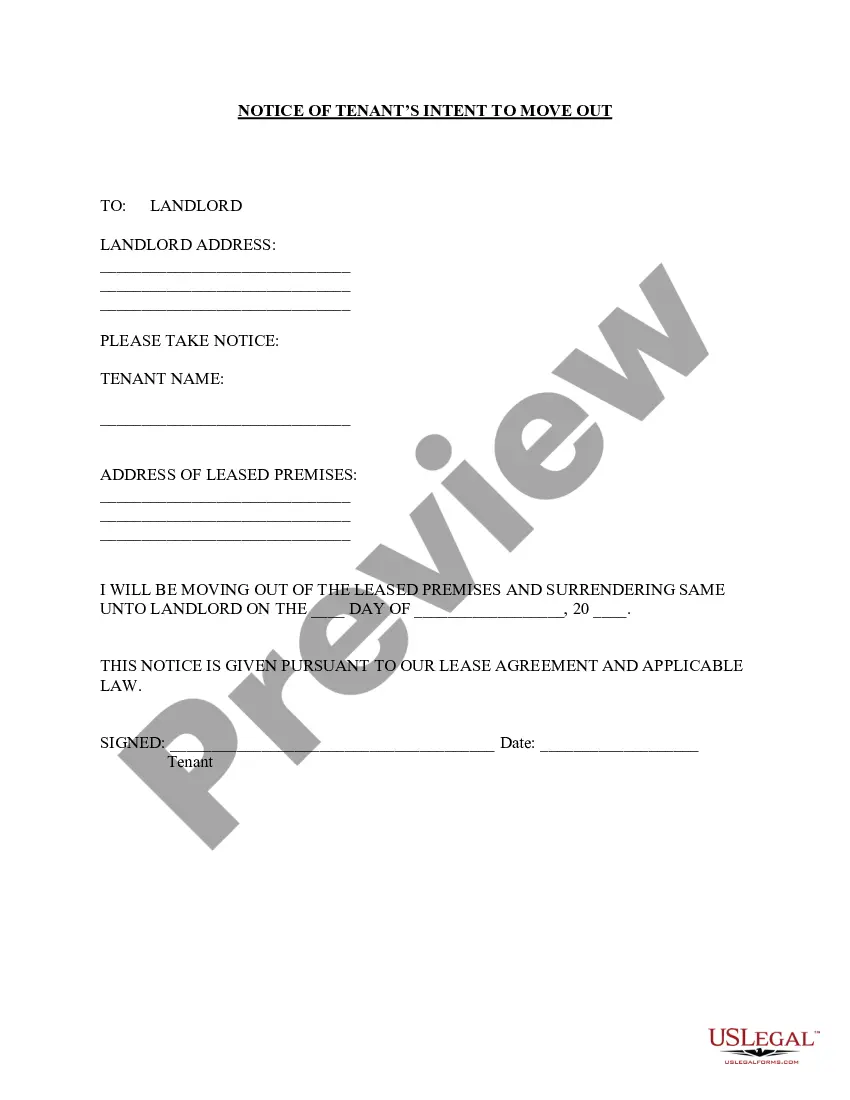
Get your form ready online
Our built-in tools help you complete, sign, share, and store your documents in one place.
Make edits, fill in missing information, and update formatting in US Legal Forms—just like you would in MS Word.
Download a copy, print it, send it by email, or mail it via USPS—whatever works best for your next step.
Sign and collect signatures with our SignNow integration. Send to multiple recipients, set reminders, and more. Go Premium to unlock E-Sign.
If this form requires notarization, complete it online through a secure video call—no need to meet a notary in person or wait for an appointment.
We protect your documents and personal data by following strict security and privacy standards.

Make edits, fill in missing information, and update formatting in US Legal Forms—just like you would in MS Word.

Download a copy, print it, send it by email, or mail it via USPS—whatever works best for your next step.

Sign and collect signatures with our SignNow integration. Send to multiple recipients, set reminders, and more. Go Premium to unlock E-Sign.

If this form requires notarization, complete it online through a secure video call—no need to meet a notary in person or wait for an appointment.

We protect your documents and personal data by following strict security and privacy standards.
Looking for another form?







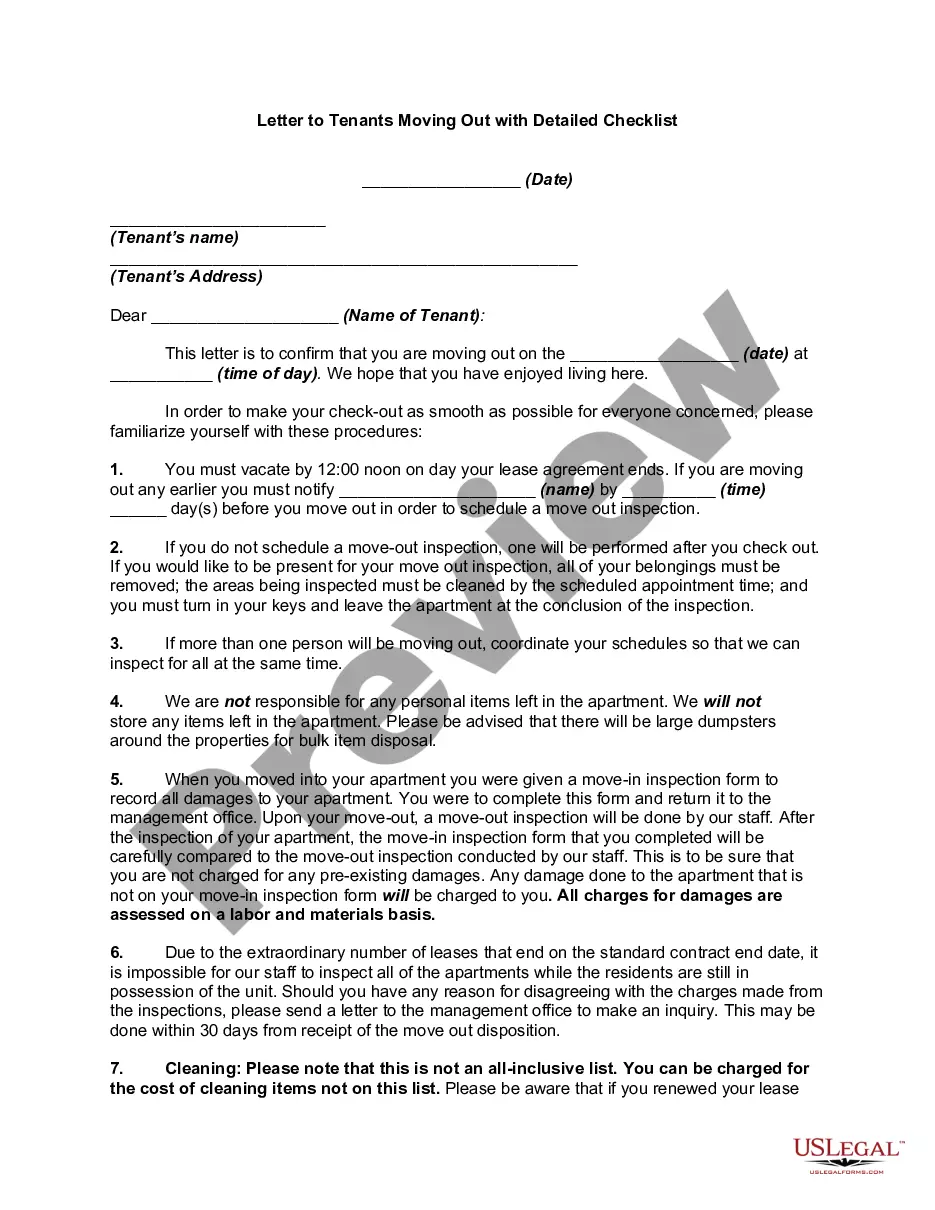
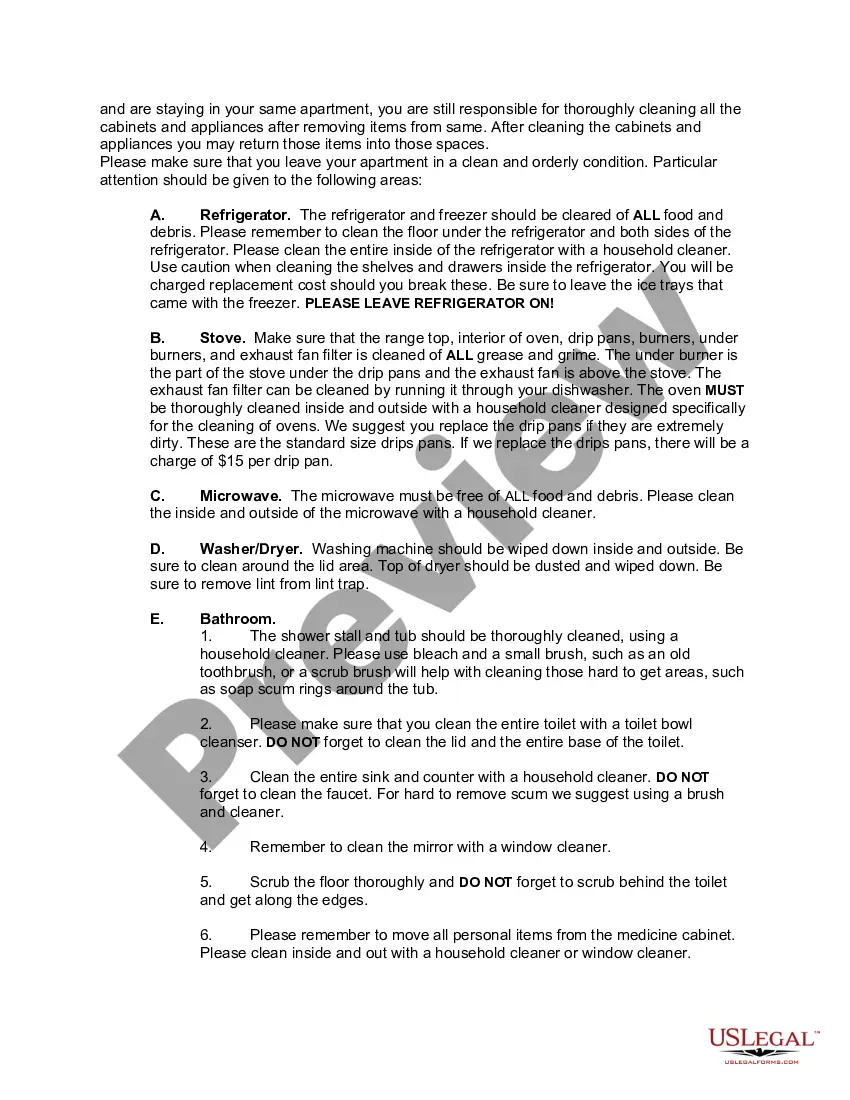
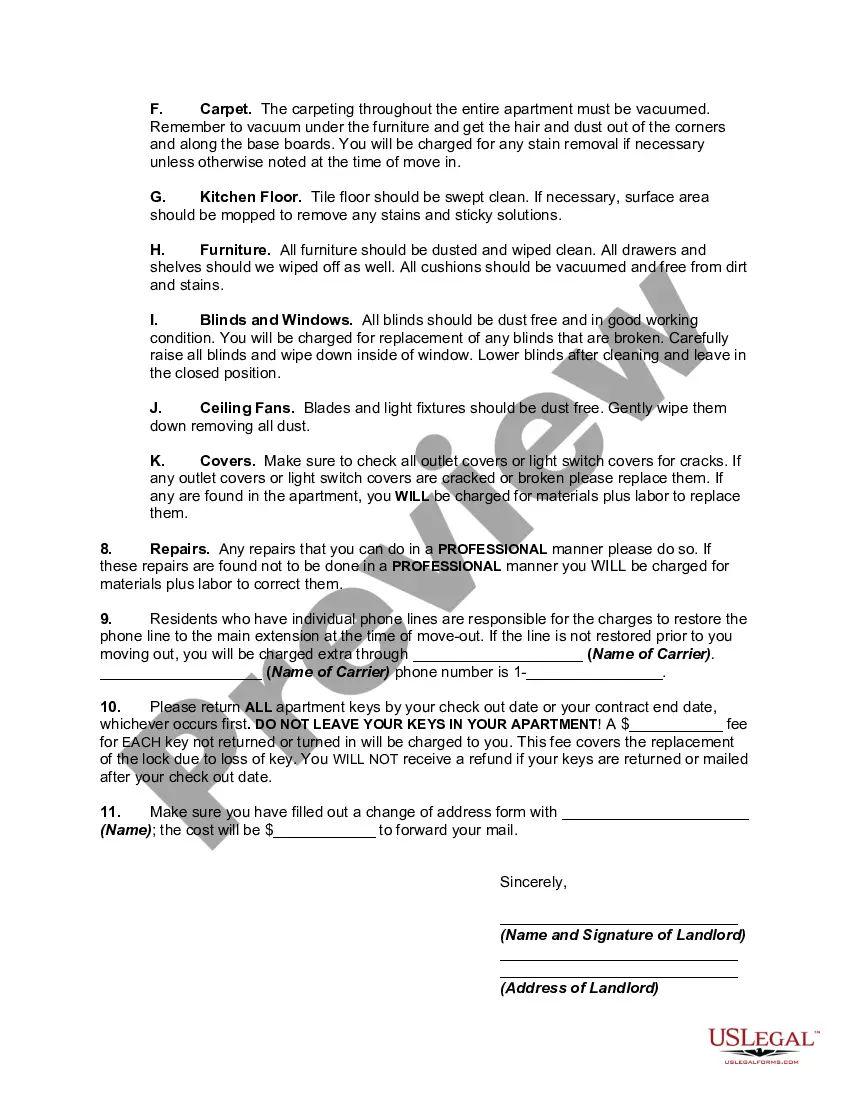
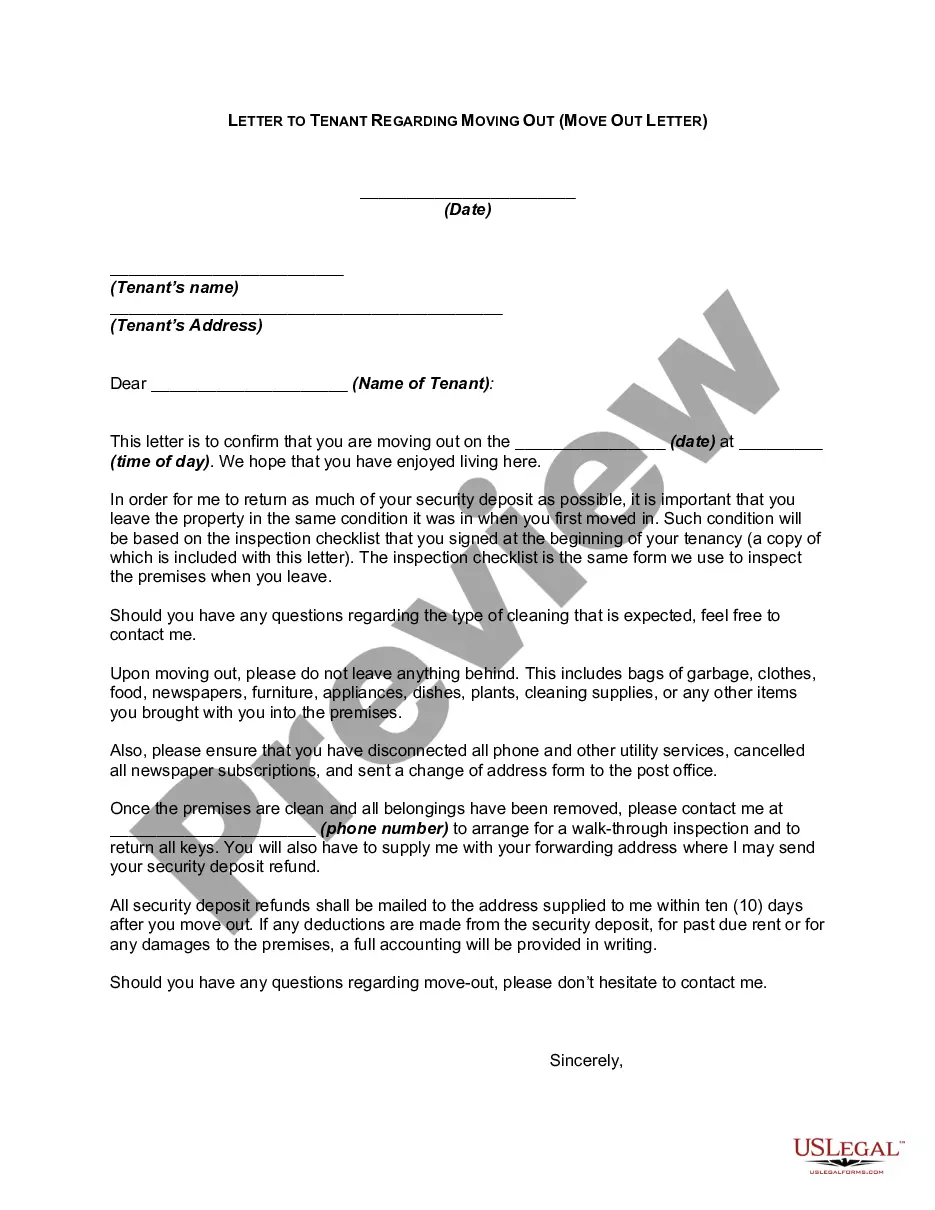
How to fill out Letter To Tenants Moving Out With Detailed Checklist?
Acquiring legal forms that comply with national and local laws is essential, and the web provides numerous alternatives to select from.
However, what is the benefit of squandering time hunting for the suitable Tenant Moving Out Without Notice template online when the US Legal Forms digital library already contains such forms aggregated in one location.
US Legal Forms stands as the largest online legal repository with more than 85,000 editable templates created by lawyers for various professional and personal scenarios.
Explore the template using the Preview feature or through the text description to confirm it aligns with your requirements.
- They are straightforward to navigate with all documents organized by state and intended usage.
- Our experts keep current with legal modifications, so you can be confident that your form is updated and adheres to regulations when obtaining a Tenant Moving Out Without Notice from our site.
- Acquiring a Tenant Moving Out Without Notice is quick and easy for both existing and new users.
- If you already possess an account with an active subscription, Log In and retrieve the document example you require in the desired format.
- If you are new to our platform, follow the steps outlined below.
Form popularity
FAQ
To remove someone from your house immediately, you typically need to follow local laws regarding eviction. Simply asking them to leave usually isn't enough, so it's important to understand the legal procedure. Platforms like USLegalForms offer useful resources to navigate this process effectively and ensure compliance with the law.
Getting someone to leave your house may require legal intervention if they refuse to go. You should document your attempts to resolve the issue peacefully, which might benefit you in court. Consult with legal resources or platforms like USLegalForms to learn how to file for eviction if necessary.
If a tenant doesn't move out after their lease ends or after a notice, you should start the eviction process according to state laws. Gather evidence of the tenant's refusal to leave and any relevant communications. Using USLegalForms can help you create the necessary legal documents to support your case.
When a tenant refuses to leave, it is important to stay calm and approach the situation legally. First, communicate with them to understand their intentions, as they might be willing to discuss their situation. If they insist on staying, you may need to initiate an eviction process to legally remove them from your property.
The timeline for evicting a tenant varies by state, but generally, you can start the eviction process after providing the required notice. If a tenant is moving out without notice, you may expedite the process by filing for an eviction order. Remember, seeking assistance from platforms like USLegalForms can provide the necessary documentation to speed things along.
In most cases, a tenant cannot be evicted immediately, even if they left without notice. You must follow the legal eviction process, which often requires a notice period. Understanding your state laws is crucial, as they outline the required steps to take if a tenant moves out without notice.
In California, a landlord is generally required to provide either 30 or 60 days' notice before terminating a lease, depending on the length of the tenancy. This requirement helps tenants prepare for relocating and prevents surprises. Understanding these notice requirements is essential to avoid disputes when dealing with tenant moving out without notice. For those seeking assistance, US Legal Forms offers resources to help clarify these legal obligations.
If you simply move out and stop paying rent, the landlord will typically initiate a process to recover losses. This may include filing for eviction or pursuing claims in small claims court for damages. Such actions can lead to further financial and legal complications for you. Knowing the risks of tenant moving out without notice can help you make more informed decisions during your lease term.
Moving out without informing your landlord can create significant complications. You may be charged for unpaid rent or held liable for breaking the lease agreement. Additionally, your landlord might take measures to recover their losses, which could involve legal action. It’s important to grasp the consequences of tenant moving out without notice and the impact it can have on both parties.
In cases where a tenant leaves without notice, the landlord faces the task of quickly filling the vacancy. They must assess their rights regarding unpaid rent and potential damages. Additionally, the landlord may need to follow specific legal procedures before retaining any security deposit. Understanding how to navigate tenant moving out without notice can streamline this process.