Agreement Between Subject And Verb
Description
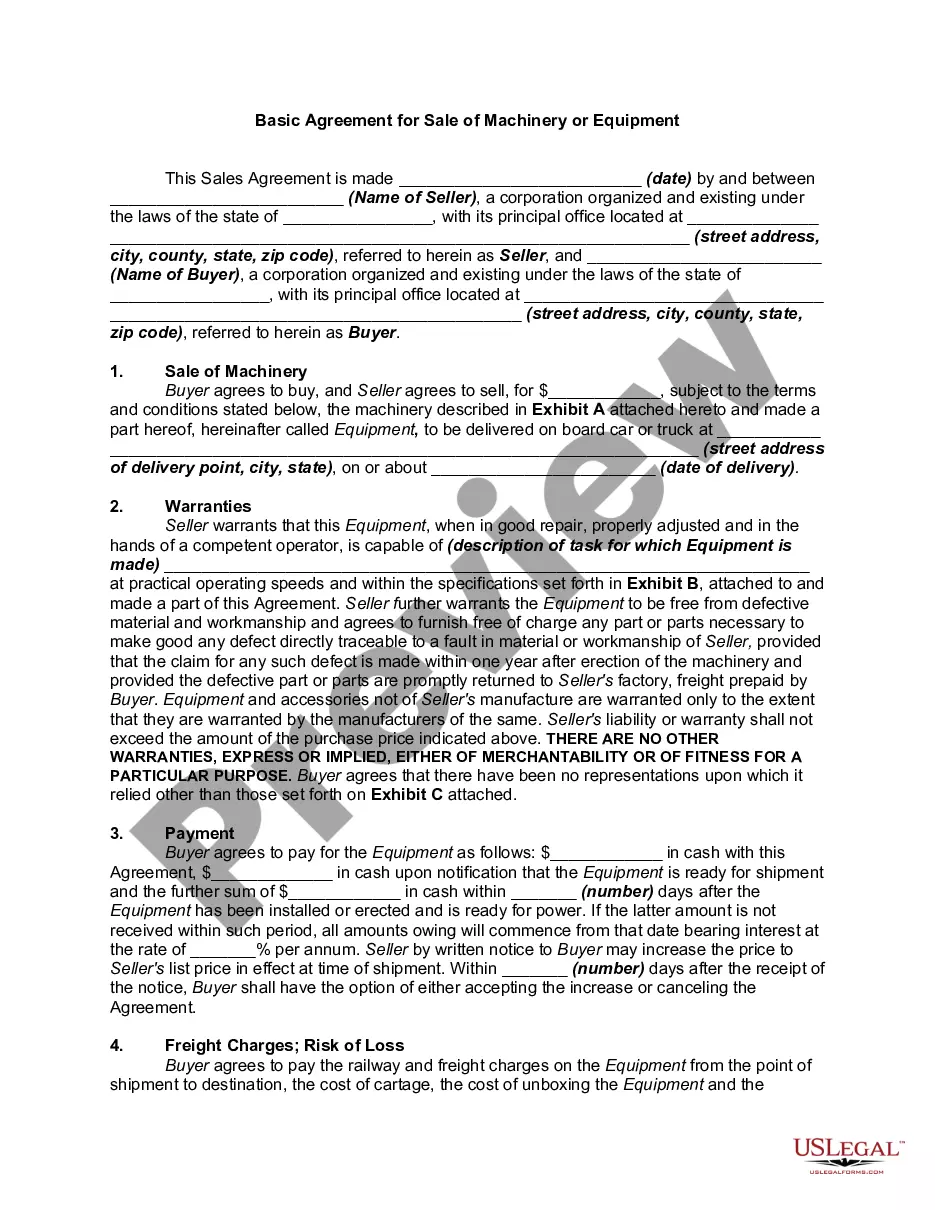
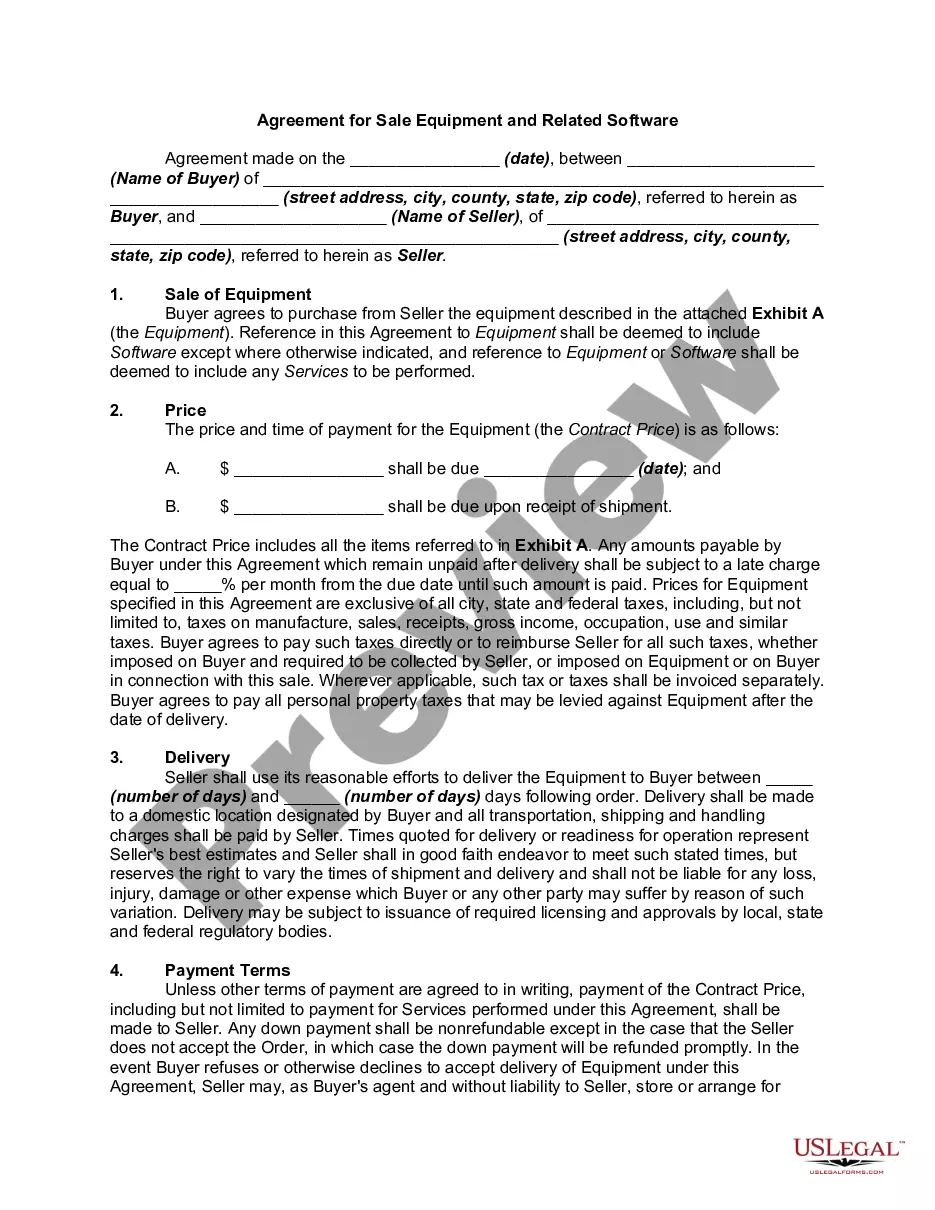
Get your form ready online
Our built-in tools help you complete, sign, share, and store your documents in one place.
Make edits, fill in missing information, and update formatting in US Legal Forms—just like you would in MS Word.
Download a copy, print it, send it by email, or mail it via USPS—whatever works best for your next step.
Sign and collect signatures with our SignNow integration. Send to multiple recipients, set reminders, and more. Go Premium to unlock E-Sign.
If this form requires notarization, complete it online through a secure video call—no need to meet a notary in person or wait for an appointment.
We protect your documents and personal data by following strict security and privacy standards.

Make edits, fill in missing information, and update formatting in US Legal Forms—just like you would in MS Word.

Download a copy, print it, send it by email, or mail it via USPS—whatever works best for your next step.

Sign and collect signatures with our SignNow integration. Send to multiple recipients, set reminders, and more. Go Premium to unlock E-Sign.

If this form requires notarization, complete it online through a secure video call—no need to meet a notary in person or wait for an appointment.

We protect your documents and personal data by following strict security and privacy standards.
Looking for another form?






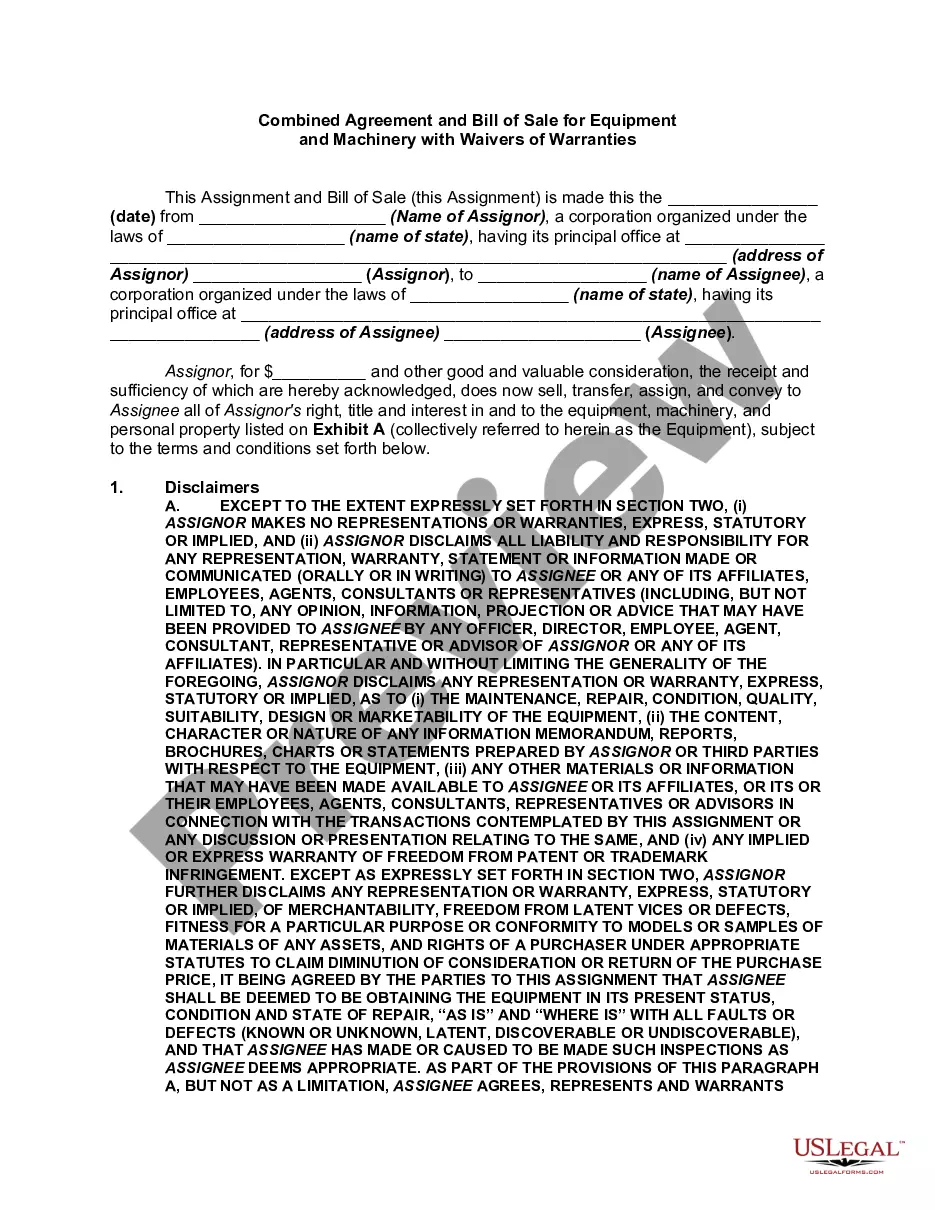
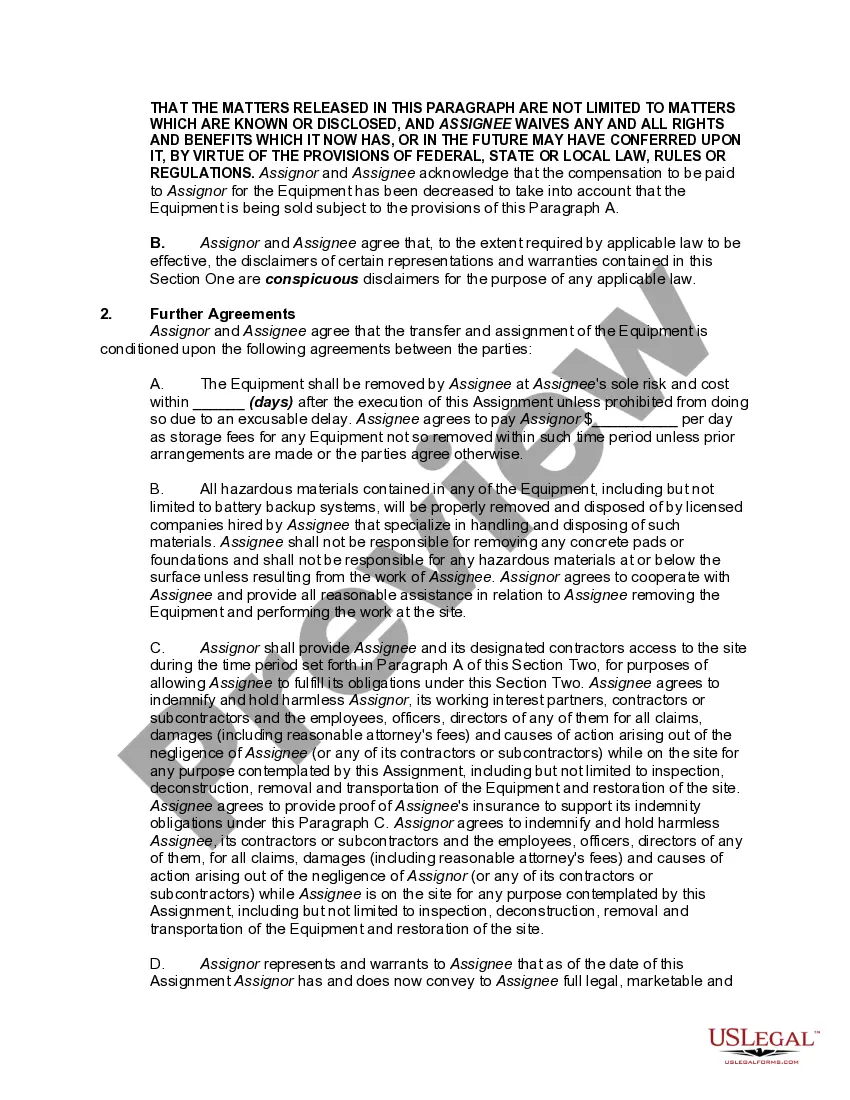
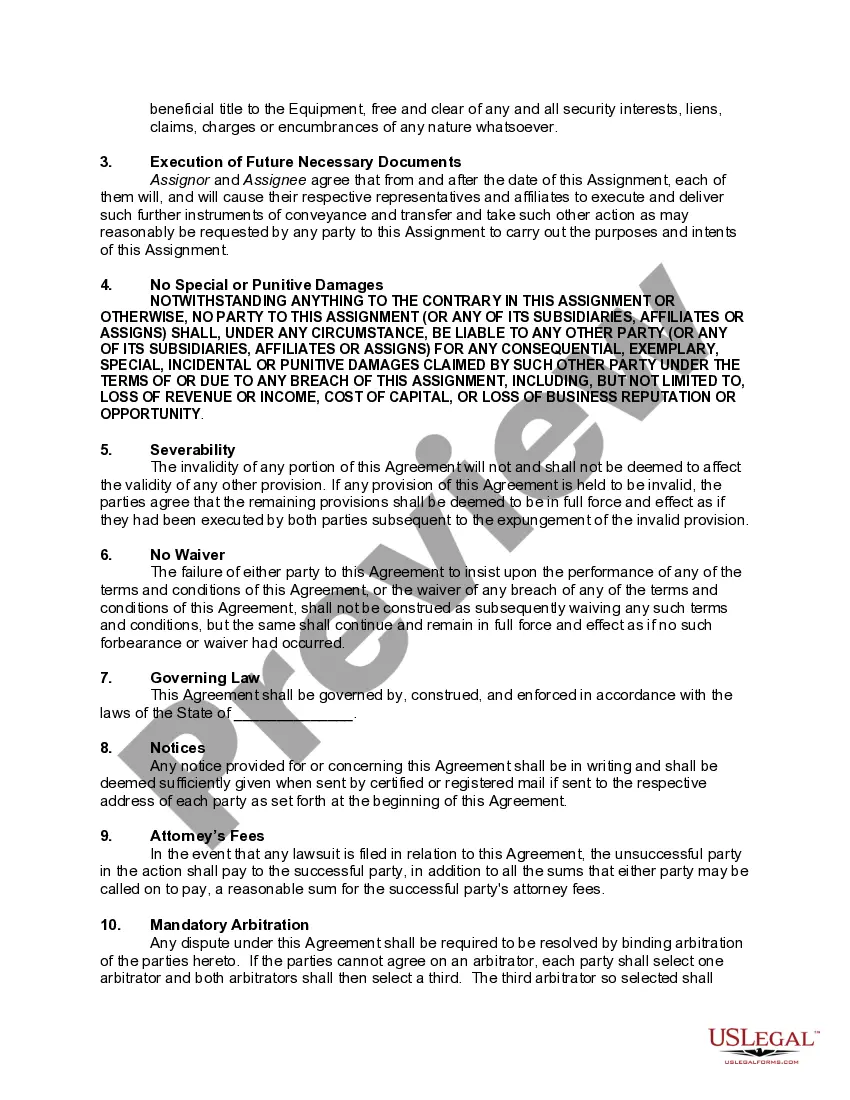
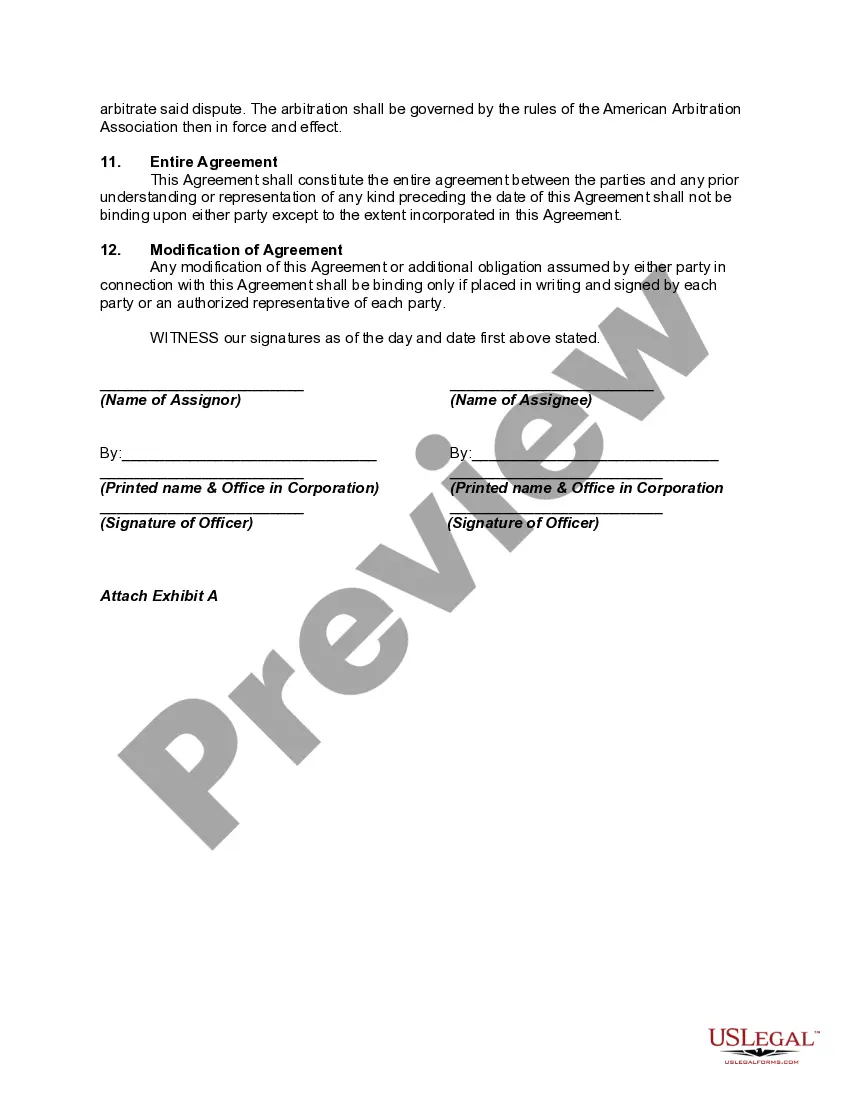
How to fill out Combined Agreement And Bill Of Sale For Equipment And Machinery With Waivers Of Warranties?
- If you are an existing user, log into your account to download the required form template directly. Ensure that your subscription is active; if it has expired, renew it based on your payment plan.
- For first-time users, begin by reviewing the Preview mode and form description to confirm you select the right document that fits your needs and adheres to your local jurisdiction.
- If necessary, utilize the Search tab above to find an alternative template that matches your requirements before proceeding.
- When ready, click on the 'Buy Now' button and choose your preferred subscription plan before creating your account to unlock the vast library of resources.
- Complete your transaction by providing your payment details, either through credit card or PayPal, to finalize the purchase.
- Once your purchase is complete, download your form to your device. You can also access it anytime in the My Forms section of your profile.
In summary, US Legal Forms empowers individuals and attorneys to execute legal documents swiftly and accurately through its extensive and easy-to-use library of legal forms. It offers a collection that's more comprehensive than competitors, ensuring you have all the tools needed to maintain effective communication in legal matters.
Don't wait to ensure that your legal documents are precise and effective—begin your journey with US Legal Forms today!
Form popularity
FAQ
Subject verb agreement rule 3 states that in sentences with collective nouns, the verb can be singular or plural based on context. For example, 'The team wins the championship' uses a singular verb because the team acts as a unit. Conversely, 'The team are arguing among themselves' uses a plural verb, emphasizing individual actions. Recognizing the nuances of agreement between subject and verb aids in creating precise and meaningful sentences.
An example of agreement of subject and verb can be seen in the sentence 'The cats sleep on the couch.' Here, 'The cats' is a plural subject, and 'sleep' is the appropriate plural verb form. This alignment illustrates the vital agreement between subject and verb, which is essential for grammatical accuracy. It contributes to the clarity and effectiveness of your communication.
Subject and verb agreement refers to the matching of the subject and verb in a sentence. For instance, in the sentence 'She runs every morning,' 'She' is a singular subject, and 'runs' is the correct singular form of the verb. This concept emphasizes the importance of the agreement between subject and verb in conveying accurate meaning. Proper agreement prevents confusion and strengthens your writing.
A simple example of a sentence with a subject and a verb is, 'The dog barks.' In this sentence, 'The dog' serves as the subject, while 'barks' functions as the verb. Understanding the agreement between subject and verb helps in composing clear and effective sentences. A clear grasp of this concept enhances your writing and communication skills.
The formula for subject-verb agreement centers on matching the subject with the appropriate verb form. It can be simplified to: Subject + Verb = Agreement. For instance, with a singular subject like 'The child,' the formula would demonstrate: 'The child plays.' Understanding this formula aids in ensuring you maintain correct agreement between subject and verb in your writing.
To write a subject-verb agreement, start by ensuring the subject properly matches the verb in number. For instance, if your subject is 'The teacher,' you would write, 'The teacher writes.' This method allows you to create clear and concise sentences that uphold the principles of agreement between subject and verb, reinforcing effective communication.
The five rules of subject-verb agreement include: 1) A singular subject takes a singular verb, e.g., 'He eats.' 2) A plural subject takes a plural verb, e.g., 'They eat.' 3) When subjects are joined by 'and,' use a plural verb, e.g., 'Tom and Jerry play.' 4) When subjects are joined by 'or,' use the verb that agrees with the closest subject, e.g., 'The cat or the dogs bark.' 5) Special words like 'everyone' or 'each' take singular verbs, e.g., 'Everyone loves a good story.' Applying these rules enhances the clarity of agreement between subject and verb.
To write a verb in agreement with its subject, you should first identify whether the subject is singular or plural. For a singular subject, use a singular verb, as in 'She runs.' Conversely, with a plural subject, use a plural verb, such as 'They run.' Consistently following this approach ensures an accurate agreement between subject and verb.
An example of a verb agreement with a subject can be seen in the sentence 'The dog barks.' Here, the subject 'dog' is singular, and the verb 'barks' agrees with it in number. When constructing sentences, always ensure that the verb correctly matches the subject to maintain proper agreement between subject and verb.
Making subjects and verbs agree involves two steps: finding the subject and selecting the correct verb form. For instance, use 'The team wins' for a singular subject and 'The teams win' for plural subjects. By following these rules consistently, you will strengthen your writing skills. Additionally, services like Uslegalforms provide templates that exemplify correct subject-verb agreement.