Texas Irrevocable Trust With Beneficiary
Description



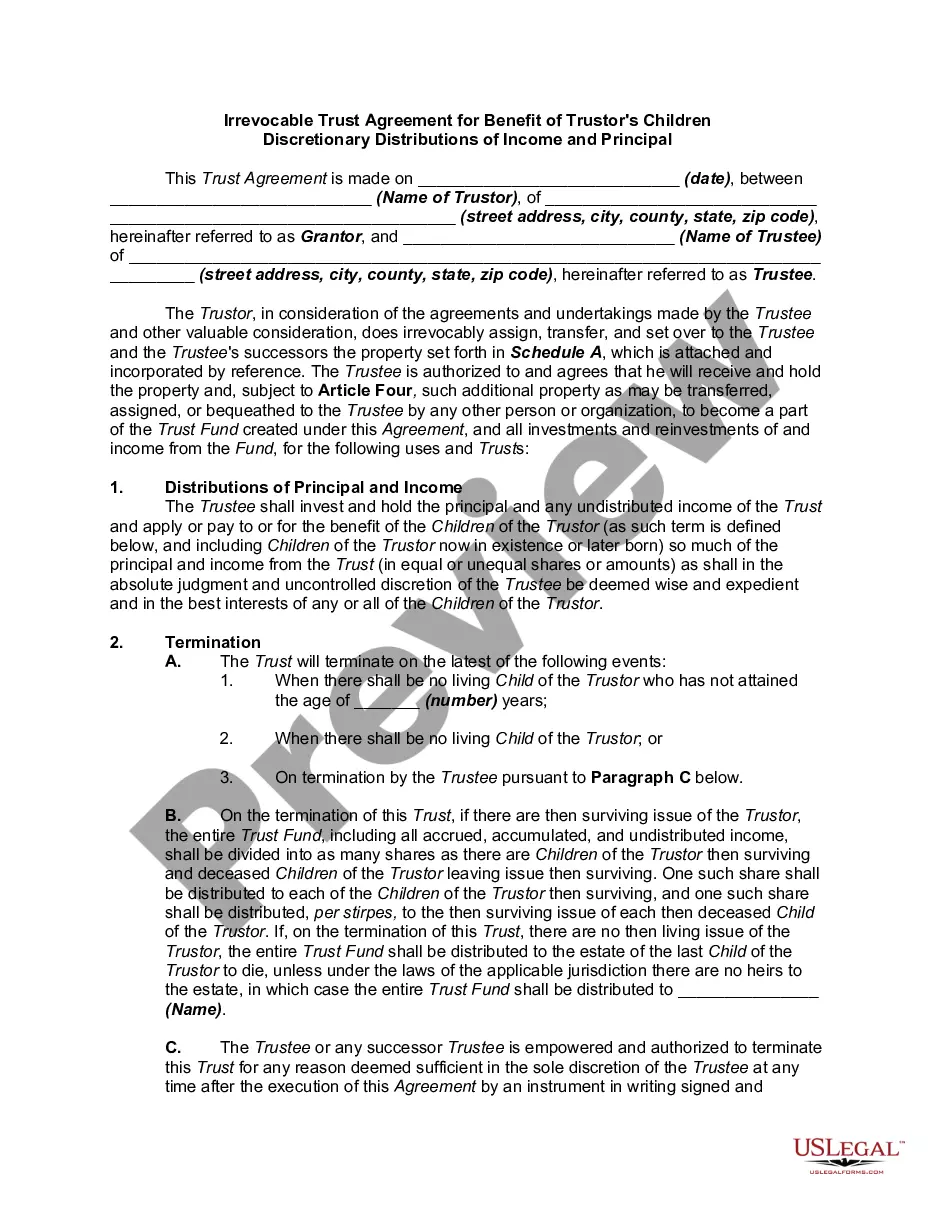
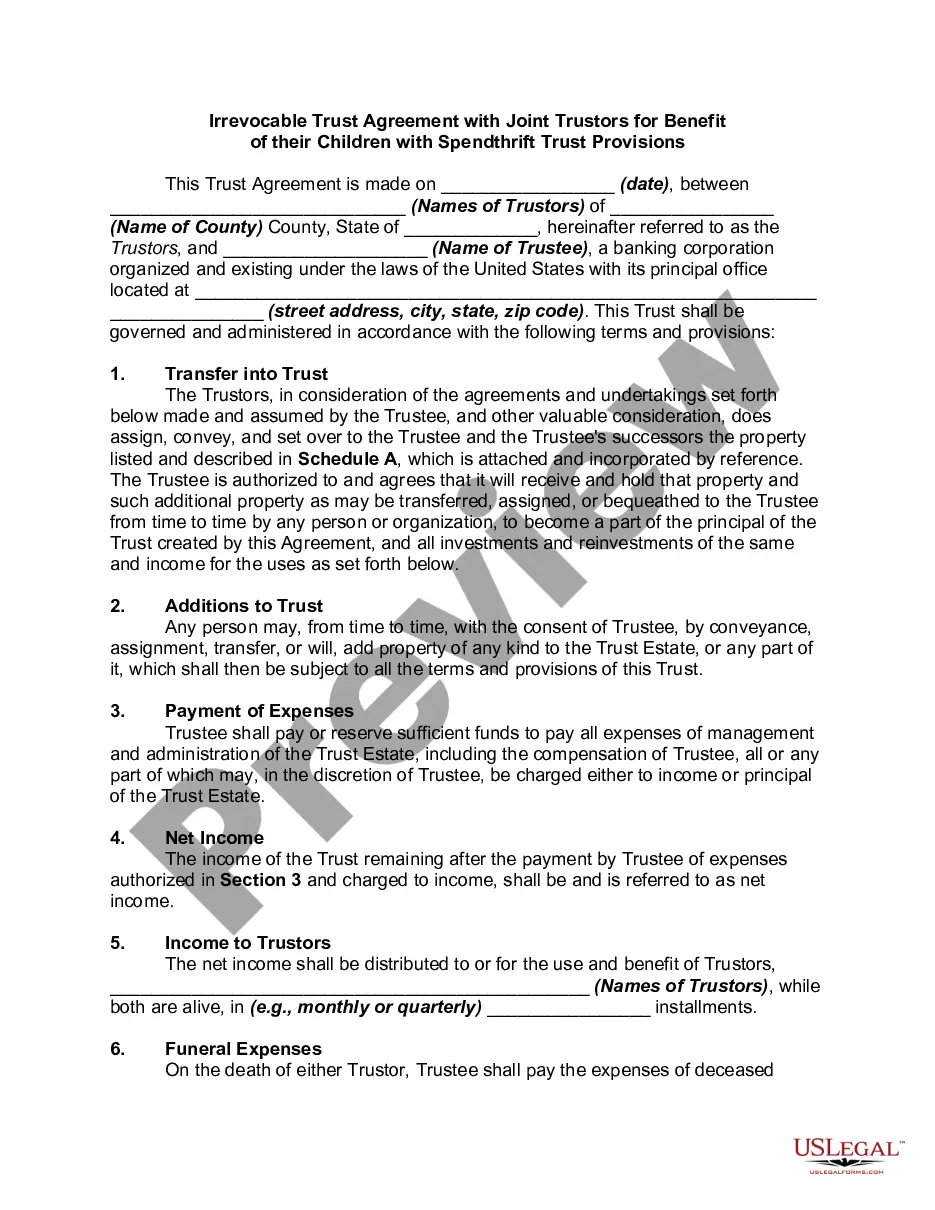
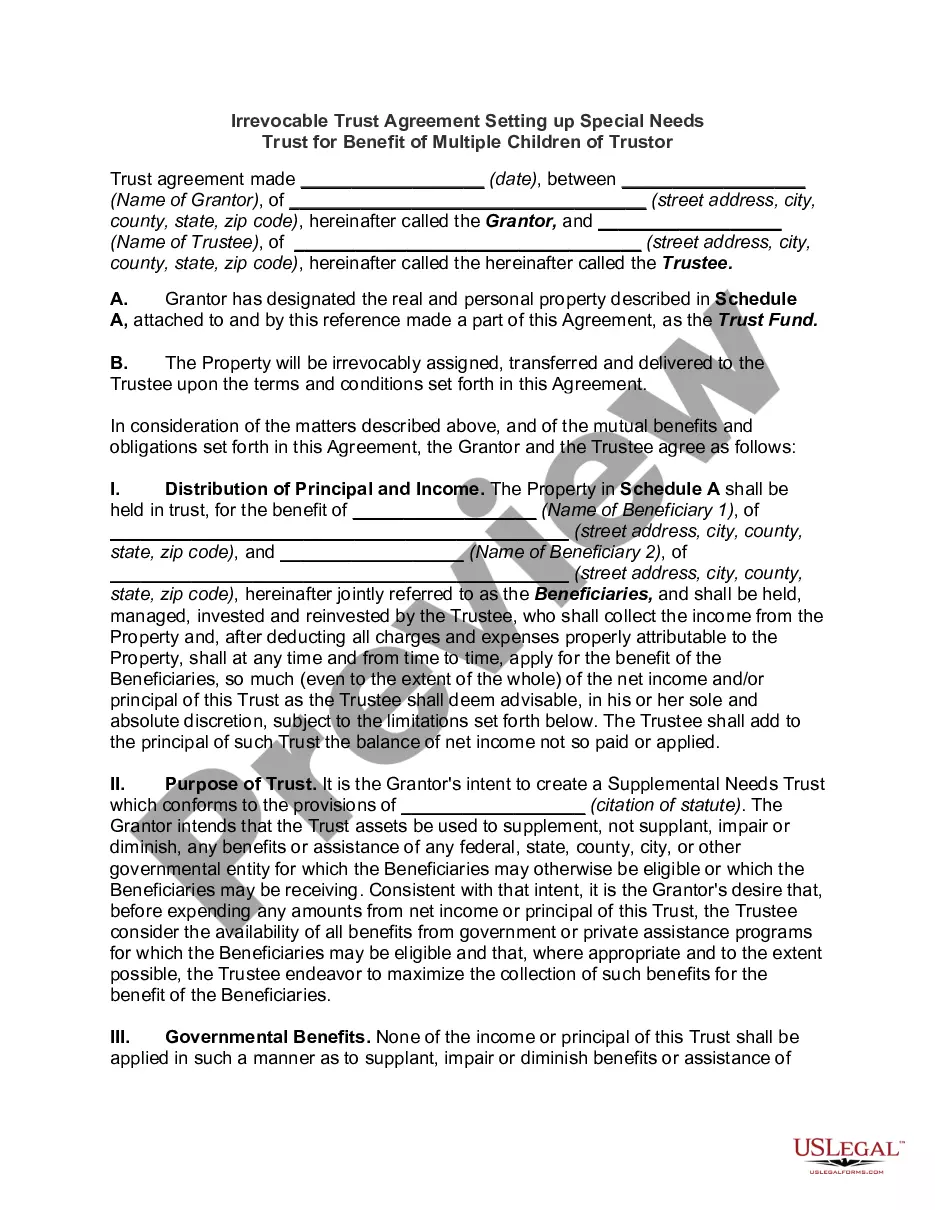
Get your form ready online
Our built-in tools help you complete, sign, share, and store your documents in one place.
Make edits, fill in missing information, and update formatting in US Legal Forms—just like you would in MS Word.
Download a copy, print it, send it by email, or mail it via USPS—whatever works best for your next step.
Sign and collect signatures with our SignNow integration. Send to multiple recipients, set reminders, and more. Go Premium to unlock E-Sign.
If this form requires notarization, complete it online through a secure video call—no need to meet a notary in person or wait for an appointment.
We protect your documents and personal data by following strict security and privacy standards.

Make edits, fill in missing information, and update formatting in US Legal Forms—just like you would in MS Word.

Download a copy, print it, send it by email, or mail it via USPS—whatever works best for your next step.

Sign and collect signatures with our SignNow integration. Send to multiple recipients, set reminders, and more. Go Premium to unlock E-Sign.

If this form requires notarization, complete it online through a secure video call—no need to meet a notary in person or wait for an appointment.

We protect your documents and personal data by following strict security and privacy standards.
Looking for another form?










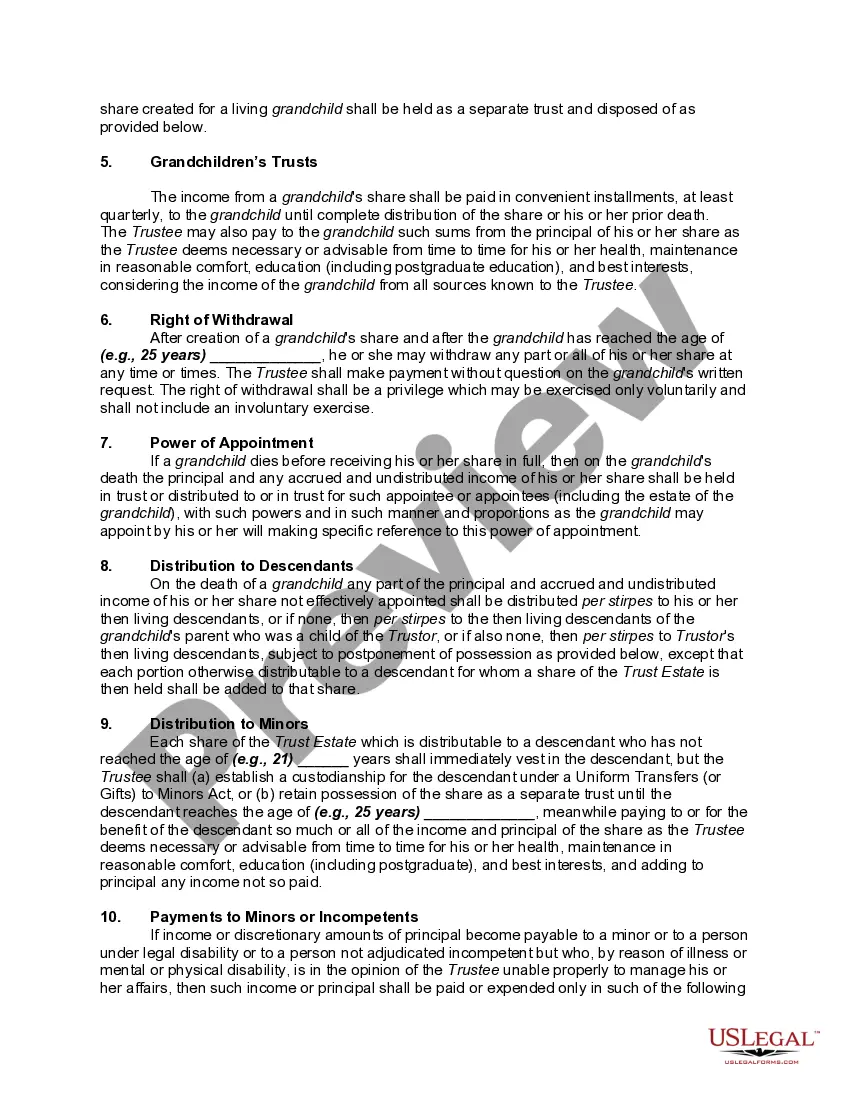
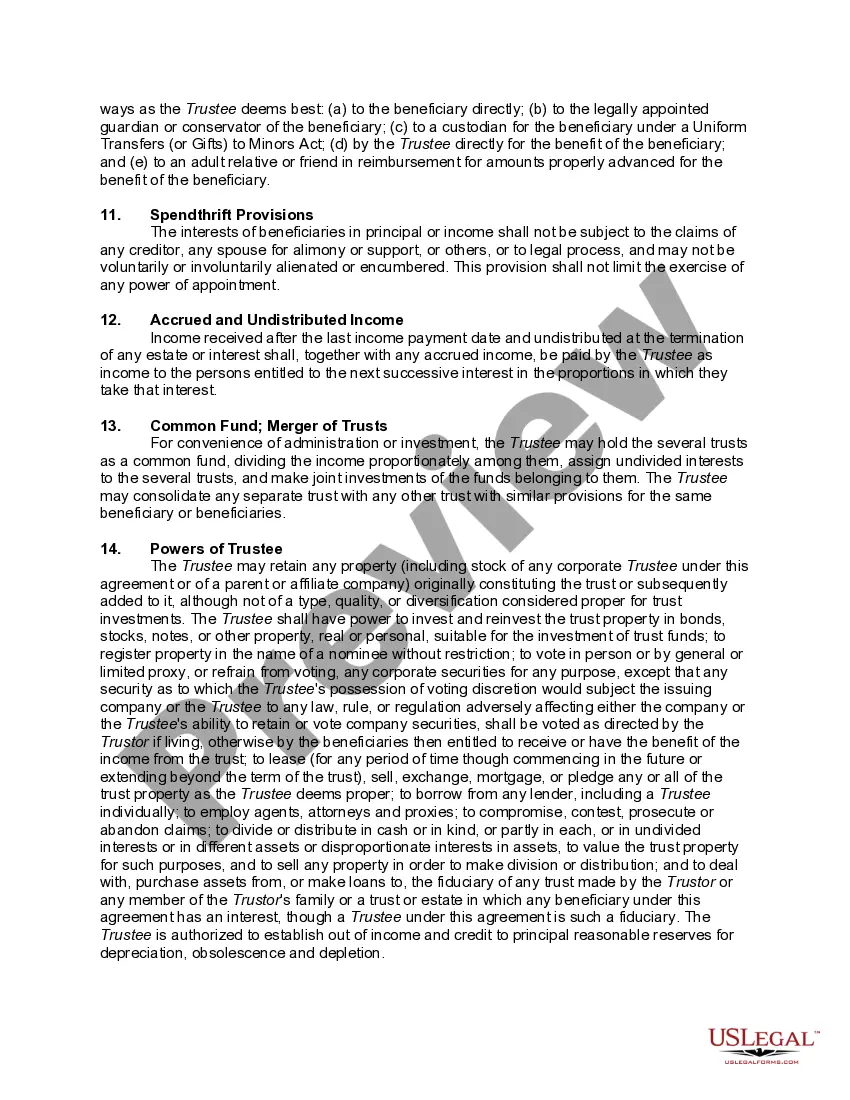
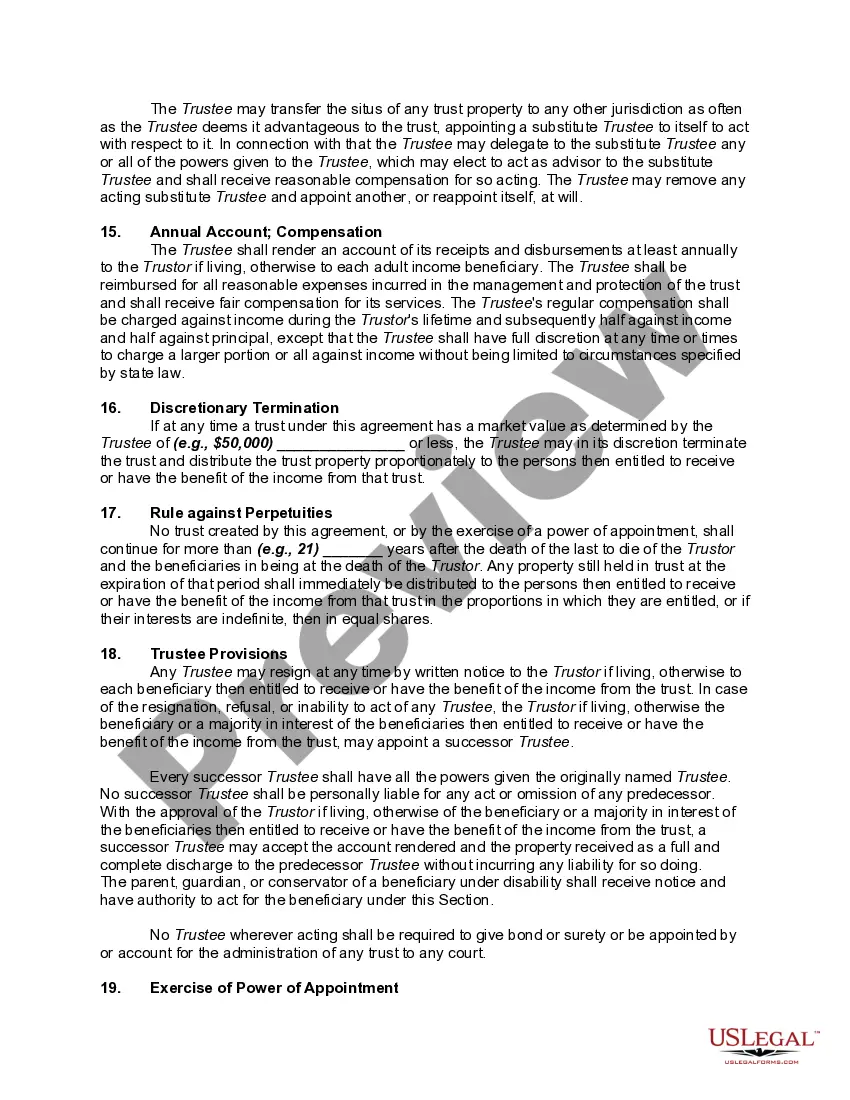
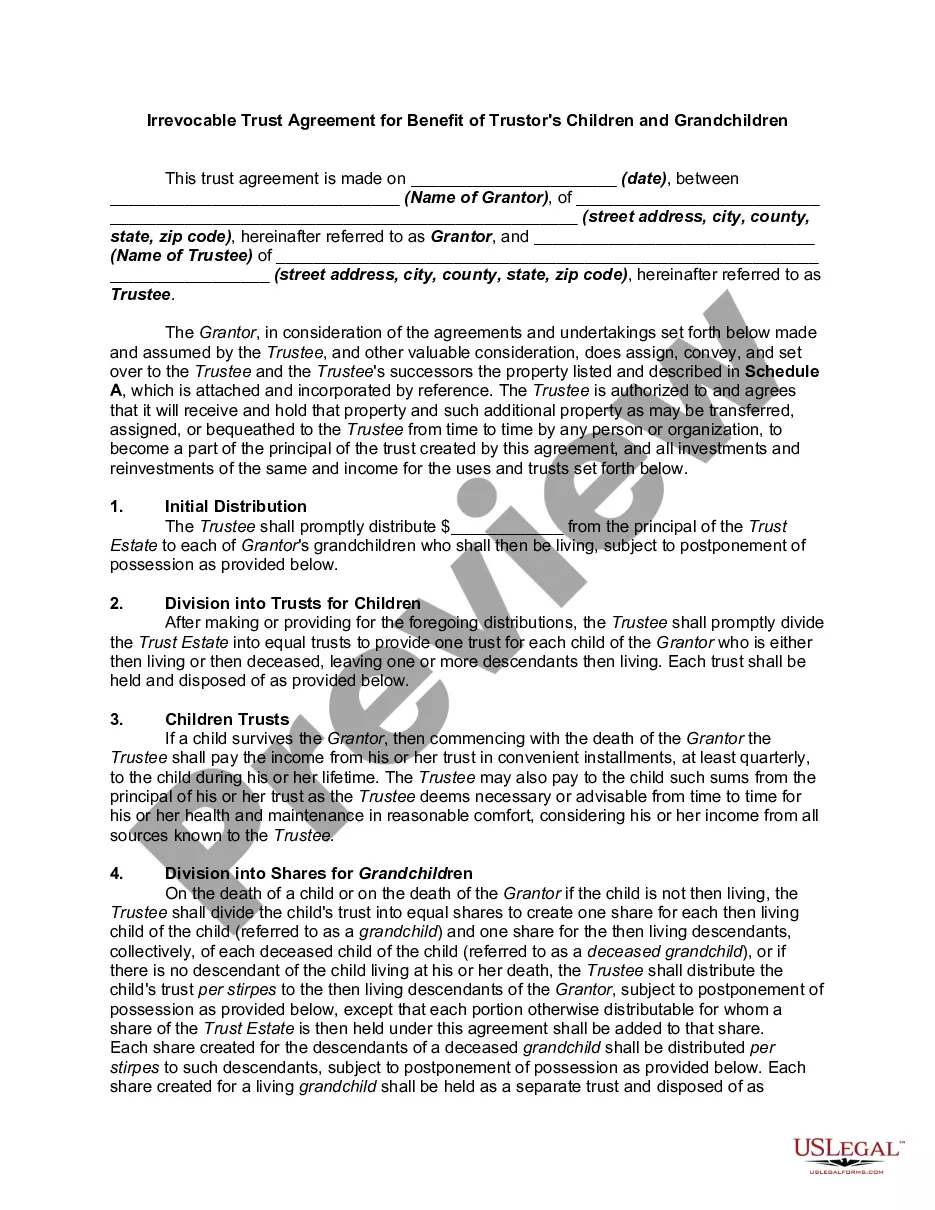
How to fill out Irrevocable Trust Agreement For Benefit Of Trustor's Children And Grandchildren With Spendthrift Trust Provisions?
- If you're a returning user, log in to your account at US Legal Forms. Check if your subscription is active before downloading the appropriate form template.
- For first-time users, start by exploring the Preview mode of your desired form. Confirm that the document suits your needs and complies with local jurisdiction requirements.
- If the form isn't quite right, utilize the Search tab to find an alternative template that fits your requirements.
- After locating the correct document, select the Buy Now option and choose your preferred subscription plan, creating an account to access the vast library of templates.
- Proceed with the payment process, using a credit card or PayPal to complete your subscription.
- Once purchased, download your form directly to your device, making it easier to complete. You can also access it anytime via the My Forms section in your profile.
US Legal Forms is dedicated to empowering both individuals and attorneys by simplifying the legal document process. With an extensive library of over 85,000 forms, our platform makes it easy to find the documents you need quickly.
Start your journey to effectively managing your estate today. Visit US Legal Forms to explore our resources and create your Texas irrevocable trust with beneficiary now!
Form popularity
FAQ
Establishing a Texas irrevocable trust with beneficiary provisions offers various advantages, such as asset protection, tax benefits, and control over asset distribution. By shielding your assets from creditors and ensuring they pass smoothly to beneficiaries, you create a secure financial future. Additionally, this trust structure can significantly reduce estate taxes, making it a valuable component of effective estate planning.
Generally, you cannot add a beneficiary to a Texas irrevocable trust with beneficiary status once the trust is established. The terms of the irrevocable trust are fixed, preventing changes by the grantor. However, if you're looking at estate planning strategies that involve flexibility, platforms like US Legal Forms can provide useful templates and guidance tailored to your needs.
Yes, a Texas irrevocable trust with beneficiary designations can indeed have designated beneficiaries who are entitled to receive assets from the trust. The trust document explicitly lists these beneficiaries and outlines the conditions under which distributions occur. This structure helps ensure that the grantor’s wishes are honored while providing financial security for the beneficiaries.
Recent updates regarding Texas irrevocable trust with beneficiary provisions include changes in tax laws and regulations that affect how these trusts are administered. These rules may influence how trusts are taxed and the benefits that can be passed to beneficiaries. Therefore, consulting with a legal expert is essential to understand how these changes can affect your specific irrevocable trust.
Beneficiaries of a Texas irrevocable trust with beneficiary status have specified rights to receive trust distributions as outlined in the trust document. They can typically request information about the trust and review its financial statements. However, it's important to note that since the trust is irrevocable, the original grantor generally cannot modify its terms after creation, which impacts the beneficiaries' rights.
Adding a beneficiary to a Texas irrevocable trust can be quite complex, as changes to the trust are usually restricted. If the trust document allows for adjustments, you may need to execute an amendment or a new trust document, keeping in mind the legal intricacies. Consulting with a legal expert or using a service like US Legal Forms can help you navigate these changes effectively and ensure your wishes are honored.
Filling out a Texas irrevocable trust with beneficiary information requires careful attention to detail. Begin by providing essential information about the trust, including the name of the trust, the trustee, and the beneficiaries. Make sure to clearly define how the assets will be distributed among the beneficiaries. Resources like US Legal Forms can provide templates and guidance to help you complete this process accurately.
To set up a Texas irrevocable trust with beneficiary designation, you will need to draft a trust document that outlines your wishes. This document should include details such as the assets you wish to transfer, the beneficiaries, and the purpose of the trust. You may want to consult legal professionals or platforms like US Legal Forms to help simplify the process and ensure compliance with Texas laws.
The biggest mistake parents often make when establishing a Texas irrevocable trust with beneficiary accounts is not fully communicating their intentions with their heirs. Failing to explain the purpose and terms of the trust can lead to confusion and disputes later. It is essential to ensure that beneficiaries understand their roles, responsibilities, and the benefits they will receive from the trust.
Setting up a Texas irrevocable trust with beneficiary status can lead to potential risks. Once you establish this trust, you generally lose control over the assets, meaning you cannot change the terms or remove assets without legal challenges. Additionally, if you improperly structure the trust, it may expose your assets to creditors or cause unintended tax implications.