Spendthrift Trust Taxation Without Representation
Description




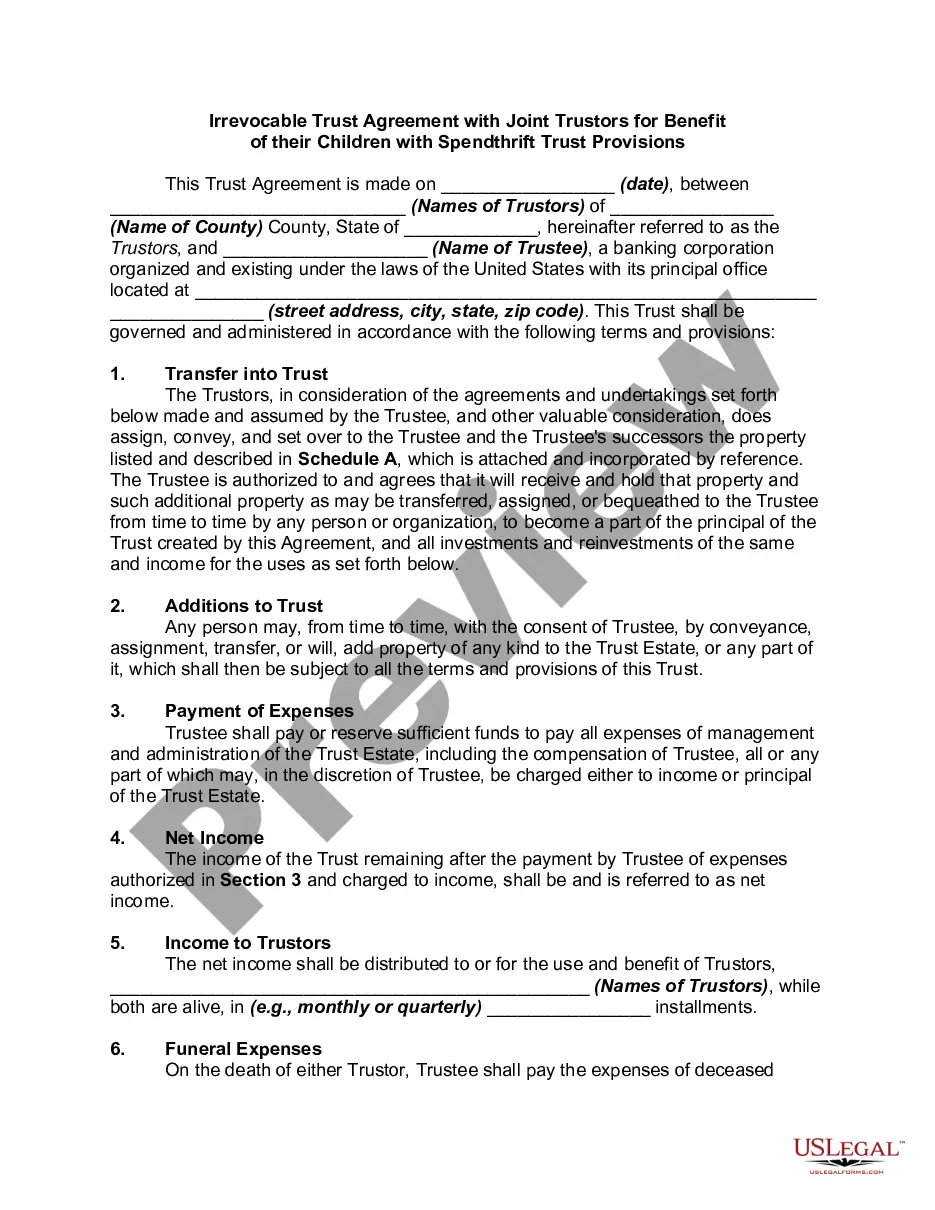
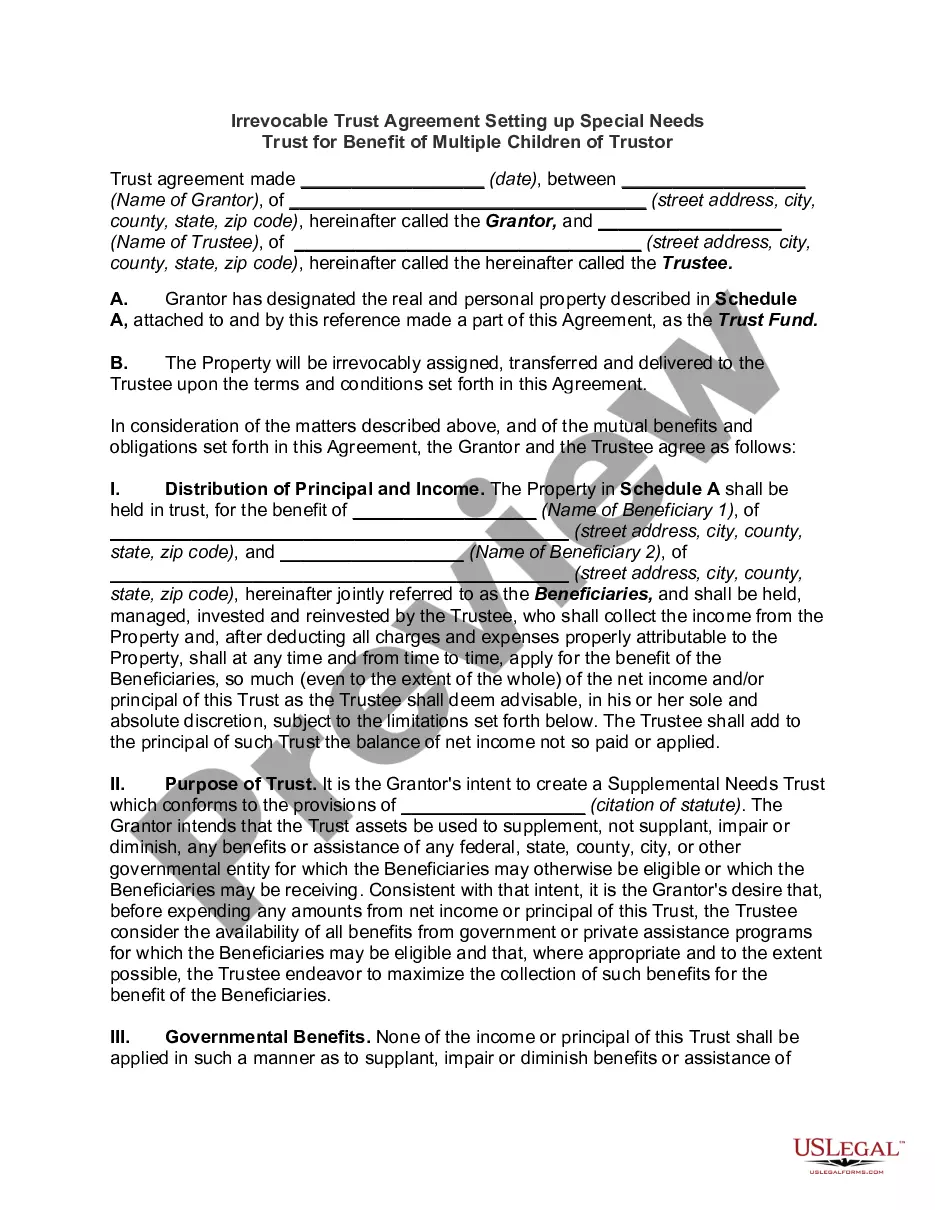
Get your form ready online
Our built-in tools help you complete, sign, share, and store your documents in one place.
Make edits, fill in missing information, and update formatting in US Legal Forms—just like you would in MS Word.
Download a copy, print it, send it by email, or mail it via USPS—whatever works best for your next step.
Sign and collect signatures with our SignNow integration. Send to multiple recipients, set reminders, and more. Go Premium to unlock E-Sign.
If this form requires notarization, complete it online through a secure video call—no need to meet a notary in person or wait for an appointment.
We protect your documents and personal data by following strict security and privacy standards.

Make edits, fill in missing information, and update formatting in US Legal Forms—just like you would in MS Word.

Download a copy, print it, send it by email, or mail it via USPS—whatever works best for your next step.

Sign and collect signatures with our SignNow integration. Send to multiple recipients, set reminders, and more. Go Premium to unlock E-Sign.

If this form requires notarization, complete it online through a secure video call—no need to meet a notary in person or wait for an appointment.

We protect your documents and personal data by following strict security and privacy standards.
Looking for another form?








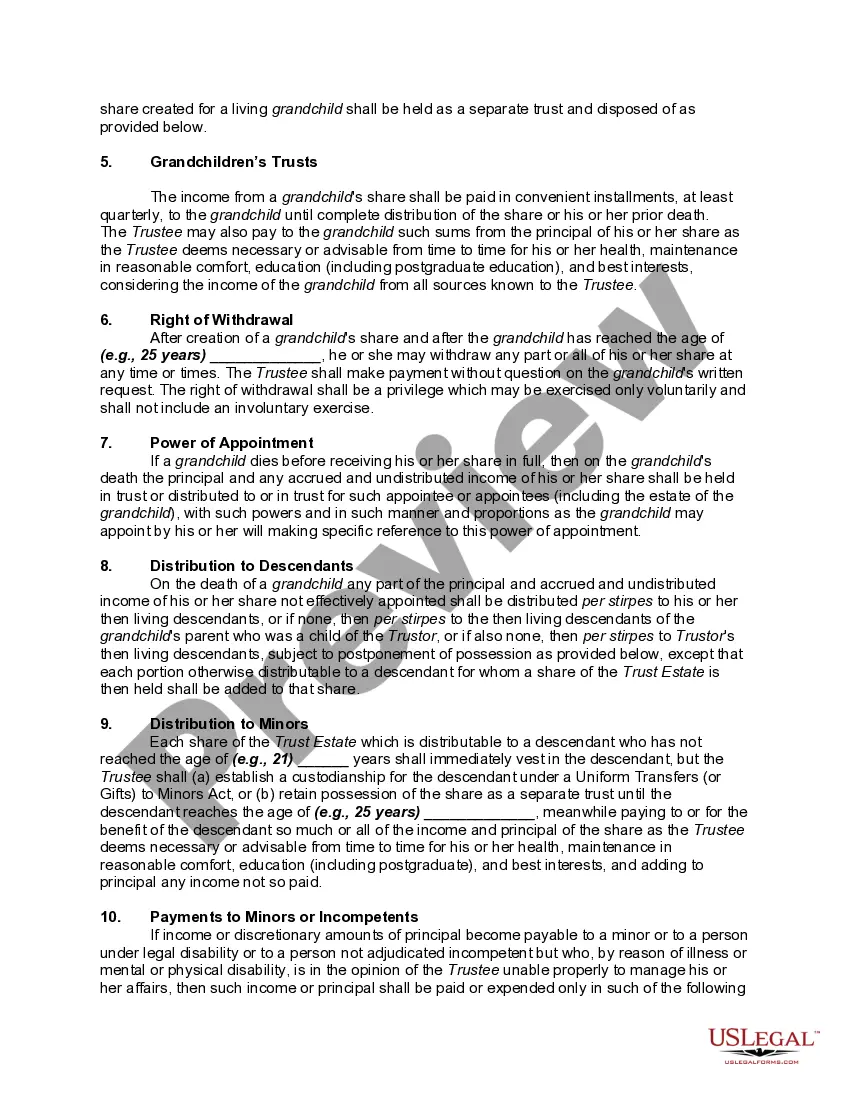
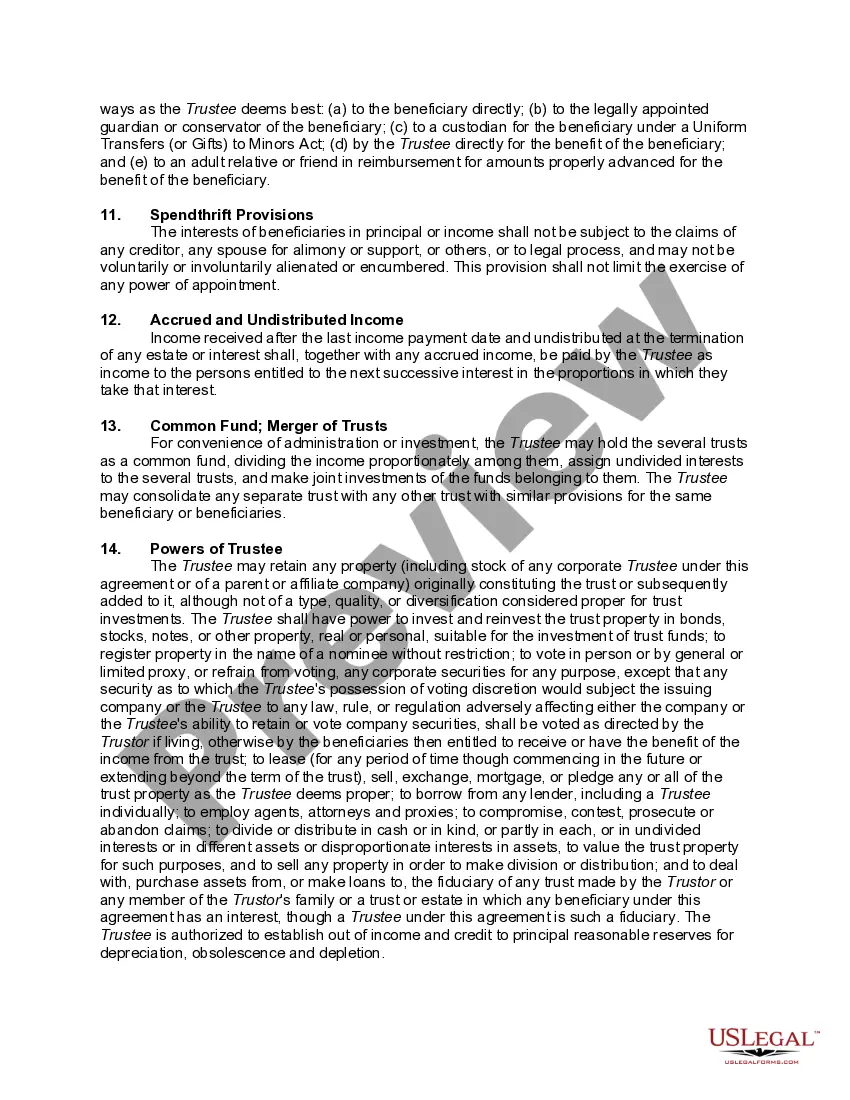
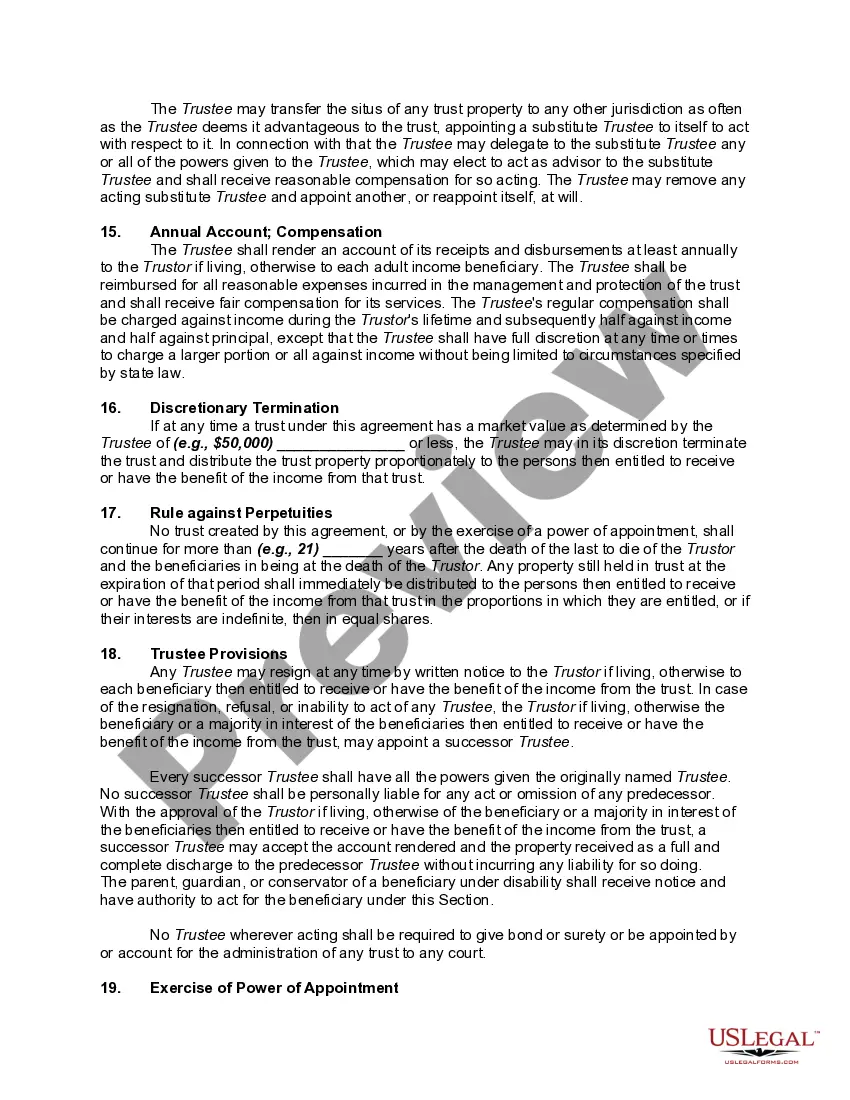
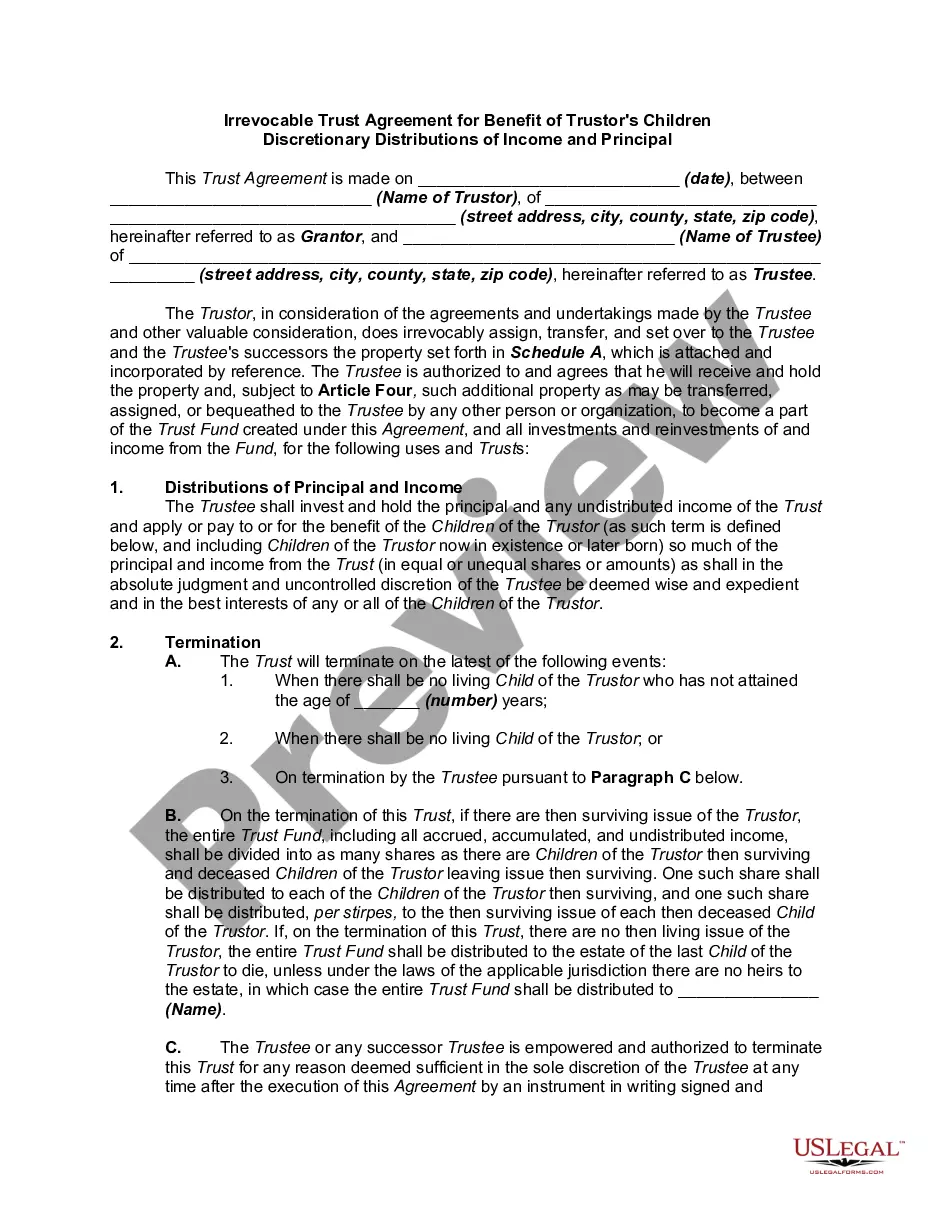
How to fill out Irrevocable Trust Agreement For Benefit Of Trustor's Children And Grandchildren With Spendthrift Trust Provisions?
Acquiring legal document specimens that comply with federal and local laws is essential, and the web provides numerous choices to select from.
However, what is the purpose of spending time searching for the appropriately formulated Spendthrift Trust Taxation Without Representation example online when the US Legal Forms digital library has already gathered such templates in one place.
US Legal Forms is the largest online legal repository featuring over 85,000 fillable templates crafted by attorneys for any business and personal situation.
Review the template using the Preview function or through the text outline to ensure it fulfills your specifications.
- They are easy to navigate with all documents categorized by state and intended use.
- Our experts keep abreast of legal modifications, ensuring your form remains current and compliant when obtaining a Spendthrift Trust Taxation Without Representation from our site.
- Acquiring a Spendthrift Trust Taxation Without Representation is swift and straightforward for both existing and new users.
- If you already possess an account with an active subscription, Log In and save the document sample you need in the desired format.
- If you are new to our website, follow the steps below.
Form popularity
FAQ
settled spendthrift trust allows the individual creating the trust to also be a beneficiary. However, this type may not provide the same level of protection against creditors, as assets might still be reachable in certain legal situations. Understanding the implications of spendthrift trust taxation without representation is essential to navigate any potential tax liabilities that arise.
Yes, a simple trust is required by law to distribute all of its income annually to beneficiaries. This requirement transforms the trust's earnings into taxable income for the recipients. With proper guidance on spendthrift trust taxation without representation, you can navigate your responsibilities as a trustee or beneficiary, ensuring compliance with tax obligations and optimizing financial outcomes.
The exact wording of a spendthrift clause may look something like ?no beneficiary may assign, anticipate, encumber, alienate, or otherwise voluntarily transfer the income or principal of any trust created under this trust.
For a potentially unreliable beneficiary, such as one with gambling or addiction issues or someone who is young and has no experience with financial matters, a spendthrift clause included as part of a testamentary trust or sub-trust (as part of a revocable living trust) protects their inheritance from poor spending ...
A spendthrift trust is a trust designed so that the beneficiary is unable to sell or give away her equitable interest in the trust property. The trustee is in control of the managing the property. Thus, the beneficiary of the trust is not in control of the property and her creditors cannot reach those assets.
The beneficiaries of a trust will not pay tax on distributions made by that trust, so long as those distributions are made on income in respect of which tax was paid by the trust.
The pros of a spendthrift trust are that it can prevent creditors and lawsuits from attaching to the beneficiary's assets and provide a steady income stream. The downside is that it can be expensive to set up and maintain, and the beneficiary may be able to challenge the trust's spendthrift provisions in court.