Sample Irrevocable Trust For Medicaid
Description



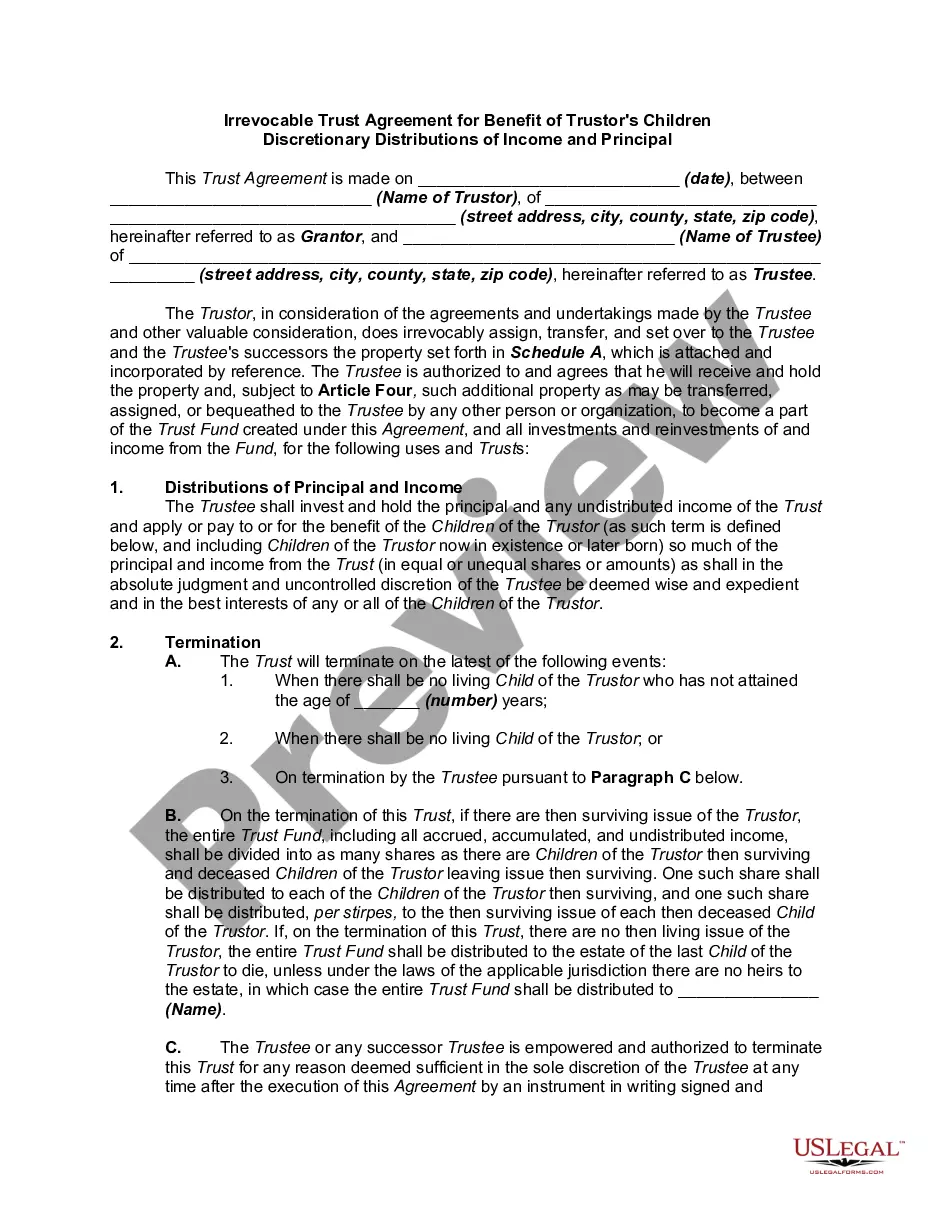
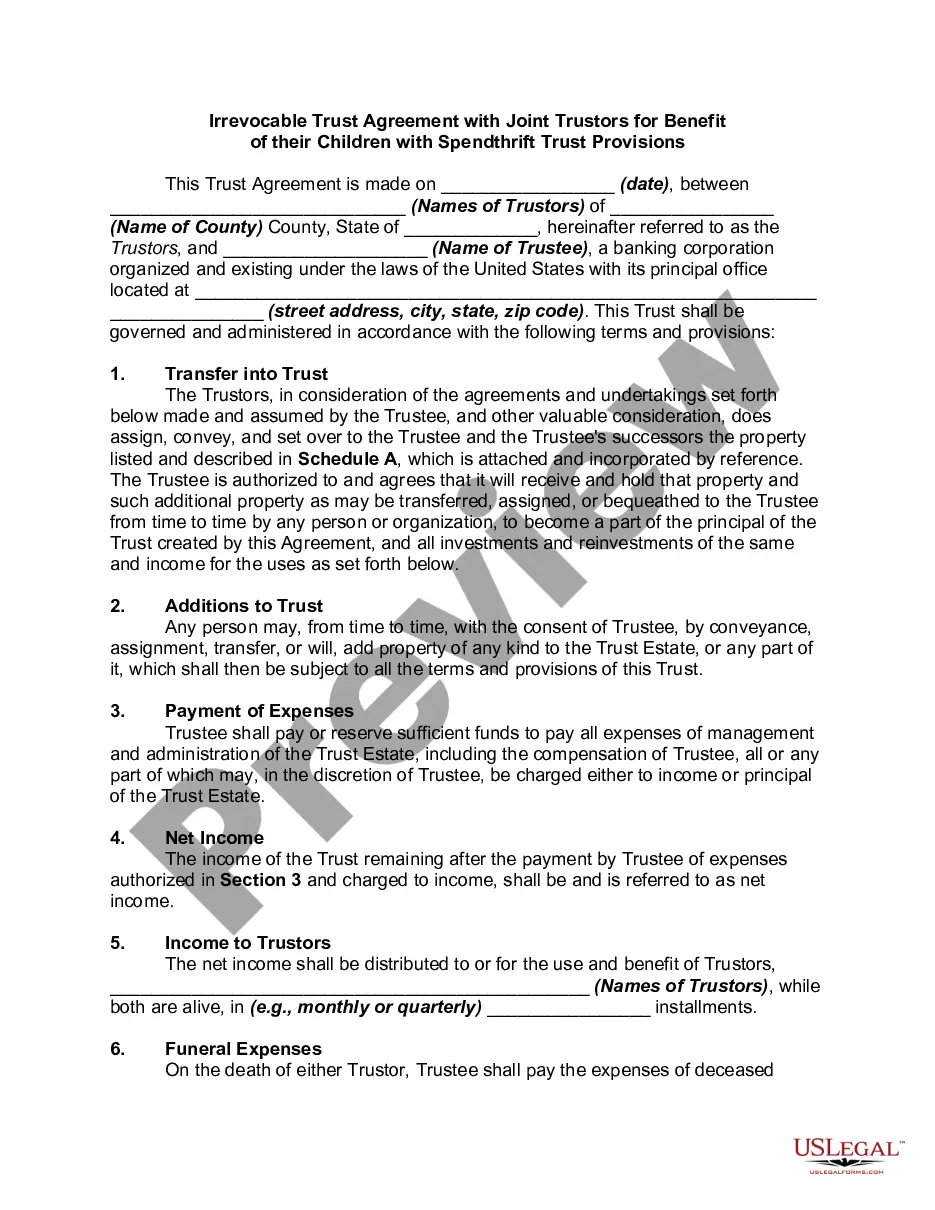

Get your form ready online
Our built-in tools help you complete, sign, share, and store your documents in one place.
Make edits, fill in missing information, and update formatting in US Legal Forms—just like you would in MS Word.
Download a copy, print it, send it by email, or mail it via USPS—whatever works best for your next step.
Sign and collect signatures with our SignNow integration. Send to multiple recipients, set reminders, and more. Go Premium to unlock E-Sign.
If this form requires notarization, complete it online through a secure video call—no need to meet a notary in person or wait for an appointment.
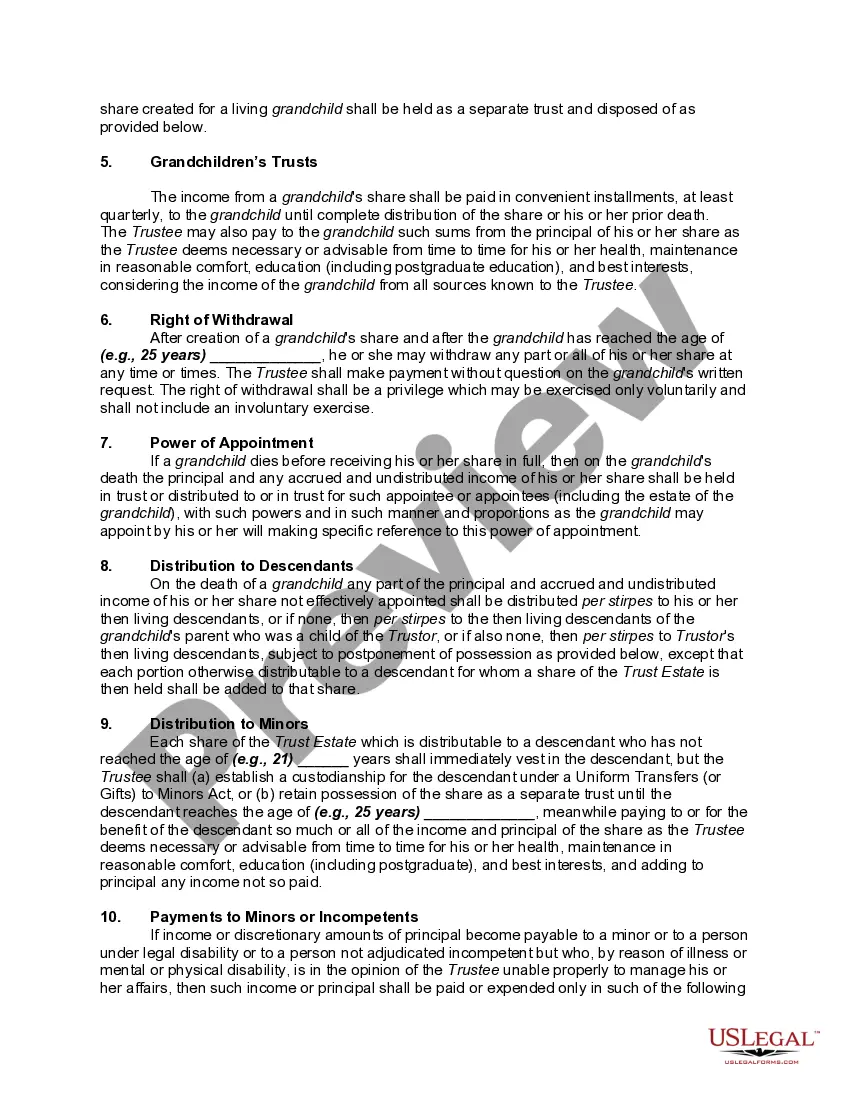
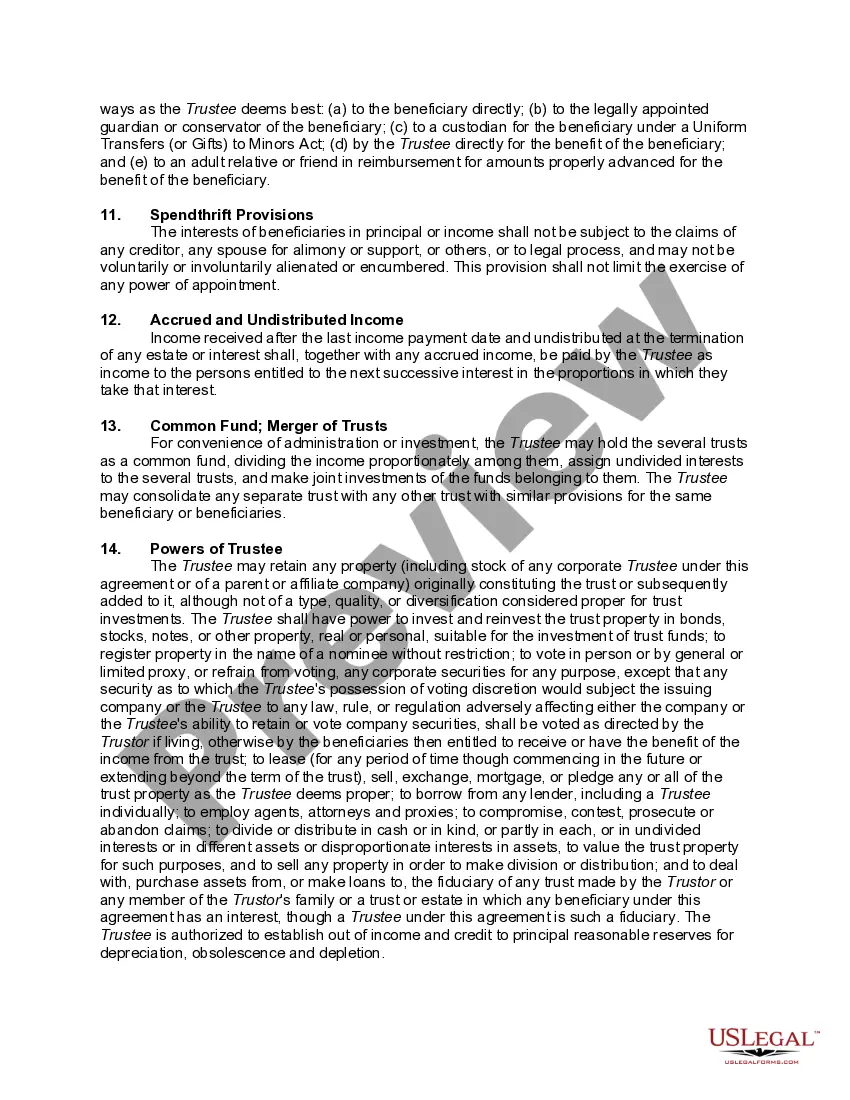
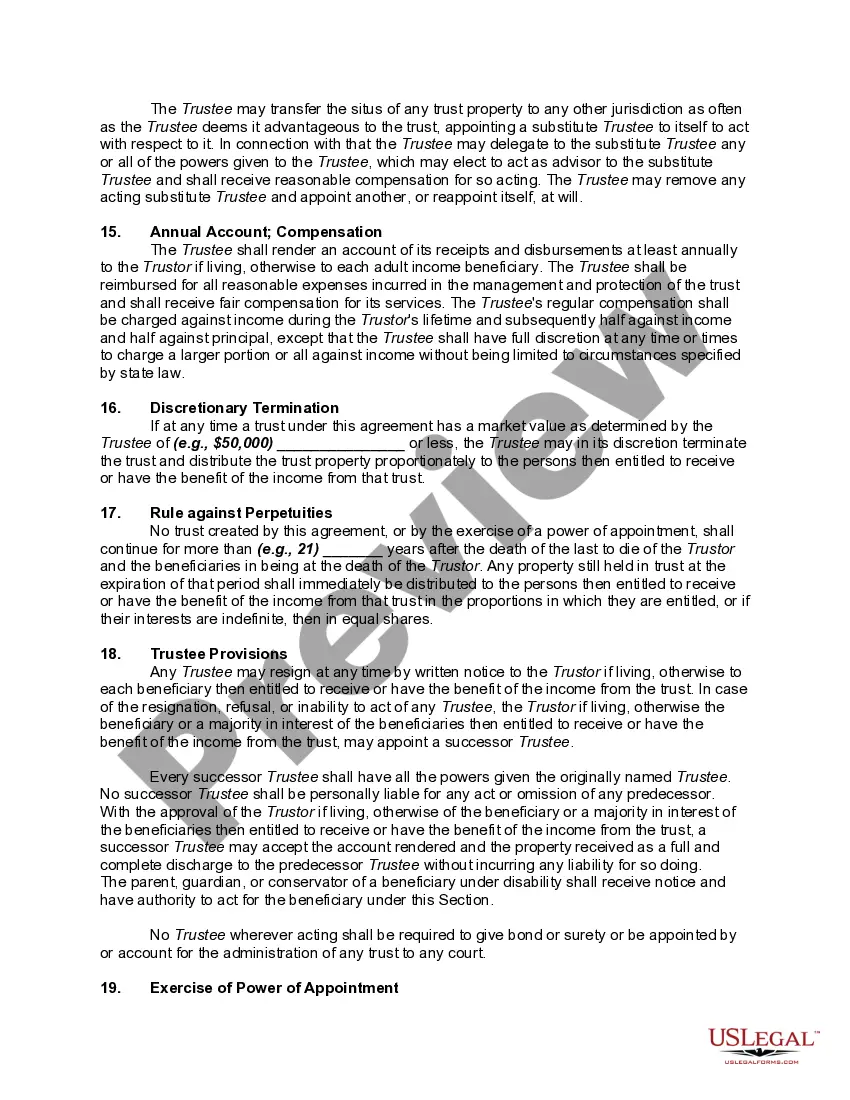
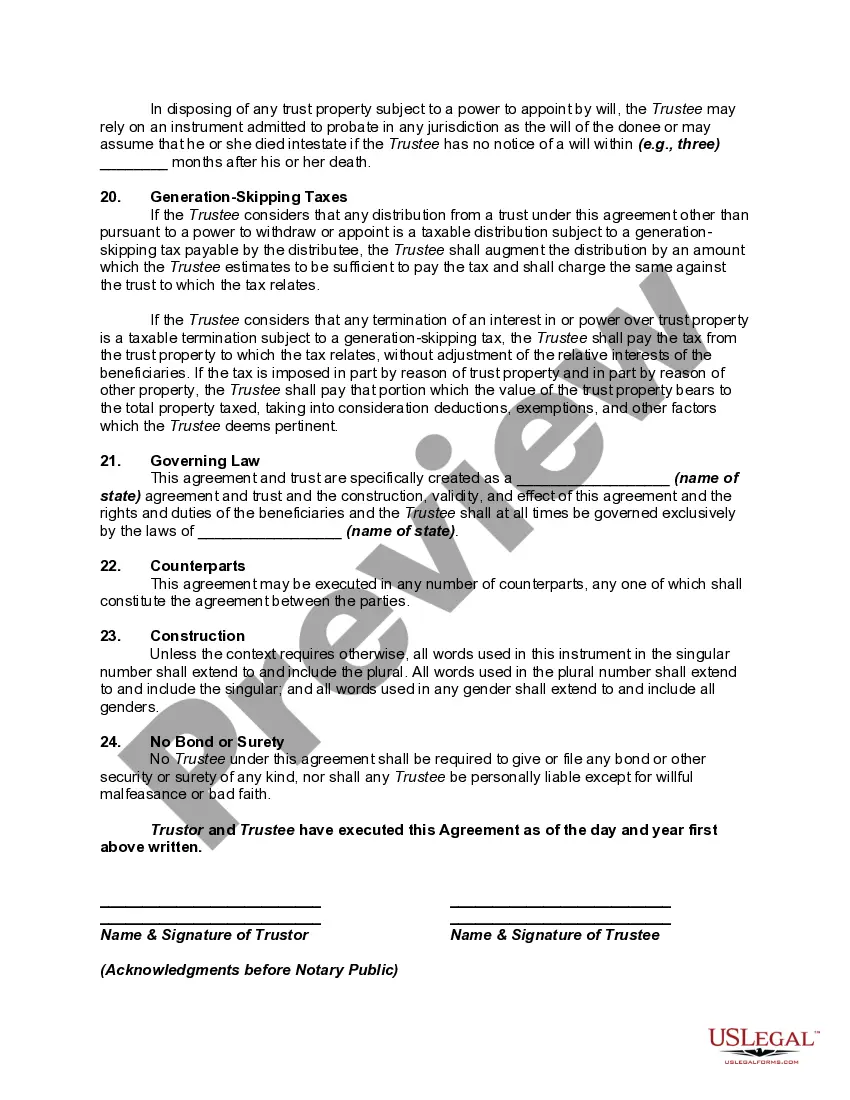
We protect your documents and personal data by following strict security and privacy standards.

Make edits, fill in missing information, and update formatting in US Legal Forms—just like you would in MS Word.

Download a copy, print it, send it by email, or mail it via USPS—whatever works best for your next step.

Sign and collect signatures with our SignNow integration. Send to multiple recipients, set reminders, and more. Go Premium to unlock E-Sign.

If this form requires notarization, complete it online through a secure video call—no need to meet a notary in person or wait for an appointment.

We protect your documents and personal data by following strict security and privacy standards.
Looking for another form?
How to fill out Irrevocable Trust Agreement For Benefit Of Trustor's Children And Grandchildren With Spendthrift Trust Provisions?
Legal documents managing can be daunting, even for experienced professionals.
When you are looking for a Sample Irrevocable Trust for Medicaid and lack the time to spend searching for the right and updated version, the process can be challenging.
Access a resource library of articles, guides, and tools related to your circumstances and requirements.
Save time and effort searching for the documents you require, and use US Legal Forms’ advanced search and Review feature to find the Sample Irrevocable Trust for Medicaid and download it.
Select Buy Now when you are ready. Choose a monthly subscription plan, find the file format you prefer, and Download, complete, eSign, print, and send your documents. Enjoy the US Legal Forms online library, backed by 25 years of experience and reliability. Transform your daily document management into a seamless and user-friendly process today.
- If you have a monthly subscription, Log In to your US Legal Forms account, search for the document, and download it.
- Check your My documents tab to view the documents you have previously downloaded and to manage your folders as you wish.
- If it is your first time with US Legal Forms, create an account to gain unlimited access to all the benefits of the platform.
- Here are the steps to follow after accessing the desired form.
- Verify this is the correct form by previewing it and reviewing its details.
- Ensure that the sample is recognized in your state or county.
- Access state- or county-specific legal and organizational documents.
- US Legal Forms caters to any needs you may have, from personal to business documentation, all in one place.
- Utilize advanced tools to create and manage your Sample Irrevocable Trust for Medicaid.
Form popularity
FAQ
An example of an irrevocable trust is a Medicaid trust designed to protect assets while qualifying for Medicaid benefits. In this type of trust, the assets are transferred to the trust, which cannot be modified or revoked once established. This allows you to retain some control over the assets while ultimately ensuring they are used for approved purposes. You can find a sample irrevocable trust for Medicaid online for further illustration.
Drawbacks of Medicaid Asset Protection Trusts Timing Is Everything. For a MAPT to function as intended, it needs to be created in advance to avoid the Medicaid lookback period. ... Income From MAPT Is Countable by Medicaid. ... Giving Up Control Is Non-Negotiable. ... Setting Up a MAPT Is Costly. ... Potential Effects on Care.
Assets that should not be used to fund your living trust include: Qualified retirement accounts ? 401ks, IRAs, 403(b)s, qualified annuities. Health saving accounts (HSAs) Medical saving accounts (MSAs) Uniform Transfers to Minors (UTMAs) Uniform Gifts to Minors (UGMAs) Life insurance. Motor vehicles.
How do you write an irrevocable trust document? Draft the written irrevocable trust agreement. Spell out which assets will be placed into the trust, name a trustee and beneficiaries, and outline the terms by which the trust assets will be distributed (how, when, to whom, etc.).
When an irrevocable trust disburses funds, the trust takes a taxable deduction for the amount distributed and issues a tax form to the beneficiary. This form, known as a K-1, shows the total disbursement received and includes a breakdown of the amount that is attributed to interest income versus principal balance.
The trusts shall be irrevocable, and the Grantor expressly waives all rights and powers, whether alone or in conjunction with others, and regardless of when or from what source he may have acquired such rights or powers, to alter, amend, revoke, or terminate the trusts, or any of the terms of this Agreement, in whole ...