Irrevocable Trust With Retained Life Estate
Description



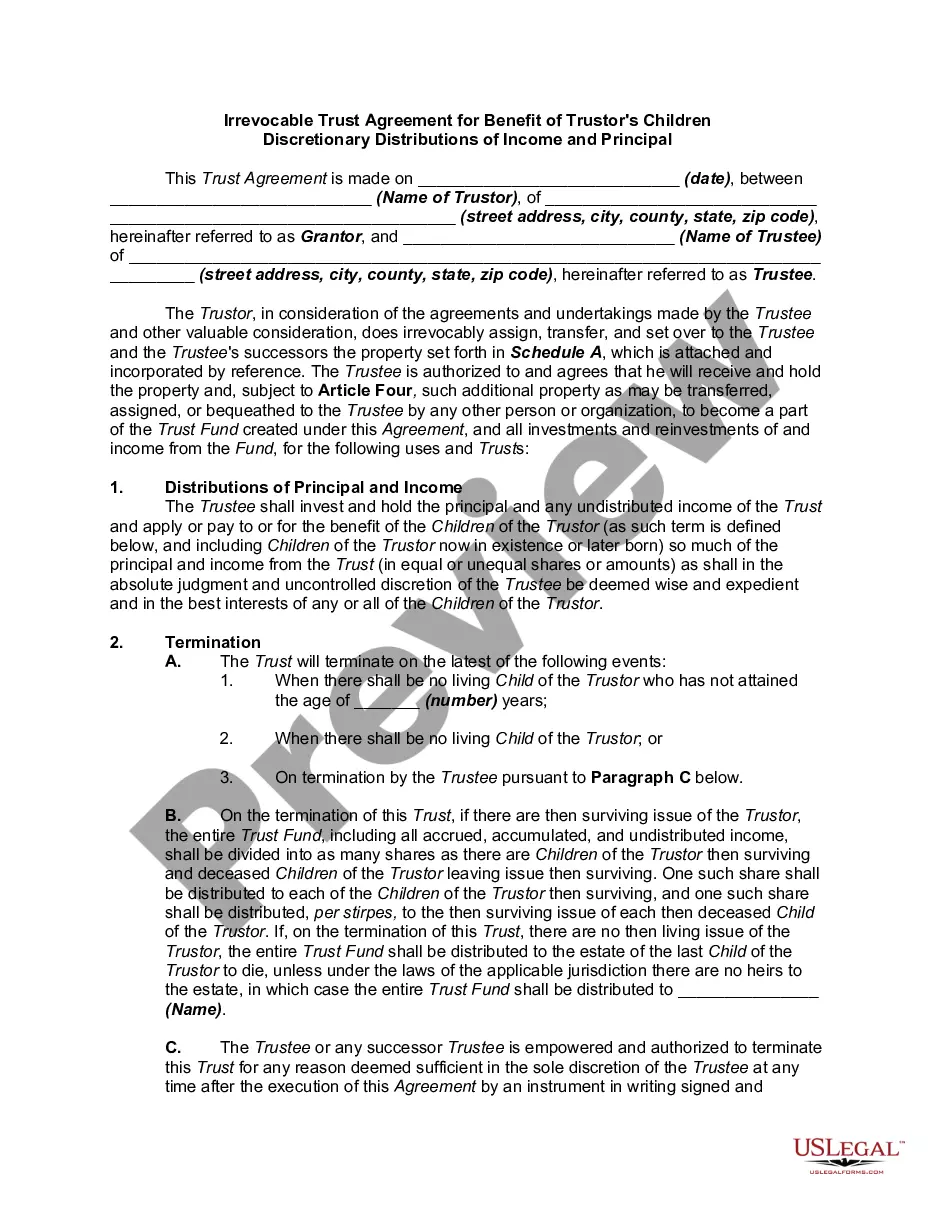
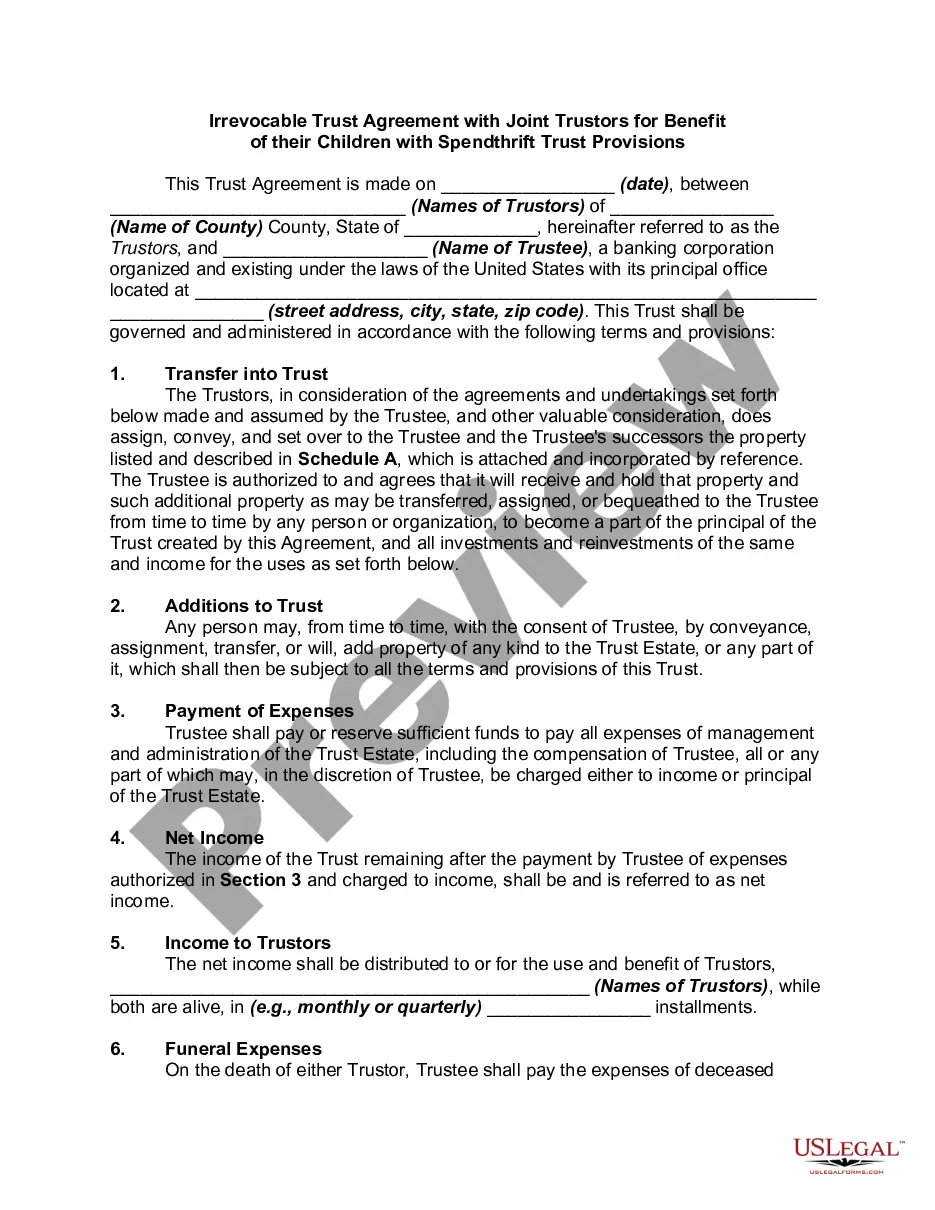

Get your form ready online
Our built-in tools help you complete, sign, share, and store your documents in one place.
Make edits, fill in missing information, and update formatting in US Legal Forms—just like you would in MS Word.
Download a copy, print it, send it by email, or mail it via USPS—whatever works best for your next step.
Sign and collect signatures with our SignNow integration. Send to multiple recipients, set reminders, and more. Go Premium to unlock E-Sign.
If this form requires notarization, complete it online through a secure video call—no need to meet a notary in person or wait for an appointment.
We protect your documents and personal data by following strict security and privacy standards.

Make edits, fill in missing information, and update formatting in US Legal Forms—just like you would in MS Word.

Download a copy, print it, send it by email, or mail it via USPS—whatever works best for your next step.

Sign and collect signatures with our SignNow integration. Send to multiple recipients, set reminders, and more. Go Premium to unlock E-Sign.

If this form requires notarization, complete it online through a secure video call—no need to meet a notary in person or wait for an appointment.

We protect your documents and personal data by following strict security and privacy standards.
Looking for another form?










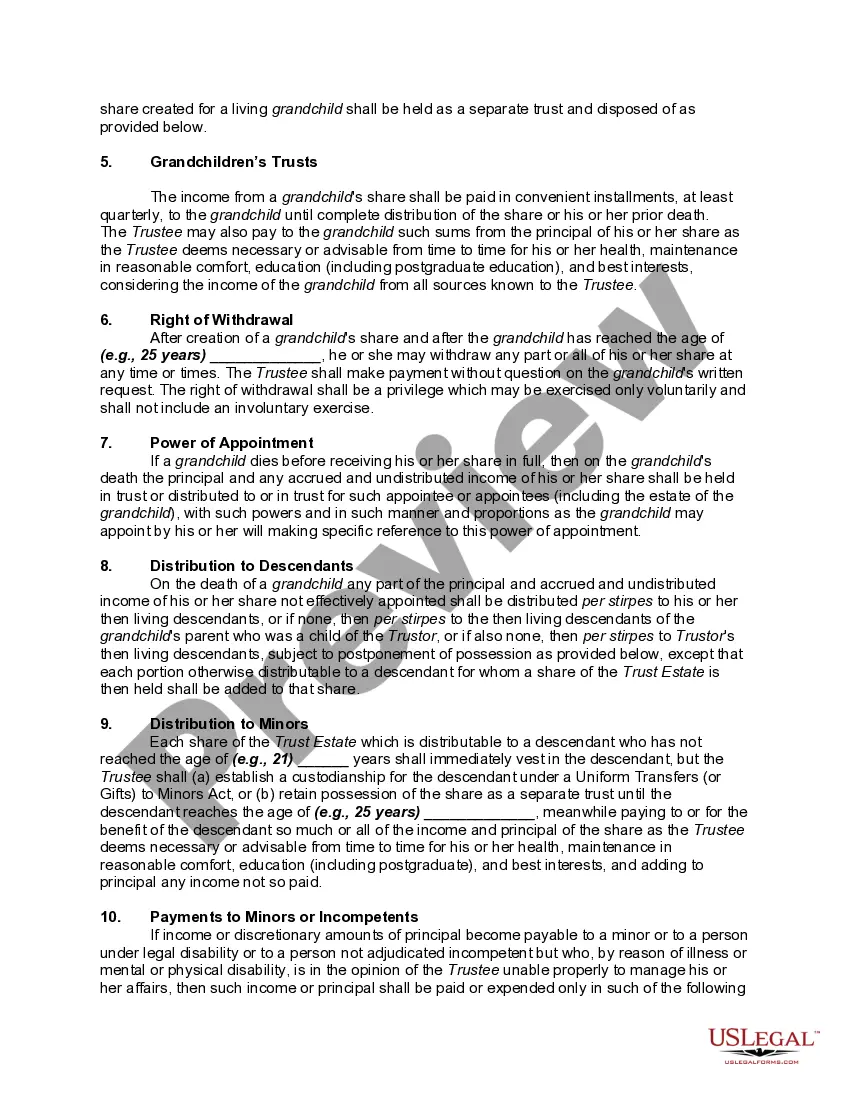
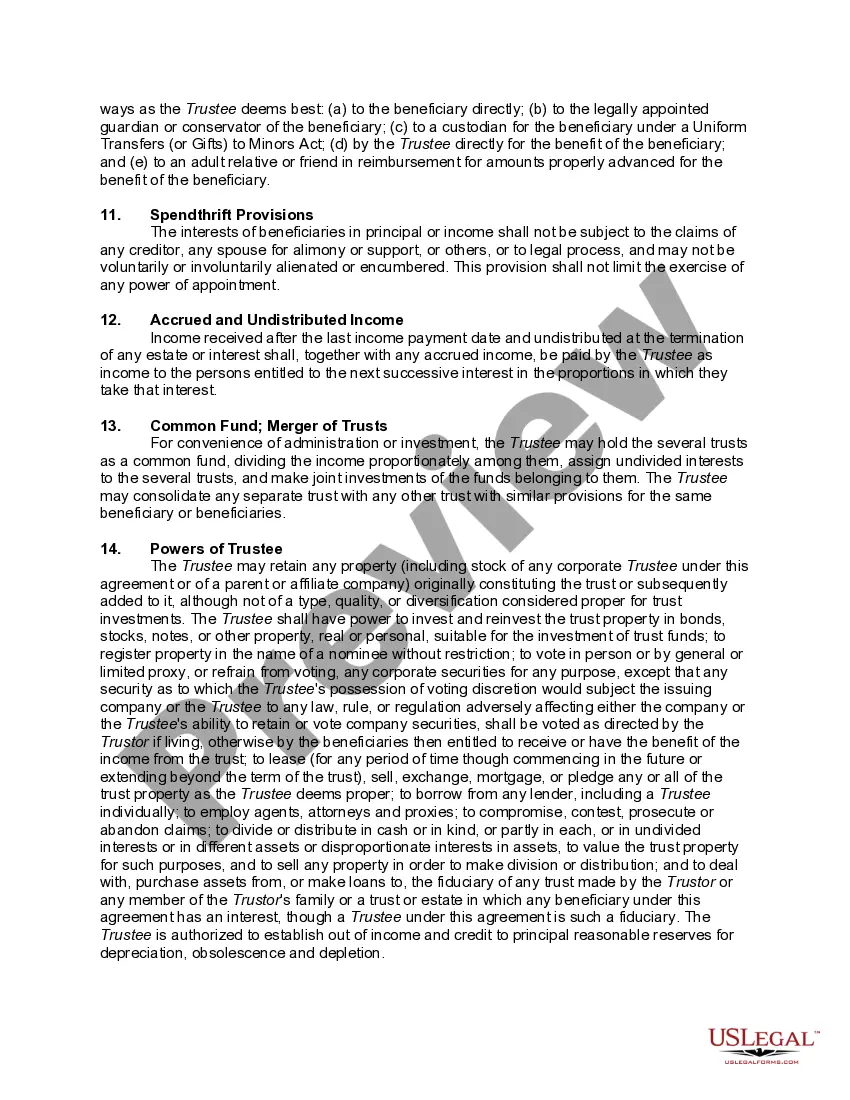
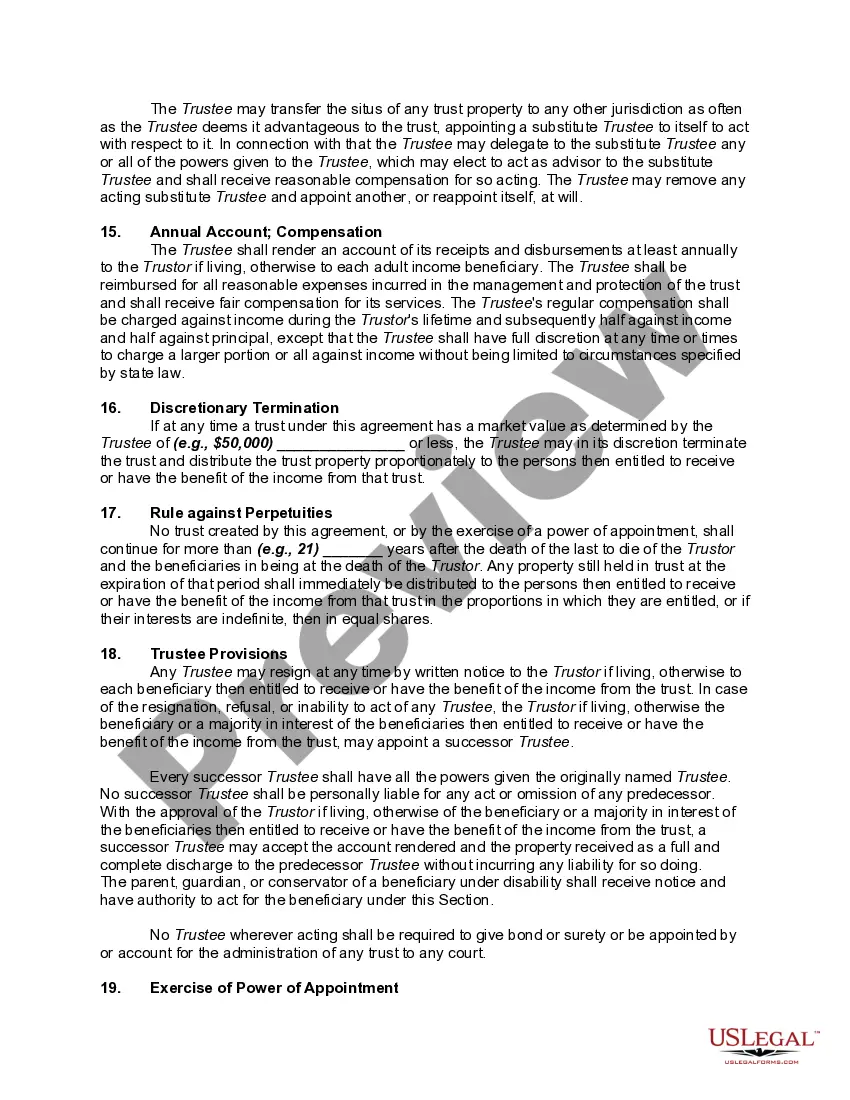
How to fill out Irrevocable Trust Agreement For Benefit Of Trustor's Children And Grandchildren With Spendthrift Trust Provisions?
- If you're a returning user, simply log in to your account and download the desired form template by clicking the Download button. Ensure your subscription is active; if not, renew according to your plan.
- For first-time users, start by checking the preview mode and description of the form. Make sure it aligns with your requirements and complies with local jurisdiction laws.
- If needed, search for other templates using the Search tab at the top of the page until you find the correct document.
- Once you've identified the right form, click the Buy Now button and select a subscription plan that works for you. Create an account to access the form library.
- Complete your purchase by entering your credit card details or using your PayPal account for payment.
- Download your form, save it on your device, and access it later from the My Forms section of your profile.
In conclusion, US Legal Forms provides a comprehensive library filled with over 85,000 customizable legal forms, ensuring you have the necessary tools to create an irrevocable trust with retained life estate efficiently.
Start today by exploring the resources available to you and take control of your legal needs with confidence!
Form popularity
FAQ
In an irrevocable trust with retained life estate, consider including real estate, stocks, or bonds as optimal assets. These types of investments are generally stable and can provide consistent returns over time. Furthermore, by placing these assets in the trust, you can effectively reduce estate taxes and protect your wealth from creditors. The uslegalforms platform offers tools to help structure your trust for maximum advantage.
Certain assets are not recommended for placement in an irrevocable trust with retained life estate. Personal property, accounts that demand regular management, and assets subject to high maintenance requirements might hinder the trust's purpose. Typically, it’s advisable to steer clear of significant liabilities or assets with variable valuations, ensuring a stable financial future.
When creating an irrevocable trust with retained life estate, it's essential to exclude certain assets. For instance, your primary residence or assets that require your direct control may not be suitable. Additionally, assets that may lose value or those excessively linked to your personal finances should also be avoided. Consulting with a professional is vital to ensure you allocate assets wisely.
One main reason to consider an irrevocable trust with retained life estate is estate tax reduction. This type of trust can help minimize your taxable estate, potentially saving your heirs a significant amount in taxes. Another reason is asset protection; placing assets into this trust can shield them from creditors and lawsuits. Finally, an irrevocable trust with retained life estate provides clarity in asset distribution, ensuring your wishes are fulfilled without the complications that can arise from probate.
Upon the death of an individual holding a life estate, the property automatically transfers to the remaindermen named in the deed. This transfer happens without going through probate, facilitating a smoother transition of ownership. If the property was part of an irrevocable trust with retained life estate, the trust’s provisions dictate the distribution, potentially reducing legal complexities.
In many cases, a life estate could provide some level of protection from being claimed by nursing home costs, but it depends on your specific situation and state laws. An irrevocable trust with retained life estate may offer even greater protection, as the assets removed from your estate are generally not counted for eligibility purposes. To understand your options better, consider consulting a professional.
When the owner of an irrevocable trust with retained life estate passes away, the property within the trust is distributed according to the terms of the trust. The trust continues to exist, providing a clear directive for how assets are managed and distributed. This beneficial process reduces potential disputes among heirs.
A life estate and an irrevocable trust are not the same; they serve different purposes. A life estate grants usage rights during an individual's lifetime, while an irrevocable trust with retained life estate involves a transfer of ownership into trust for estate and tax benefits. Both tools can work together to achieve specific estate planning goals.
Yes, you can place a property with a life estate into an irrevocable trust with retained life estate. By doing so, you keep the right to live in the property while removing it from your taxable estate. This arrangement not only supports your housing needs but also helps in long-term financial planning.
A life estate allows someone to live in a property for their lifetime, while an irrevocable trust with retained life estate involves transferring property into a trust that you can still use during your life. In the latter, you relinquish control over the property, removing it from your estate for tax purposes. Understanding these distinctions is crucial for effective estate planning.