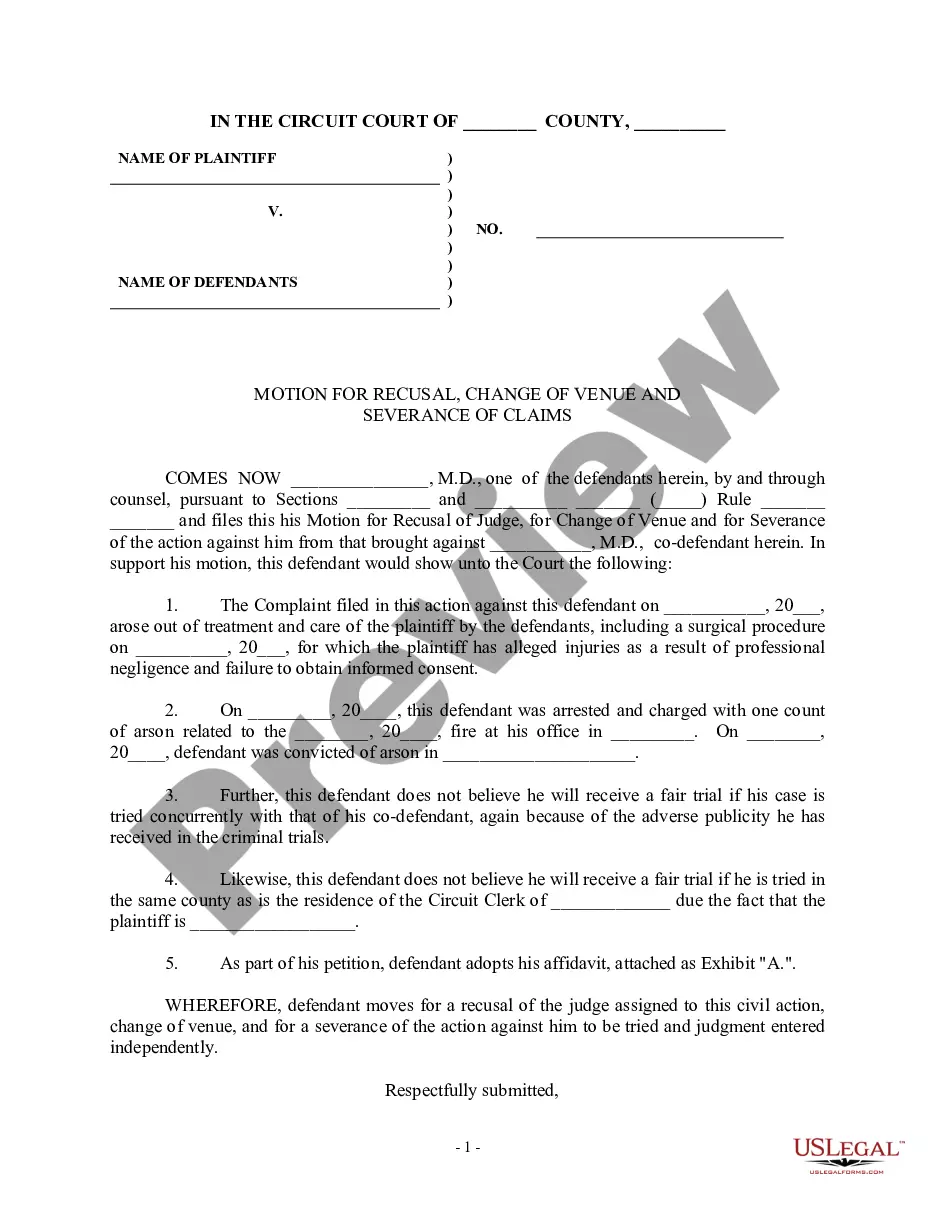
Recusal Form Sample With Court
Description

Get your form ready online
Our built-in tools help you complete, sign, share, and store your documents in one place.
Make edits, fill in missing information, and update formatting in US Legal Forms—just like you would in MS Word.
Download a copy, print it, send it by email, or mail it via USPS—whatever works best for your next step.
Sign and collect signatures with our SignNow integration. Send to multiple recipients, set reminders, and more. Go Premium to unlock E-Sign.
If this form requires notarization, complete it online through a secure video call—no need to meet a notary in person or wait for an appointment.
We protect your documents and personal data by following strict security and privacy standards.

Make edits, fill in missing information, and update formatting in US Legal Forms—just like you would in MS Word.

Download a copy, print it, send it by email, or mail it via USPS—whatever works best for your next step.

Sign and collect signatures with our SignNow integration. Send to multiple recipients, set reminders, and more. Go Premium to unlock E-Sign.

If this form requires notarization, complete it online through a secure video call—no need to meet a notary in person or wait for an appointment.

We protect your documents and personal data by following strict security and privacy standards.
Looking for another form?


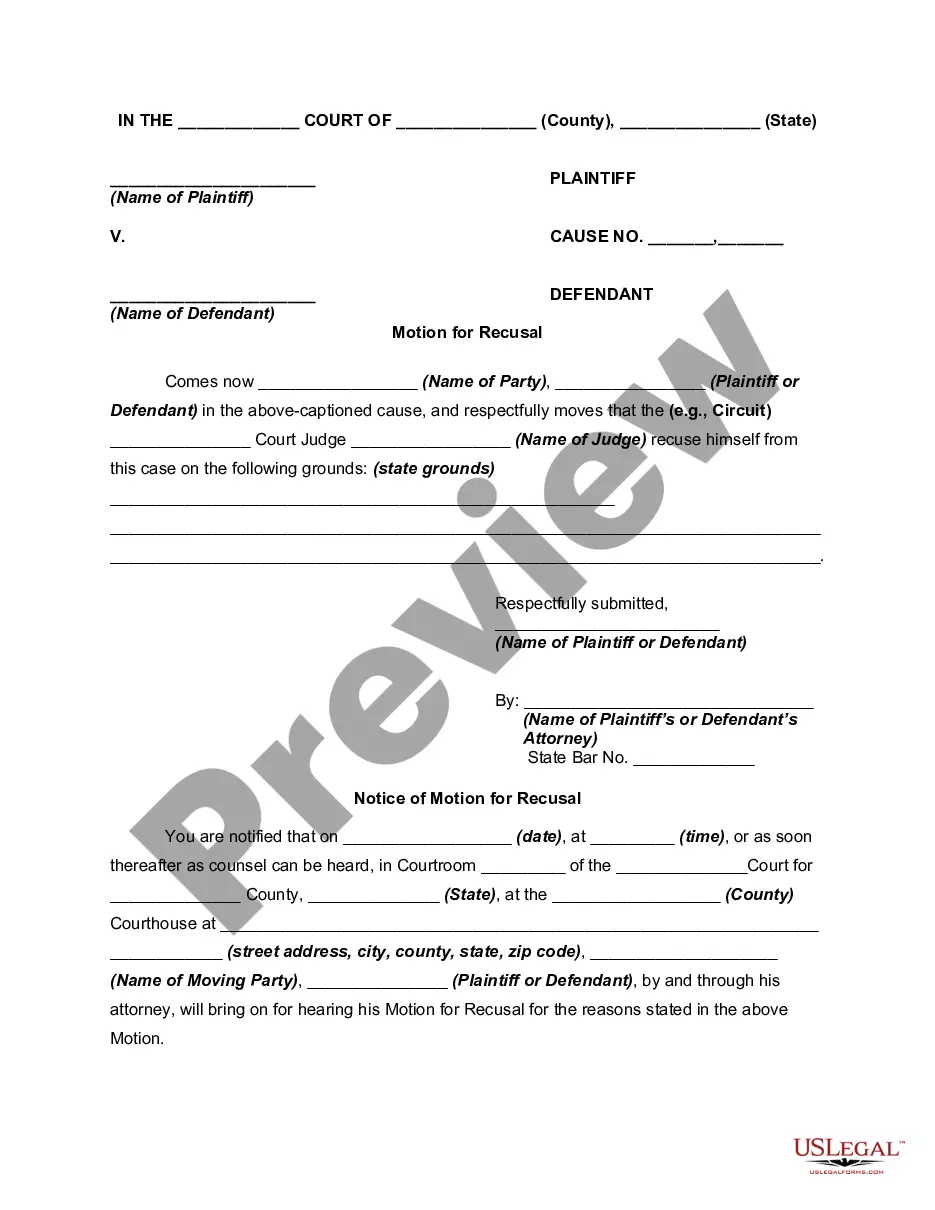
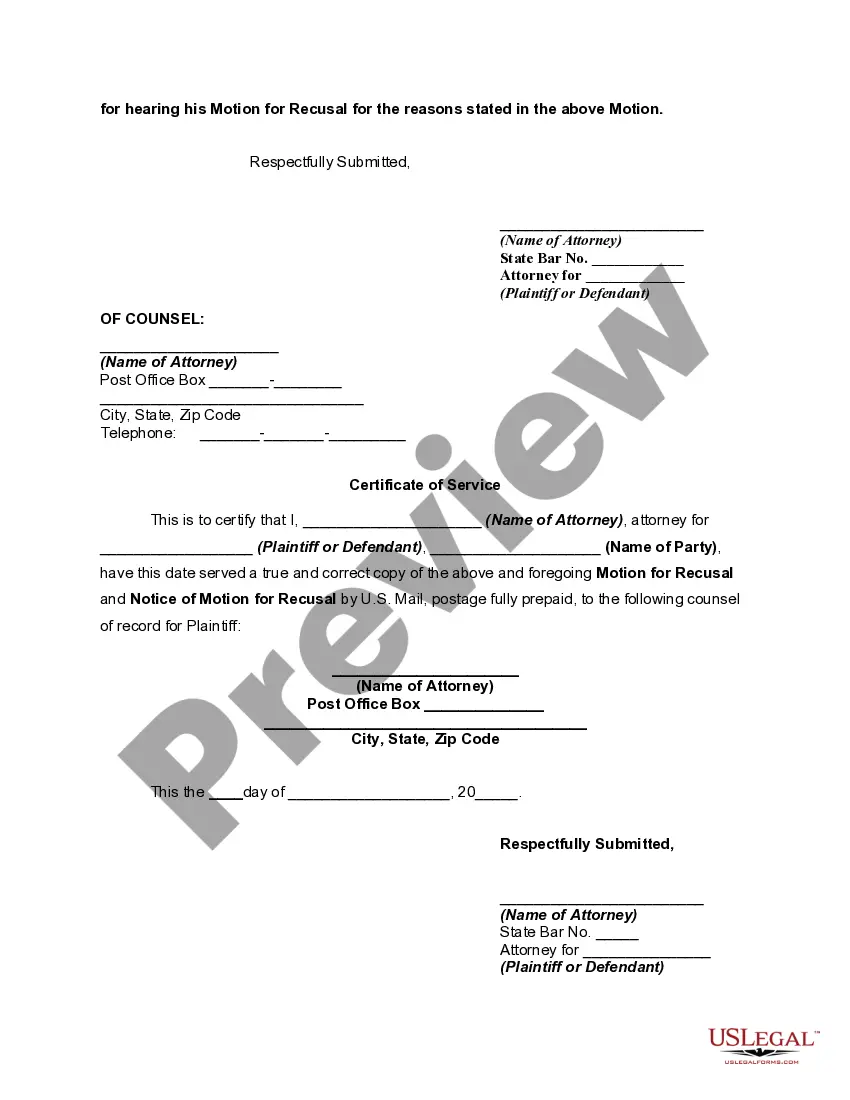
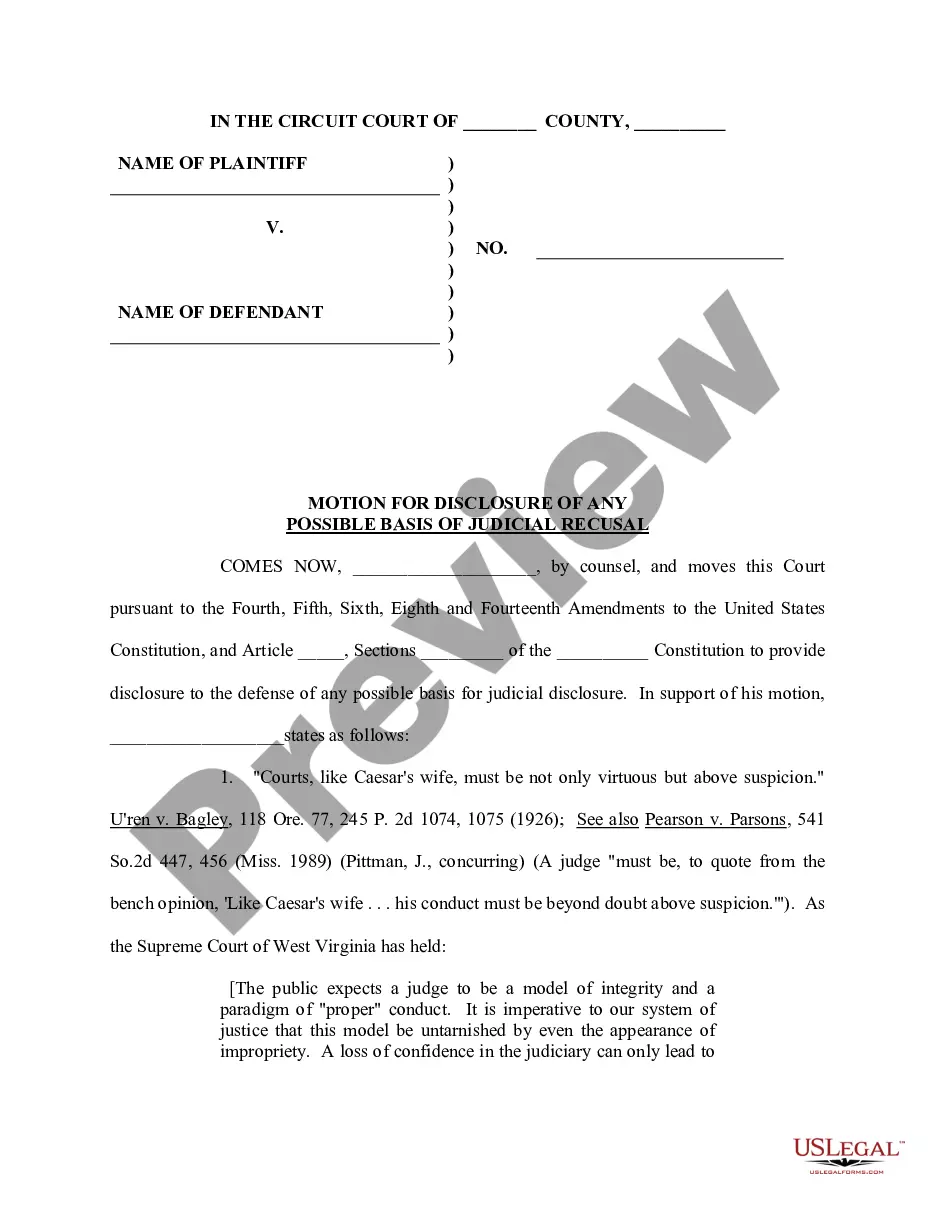
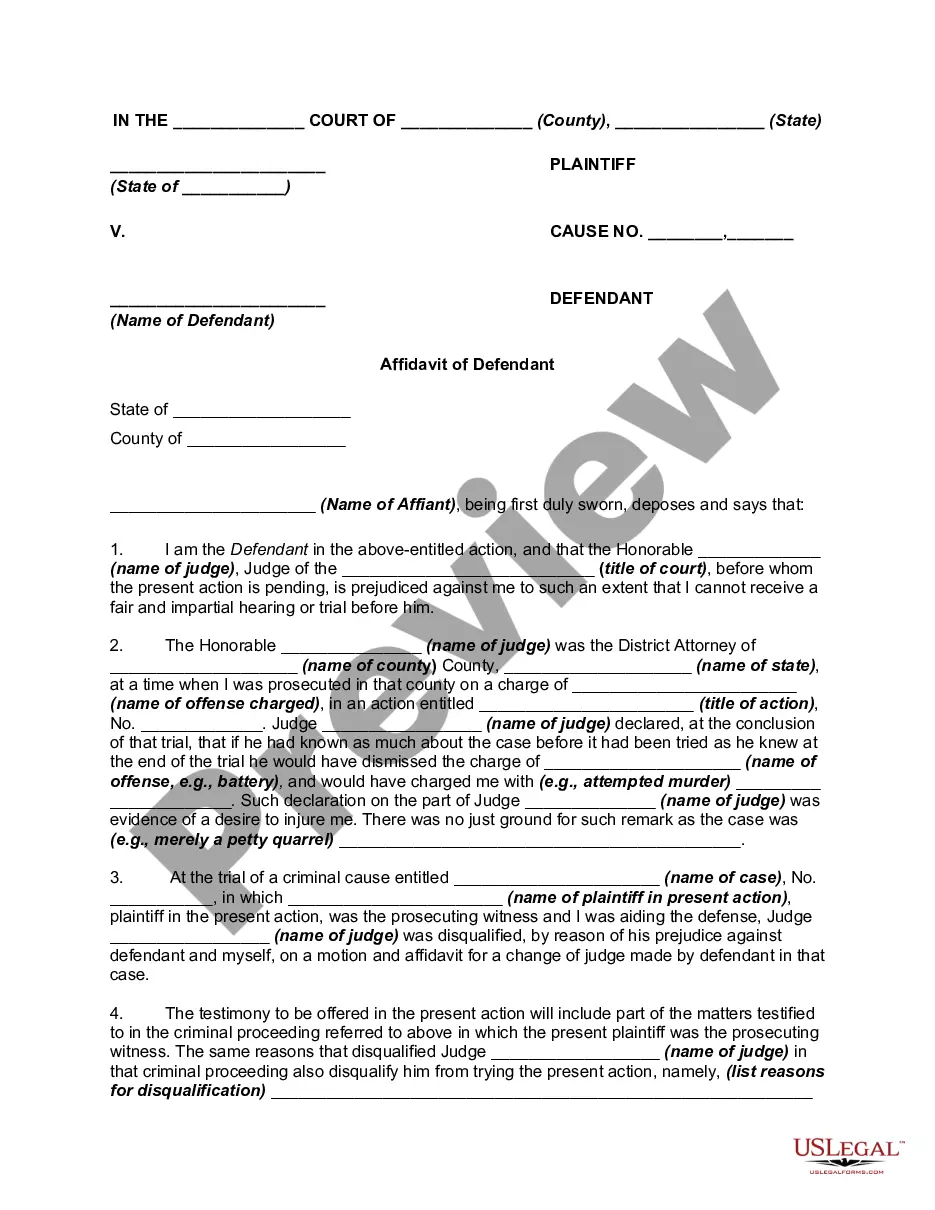
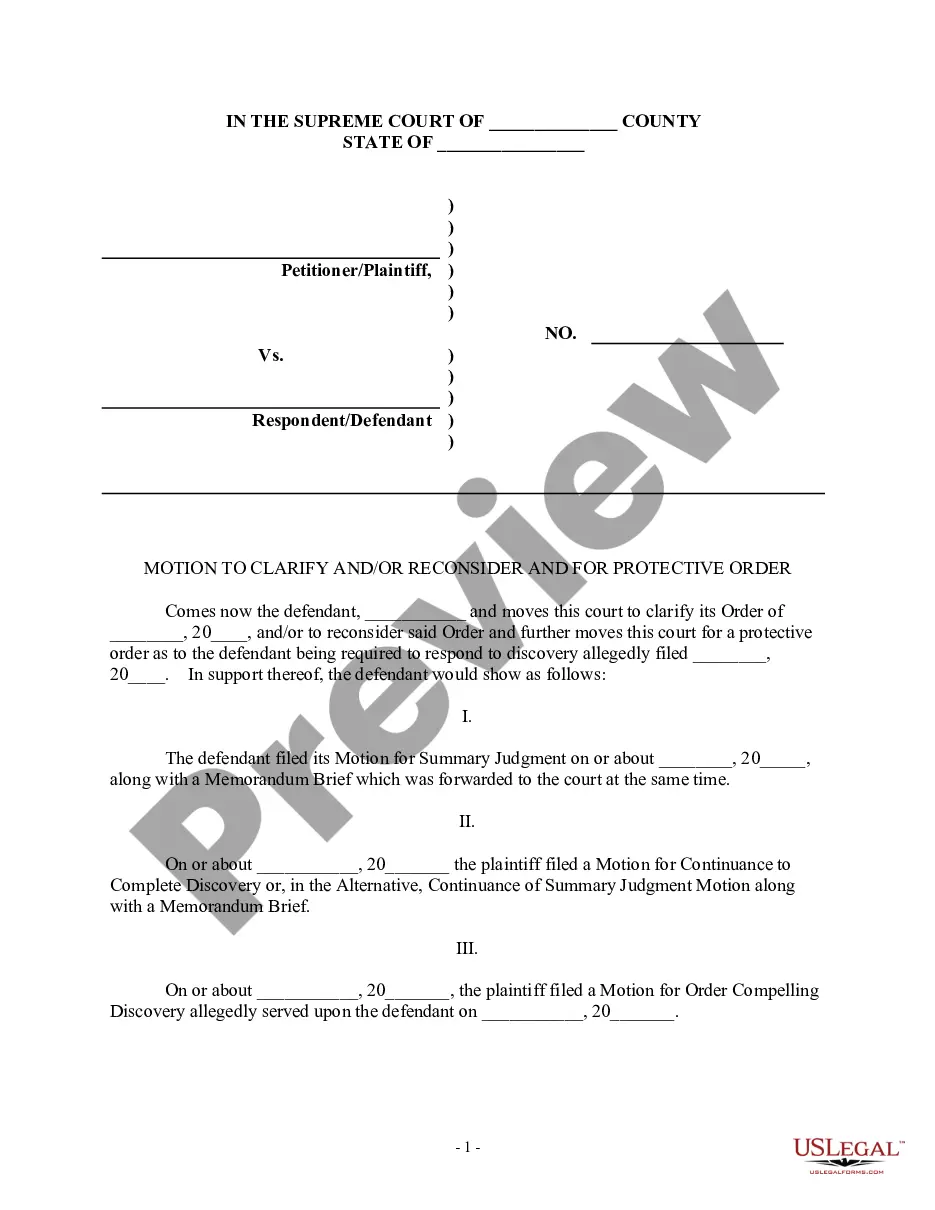
How to fill out Motion For Recusal Of Judge - Removal?
Managing legal documents and processes can be a lengthy addition to your day.
Recusal Form Example With Court and similar forms generally require you to look for them and understand how to fill them out properly.
Consequently, whether you are addressing financial, legal, or personal issues, utilizing a comprehensive and user-friendly online repository of forms at your disposal will be extremely beneficial.
US Legal Forms is the leading online resource for legal templates, featuring over 85,000 state-specific documents and various tools to assist you in completing your paperwork with ease.
Is it your first time using US Legal Forms? Sign up and create your account in a few minutes to gain access to the form library and Recusal Form Example With Court. After that, follow the steps below to finalize your form: Make sure to verify that you have the right form by utilizing the Preview option and reviewing the form description. Select Buy Now when you are ready, and choose the subscription plan that best suits your requirements. Click Download then complete, sign, and print the form. US Legal Forms has 25 years of experience aiding individuals in managing their legal documents. Locate the form you need today and streamline any process without breaking a sweat.
- Browse the collection of pertinent documents available to you with just one click.
- US Legal Forms provides state- and county-specific documents accessible for download at any time.
- Secure your document management operations with premium support that enables you to create any form within minutes without additional or undisclosed charges.
- Simply Log In to your account, find Recusal Form Example With Court, and download it instantly from the My documents section.
- You can also access previously saved forms.
Form popularity
FAQ
To ask a judge to recuse himself, you must file a motion that clearly states your reasons for the request. Ensure that you include any evidence or facts that support your claim of bias or conflict of interest. You can use a recusal form sample with court as a guide to structure your motion effectively. This structured approach helps ensure that your request is taken seriously and properly reviewed.
A recusal form is a legal document submitted to a court requesting that a judge withdraw from a case. This form outlines the reasons for the request, including any potential conflicts of interest. Having a recusal form sample with court requirements can significantly ease the preparation of this document. Uslegalforms offers a variety of templates that help you create a precise and effective recusal form.
An example of recusal occurs when a judge has a personal relationship with one of the parties involved in a case, which could influence their impartiality. In such situations, the judge may choose to step down and allow another judge to handle the case. Utilizing a recusal form sample with court standards can provide clarity on how to express such situations formally. Uslegalforms can guide you through this process with appropriate templates.
A recusal application generally requires a detailed explanation of the grounds for recusal, such as personal bias or financial interest. You should also include supporting documentation that substantiates your claims. Using a recusal form sample with court specifications can streamline your application process. Uslegalforms offers templates that can help you meet these requirements effectively.
To ask a judge to recuse, you must file a formal motion with the court. In this motion, clearly state the reasons for your request, such as a conflict of interest or bias. Including a recusal form sample with court guidelines can strengthen your motion. Consider using resources from uslegalforms to ensure your submission meets all necessary requirements.
E.g., In the Ayodhya-Ramjanmabhoomi case, Justice U U Lalit recused himself from the Constitution Bench. This was after the litigants brought to his attention that he had appeared as a lawyer in a criminal case relating to the case.
A recusal application can be based on either actual bias or apparent bias, and is generally a matter of whether the judicial officer might not bring an open mind to the resolution of the question that he or she is required to decide.
"Recusal" means the process by which a person is disqualified, or disqualifies himself or herself, from a matter because of a conflict of interest.
The Due Process clauses of the United States Constitution require judges to recuse themselves from cases in two situations: Where the judge has a financial interest in the case's outcome. Where there is otherwise a strong possibility that the judge's decision will be biased.
The judge is only required to order recusal (or refer the matter over to another judge to decide whether recusal is necessary) if a reasonable person, knowing all the facts, would have doubts about the judge's ability to be impartial in the case.