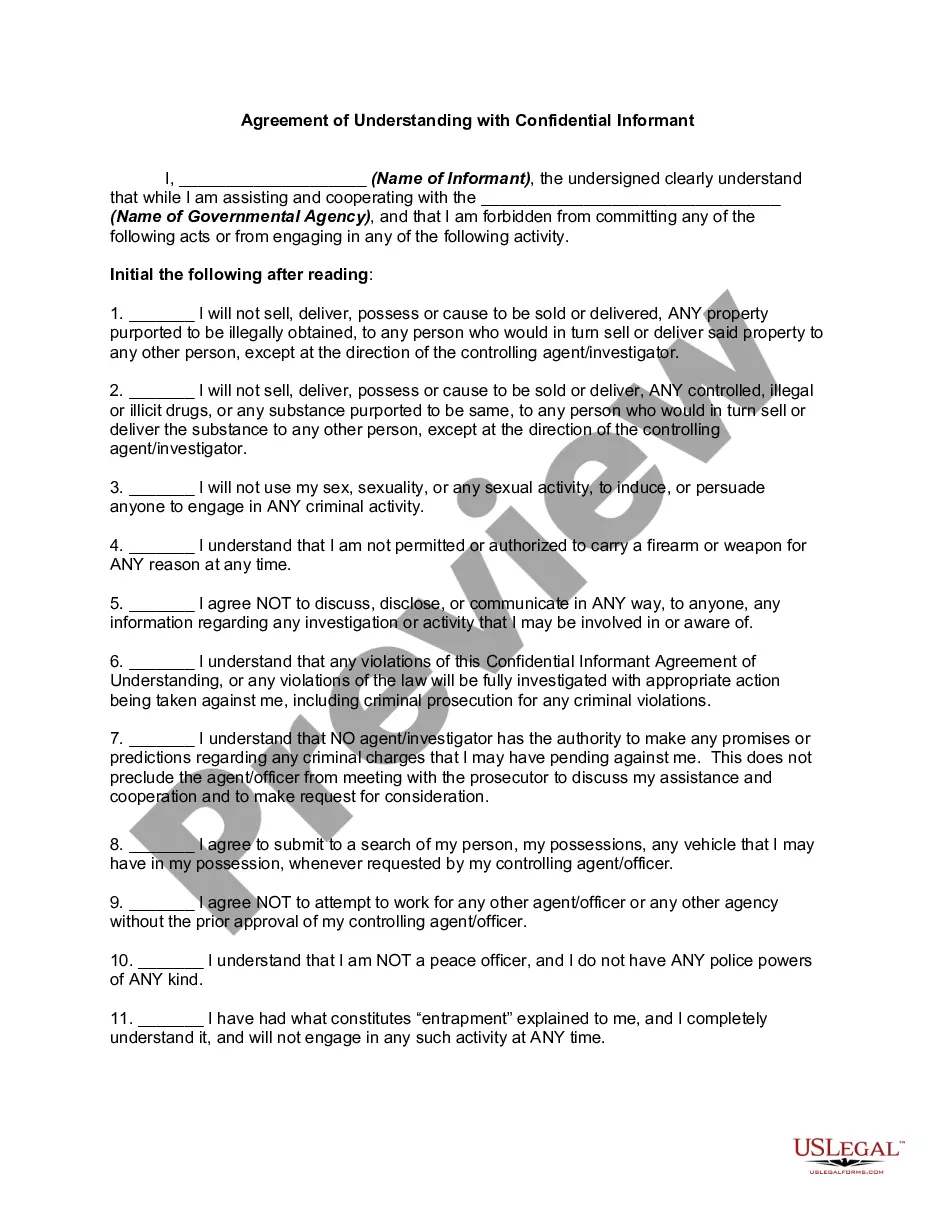
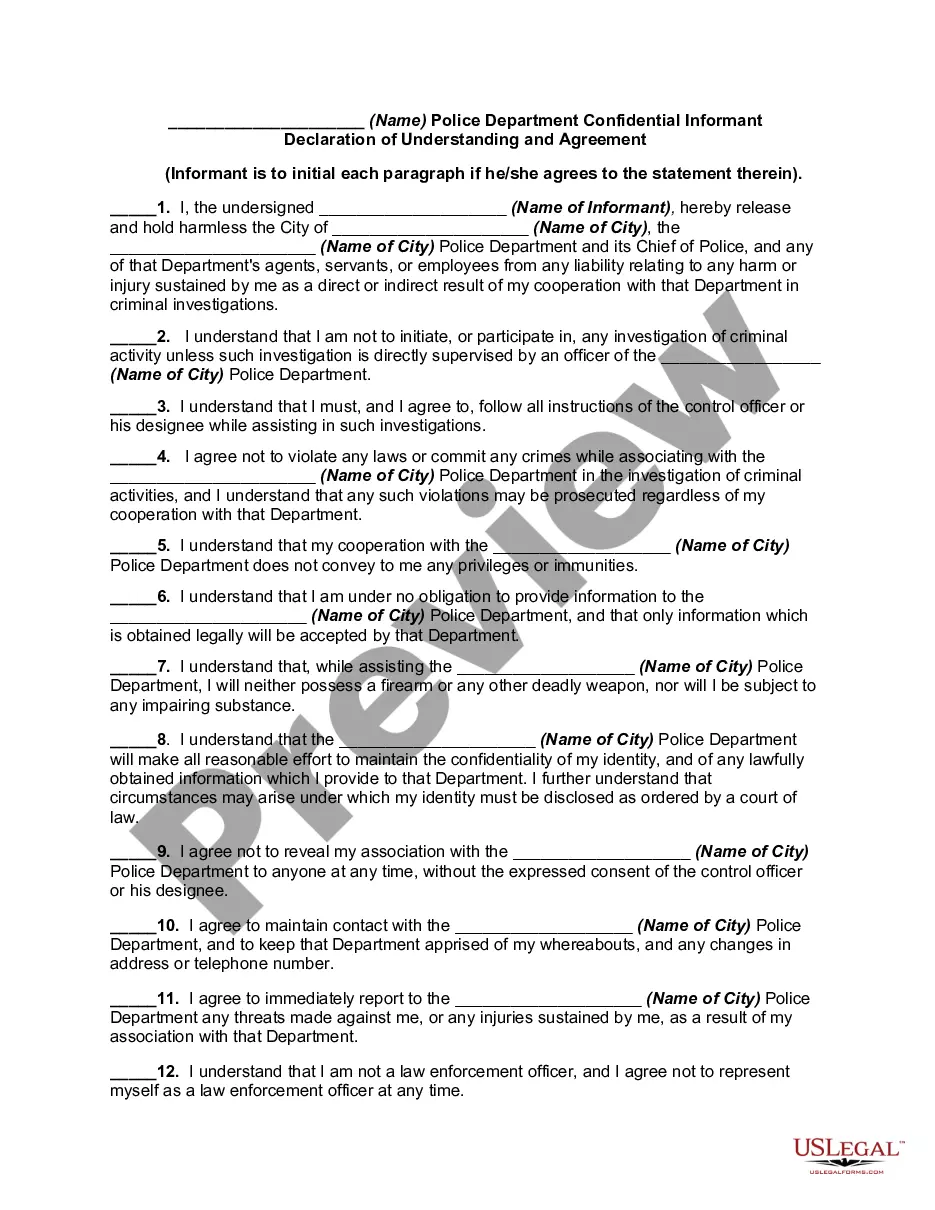
Confidential Informant Sample For Police
Description
Get your form ready online
Our built-in tools help you complete, sign, share, and store your documents in one place.
Make edits, fill in missing information, and update formatting in US Legal Forms—just like you would in MS Word.
Download a copy, print it, send it by email, or mail it via USPS—whatever works best for your next step.
Sign and collect signatures with our SignNow integration. Send to multiple recipients, set reminders, and more. Go Premium to unlock E-Sign.
If this form requires notarization, complete it online through a secure video call—no need to meet a notary in person or wait for an appointment.
We protect your documents and personal data by following strict security and privacy standards.

Make edits, fill in missing information, and update formatting in US Legal Forms—just like you would in MS Word.

Download a copy, print it, send it by email, or mail it via USPS—whatever works best for your next step.

Sign and collect signatures with our SignNow integration. Send to multiple recipients, set reminders, and more. Go Premium to unlock E-Sign.

If this form requires notarization, complete it online through a secure video call—no need to meet a notary in person or wait for an appointment.

We protect your documents and personal data by following strict security and privacy standards.
Looking for another form?

How to fill out Agreement Of Understanding With Confidential Informant?
Managing legal documents can be exasperating, even for the most experienced experts.
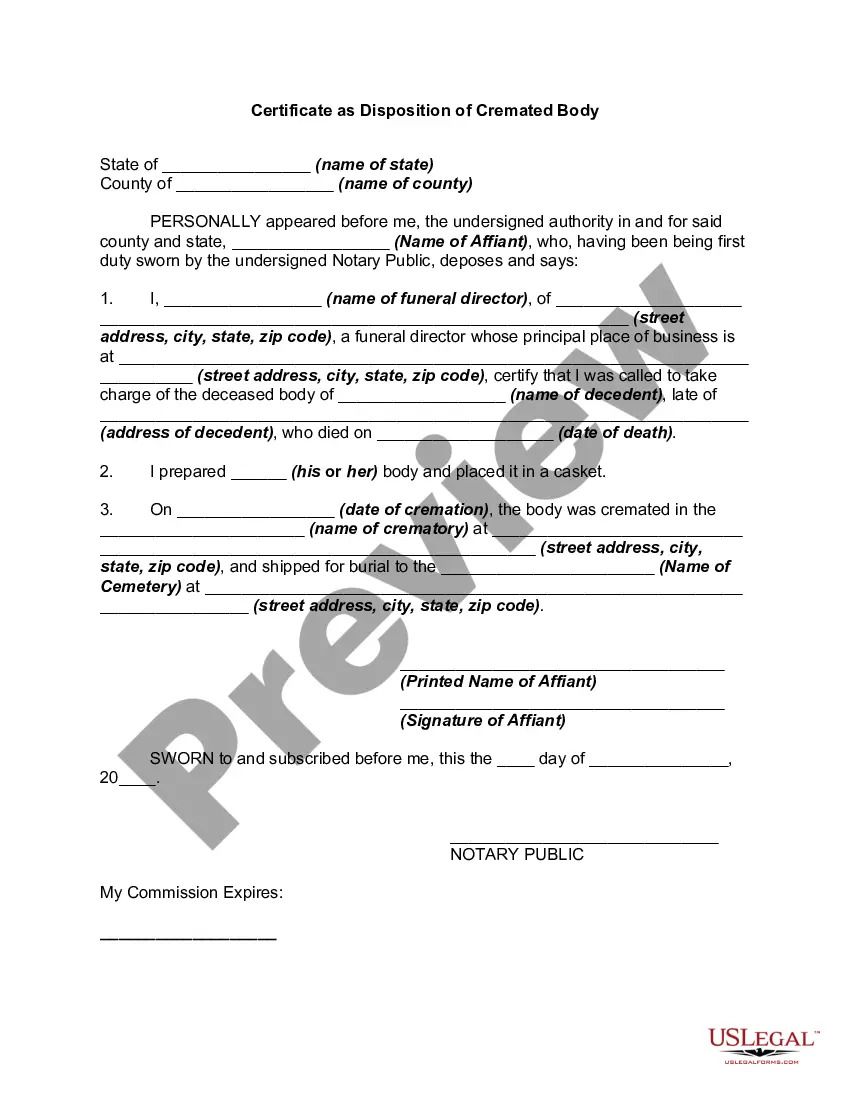
When you need a Confidential Informant Sample For Police and lack the time to search for the correct and current version, the procedures can be overwhelming.
US Legal Forms caters to all your requirements, from personal to organizational paperwork, all centralized in one location.
Utilize advanced tools to complete and manage your Confidential Informant Sample For Police.
Once you have obtained the desired form, follow these steps: Verify it is the appropriate form by previewing it and reviewing its description. Ensure that the sample is approved in your state or county. Click Buy Now when you are ready. Choose a subscription plan. Select the format you prefer, then Download, complete, eSign, print, and send your document. Enjoy the US Legal Forms online library, backed by 25 years of expertise and reliability. Transform your daily document management into a straightforward and user-friendly experience today.
- Access a valuable repository of articles, guides, and resources pertinent to your situation and needs.
- Save time and effort when searching for the documents you require, and use US Legal Forms’ sophisticated search and Review tool to find Confidential Informant Sample For Police and obtain it.
- If you hold a monthly subscription, Log In to your US Legal Forms account, search for the form, and acquire it.
- Check your My documents tab to view the documents you have previously stored and organize your folders as you see fit.
- If this is your first experience with US Legal Forms, create a complimentary account and gain unlimited access to all the platform's advantages.
- A robust online form library can be a transformative solution for anyone aiming to handle these circumstances efficiently.
- US Legal Forms stands as a frontrunner in online legal forms, boasting over 85,000 state-specific legal documents accessible to you whenever needed.
- With US Legal Forms, you can access state- or county-specific legal and business documents.
Form popularity
FAQ
Identifying a police informant can be challenging, as law enforcement takes steps to keep their identities secret. However, you might notice certain behaviors, such as unexplained interactions with the police or unusual knowledge about ongoing investigations. If you're looking for a confidential informant sample for police, it’s important to remember that these individuals often operate discreetly to provide crucial information without drawing attention.
A confidential informant statement is a document that outlines the information provided by an individual who assists law enforcement. This statement typically includes details about criminal activities, individuals involved, and any evidence the informant has. For those seeking a confidential informant sample for police, it's crucial to understand that these statements protect the informant's identity while providing valuable intelligence to the police.
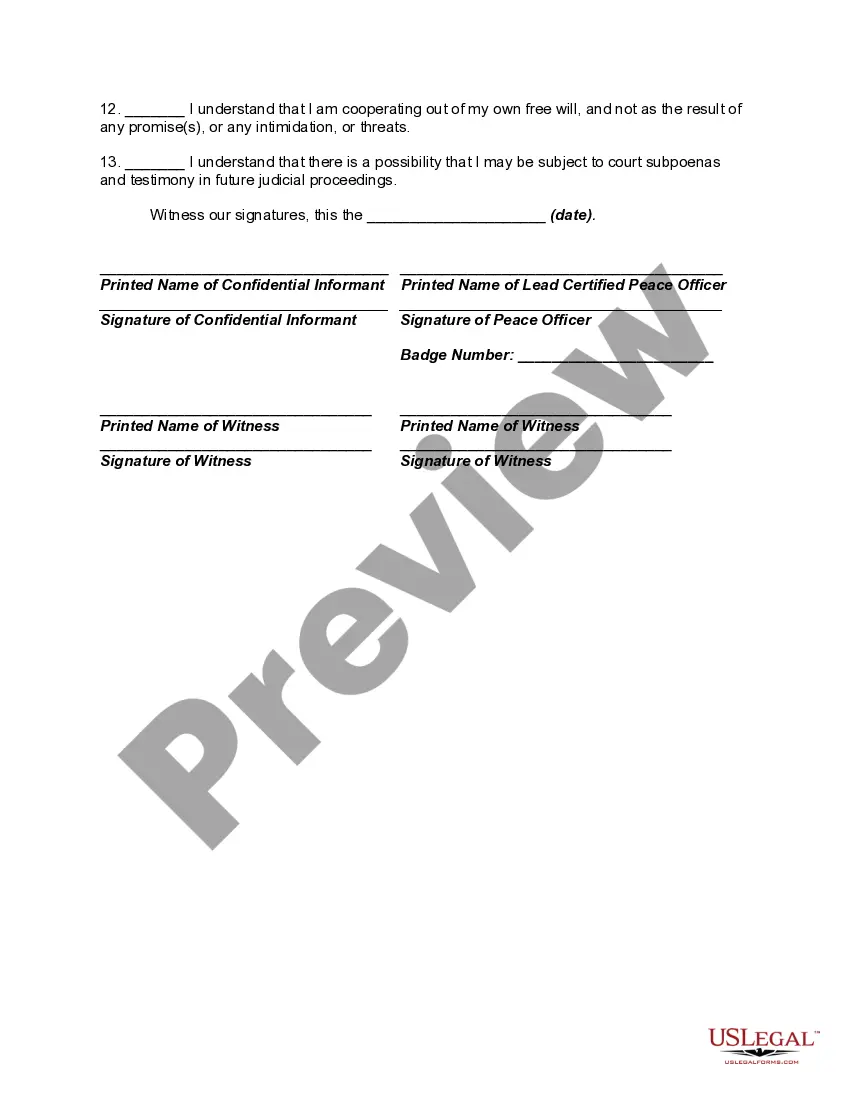
Confidential informants are prohibited from engaging in illegal activities that could compromise their role or the integrity of investigations. This includes fabricating information, conducting independent investigations, or revealing their status as informants. By using a well-prepared confidential informant sample for police, officers can clarify these limitations, ensuring that informants understand their boundaries and responsibilities.
Yes, exposing a confidential informant can lead to serious legal consequences, including criminal charges. The disclosure can jeopardize the informant's safety and undermine ongoing investigations. Utilizing a reliable confidential informant sample for police can provide guidance on how to protect informants and maintain confidentiality, thereby preventing potential legal issues.
Confidential informant guidelines are crucial for law enforcement agencies to follow when managing informants. These guidelines ensure that the informant's identity remains protected while also outlining their rights and responsibilities. A well-structured confidential informant sample for police can help agencies establish clear protocols, promoting accountability and ethical practices in investigations.
There are two opportunities to find out the identity of a confidential informant: before and during trial. If a defendant doesn't ask for disclosure of the identity at one of these two times, then the issue is waived (meaning that the defendant can't find out the identity later).
Informants escape liability for their own crimes when they give information to the government and can even earn the ability to continue offending. Informants may work both ends of the deal, maintaining relationships with the police and turning in other people even as they continue to break the law.
If the confidential informant is disclosed and proceeds to testify at trial, the way to beat them would be to make them appear unreliable. You impeach them on the stand, which discredits the evidence, information, and testimony they give. Criminal defense attorneys have a host of tools to do this.
ALTHOUGH CONFIDENTIALITY OF INFORMANTS HAS LONG BEEN AFFIRMED IN FEDERAL LAW, IT IS NOT ABSOLUTE. GOVERNMENT WITNESSES CAN BE COMPELLED TO DISCLOSE THEIR SOURCES IF THE DEFENSE REQUIRES.
Using Informants in Criminal Cases Law enforcement investigators frequently utilize informants to try and build a case against someone they believe has committed a crime.