Response Letter For Divorce
Description

Get your form ready online
Our built-in tools help you complete, sign, share, and store your documents in one place.
Make edits, fill in missing information, and update formatting in US Legal Forms—just like you would in MS Word.
Download a copy, print it, send it by email, or mail it via USPS—whatever works best for your next step.
Sign and collect signatures with our SignNow integration. Send to multiple recipients, set reminders, and more. Go Premium to unlock E-Sign.
If this form requires notarization, complete it online through a secure video call—no need to meet a notary in person or wait for an appointment.
We protect your documents and personal data by following strict security and privacy standards.

Make edits, fill in missing information, and update formatting in US Legal Forms—just like you would in MS Word.

Download a copy, print it, send it by email, or mail it via USPS—whatever works best for your next step.

Sign and collect signatures with our SignNow integration. Send to multiple recipients, set reminders, and more. Go Premium to unlock E-Sign.

If this form requires notarization, complete it online through a secure video call—no need to meet a notary in person or wait for an appointment.

We protect your documents and personal data by following strict security and privacy standards.
Looking for another form?








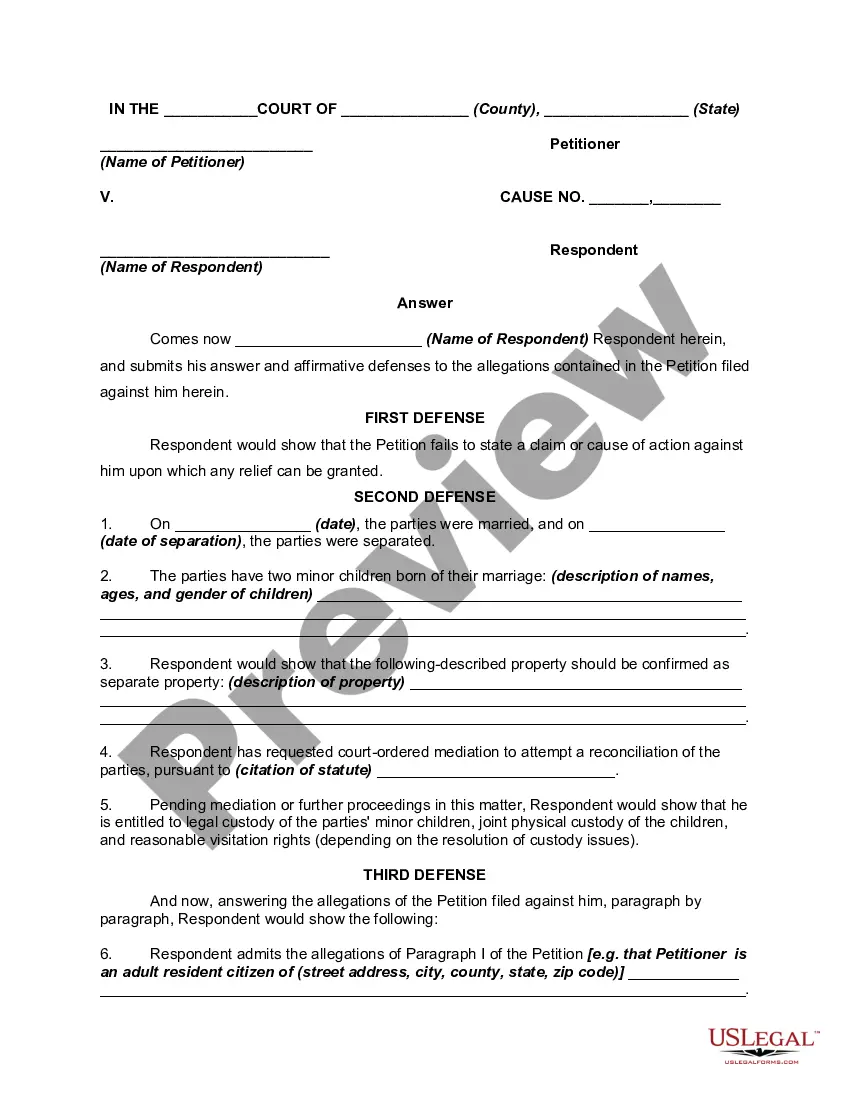
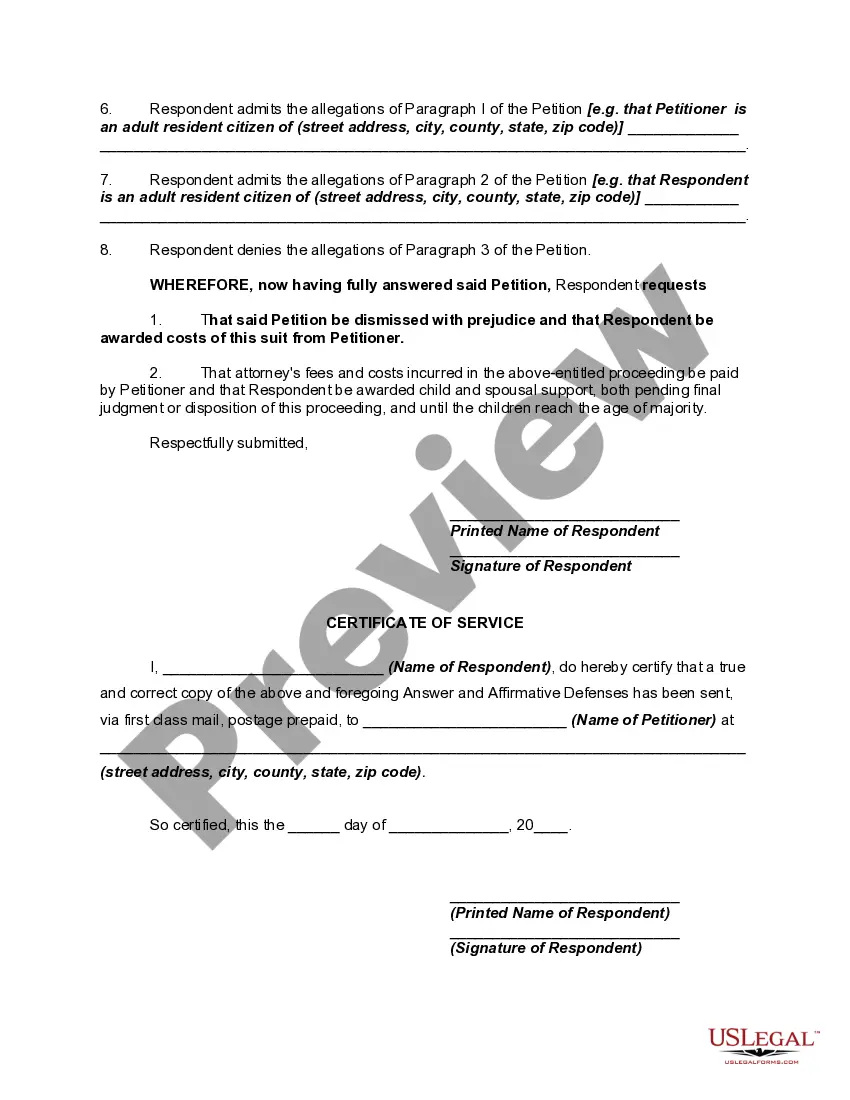
How to fill out Answer Or Response To Petition Or Complaint For Dissolution Of Marriage Or Divorce?
The Divorce Response Letter presented on this website is a reusable formal blueprint designed by experienced attorneys in accordance with federal and local statutes and regulations.
For more than 25 years, US Legal Forms has offered individuals, businesses, and legal practitioners over 85,000 validated, state-specific documents for any commercial and personal event. It represents the fastest, easiest, and most trustworthy method to acquire the necessary paperwork, as the service ensures the utmost level of data safety and malware protection.
Subscribe to US Legal Forms to have validated legal templates for all life scenarios readily available.
- Search for the document you require and review it.
- Browse the example you found and preview it or examine the form description to confirm it meets your needs. If it doesn't, utilize the search bar to find the suitable one. Click Buy Now when you have located the template you need.
- Choose and Log In to your account.
- Select the pricing plan that works best for you and create an account. Use PayPal or a credit card for a swift payment. If you already possess an account, Log In and verify your subscription to proceed.
- Obtain the editable template.
- Choose your preferred format for the Divorce Response Letter (PDF, DOCX, RTF) and download the document to your device.
- Complete and sign the document.
- Print the template to fill it out manually. Alternatively, utilize an online multifunctional PDF editor to quickly and accurately complete and sign your document with an electronic signature.
- Redownload your documents as needed.
- Use the same document again whenever necessary. Access the My documents tab in your profile to redownload any previously purchased forms.
Form popularity
FAQ
To reply to a divorce letter, begin by acknowledging receipt of the letter and expressing your intention to respond. Then, draft a response letter for divorce that addresses the specific issues raised in the letter. By doing so, you communicate your position effectively and ensure that your voice is heard in the divorce process.
Writing a divorce response requires clarity and attention to detail. Start by stating your agreement or disagreement with the petitioner's claims. Use a response letter for divorce template to ensure you include all necessary information, and keep your tone respectful and professional throughout the document.
Replying to a petition for divorce involves drafting a formal response document. In your response letter for divorce, you should acknowledge the petition and provide your stance on the key issues, such as child custody, property division, and any other relevant matters. This document helps the court understand your views and can influence the outcome.
To respond to someone's divorce, first carefully read the divorce petition they submitted. Then, prepare a response letter for divorce that addresses each point made in the petition, clearly stating your position. This ensures that the court considers your perspective during the proceedings.
A response for divorce is your formal reply to the divorce petition. This document outlines your agreement or disagreement with the terms proposed in the petition. Crafting a well-structured response letter for divorce is critical to ensure that your rights and preferences are presented to the court.
Yes, you should respond to a divorce letter. Ignoring it can lead to default judgment against you, meaning the court may grant the divorce without your input. A proper response letter for divorce is essential to protect your interests and voice your position.
To file a response to divorce papers, you first need to carefully review the documents you received. Next, you should create a response letter for divorce that addresses each claim made in the original filing. After preparing your response, make sure to file it with the court by the deadline. Platforms like US Legal Forms can assist you by providing templates and guidance to ensure your response is complete and accurate.
One of the biggest mistakes people make during a divorce is failing to respond properly to divorce papers. Ignoring these documents can lead to unfavorable outcomes, such as default judgments. A well-crafted response letter for divorce is essential for presenting your side of the story and protecting your rights. By addressing all necessary points, you set the stage for a fair resolution.
To file a response to divorce papers, start by drafting your response letter for divorce, highlighting your stance on the issues presented. Once completed, submit your response to the appropriate court and keep a copy for your records. It is important to comply with local court rules regarding filing. If you need assistance, USLegalForms offers resources that can help you navigate this process effectively.
Filing a response to divorce papers involves several steps. First, prepare your response letter for divorce, ensuring it addresses the claims made in the initial petition. Next, file your response with the court where the divorce was initiated, and make sure to serve a copy to your spouse. Platforms like USLegalForms can provide guidance and templates to simplify this process.