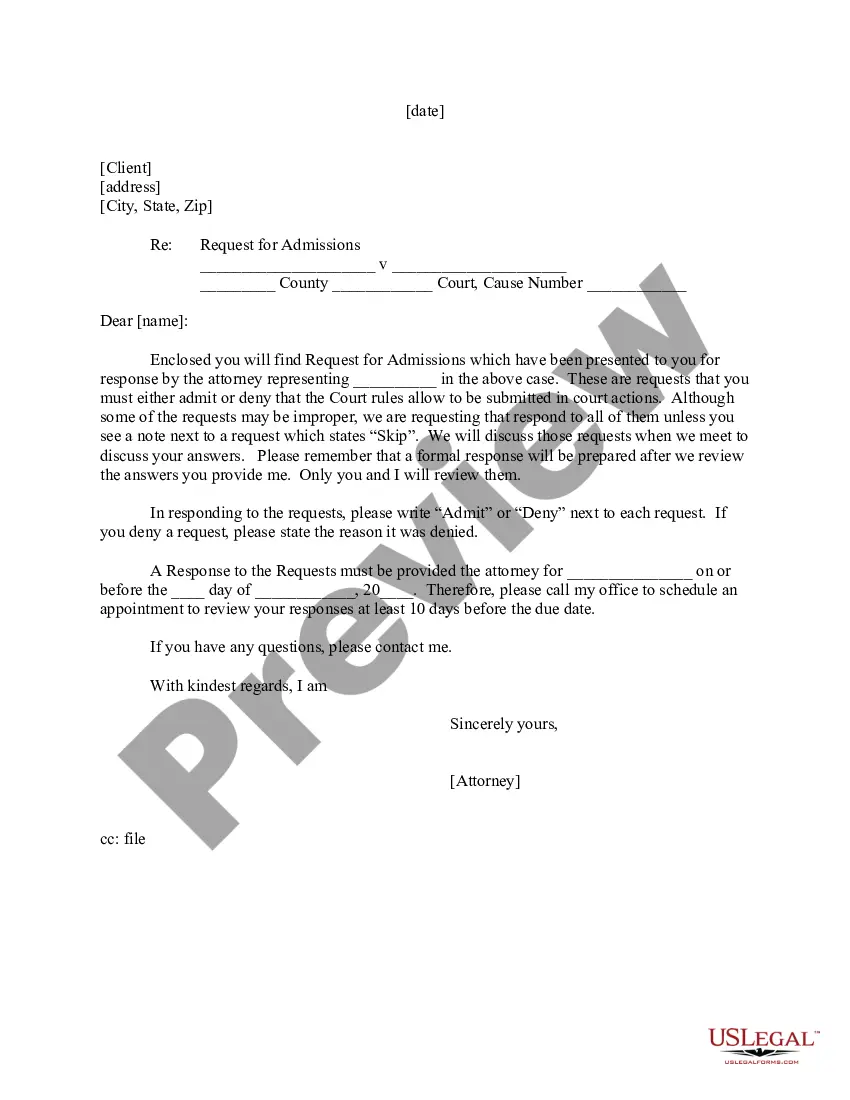
Letter To Answer A Complaint Within A Certain Population
Description

Get your form ready online
Our built-in tools help you complete, sign, share, and store your documents in one place.
Make edits, fill in missing information, and update formatting in US Legal Forms—just like you would in MS Word.
Download a copy, print it, send it by email, or mail it via USPS—whatever works best for your next step.
Sign and collect signatures with our SignNow integration. Send to multiple recipients, set reminders, and more. Go Premium to unlock E-Sign.
If this form requires notarization, complete it online through a secure video call—no need to meet a notary in person or wait for an appointment.
We protect your documents and personal data by following strict security and privacy standards.

Make edits, fill in missing information, and update formatting in US Legal Forms—just like you would in MS Word.

Download a copy, print it, send it by email, or mail it via USPS—whatever works best for your next step.

Sign and collect signatures with our SignNow integration. Send to multiple recipients, set reminders, and more. Go Premium to unlock E-Sign.

If this form requires notarization, complete it online through a secure video call—no need to meet a notary in person or wait for an appointment.

We protect your documents and personal data by following strict security and privacy standards.
Looking for another form?








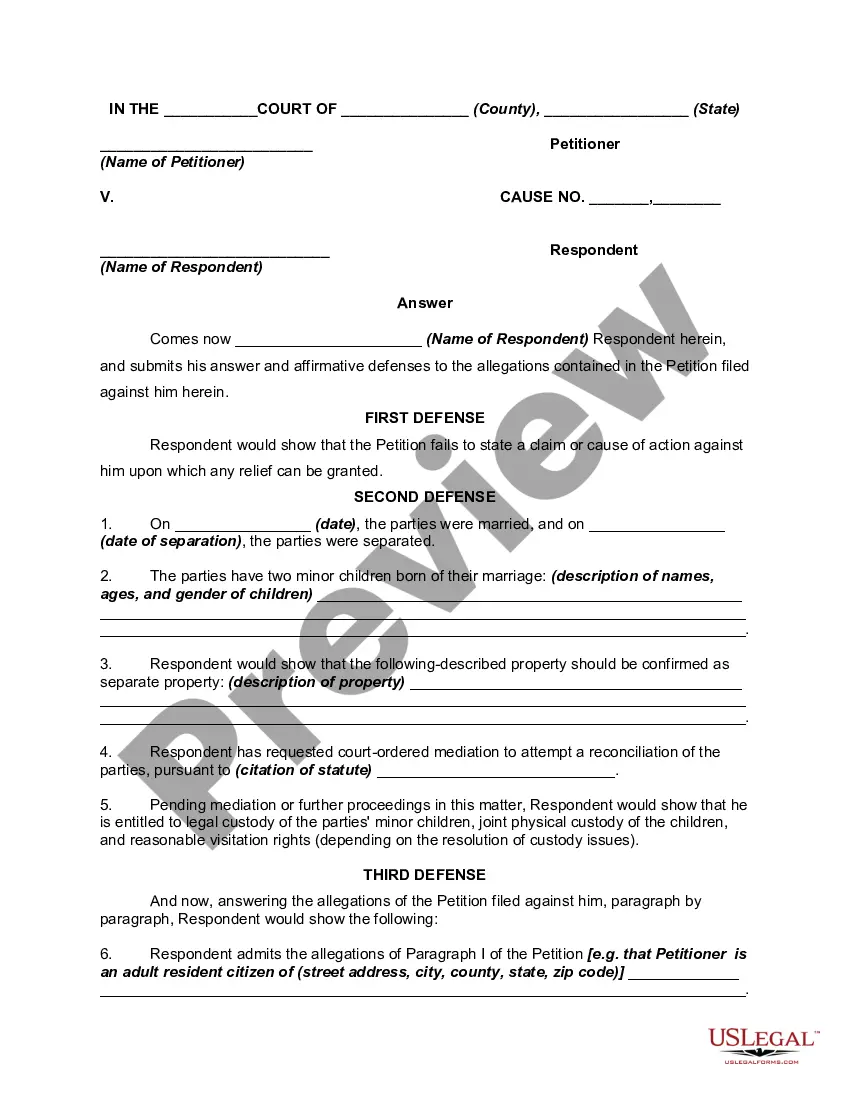
How to fill out Answer Or Response To Petition Or Complaint For Dissolution Of Marriage Or Divorce?
Legal documentation management can be exasperating, even for adept professionals.
When you are in search of a Response Letter to Address a Complaint Within a Specific Demographic and lack the time to dedicate to finding the correct and current version, the activities can be overwhelming.
Utilize a valuable resource pool of articles, guides, and materials relevant to your circumstances and needs.
Save time and effort in sourcing the documents you require, and utilize US Legal Forms' sophisticated search and Preview option to find Response Letter to Address a Complaint Within a Specific Demographic and acquire it.
Enjoy the US Legal Forms online library, backed by 25 years of experience and reliability. Improve your daily document management in an easy and user-friendly manner today.
- If you have a subscription, sign in to your US Legal Forms account, search for the document, and download it.
- Check the My documents section to view the documents you have saved and manage your folders as desired.
- If it’s your first experience with US Legal Forms, create a free account for unlimited access to all features of the library.
- After locating the document you require, confirm it is the correct form by reviewing it and assessing its details.
- Make sure the template is recognized in your state or county.
- Once you are ready, select Buy Now.
- Choose a subscription package.
- Select the format you prefer, and Download, fill it out, sign, print, and send your document.
- Access state- or county-specific legal and business documents.
- US Legal Forms accommodates any requests you may have, from personal to commercial paperwork, all centralized in one place.
- Leverage advanced tools to create and manage your Response Letter to Address a Complaint Within a Specific Demographic.
Form popularity
FAQ
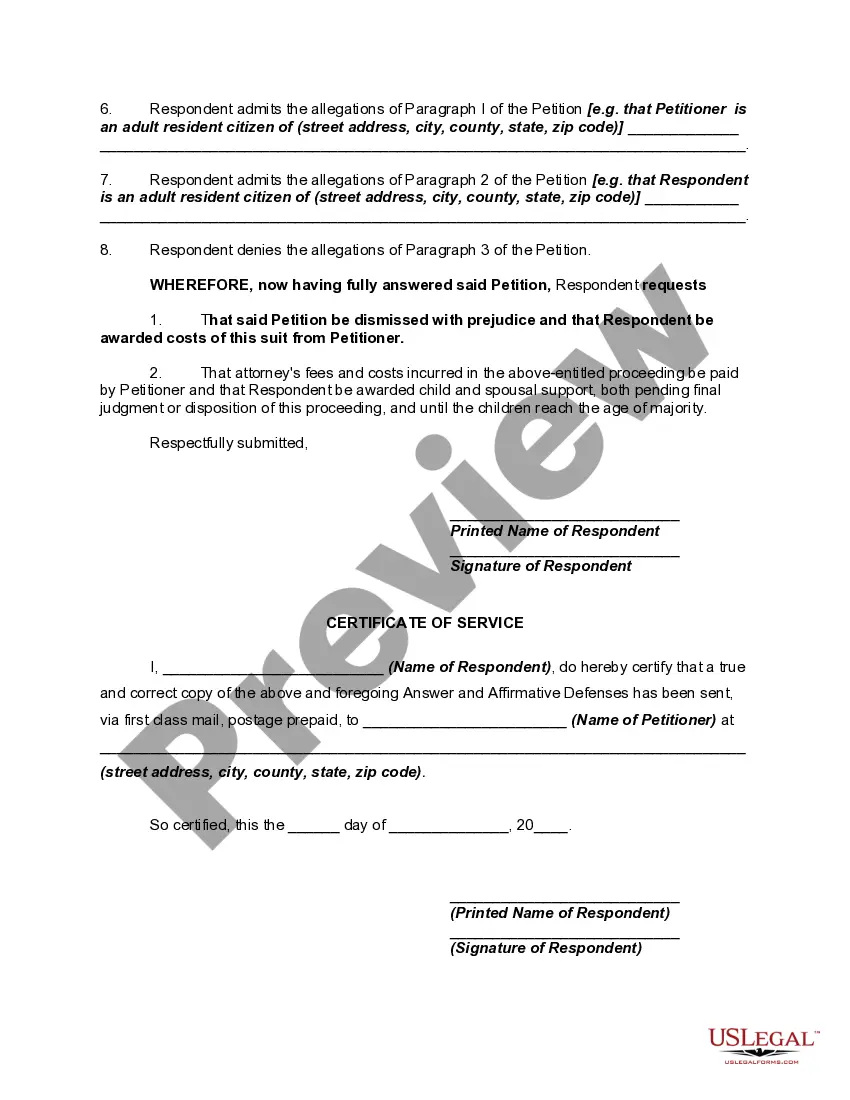
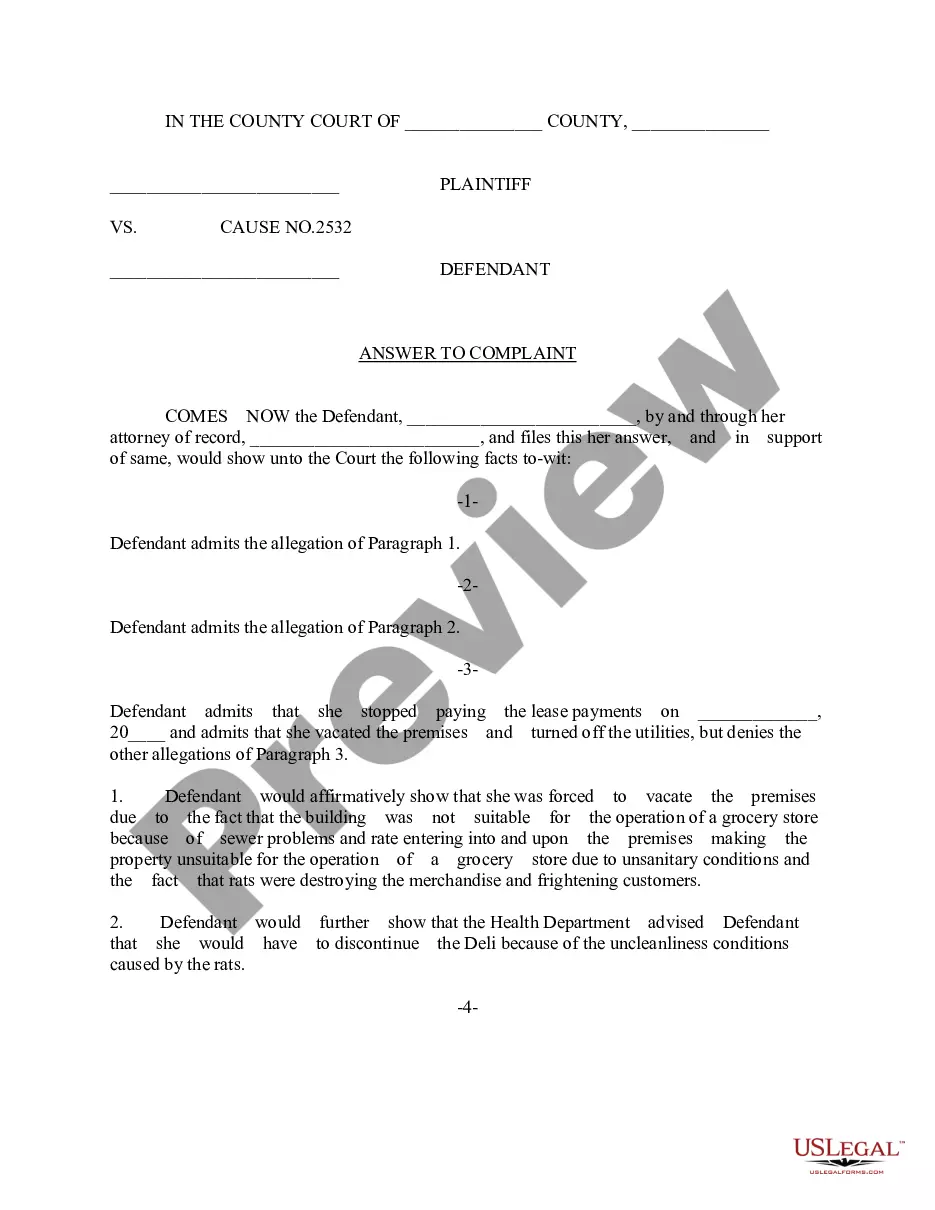
It is a formal written statement that addresses the allegations made by the plaintiff and either admits or denies them. Example: If a person is sued for breach of contract, they would file a responsive pleading that either admits to breaching the contract or denies the allegations made by the plaintiff.
Affirmative defense?Examples On [Date], after making the contract and the alleged breach, and before this action was commenced, defendant paid to the plaintiff the sum of [specify amount], which was accepted by the plaintiff in full satisfaction and discharge of the damages claimed in the petition.
On a separate page or pages, write a short and plain statement of the answer to the allegations in the complaint. Number the paragraphs. The answer should correspond to each paragraph in the complaint, with paragraph 1 of the answer corresponding to paragraph 1 of the complaint, etc.
An answer is a formal written response to the plaintiff's complaint in which the defendant responds to all of the allegations in the complaint and sets forth any defenses to all or part of plaintiff's claims. An answer is filed by the defendant after s/he has been served with a copy of the complaint.
In law, an answer refers to a defendant's first formal written statement to a plaintiff's initial petition or complaint. This opening written statement will admit or deny the allegations, or demand more information about the claims of wrongdoing.