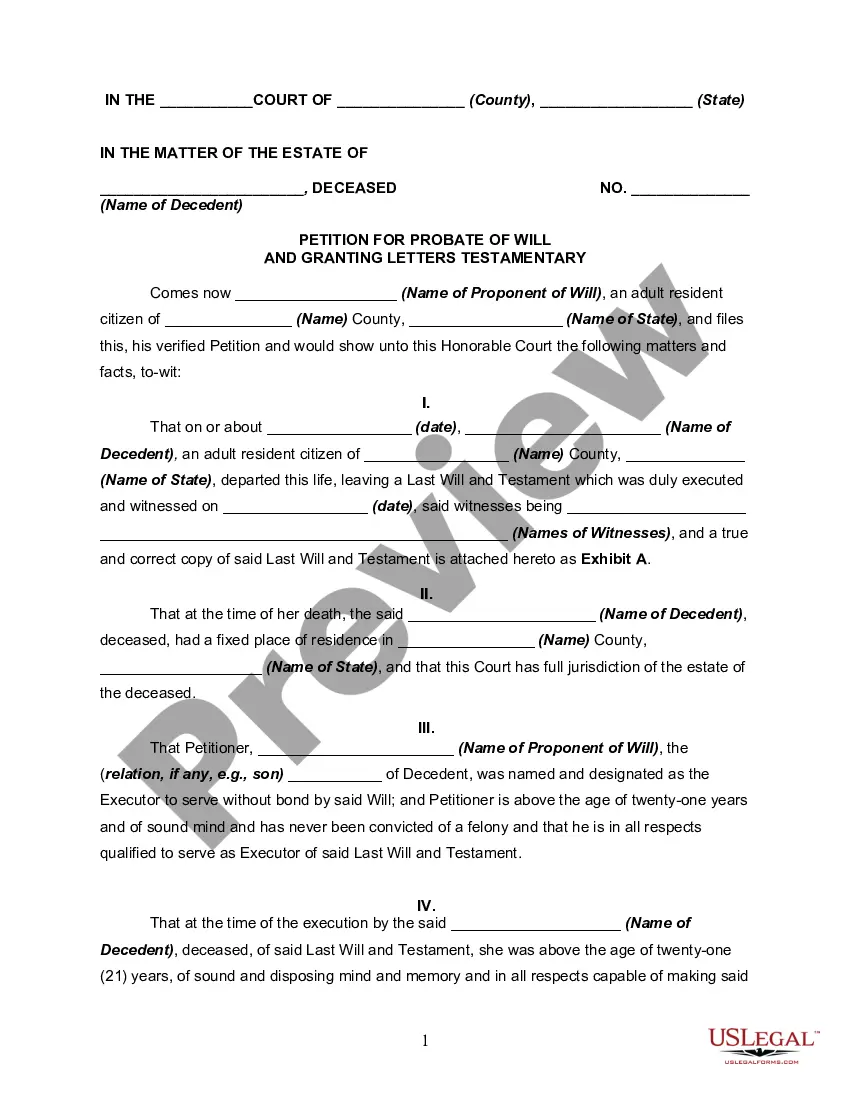
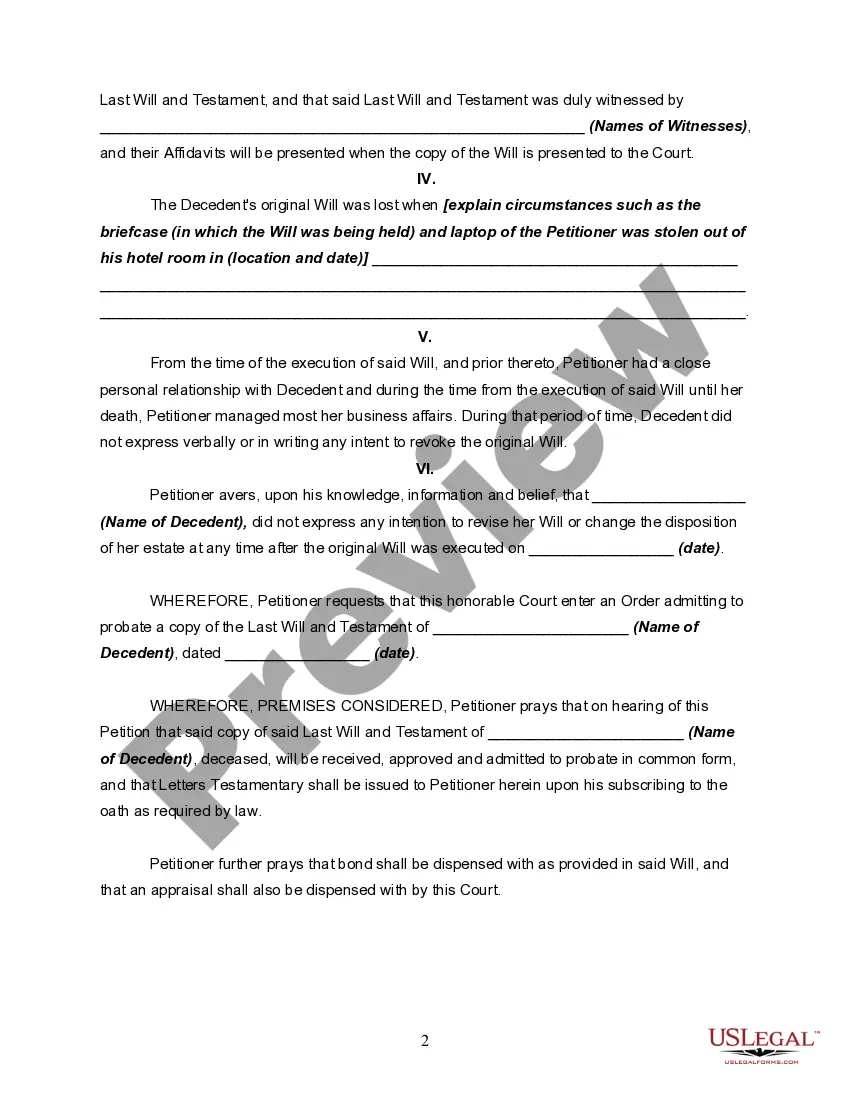
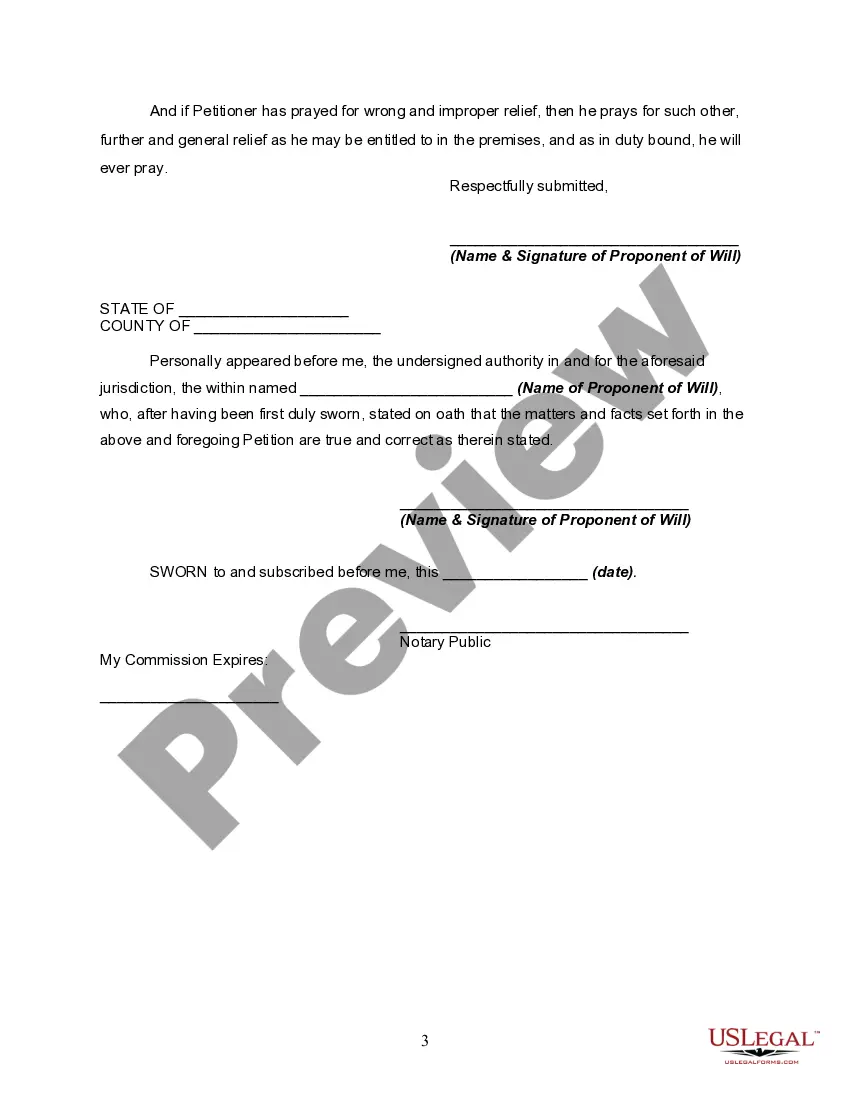
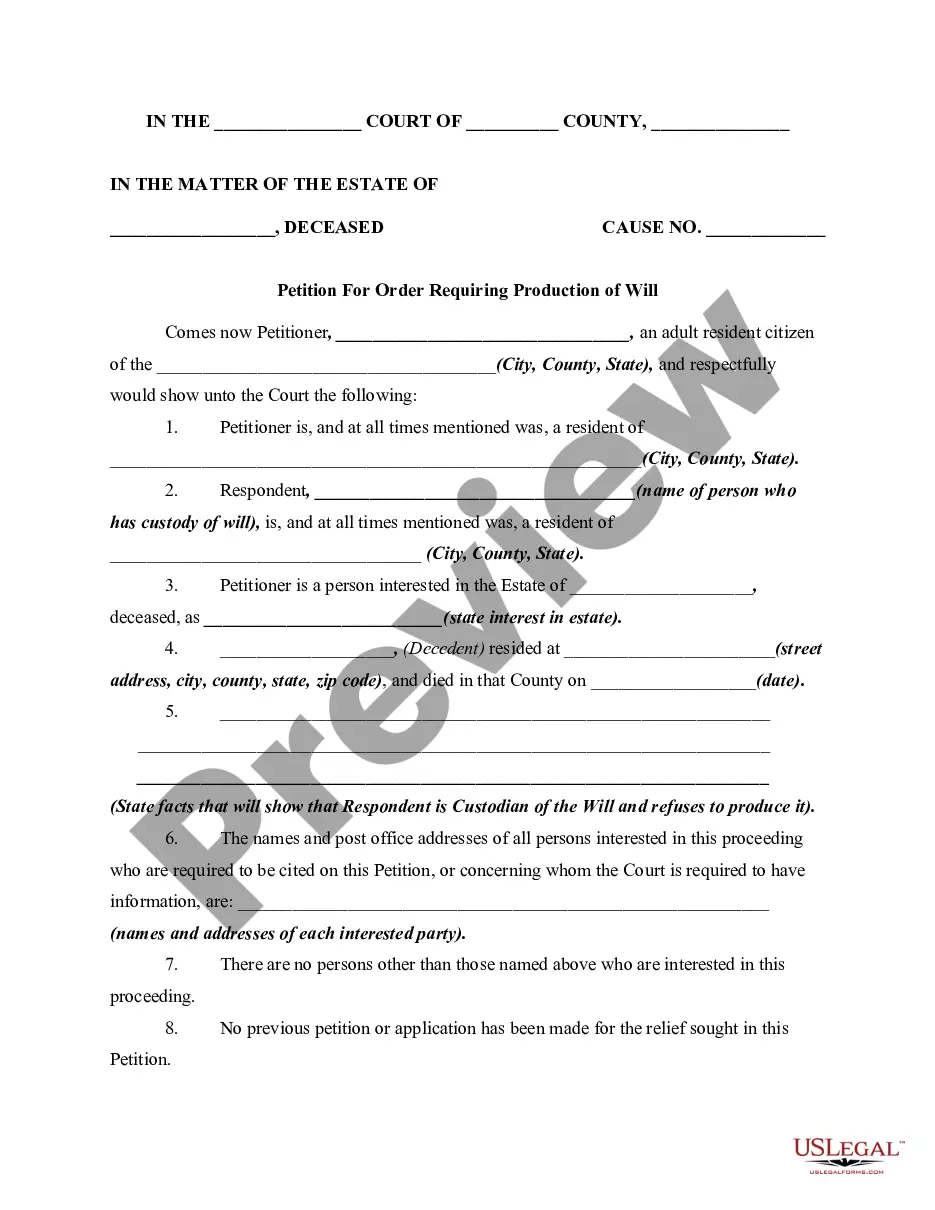
Petition With The Court
Description

Get your form ready online
Our built-in tools help you complete, sign, share, and store your documents in one place.
Make edits, fill in missing information, and update formatting in US Legal Forms—just like you would in MS Word.
Download a copy, print it, send it by email, or mail it via USPS—whatever works best for your next step.
Sign and collect signatures with our SignNow integration. Send to multiple recipients, set reminders, and more. Go Premium to unlock E-Sign.
If this form requires notarization, complete it online through a secure video call—no need to meet a notary in person or wait for an appointment.
We protect your documents and personal data by following strict security and privacy standards.

Make edits, fill in missing information, and update formatting in US Legal Forms—just like you would in MS Word.

Download a copy, print it, send it by email, or mail it via USPS—whatever works best for your next step.

Sign and collect signatures with our SignNow integration. Send to multiple recipients, set reminders, and more. Go Premium to unlock E-Sign.

If this form requires notarization, complete it online through a secure video call—no need to meet a notary in person or wait for an appointment.

We protect your documents and personal data by following strict security and privacy standards.
Looking for another form?







How to fill out Petition To Probate Lost Will?
Accessing legal document examples that comply with federal and state guidelines is crucial, and the web provides a wide range of choices to select from.
However, what is the use of wasting effort searching for the appropriate Petition With The Court example online if the US Legal Forms digital library already compiles such templates in one location.
US Legal Forms is the premier online legal repository featuring over 85,000 fillable templates created by attorneys for various business and personal situations.
Examine the template using the Preview feature or by reviewing the text outline to ensure it aligns with your requirements.
- They are easy to navigate with all documents categorized by state and intended purpose.
- Our experts stay current with legal updates, ensuring that your documents are always accurate and compliant when you acquire a Petition With The Court from our site.
- Obtaining a Petition With The Court is both quick and straightforward for both existing and new users.
- If you already possess an account with an active subscription, Log In and store the document example you need in the correct format.
- If you are new to our site, follow the steps below.
Form popularity
FAQ
A good example of a petition is one that seeks a court order for child custody. In this case, the petition outlines the child's best interests, reasons for the requested custody arrangement, and any relevant supporting evidence. Such a document clearly articulates the petitioner's requests and legal grounds, making it easier for the court to understand the situation. You can find examples through platforms like US Legal Forms to assist you.
Contact a local title company. California tenants seeking their landlord's information can contact a representative at a local title company and obtain a FARM list for the property. This document will have everything the California tenant needs to get ahold of the landlord.
A landlord uses a 30-day Notice to Quit (move out) to end a month-to-month tenancy if the tenant has been renting for less than 1 year. A landlord uses a 60-day Notice to Quit if their tenant has been renting for 1 year or more.
Under the provisions of the TPA, landlords are allowed to increase rents each year by 5% plus the applicable average increase in the cost of living in order to allow for inflation. There is a maximum increase of 10% allowed in any given year, thus the Act's provision is often referred to as a ?rent cap.?
California landlords must adhere to the Federal Fair Housing Act and laws and cannot discriminate against tenants based on protected characteristics such as race, color, religion, sex, national origin, familial status, or disability.
Rent Control Laws ing to the AB-1482 from the California Tenant Protection Act), any rent increase is capped at 5% plus inflation or 10% of the lowest price paid in the last 12 months. These laws started in January 2020, and it's expected to last until January 2030. You can read more about this measure here.
For month-to-month tenancies, you must provide a 30-day written notice of the change in the terms of the tenancy. If the change involves a rent increase of more than 10%, a 90-day notice is required. However, if the increase is due to income or household size recertification, you only need to provide 30 days' notice.
The county clerk or county recorder should also know who owns a property in California. As long as you know the property's location and county, you can typically get the information for free. Even if you need to print documents, these offices typically charge minimal fees.