Petition Probate Form With Will
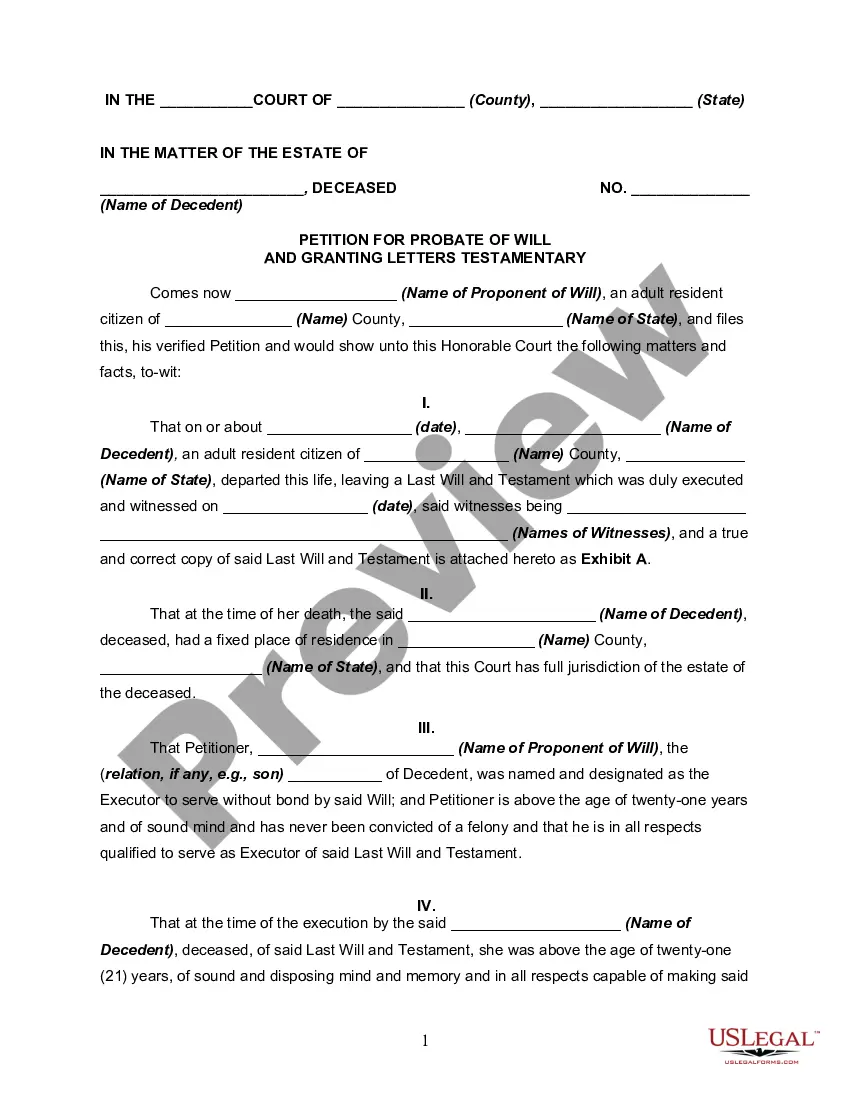
Description

Get your form ready online
Our built-in tools help you complete, sign, share, and store your documents in one place.
Make edits, fill in missing information, and update formatting in US Legal Forms—just like you would in MS Word.
Download a copy, print it, send it by email, or mail it via USPS—whatever works best for your next step.
Sign and collect signatures with our SignNow integration. Send to multiple recipients, set reminders, and more. Go Premium to unlock E-Sign.
If this form requires notarization, complete it online through a secure video call—no need to meet a notary in person or wait for an appointment.
We protect your documents and personal data by following strict security and privacy standards.

Make edits, fill in missing information, and update formatting in US Legal Forms—just like you would in MS Word.

Download a copy, print it, send it by email, or mail it via USPS—whatever works best for your next step.

Sign and collect signatures with our SignNow integration. Send to multiple recipients, set reminders, and more. Go Premium to unlock E-Sign.

If this form requires notarization, complete it online through a secure video call—no need to meet a notary in person or wait for an appointment.

We protect your documents and personal data by following strict security and privacy standards.
Looking for another form?








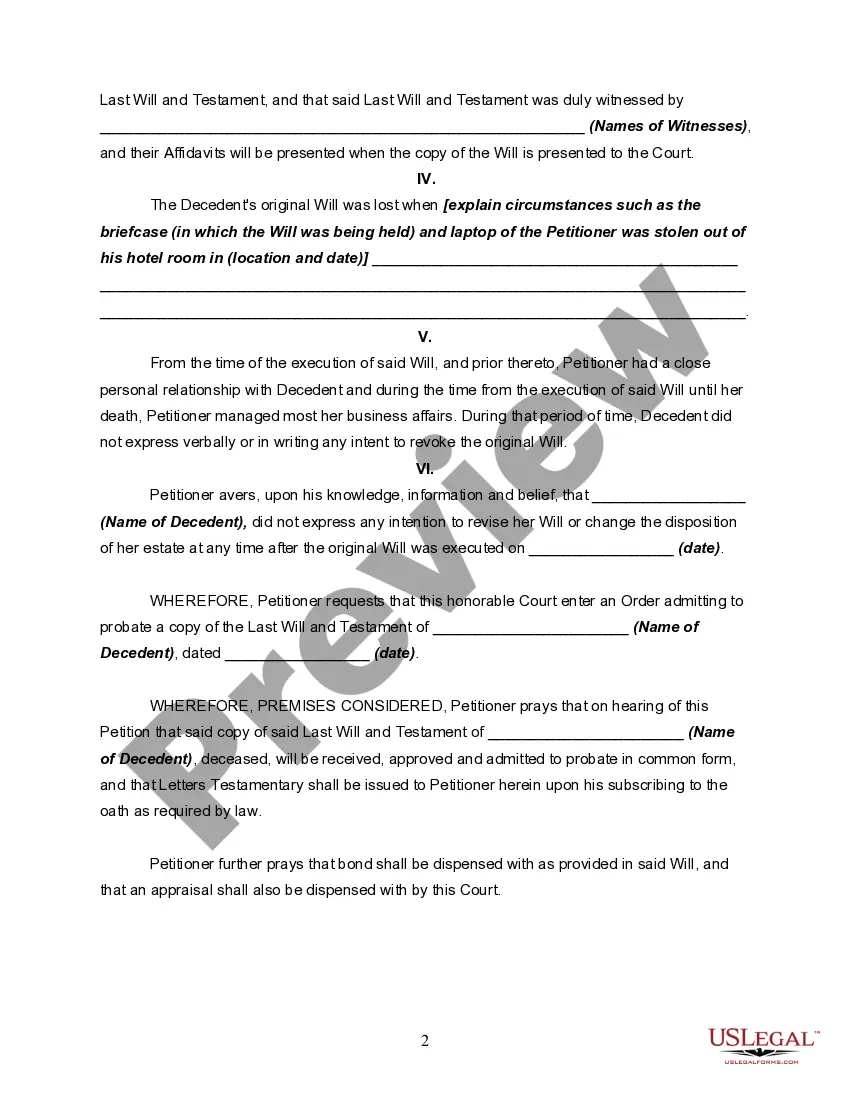
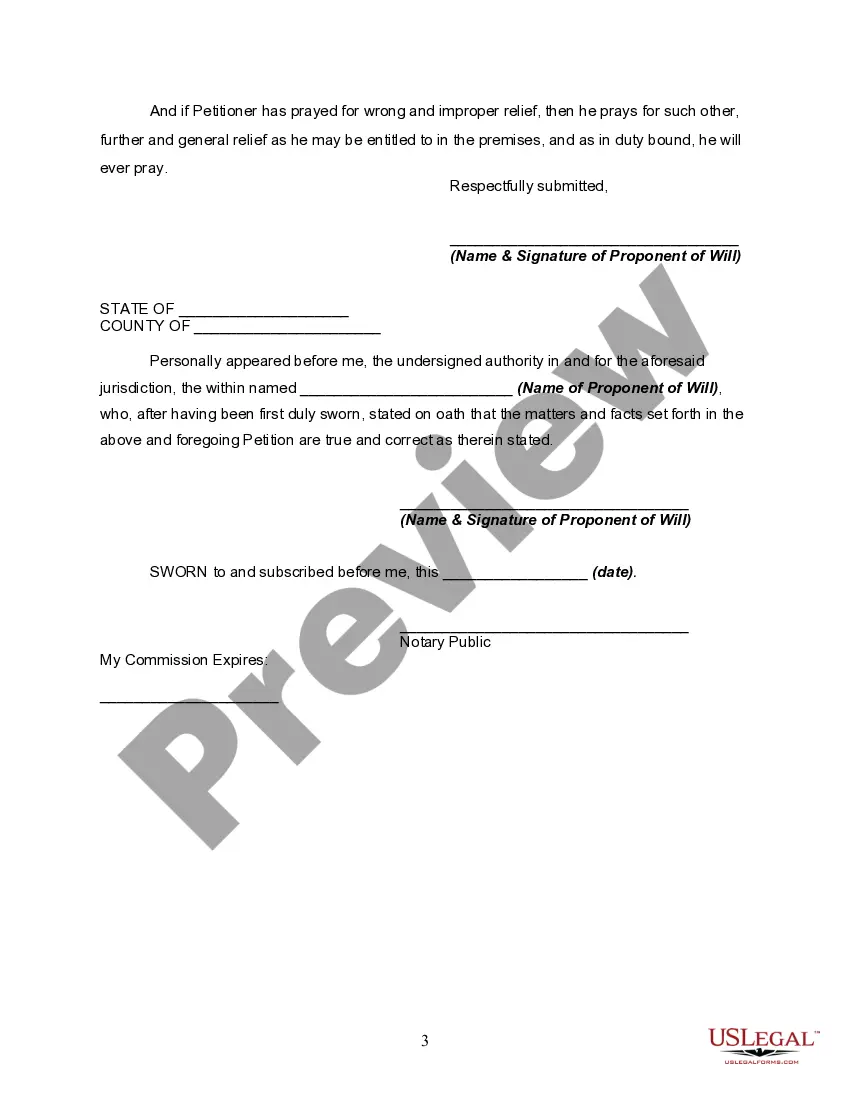
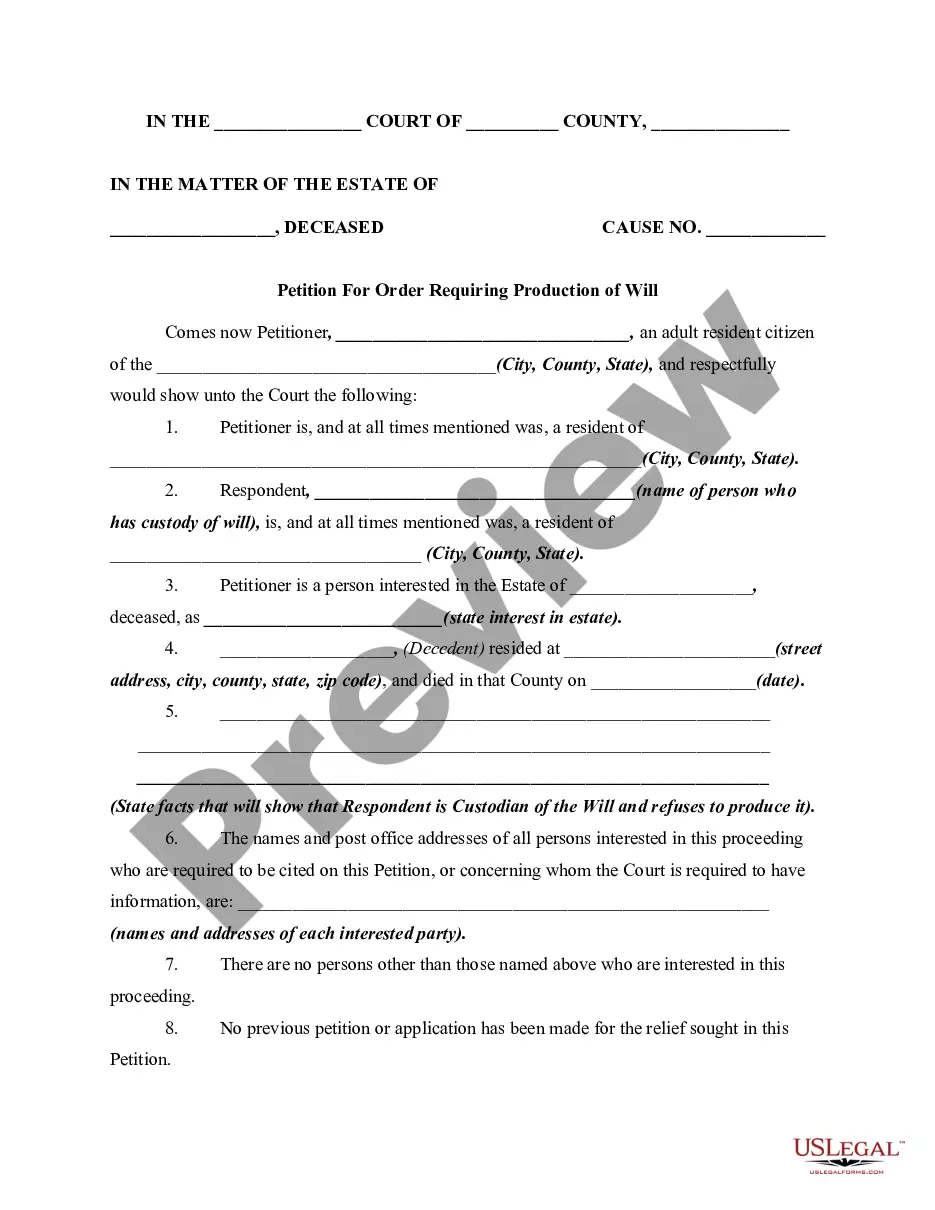
How to fill out Petition To Probate Lost Will?
Obtaining legal documents that adhere to federal and state laws is essential, and the internet provides numerous alternatives to select from.
However, what is the benefit of spending time searching for the accurately crafted Petition Probate Form With Will example online when the US Legal Forms digital library has already compiled such documents in one location.
US Legal Forms is the leading online legal repository featuring over 85,000 editable templates created by legal professionals for various professional and personal situations.
Review the template using the Preview feature or via the text outline to ensure it meets your requirements.
- They are simple to navigate, with all documents categorized by state and intended use.
- Our experts keep pace with legal changes, ensuring that your form is always current and compliant when you obtain a Petition Probate Form With Will from our site.
- Acquiring a Petition Probate Form With Will is quick and straightforward for both existing and new users.
- If you already possess an account with an active subscription, sign in and download the document you require in your preferred format.
- If you are visiting our website for the first time, follow the steps outlined below.
Form popularity
FAQ
Default means a party has not done what is required of them in the time allowed. For example, a defendant (or respondent) did not file an answer to a complaint within the required time, or a plaintiff (or petitioner) did not answer a counterclaim within the required time.
Here are the steps that must be taken to be granted a default judgment by the court: Have your spouse served with a divorce petition or complaint and a court summons, per Utah Rule of Civil Procedure 4. The other party has 21 days from the date served to respond. If served out of state, he or she has 30 days.
To get a judgment by default, you must serve the other party with the Summons and the Complaint/Petition, file proof of service with the court, and then wait at least 21 days (30 days if the other party was served outside Utah).
The statute of limitations for renewing a judgment is 8 years from the date of the judgment.
A default judgment is the court order entered against the party who defaulted.
To register the order, file the Request to Register and its supporting documents with the judicial services representative. File in the district court in the county in which the children live. If the children do not live in Utah, then file in the county in which the opposing party lives.
There are several ways to access district and justice court case information: Free public XChange access is available at most district courthouses and may be available in some justice court locations. ... Free public XChange access is also available at the Utah State Law Library.
A default is a failure to perform a duty in legal proceedings. A default judgment is binding, and the defaulting defendant may not litigate his case or present any evidence. A civil action default judgment will grant the amount of relief sought in a plaintiff's complaint.