Criminal Charges With Theft
Description
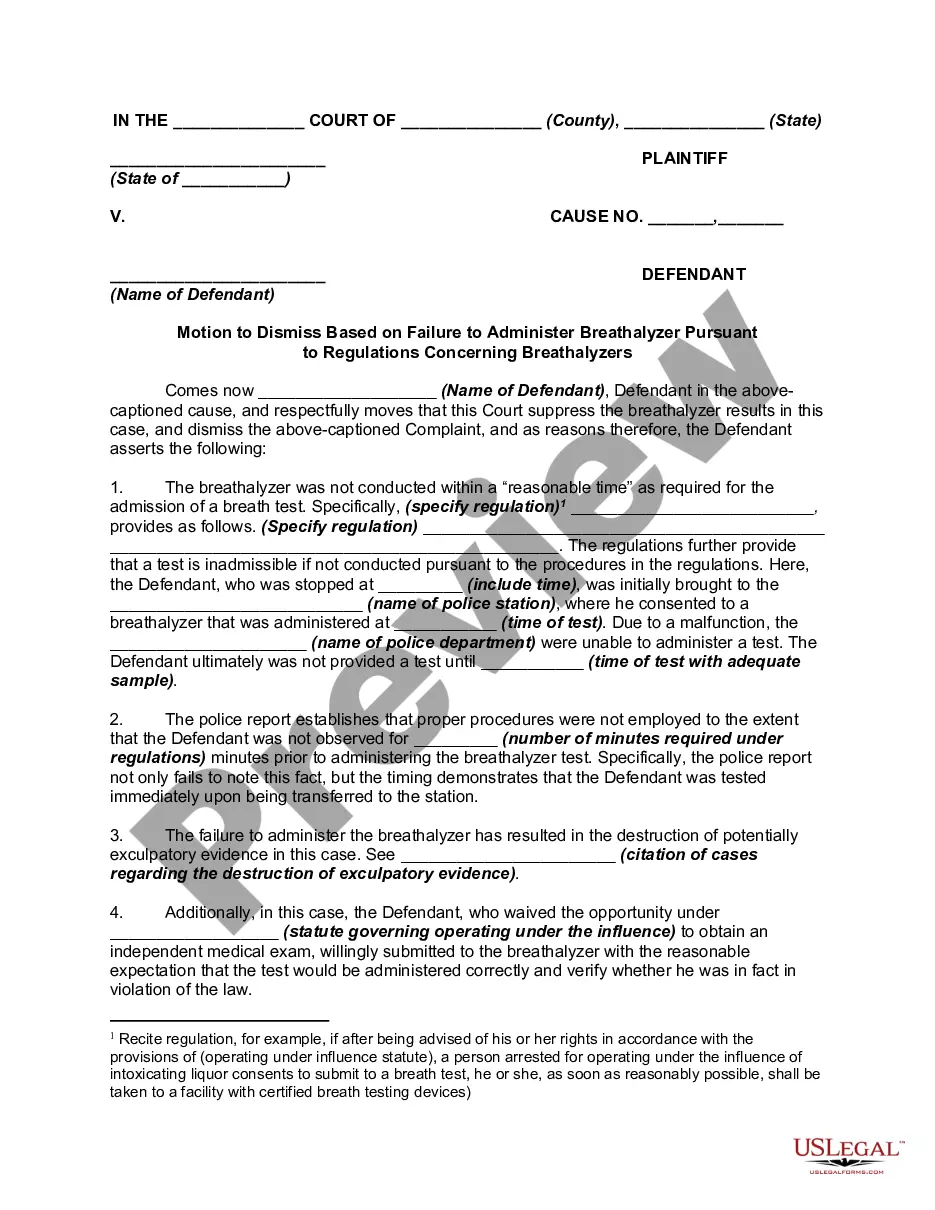
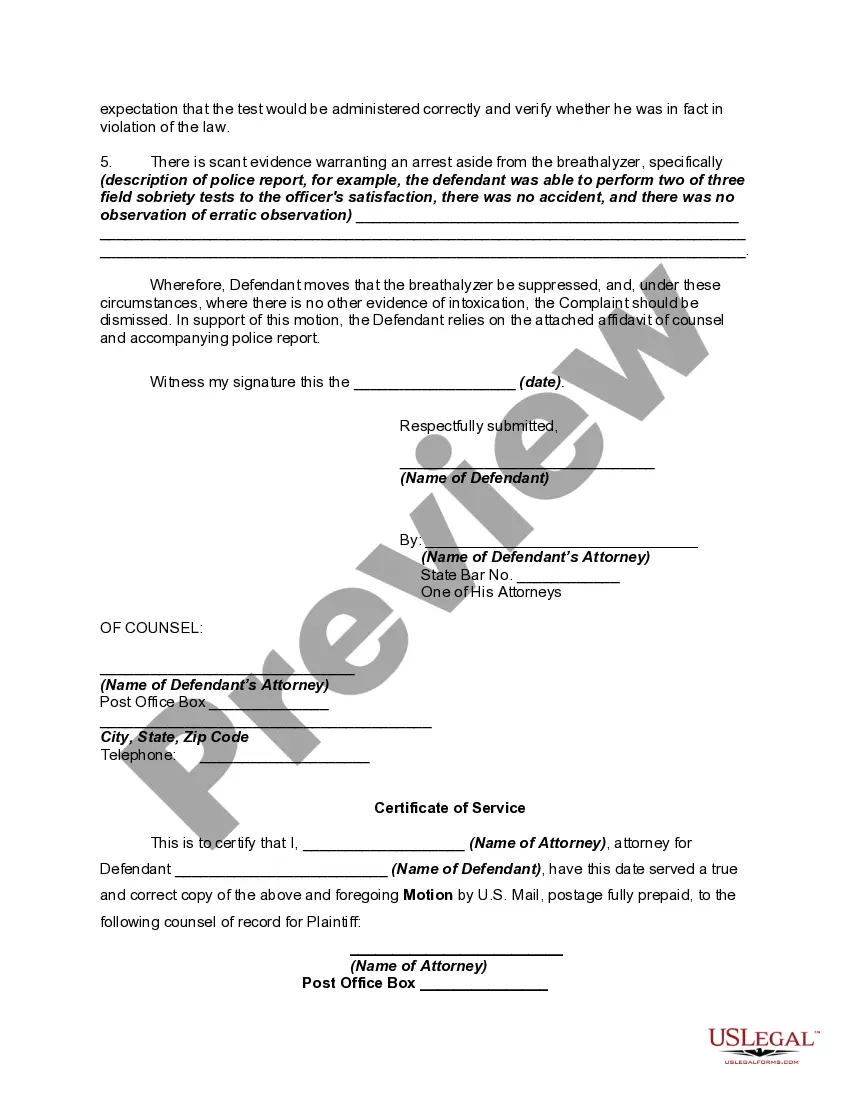
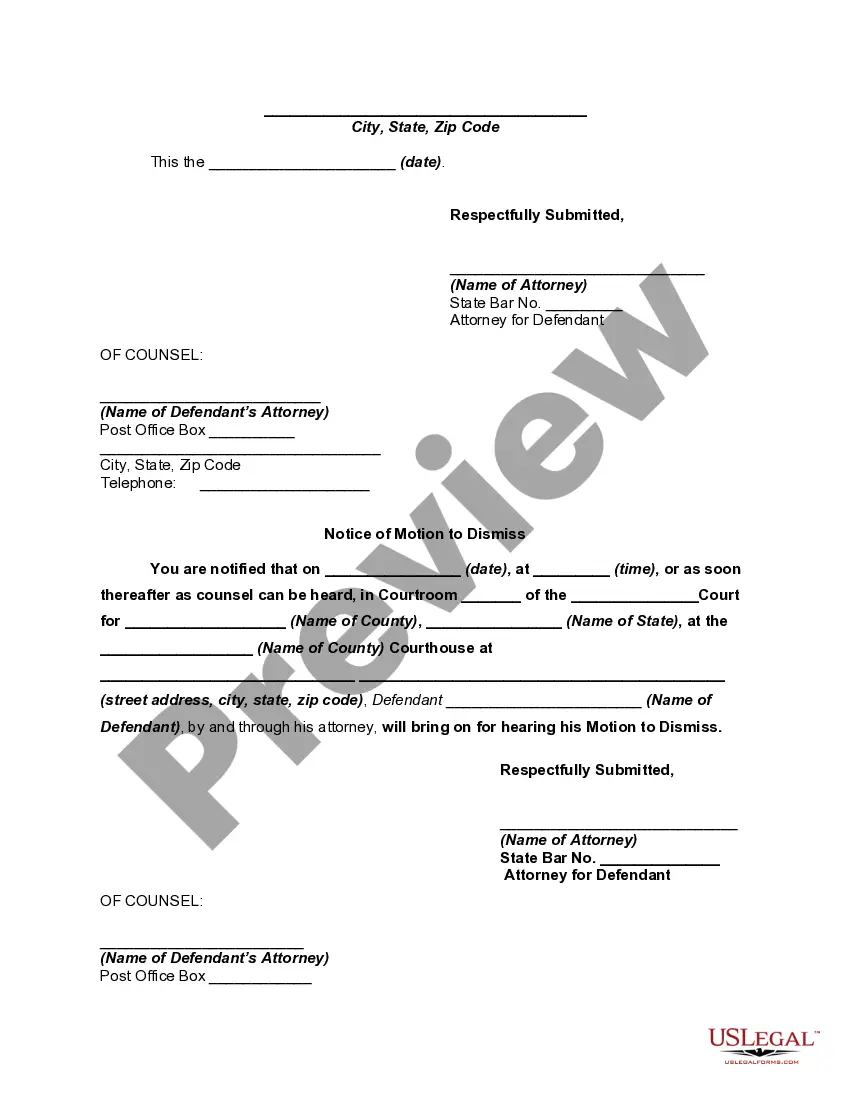

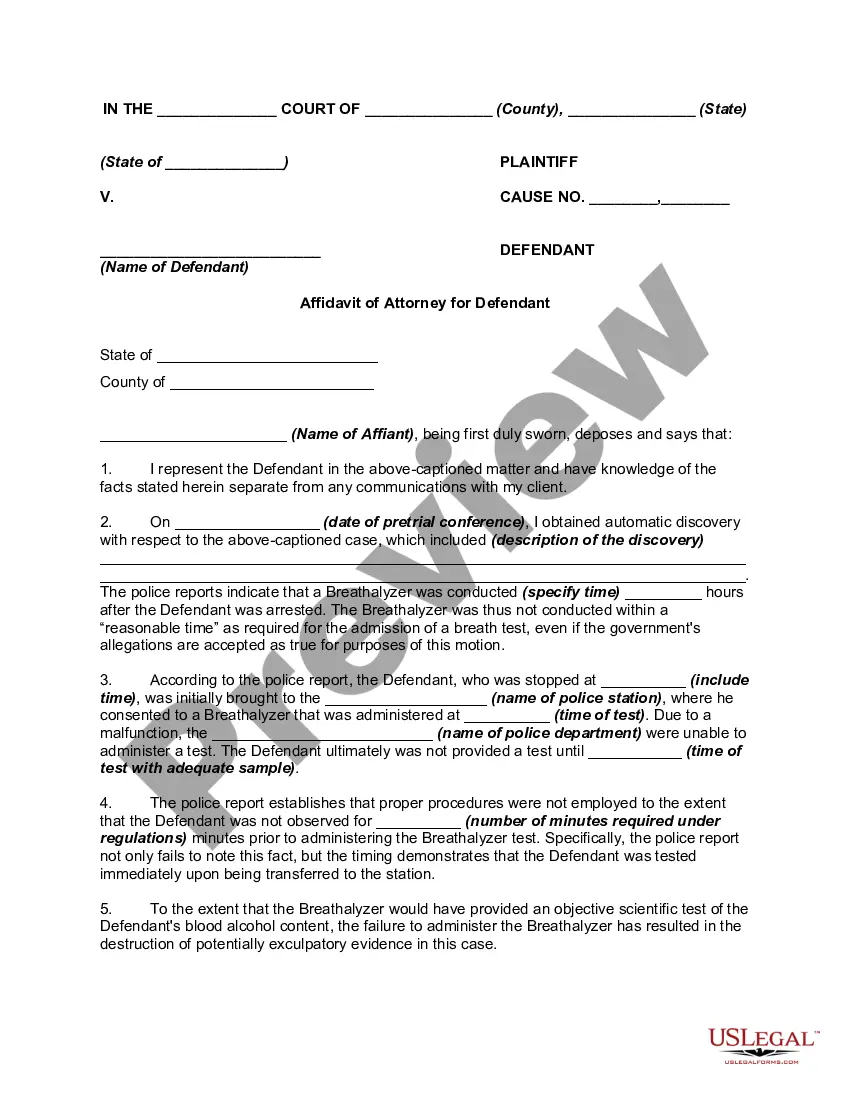
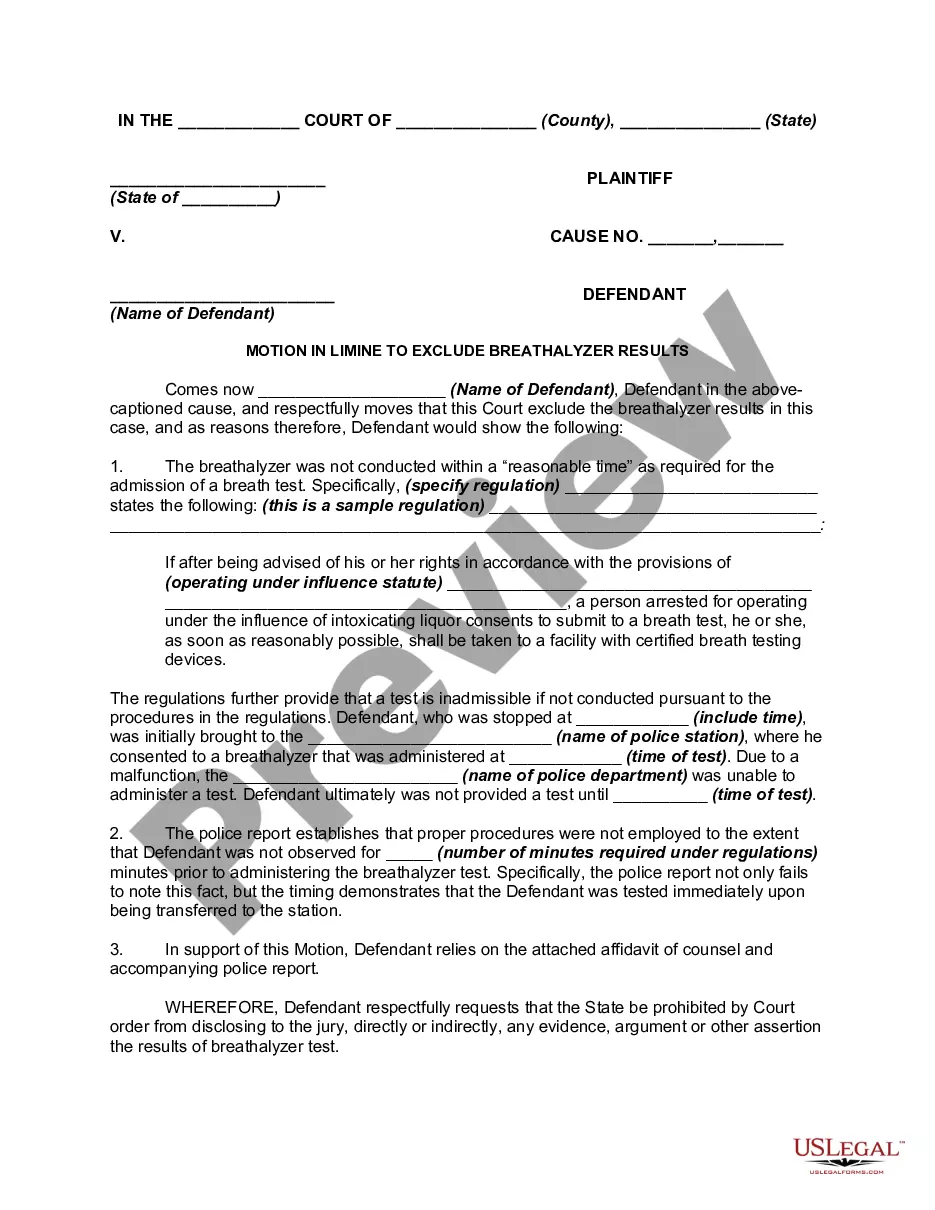







How to fill out Motion To Dismiss Criminal Charges For Failure To Follow Breathalyzer Protocols - DUI?
- Log into your US Legal Forms account if you've used the service before and download the required form template by clicking the Download button.
- Ensure your subscription is active; if not, renew it based on your payment plan.
- Preview the form and read its description to confirm it meets your needs and aligns with local jurisdiction requirements.
- If the form isn't suitable, utilize the Search tab to find alternative templates.
- Once you find an appropriate document, click on the Buy Now button and select your preferred subscription plan.
- Complete the registration process to access the full library.
- Enter your payment information or use PayPal to finalize your purchase.
- Download the form to your device, ready for completion and available via the My Forms section in your account whenever necessary.
US Legal Forms not only provides a robust collection of forms but also empowers individuals with expert support for accurate form completion. With over 85,000 fillable legal documents at your fingertips, you can navigate legal challenges with confidence.
Don’t hesitate to make your next move—get started with US Legal Forms today!
Form popularity
FAQ
When pursuing criminal charges with theft, you need to gather clear evidence to support your claim. This can include photographs of the scene, video footage, witness statements, and any personal items that were stolen. Organizing this evidence will help law enforcement assess the situation accurately. Consulting with a legal advisor is also beneficial to understand the specifics required for your case.
Theft is generally categorized as a misdemeanor or felony, depending on the severity of the offense and the items stolen. Misdemeanor theft typically involves lower-value items, while felony theft, often referred to as grand theft, involves higher-value property. Each type of offense has different legal repercussions. If you are facing charges, it is wise to consult a professional to understand the classification of your specific case.
Theft is classified as a property crime, which encompasses a variety of offenses aimed at taking or destroying someone else's belongings. Crimes like burglary, larceny, and shoplifting all fall under the definition of theft. Each type of theft may carry different legal consequences based on the situation and the jurisdiction’s laws. Obtaining detailed information about criminal charges with theft can help you better prepare if you are facing such allegations.
The minimum sentence for theft varies by state and the value of the stolen items. In many jurisdictions, a first-time offender may face fines or short-term incarceration for minor theft, while more serious charges can lead to harsher penalties. Understanding the specifics of criminal charges with theft in your area is crucial. Legal resources, like those available at uslegalforms, can provide detailed information tailored to your situation.
Yes, stealing typically results in criminal charges with theft, which can go on your criminal record. A record of theft can have lasting implications, affecting your ability to find employment and secure housing. It's important to understand how these charges may influence your future. If you're facing such charges, consulting a legal professional can help you navigate your options.
Deciding to sue or press charges for theft depends on your desired outcome. Pressing charges initiates a criminal case that seeks to punish the offender, while suing aims for financial restitution. Consider your goals, and if you need assistance navigating the legal process, the USLegalForms platform provides resources that can help you understand your options effectively.
After you file an incident report for theft, law enforcement will review the information and may conduct an investigation. They will look for evidence, interview witnesses, and try to identify the suspect. Once they have sufficient evidence, they may proceed with filing criminal charges with theft against the accused.
To press charges on theft, first report the incident to your local law enforcement agency. Provide them with as much detail as possible, including what was stolen and any potential witnesses. Law enforcement will gather evidence and decide if they will pursue criminal charges with theft based on the information you provide.
Rule 609 in Minnesota pertains to the admissibility of evidence concerning prior convictions to challenge a witness's credibility in court. Specifically, it allows for the introduction of past convictions if they are relevant to the character of the witness, especially in cases involving theft. Understanding how this rule may impact your case is crucial if you face criminal charges with theft.
Minnesota's theft laws statute outlines various forms of theft, including shoplifting, burglary, and robbery. Each category has specific implications and penalties depending on the severity of the crime and the value of the property involved. If you are charged with theft in Minnesota, knowing the intricacies of the law is essential for mounting an effective defense against these criminal charges with theft.