Fdic Insurance For Escrow Accounts
Description
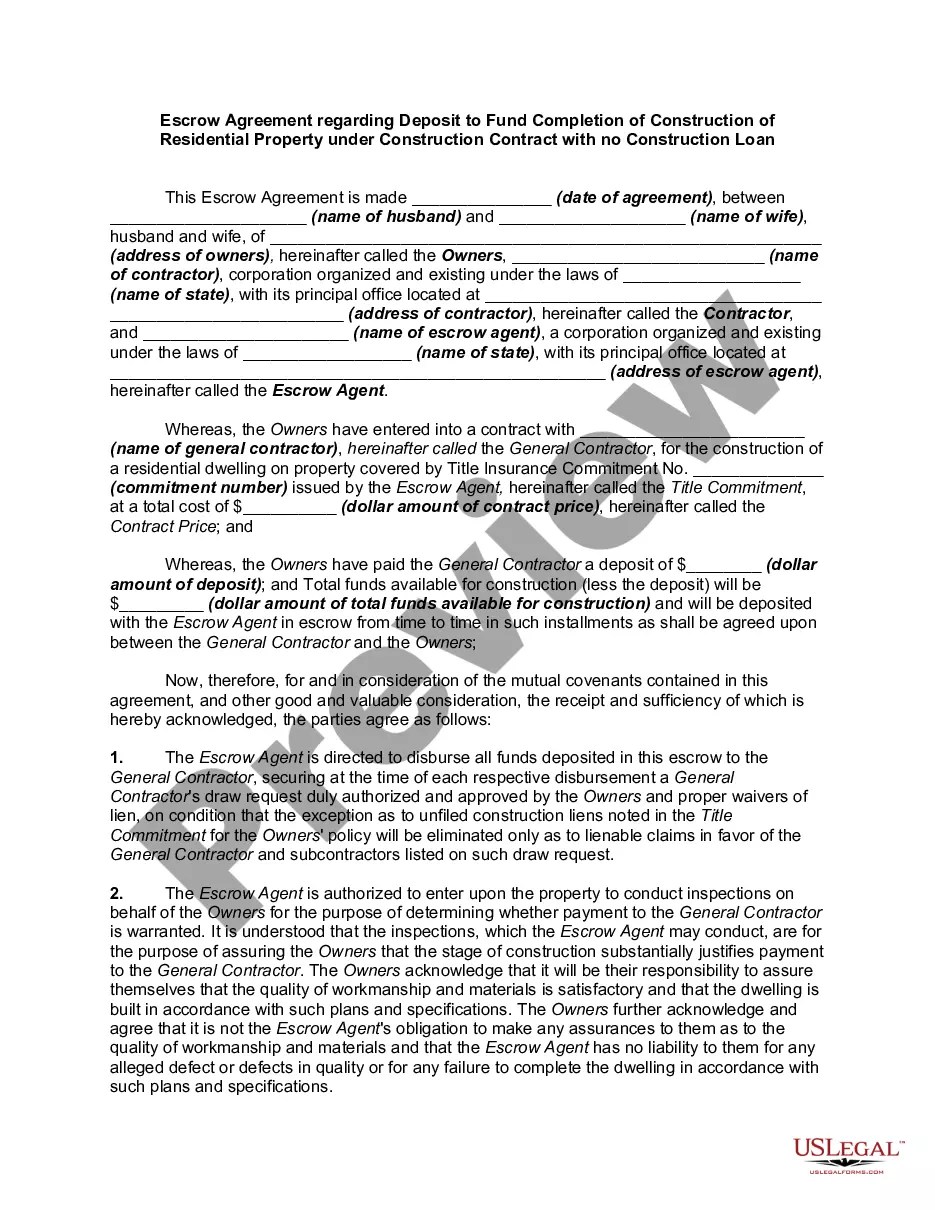
Get your form ready online
Our built-in tools help you complete, sign, share, and store your documents in one place.
Make edits, fill in missing information, and update formatting in US Legal Forms—just like you would in MS Word.
Download a copy, print it, send it by email, or mail it via USPS—whatever works best for your next step.
Sign and collect signatures with our SignNow integration. Send to multiple recipients, set reminders, and more. Go Premium to unlock E-Sign.
If this form requires notarization, complete it online through a secure video call—no need to meet a notary in person or wait for an appointment.
We protect your documents and personal data by following strict security and privacy standards.

Make edits, fill in missing information, and update formatting in US Legal Forms—just like you would in MS Word.

Download a copy, print it, send it by email, or mail it via USPS—whatever works best for your next step.

Sign and collect signatures with our SignNow integration. Send to multiple recipients, set reminders, and more. Go Premium to unlock E-Sign.

If this form requires notarization, complete it online through a secure video call—no need to meet a notary in person or wait for an appointment.

We protect your documents and personal data by following strict security and privacy standards.
Looking for another form?






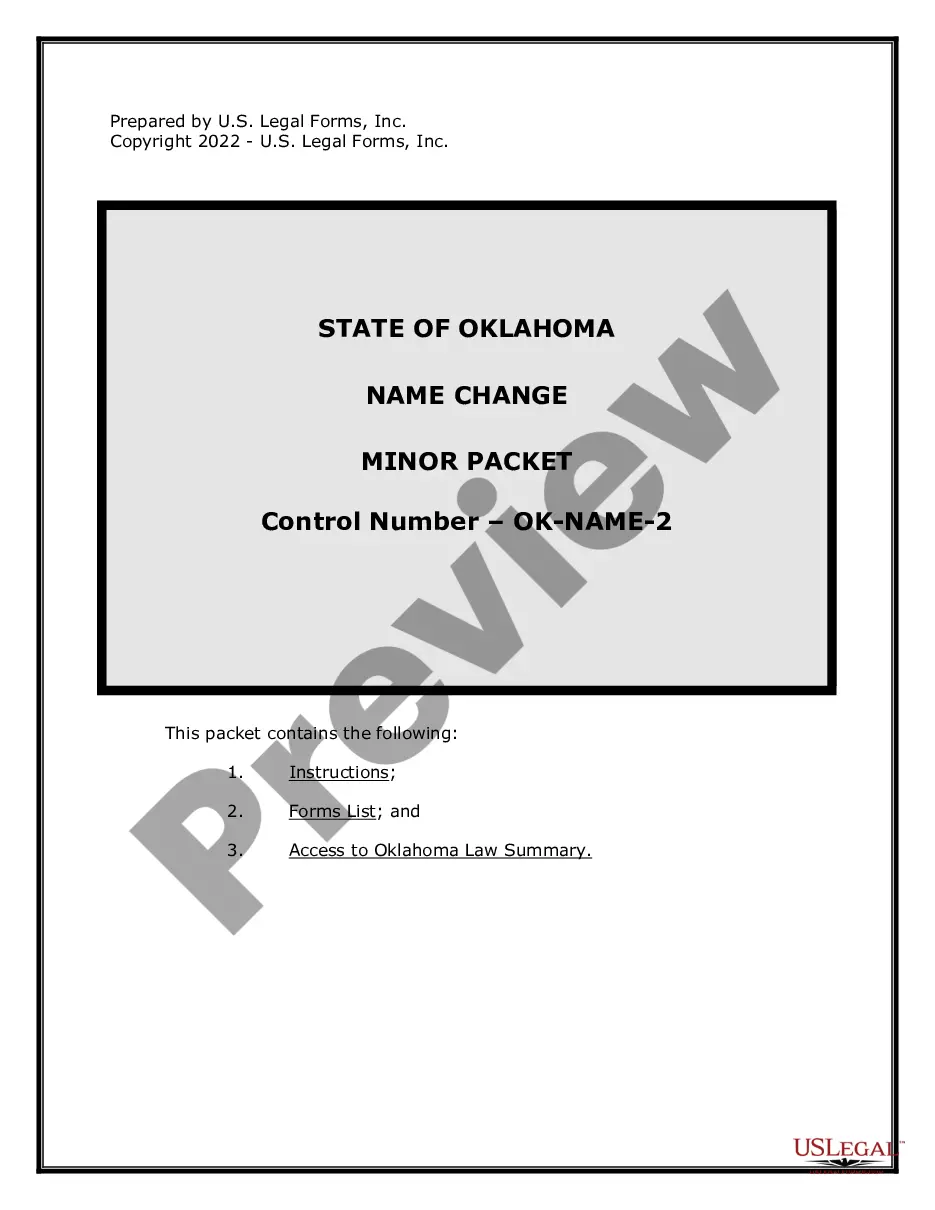

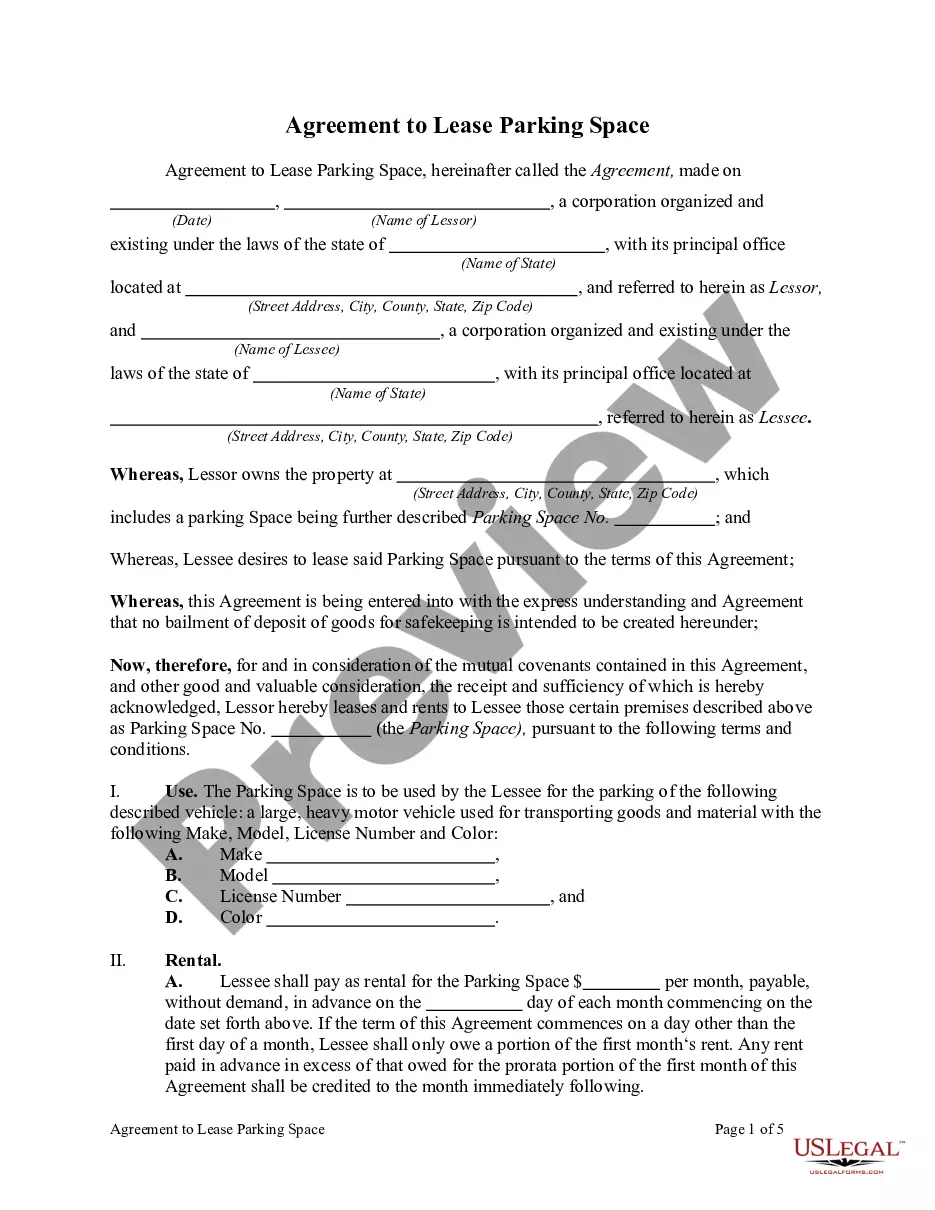
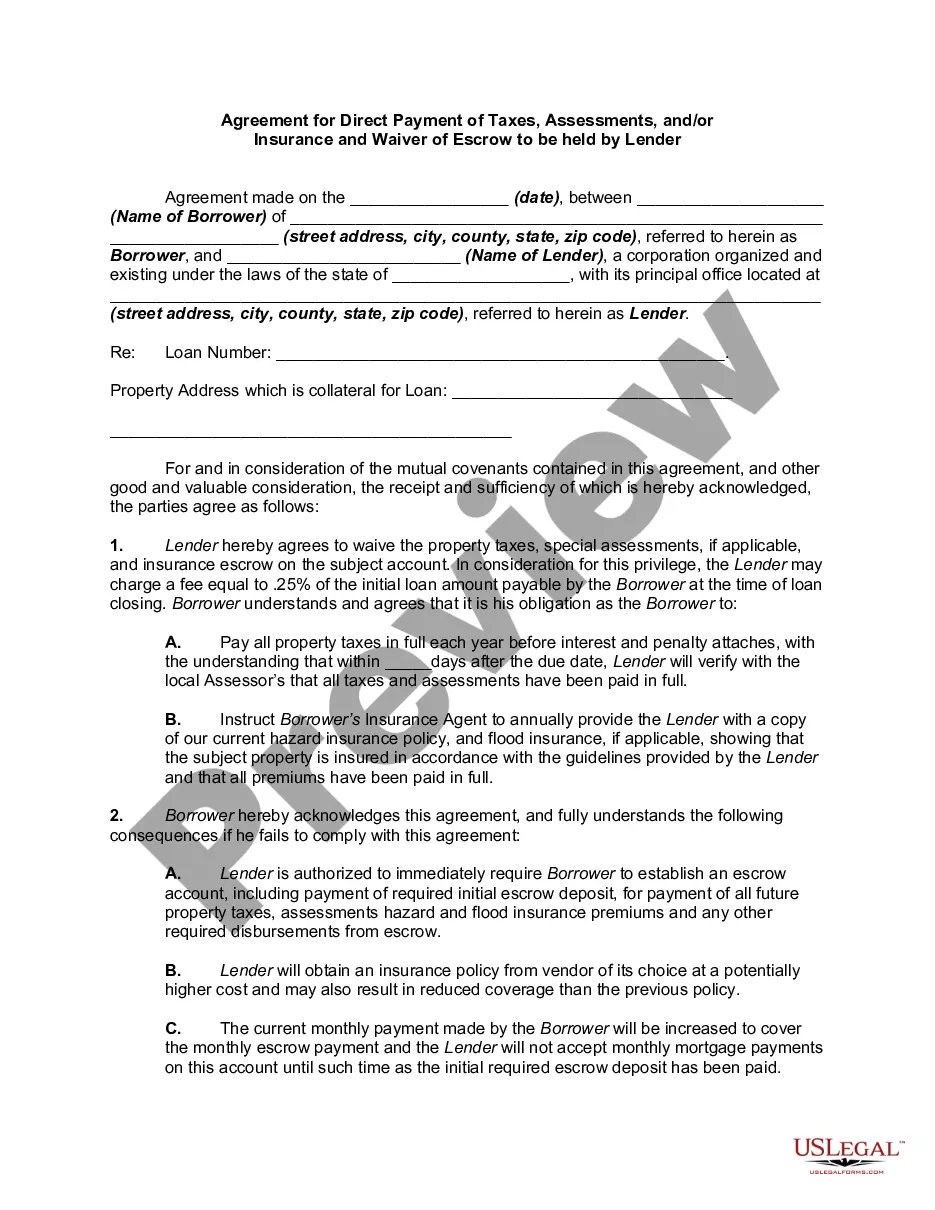
How to fill out Agreement For Direct Payment Of Taxes, Assessments, And/or Insurance And Waiver Of Escrow To Be Held By Lender?
Regardless of whether it’s for corporate endeavors or personal matters, everybody encounters legal circumstances at some point in their lives.
Completing legal paperwork requires meticulous care, beginning with choosing the appropriate form template.
Once it is saved, you can complete the form with the assistance of editing software or print it and finalize it manually. With an extensive collection at US Legal Forms readily available, you won’t have to waste time searching for the suitable template across the internet. Utilize the library’s straightforward navigation to locate the ideal template for any occasion.
- For instance, if you select an incorrect version of the Fdic Insurance For Escrow Accounts, it will be rejected upon submission.
- Thus, it is crucial to have a dependable source of legal documents such as US Legal Forms.
- If you need to acquire a Fdic Insurance For Escrow Accounts template, follow these straightforward steps.
- Obtain the template you require by utilizing the search bar or browsing through the catalog.
- Review the description of the form to verify it aligns with your circumstances, state, and county.
- Click on the preview of the form to inspect it.
- If it is the incorrect document, return to the search feature to locate the Fdic Insurance For Escrow Accounts template you require.
- Download the file once it satisfies your criteria.
- If you already have a US Legal Forms account, simply click Log in to access previously stored documents in My documents.
- If you do not possess an account yet, you can acquire the form by clicking Buy now.
- Select the appropriate pricing choice.
- Fill out the registration form for your profile.
- Choose your payment method: you can utilize a credit card or a PayPal account.
- Select the document format you prefer and download the Fdic Insurance For Escrow Accounts.
Form popularity
FAQ
To exceed the $250,000 FDIC insurance limit, consider utilizing multiple accounts across different banks or various ownership categories like individual, joint, and trust accounts. This strategy allows you to take advantage of the insurance limits effectively. Understanding FDIC insurance for escrow accounts empowers you to protect your assets. If you need further assistance in structuring your accounts, the US Legal Forms platform provides resources to guide you through this process.
Yes, the FDIC insures up to $250,000 per depositor, per insured bank, for each account ownership category. This means you can potentially secure more than $250,000 by having multiple accounts in different ownership categories, such as individual and joint accounts. Understanding FDIC insurance for escrow accounts helps you navigate where your funds are safest. For more tailored guidance, consider using the US Legal Forms platform to manage your escrow accounts effectively.
You and your spouse each can open individual accounts at a single bank, resulting in each of you having up to $250,000 FDIC-insured. You can then also open a joint account and each has $250,000 insured in that account. Between those three accounts, you could have up to $1 million FDIC-insured at one bank.
The standard deposit insurance amount is $250,000 per depositor, per insured bank, for each account ownership category. The FDIC insures deposits that a person holds in one insured bank separately from any deposits that the person owns in another separately chartered insured bank.
The FDIC adds together all single accounts owned by the same person at the same bank and insures the total up to $250,000.
To make sure your escrow accounts get the maximum level of protection, there are specific rules and considerations that both brokers and financial institutions must adhere to. The FDIC provides insurance coverage for deposits in member banks up to a certain limit.
The FDIC adds together all single accounts owned by the same person at the same bank and insures the total up to $250,000.