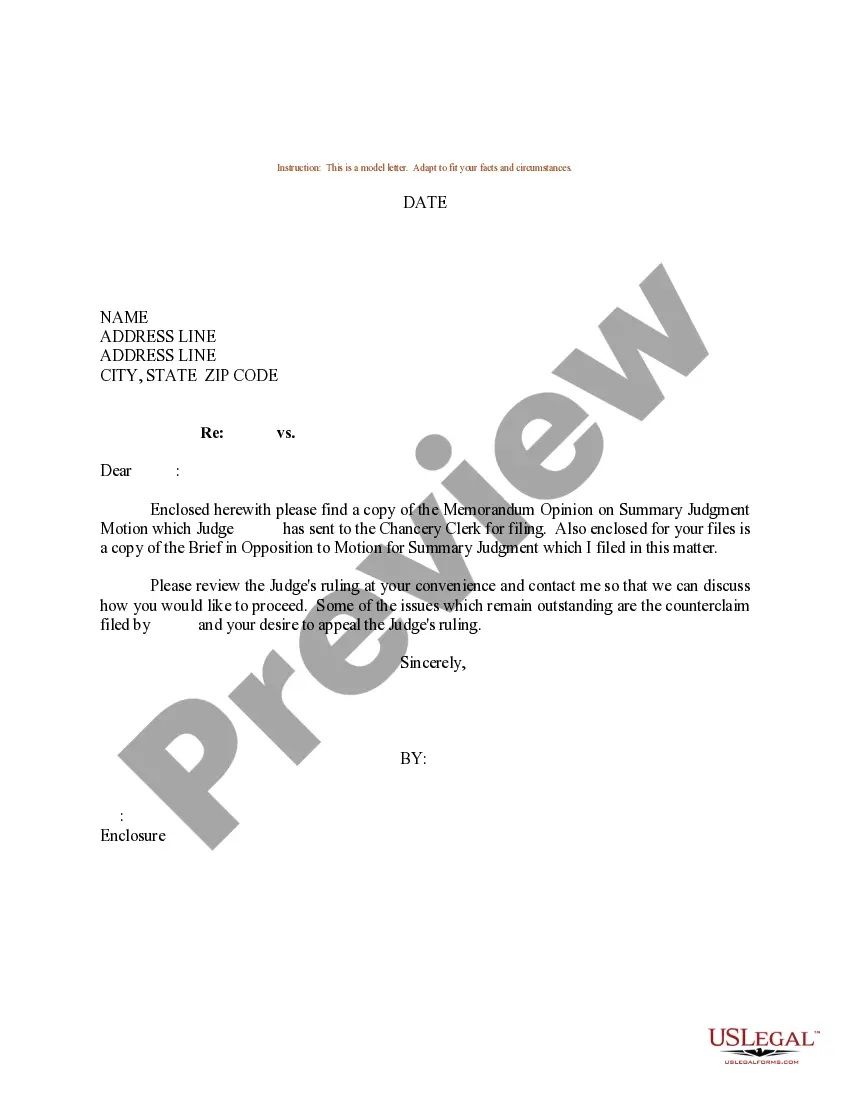
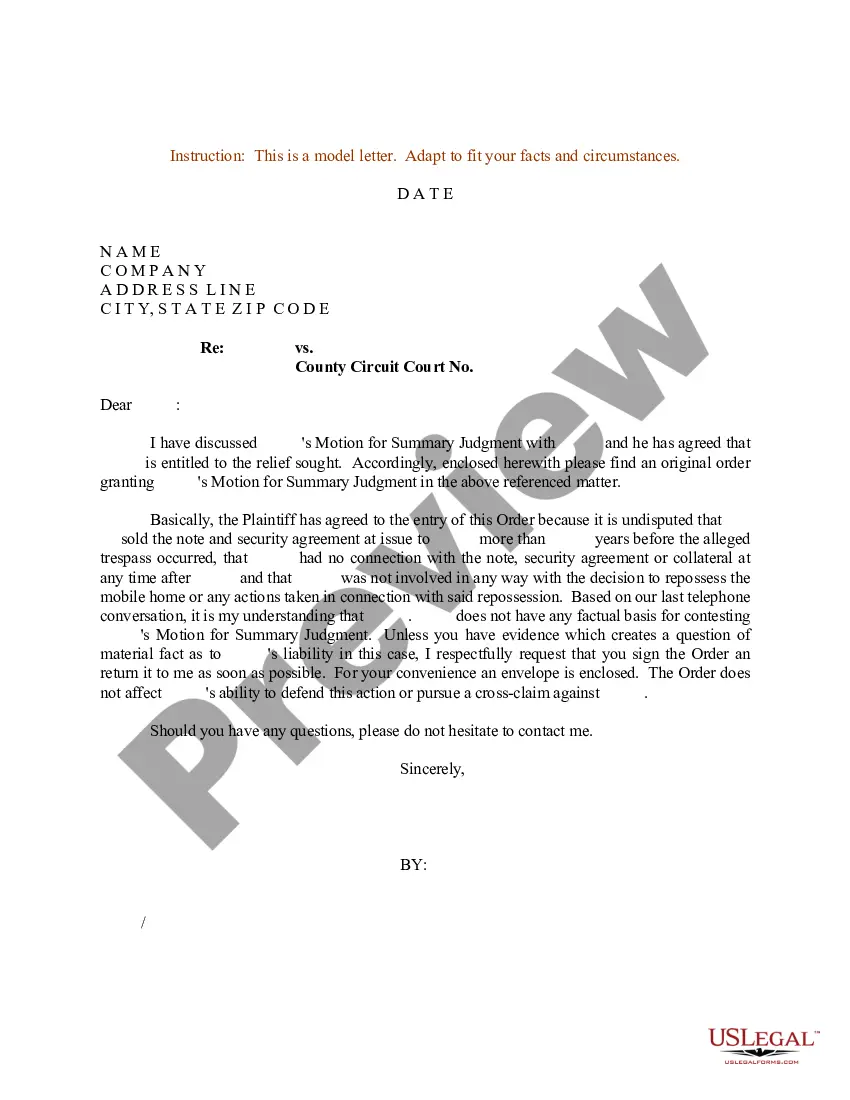
Plaintiff Summary Judgment Motion With Motion
Description
Get your form ready online
Our built-in tools help you complete, sign, share, and store your documents in one place.
Make edits, fill in missing information, and update formatting in US Legal Forms—just like you would in MS Word.
Download a copy, print it, send it by email, or mail it via USPS—whatever works best for your next step.
Sign and collect signatures with our SignNow integration. Send to multiple recipients, set reminders, and more. Go Premium to unlock E-Sign.
If this form requires notarization, complete it online through a secure video call—no need to meet a notary in person or wait for an appointment.
We protect your documents and personal data by following strict security and privacy standards.

Make edits, fill in missing information, and update formatting in US Legal Forms—just like you would in MS Word.

Download a copy, print it, send it by email, or mail it via USPS—whatever works best for your next step.

Sign and collect signatures with our SignNow integration. Send to multiple recipients, set reminders, and more. Go Premium to unlock E-Sign.

If this form requires notarization, complete it online through a secure video call—no need to meet a notary in person or wait for an appointment.

We protect your documents and personal data by following strict security and privacy standards.
Looking for another form?





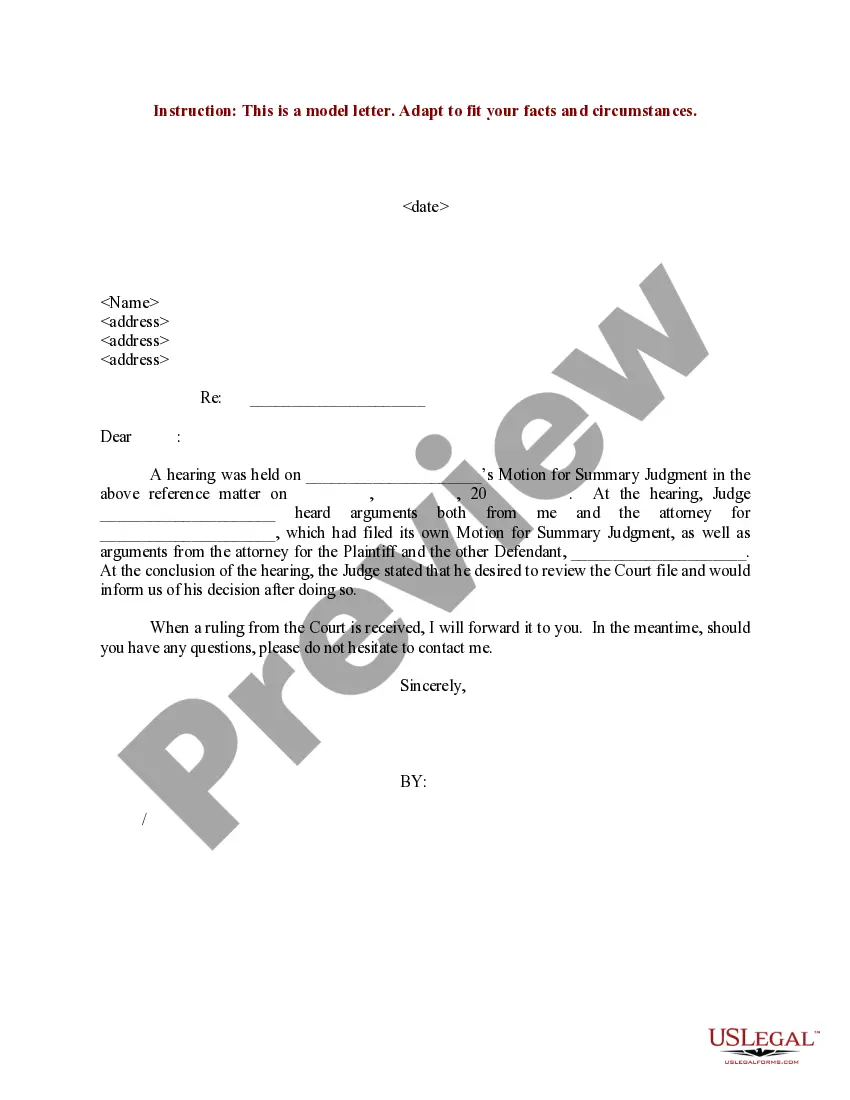
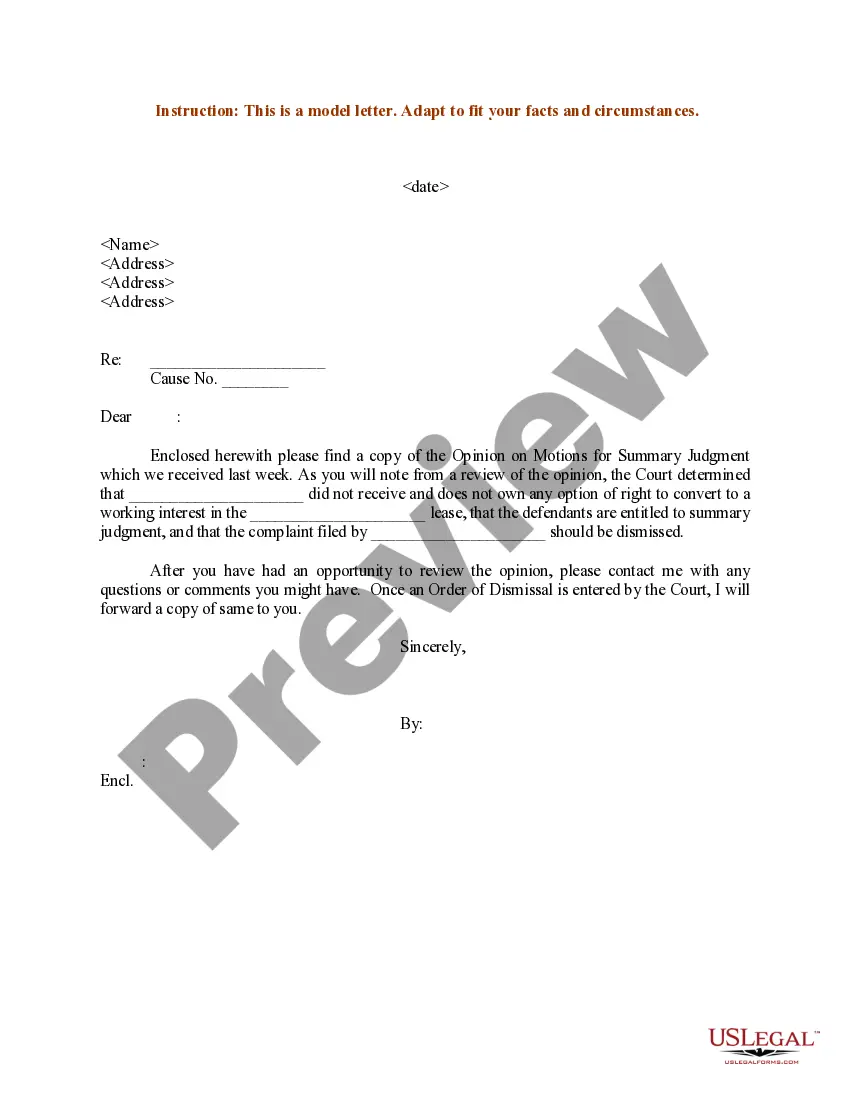
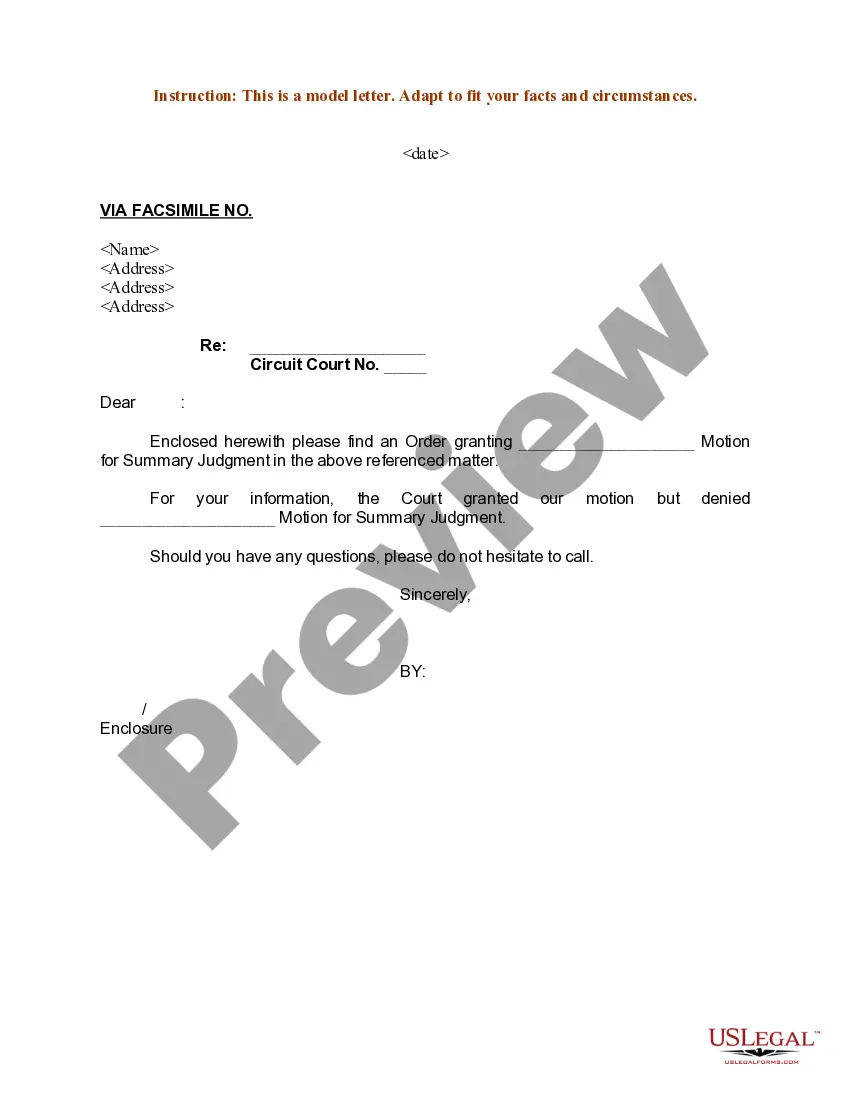
How to fill out Sample Letter Regarding Memorandum Opinion On Summary Judgment Motion?
Acquiring legal templates that adhere to federal and state regulations is essential, and the internet provides numerous choices to select from.
However, what is the benefit in squandering time searching for the properly formulated Plaintiff Summary Judgment Motion With Motion example online when the US Legal Forms digital library already has these templates compiled in one location.
US Legal Forms is the largest online legal repository with more than 85,000 fillable templates created by attorneys for any professional or personal situation. They are straightforward to navigate with all documents categorized by state and intended use.
Search for another example using the search tool at the top of the page if needed. Click Buy Now once you've identified the correct form and choose a subscription plan. Create an account or Log In and complete a payment with PayPal or a credit card. Choose the best format for your Plaintiff Summary Judgment Motion With Motion and download it. All documents you find through US Legal Forms are reusable. To re-download and complete previously acquired forms, access the My documents tab in your account. Enjoy the most comprehensive and user-friendly legal document service!
- Our experts stay updated with legislative changes, ensuring that you can always trust your form is current and compliant when obtaining a Plaintiff Summary Judgment Motion With Motion from our site.
- Acquiring a Plaintiff Summary Judgment Motion With Motion is quick and easy for both existing and new users.
- If you already possess an account with an active subscription, Log In and download the document sample you require in the appropriate format.
- If you are a newcomer to our platform, follow the steps below.
- View the template using the Preview option or through the text description to ensure it fits your needs.
Form popularity
FAQ
Yes, a plaintiff can motion for summary judgment when they believe that the evidence and legal standards clearly favor their case. This motion seeks to eliminate the need for a trial by demonstrating that there are no significant facts in dispute. By filing a plaintiff summary judgment motion with motion, the plaintiff can streamline their legal process and potentially achieve a favorable outcome more quickly.
A defendant can apply for summary judgment at any point after the commencement of the lawsuit, typically early in the litigation process. This motion allows the defendant to argue that the plaintiff has not provided sufficient evidence to support their claims. Timing is crucial; thus, defendants should act promptly to strengthen their position using a motion for summary judgment.
Yes, motions for summary judgment are generally considered public records. This transparency allows interested parties to access the filings and understand the legal arguments being presented. However, specific details may vary depending on jurisdiction and court rules, so it’s advisable to check local laws regarding public access.
In civil litigation, both plaintiffs and defendants can make a motion for summary judgment. This means that any party involved in the case can request the court to rule in their favor without going to trial. Each party must provide sufficient evidence and legal arguments to support their respective motions.
A plaintiff files a motion for summary judgment to expedite the resolution of their case when they believe there is sufficient evidence to warrant a ruling in their favor. This motion aims to eliminate unnecessary trial time and costs by asking the court to decide the case based solely on the submitted evidence. By utilizing a plaintiff summary judgment motion with motion, the plaintiff seeks to establish their position clearly and efficiently.
Yes, a plaintiff can appeal a summary judgment if they believe the court made an error in its decision. The appeal process allows the plaintiff to challenge the ruling and seek a different outcome. To successfully appeal, the plaintiff must demonstrate that the court misapplied the law or overlooked key evidence supporting their case.
To support a plaintiff summary judgment motion with motion, you need to provide clear evidence that demonstrates there are no genuine disputes of material fact. This evidence can include affidavits, depositions, and relevant documents. Additionally, you should outline the legal standards that apply to your case, making a compelling argument for why the court should grant your motion.
An order granting a motion for summary judgment is a formal decision by the court that rules in favor of the party who filed the motion. This order indicates that the court agrees there are no genuine disputes over material facts, thus supporting the motion's claims. Essentially, it allows the plaintiff to win the case without proceeding to trial. Knowing how to properly draft and support your plaintiff summary judgment motion with motion can help secure such an order.
You should file a motion for summary judgment when you believe that your case has strong evidence and there are no material facts that could affect the outcome. Typically, this motion is filed after the discovery phase, once you have gathered sufficient evidence. Timing is crucial, as filing too early or too late can impact the court's decision. Consulting with platforms like USLegalForms can provide you with necessary guidance for this timing.
Whether a summary judgment is good or bad largely depends on your perspective in the case. For a plaintiff, winning a summary judgment can lead to a swift resolution and avoid the uncertainties of a trial. Conversely, if the summary judgment is denied, it may prolong the case and require more preparation for trial. Understanding the implications of a plaintiff summary judgment motion with motion can help you strategize your approach.