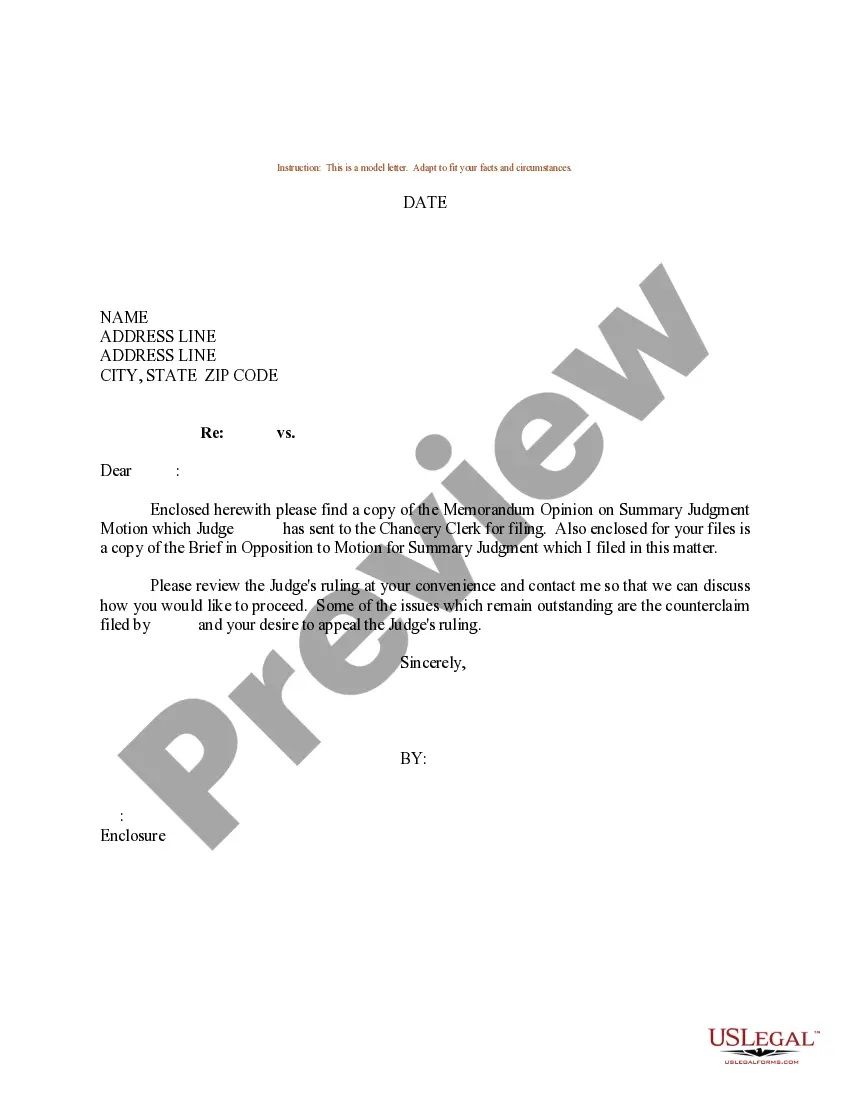
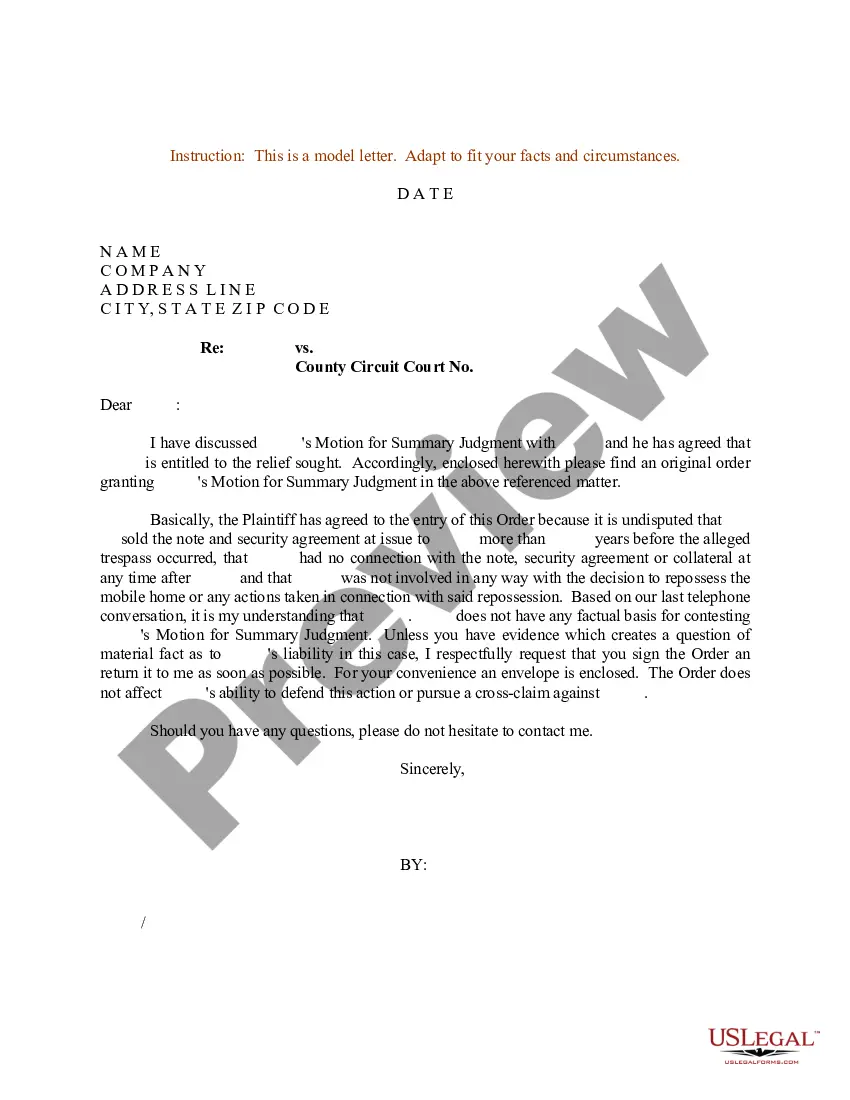
Motion For Summary Judgment Template California
Description
Get your form ready online
Our built-in tools help you complete, sign, share, and store your documents in one place.
Make edits, fill in missing information, and update formatting in US Legal Forms—just like you would in MS Word.
Download a copy, print it, send it by email, or mail it via USPS—whatever works best for your next step.
Sign and collect signatures with our SignNow integration. Send to multiple recipients, set reminders, and more. Go Premium to unlock E-Sign.
If this form requires notarization, complete it online through a secure video call—no need to meet a notary in person or wait for an appointment.
We protect your documents and personal data by following strict security and privacy standards.

Make edits, fill in missing information, and update formatting in US Legal Forms—just like you would in MS Word.

Download a copy, print it, send it by email, or mail it via USPS—whatever works best for your next step.

Sign and collect signatures with our SignNow integration. Send to multiple recipients, set reminders, and more. Go Premium to unlock E-Sign.

If this form requires notarization, complete it online through a secure video call—no need to meet a notary in person or wait for an appointment.

We protect your documents and personal data by following strict security and privacy standards.
Looking for another form?






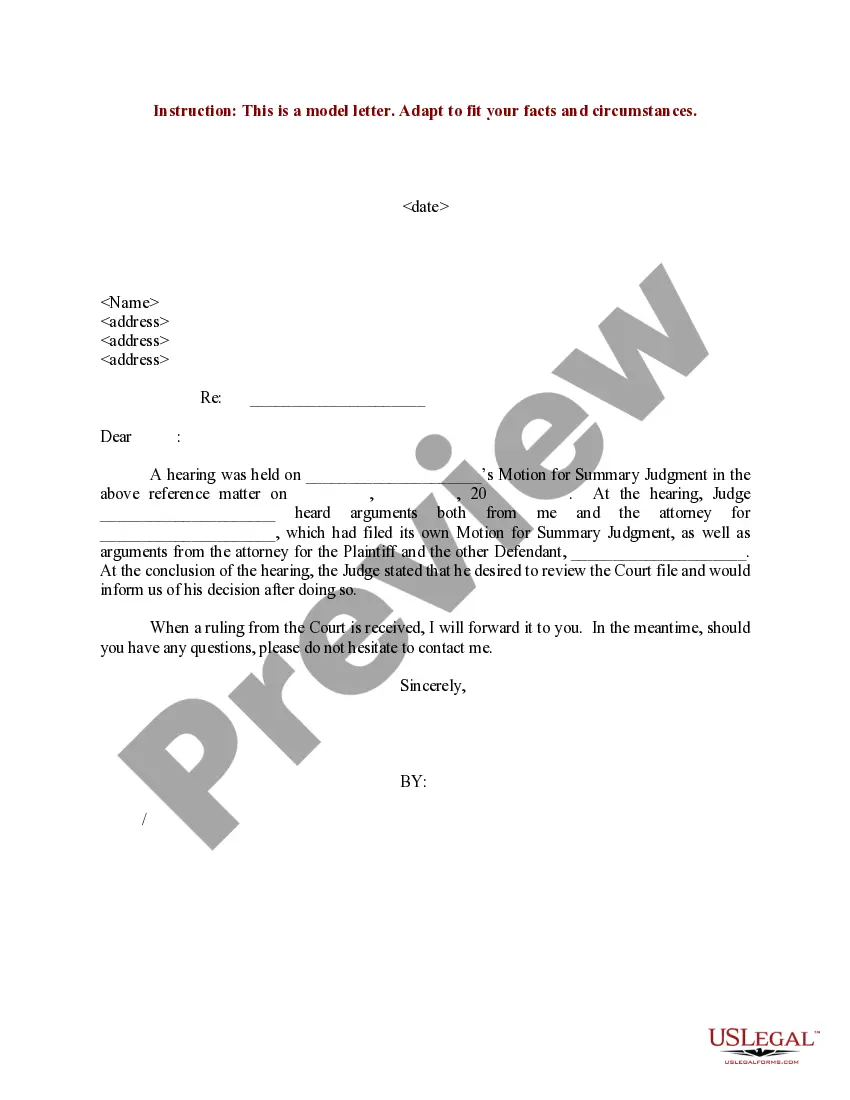
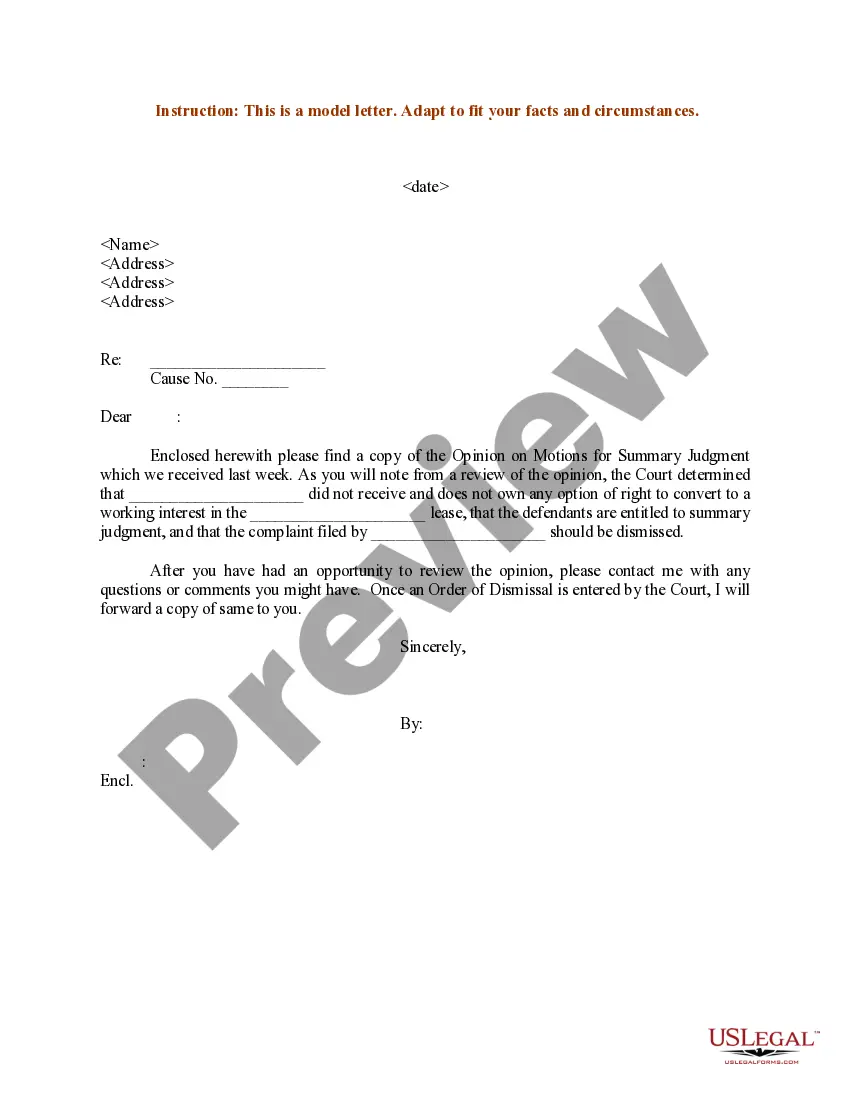
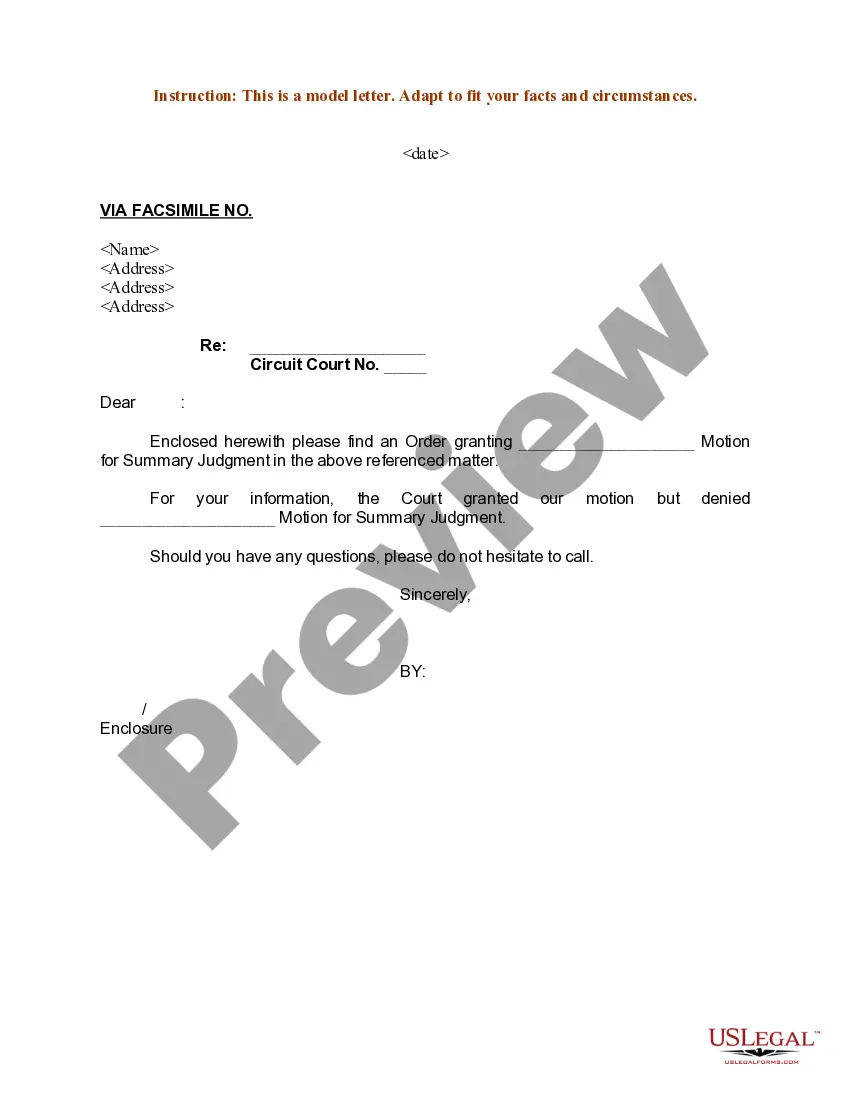
How to fill out Sample Letter Regarding Memorandum Opinion On Summary Judgment Motion?
It’s well known that you cannot transform into a legal authority instantly, nor can you comprehend how to swiftly create a Motion For Summary Judgment Template California without possessing a unique set of expertise.
Assembling legal documents is a laborious process that requires certain education and competencies. Therefore, why not entrust the development of the Motion For Summary Judgment Template California to the experts.
With US Legal Forms, one of the largest legal document repositories, you can find everything from litigation papers to templates for internal corporate correspondence. We understand the significance of adhering to federal and state laws and regulations.
You can re-access your documents from the My documents section whenever necessary. If you are an existing client, you can simply Log In, find, and download the template from the same section.
Regardless of the aim of your documents—whether financial, legal, or personal—our website has you covered. Experience US Legal Forms today!
- Locate the form you require using the search bar situated at the top of the page.
- View it (if this option is available) and review the accompanying description to assess if the Motion For Summary Judgment Template California meets your needs.
- Start your search anew if you require any additional template.
- Register for a complimentary account and choose a subscription plan to acquire the form.
- Select Purchase now. Immediately after the payment is processed, you can download the Motion For Summary Judgment Template California, complete it, print it, and send it by mail to the appropriate individuals or organizations.
Form popularity
FAQ
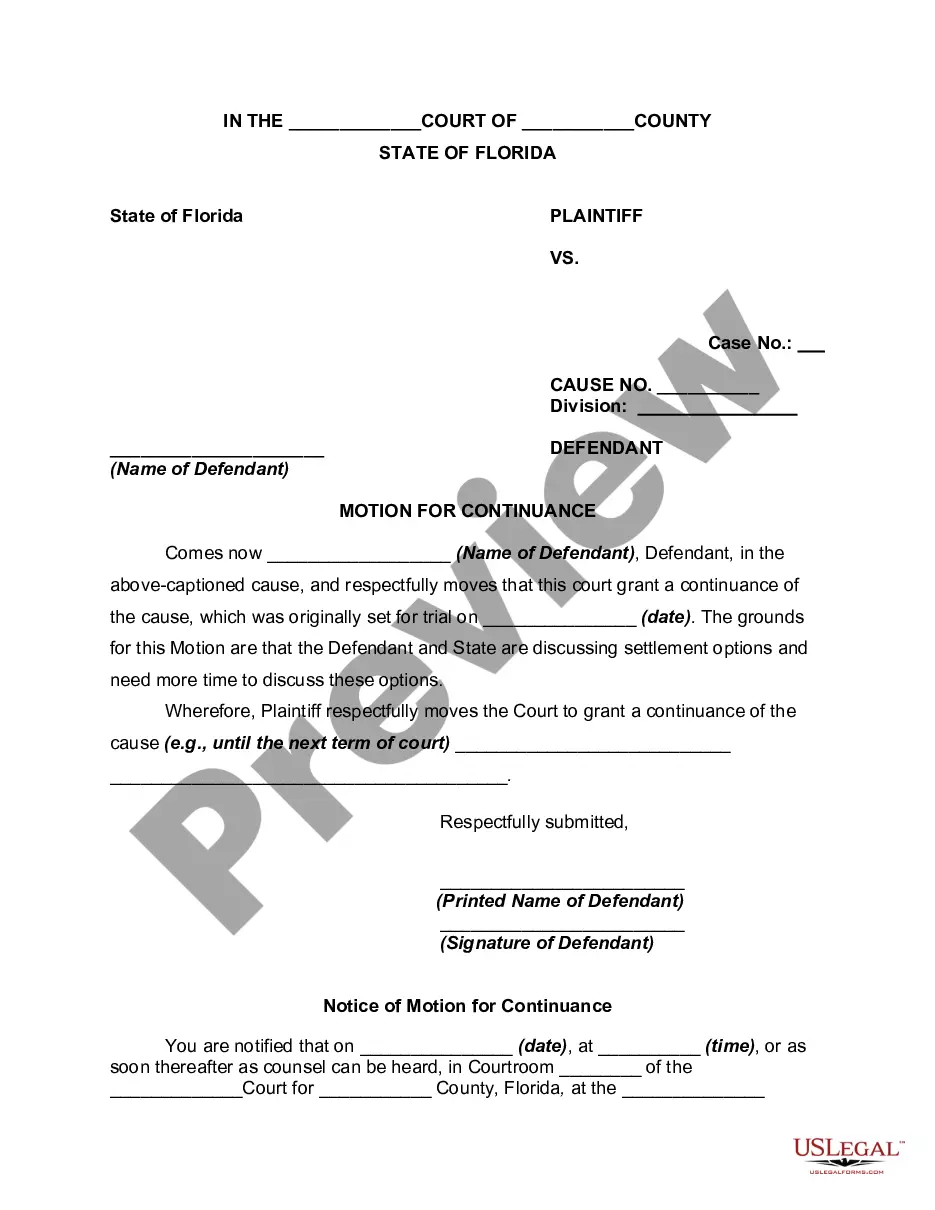
Formatting a motion for summary judgment in California requires attention to detail. Start with the caption, followed by a table of contents if extensive. Ensure proper headings, pagination, and formatting per local court rules. To simplify formatting tasks, consider using a Motion for summary judgment template California, which provides a structured approach to presenting your case.
To ask for a summary judgment in California, you must file a motion in court, along with supporting documents that demonstrate there are no genuine disputes of material fact. Utilizing the Motion for Summary Judgment Template California can streamline this process and ensure you include all necessary elements. Be clear and precise in your arguments and reference the evidence that supports your position. Once filed, the court will provide a hearing date where you will present your case.
A motion for summary adjudication shall be granted only if it completely disposes of a cause of action, an affirmative defense, a claim for damages, or an issue of duty.
The chance of success in these cases is less than 10% [1]. Another study found that summary judgment is mostly granted in Title VII cases, for example, cases involving equal pay or employment discrimination [2]. When it comes to federal cases, summary judgments are filed in 17% of total cases.
Section 1008 allows the trial court to reconsider and modify, amend or revoke its prior order only upon new or different facts, circumstances or law. It is improper for a court to expressly invite the parties to file a second summary judgment motion in order to reassess its prior ruling.
Notice of a summary judgment motion, as well as the papers in support of the motion, must be filed with the court and served on all parties at least 75 calendar days before the scheduled hearing date of the motion. All papers opposing a motion must be served and filed not less than 14 days before the hearing date.
A motion for summary judgment in California must be heard no later than 30 days before the date of the trial unless the court orders otherwise.