Next Of Kin In Order
Description
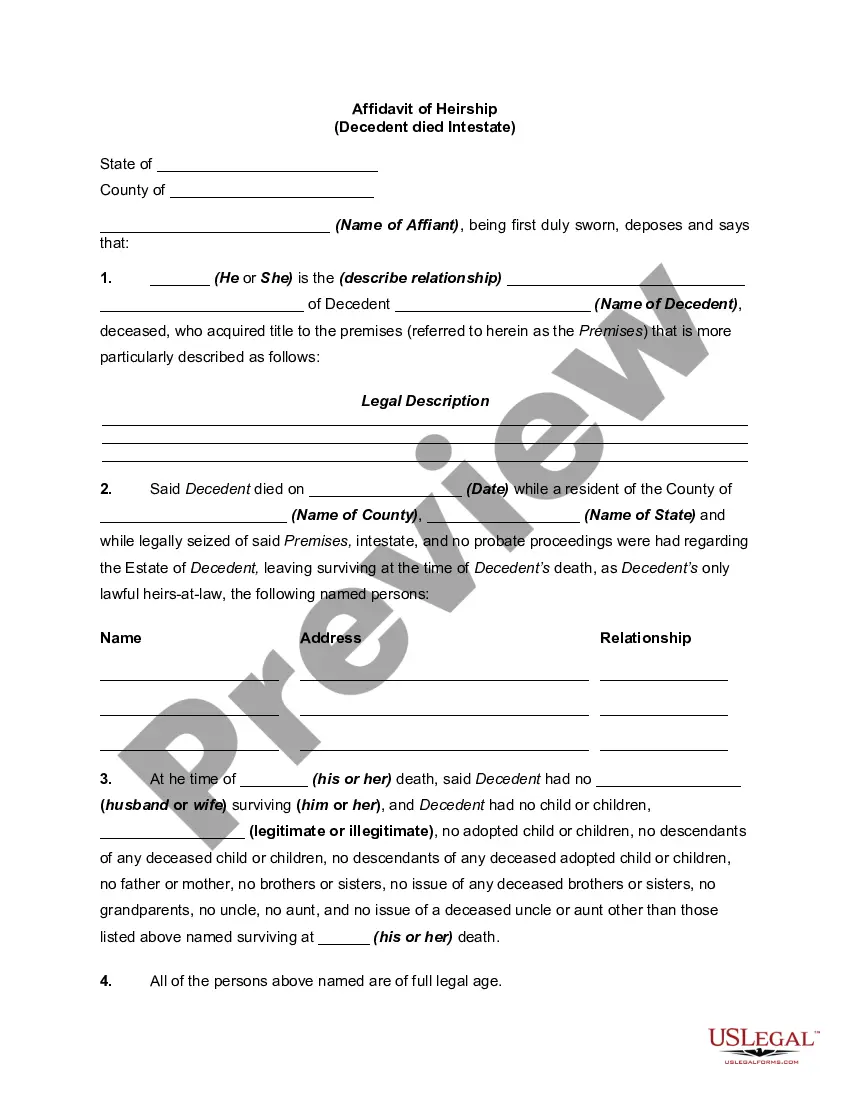

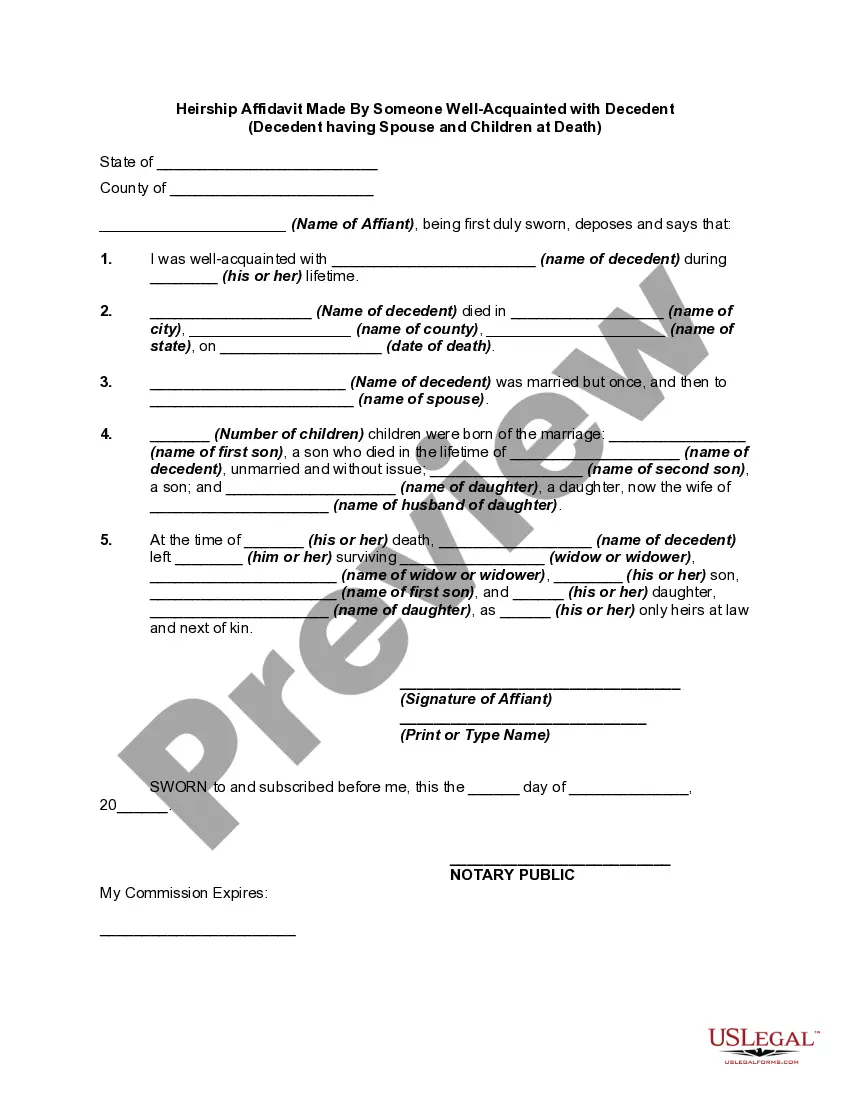
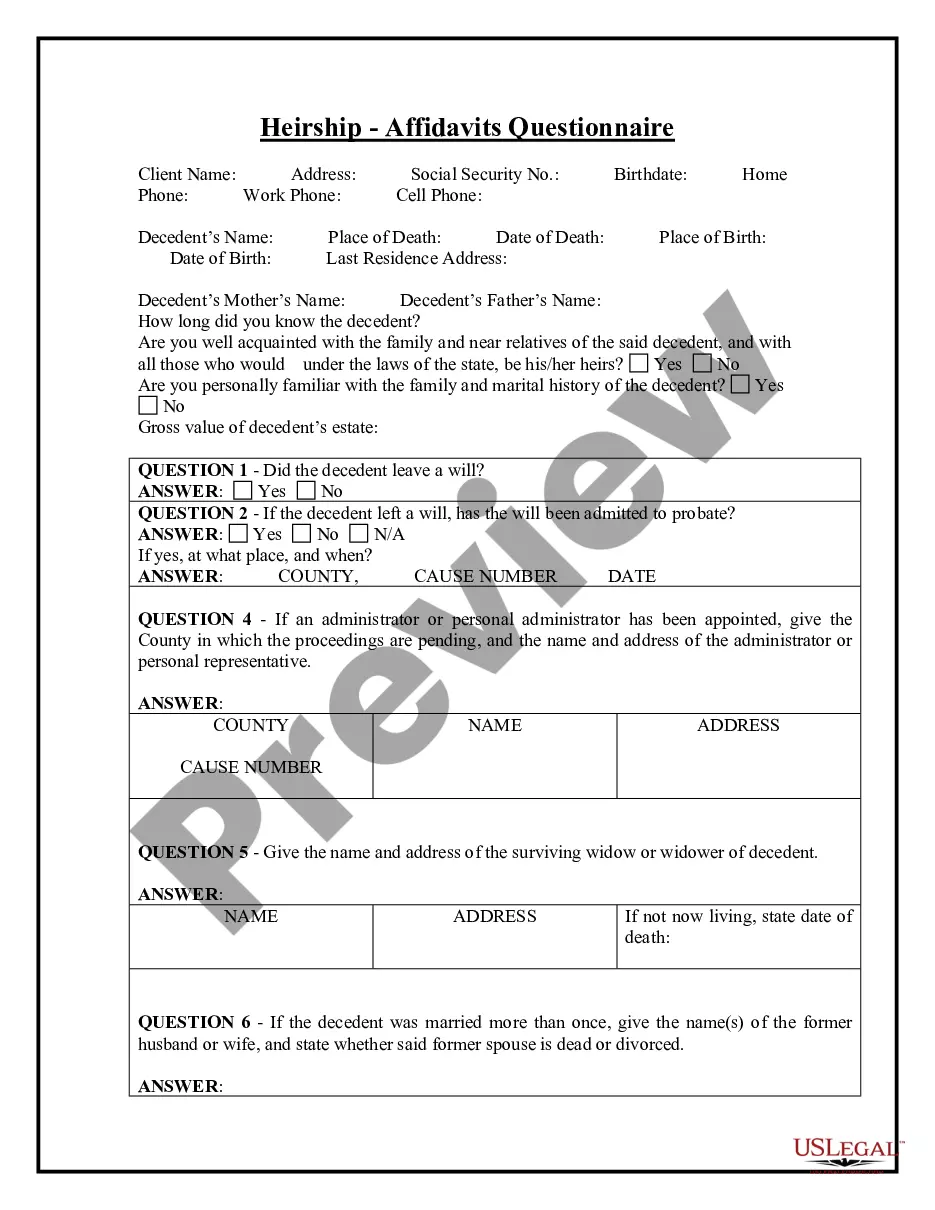


How to fill out Affidavit Of Heirship, Next Of Kin Or Descent - Decedent Died Intestate?
Whether for corporate reasons or personal issues, everyone must handle legal matters at some stage in their existence.
Filling out legal forms demands meticulous care, starting from selecting the appropriate form template.
Once it is saved, you can fill out the form using editing software or print it and complete it by hand. With a comprehensive US Legal Forms catalog available, you don’t need to waste time looking for the right template on the internet. Take advantage of the library’s straightforward navigation to find the suitable template for any occasion.
- Locate the template you require by using the search bar or browsing the catalog.
- Review the form’s details to ensure it aligns with your situation, region, and jurisdiction.
- Click on the form’s preview to inspect it.
- If it turns out to be the incorrect form, return to the search function to find the Next Of Kin In Order template you need.
- Download the template once it satisfies your criteria.
- If you possess a US Legal Forms account, simply click Log in to access previously saved forms in My documents.
- If you do not have an account yet, you can acquire the form by clicking Buy now.
- Choose the correct pricing option.
- Complete the profile registration form.
- Select your payment method: you can use a credit card or PayPal account.
- Choose the file format you desire and download the Next Of Kin In Order.
Form popularity
FAQ
To list next of kin in order, start by identifying individuals who are closest to you, typically relatives like parents, siblings, or children. It is essential to consider legal guidelines that may affect your choices, as different states may have specific requirements. You can utilize platforms like US Legal Forms to access templates that help you document and formalize your next of kin list. This way, you ensure clarity and compliance with any necessary legal standards.
The order of next to kin outlines the sequential priority among relatives regarding legal rights and responsibilities. It generally starts with the spouse, followed by children, parents, siblings, and then more distant relatives. Knowing this order can help ensure your preferences are respected in legal processes and estate management. Consider using US Legal Forms to aid in establishing your next of kin documentation.
The hierarchy of next of kin is a structured order that determines the priority of relatives in legal matters. Typically, it includes the spouse, children, parents, siblings, and extended family. This hierarchy is vital when making critical decisions or handling an estate after someone passes. Leveraging resources like US Legal Forms can help clarify these relationships and their implications.
The next of kin order in the United States generally follows a hierarchical structure. It usually starts with the spouse, then children, parents, siblings, and, in some cases, more distant relatives like grandparents. Each state may have slight variations in these laws, so it's essential to familiarize yourself with local regulations. Understanding this order can facilitate estate planning and ensure your wishes are honored.
To list next of kin in order, start by identifying your closest relatives, including your spouse, children, parents, and siblings. It's essential to arrange these relatives based on legal priority, with spouses at the top, followed by children, and so forth. A clear list will aid in managing your affairs and communicating your wishes effectively. Consider using platforms like US Legal Forms for assistance in documentation.
The rule of next of kin in order establishes who has priority regarding legal decisions after someone passes away. Generally, this rule designates immediate family members, starting with the spouse, followed by children, parents, and siblings. Understanding this rule can clarify who has the authority to make critical decisions during difficult times. Additionally, knowing this helps streamline processes related to estate planning.
In the context of next of kin in order, the first in line is typically the spouse or civil partner. If the individual does not have a spouse, the next closest relatives, such as children, follow. It is essential to understand how these relationships affect inheritance and legal decisions. Knowing who comes first can help you plan effectively.
The hierarchy of next of kin is essential in legal contexts, guiding how estates are distributed and who can make critical health decisions. This hierarchy often consists of spouses, children, parents, and siblings, in that order. Clear understanding of this hierarchy can prevent disputes and ensure that your wishes are honored. For those needing further assistance, USLegalForms offers user-friendly resources to clarify the next of kin in order.
Next of kin rank denotes the legal level of family relationships recognized for inheritance and decision-making purposes. This ranking typically starts with spouses and children, followed by parents, siblings, and other relatives. Knowing your next of kin rank can significantly impact estate planning and health care decisions. For comprehensive information on these ranks, USLegalForms provides valuable insights and tools to help you navigate these important issues.
The hierarchy for next of kin is a structured list that determines who is legally recognized when it comes to inheritance and medical decisions. It usually prioritizes spouses, children, and then ascends to parents and siblings. Understanding this hierarchy is crucial for making informed decisions in family matters, especially during challenging times. Platforms like USLegalForms can assist you in understanding your rights and obligations regarding next of kin in order.