Decedent Intestate For Child
Description
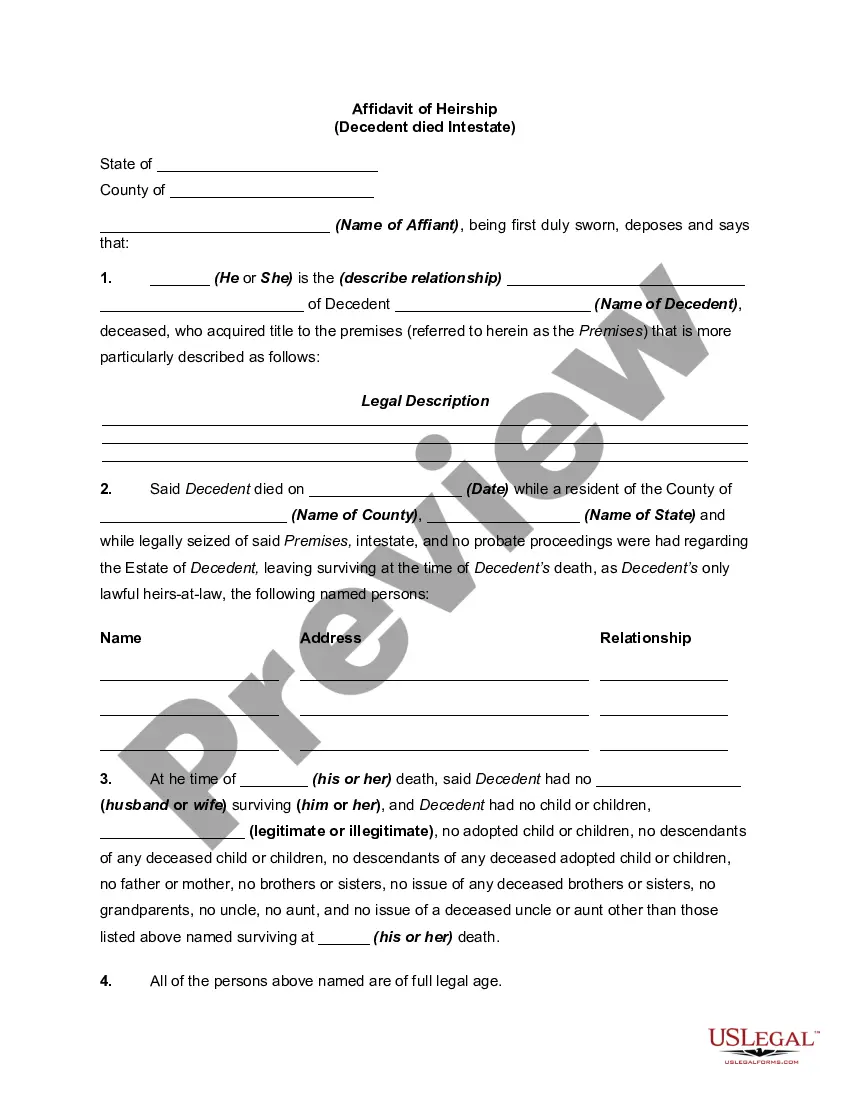
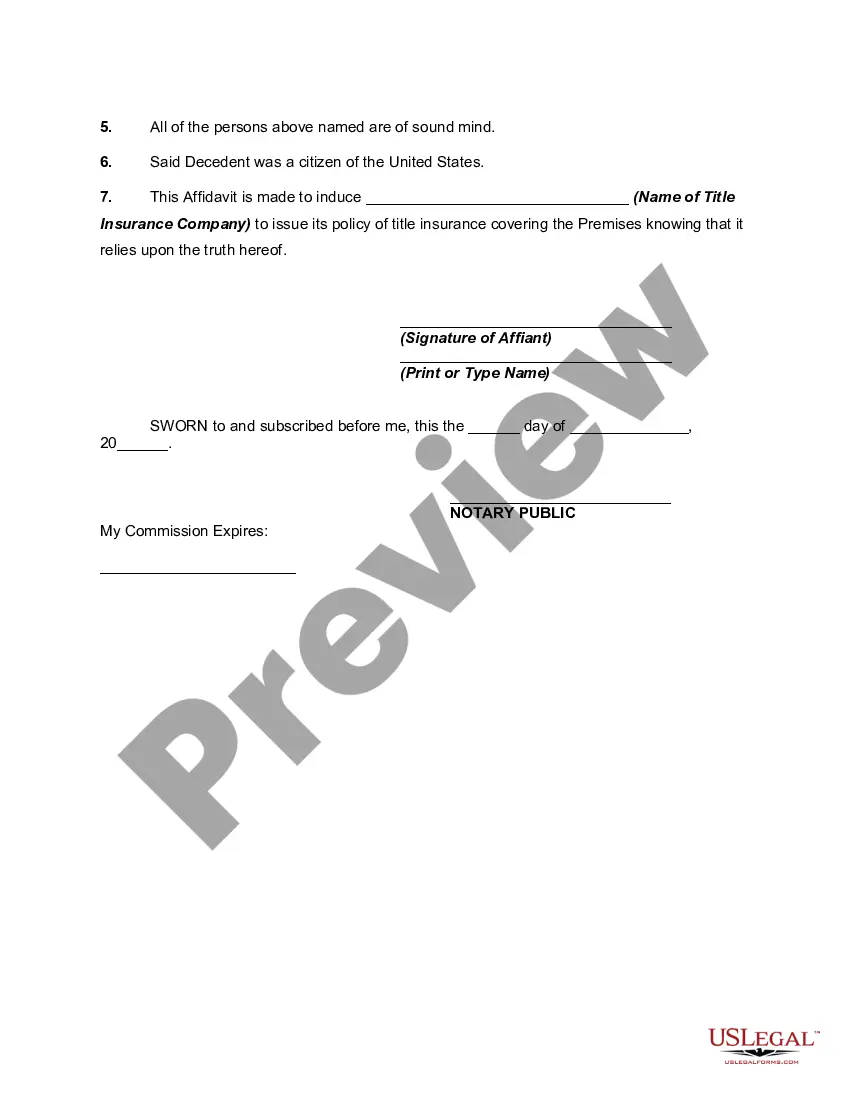
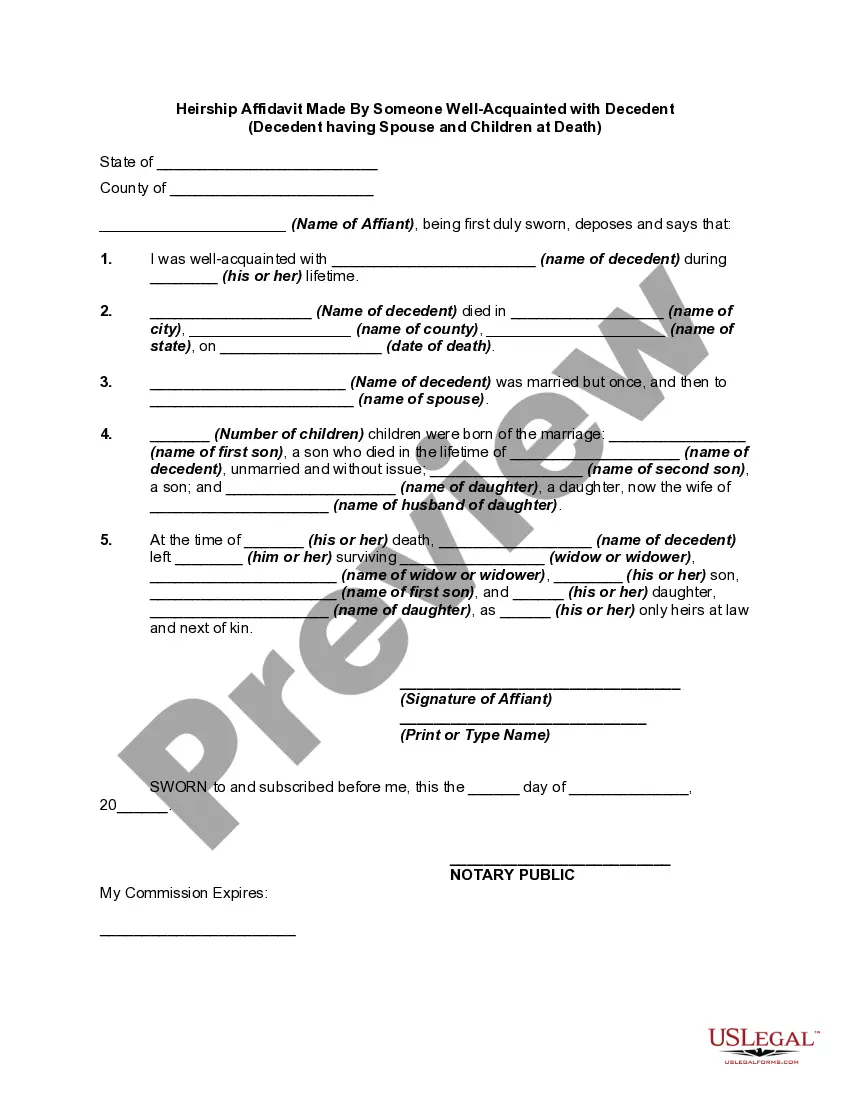
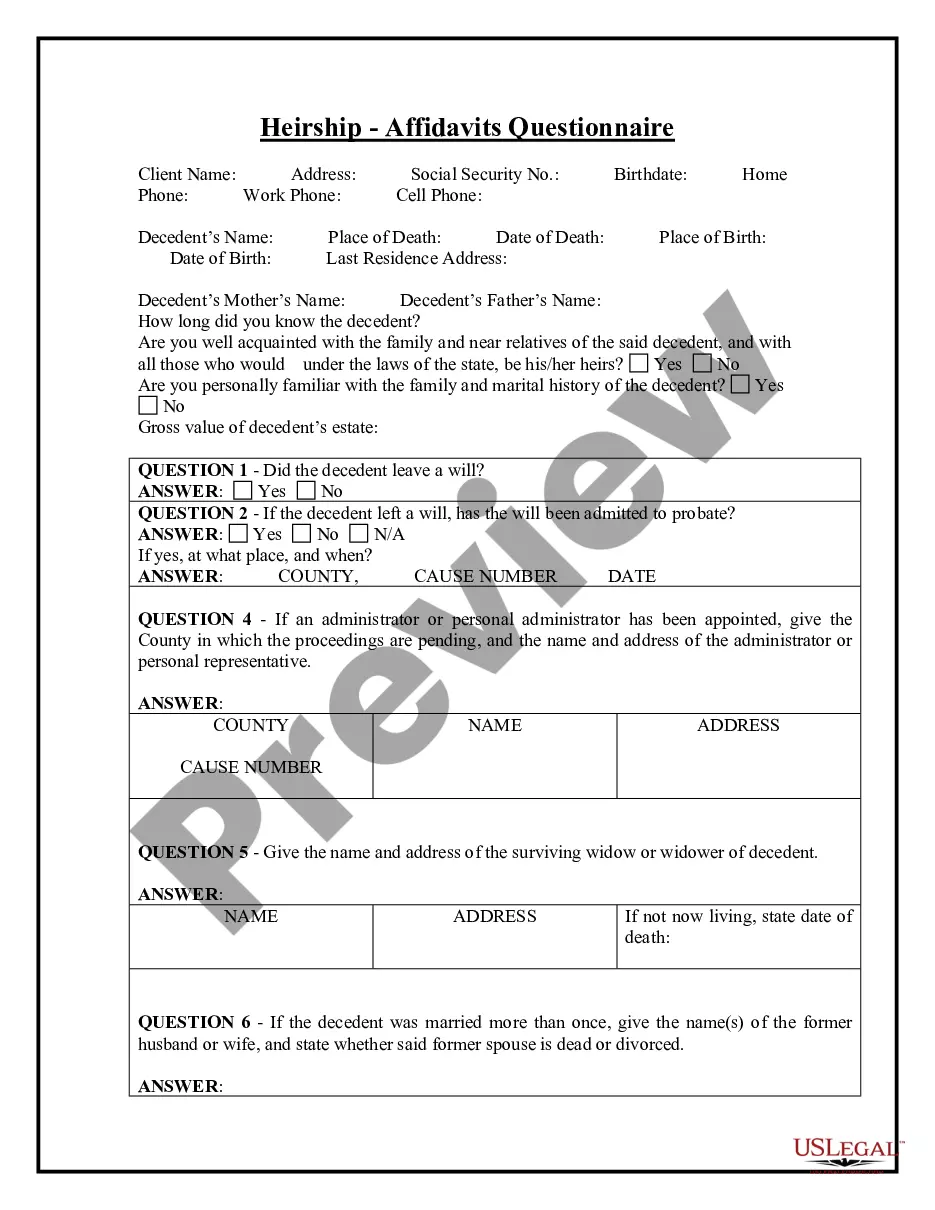





How to fill out Affidavit Of Heirship, Next Of Kin Or Descent - Decedent Died Intestate?
Legal administration can be perplexing, even for experienced experts.
When you are focused on a Decedent Intestate For Child and lack the time to engage in the search for the correct and current version, the procedures can be challenging.
With US Legal Forms, you can.
Obtain state- or county-specific legal and business documents. US Legal Forms addresses all requirements you may have, ranging from personal to organizational paperwork, all in one location.
If this is your initial experience with US Legal Forms, create an account and gain unlimited access to all platform benefits. Here are the steps to follow after obtaining the form you seek.
- Employ advanced tools to fill out and manage your Decedent Intestate For Child.
- Access a valuable resource library of articles, guides, and materials related to your situation and requirements.
- Save time and effort hunting for the forms you need, using US Legal Forms’ advanced search and Preview feature to find Decedent Intestate For Child and acquire it.
- If you possess a membership, Log In to your US Legal Forms account, search for the form, and download it.
- Check the My documents tab to view the documents you have previously downloaded and manage your folders as desired.
- Utilize a robust online form repository that could significantly aid anyone wishing to effectively manage these scenarios.
- US Legal Forms is a prominent provider in online legal documents, featuring over 85,000 state-specific legal forms available to you at any time.
Form popularity
FAQ
A 7-year-old's memories can be quite vivid, but they may not retain the same depth of memory as an adult. While children's memories tend to evolve, their emotional recollections can remain strong. It's important to remember that discussing end-of-life topics with them can help create lasting significance instead of despair when considering the decedent intestate for child aspects.
A man or woman who dies without making a will is intestate. an intestate parent. intestate property belongs to someone who has died without leaving instructions about who should be given it: an intestate estate. (Definition of intestate from the Cambridge Business English Dictionary © Cambridge University Press)
There are different types of heirs such as the heir apparent who is the first in line for inheritance, the presumptive heir whose right may be defeated, the adoptive heir who has the same rights as biological children, and the collateral heir who is a blood relative but not a direct descendant.
A child's share is determined by dividing the intestate estate by the number of surviving children of the deceased and deceased children who have left issue, plus the number of surviving spouses.
An heir is a person who is legally entitled to collect an inheritance when a deceased person did not formalize a last will and testament. Generally speaking, heirs who inherit the property are children, descendants, or other close relatives of the decedent.
In Pennsylvania, if you are married and you die without a Will, what your Spouse receives depends on whether or not you have living Parents or Descendants, i.e., Children, Grandchildren, or Great-grandchildren. If you have no living Descendants, your Spouse inherits all your Intestate Property or Assets.