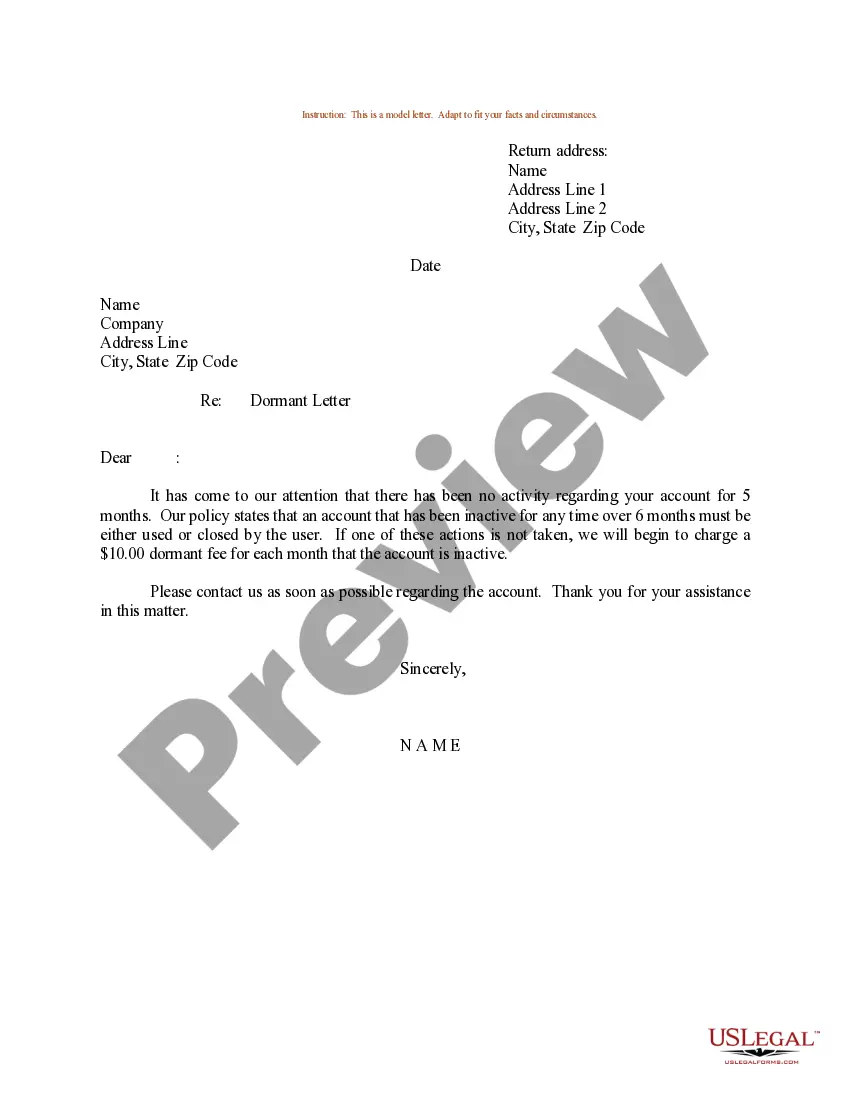
Inactive Account Letter To Customer
Description
Get your form ready online
Our built-in tools help you complete, sign, share, and store your documents in one place.
Make edits, fill in missing information, and update formatting in US Legal Forms—just like you would in MS Word.
Download a copy, print it, send it by email, or mail it via USPS—whatever works best for your next step.
Sign and collect signatures with our SignNow integration. Send to multiple recipients, set reminders, and more. Go Premium to unlock E-Sign.
If this form requires notarization, complete it online through a secure video call—no need to meet a notary in person or wait for an appointment.
We protect your documents and personal data by following strict security and privacy standards.

Make edits, fill in missing information, and update formatting in US Legal Forms—just like you would in MS Word.

Download a copy, print it, send it by email, or mail it via USPS—whatever works best for your next step.

Sign and collect signatures with our SignNow integration. Send to multiple recipients, set reminders, and more. Go Premium to unlock E-Sign.

If this form requires notarization, complete it online through a secure video call—no need to meet a notary in person or wait for an appointment.

We protect your documents and personal data by following strict security and privacy standards.
Looking for another form?
How to fill out Sample Letter For Dormant Letter?
Creating legal documents from the ground up can occasionally be overwhelming.
Certain situations may require extensive research and significant financial investment.
If you seek a simpler and more economical method of drafting an Inactive Account Letter To Customer or other documentation without unnecessary hurdles, US Legal Forms is readily accessible.
Our online repository of over 85,000 current legal documents addresses nearly every aspect of your financial, legal, and personal needs.
US Legal Forms boasts an impeccable reputation and over 25 years of experience. Join us now and make document handling a straightforward and efficient process!
- With a few clicks, you can quickly access state- and county-compliant templates carefully prepared by our legal professionals.
- Utilize our platform whenever you require trustworthy and dependable services to effortlessly locate and retrieve the Inactive Account Letter To Customer.
- If you're familiar with our site and have previously registered an account, just Log In, choose the document, and download it or re-download it later in the My documents section.
- No account? That’s not an issue. Signing up takes minimal time and lets you explore the library efficiently.
- Before you proceed to download the Inactive Account Letter To Customer, consider these suggestions.
Form popularity
FAQ
To activate inactive customers, begin by sending a well-crafted inactive account letter to customer. This letter should clearly explain the benefits of re-engaging with your services and any incentives you may offer for returning. Follow up with personalized communication, as this shows your commitment to their experience. Utilizing the UsLegalForms platform can assist you in creating effective templates and tracking responses, making the process more efficient.
To write an inactive account letter to the customer regarding a closed bank account, start by providing your account details in the letter. Explain that you noticed the account closure and wish to reactivate it, if possible, or inquire about the reasons for closure. Ask for any steps you need to take to reactivate your account. Use clear language and end with your contact details for follow-up.
When writing an inactive account letter to customer service for reactivation, include your account information at the top of the letter. Briefly explain your situation and why you want to reactivate your account. Be polite, and clearly request that they review your account status. Conclude with your contact information and a thank-you note.
To write an inactive account letter to the customer for the post office, start by addressing the letter to your local post office. Include your name, address, account number, and a brief explanation of why you are requesting reactivation. Clearly state your desire to reactivate your account and provide any necessary identification details. Ensure you sign the letter and send it to the appropriate address.
To write a letter addressing an inactive bank account, begin by summarizing the issue clearly in the first paragraph. Reference your account details, such as the account number and your full name. Politely request any documentation or assistance needed to reactivate or learn more about your account status. An informative inactive account letter to customer can help streamline your communication with the bank.
Typically, banks keep inactive accounts open for a period ranging from three to five years, depending on their policies. After this period, they may close the account and transfer the remaining balance to a state unclaimed property office. To avoid surprises, it is best to stay informed about your account’s status and the bank’s practices regarding inactive accounts. Regularly checking your account can save you from losing access to funds.
When a bank account becomes inactive, the first step is to contact your bank to understand its policies regarding inactive accounts. You may need to provide identification or additional information to reactivate the account. It is also wise to review associated fees or penalties that may apply. Addressing this promptly can help you maintain control over your finances.
To write an effective inactive account letter to customer, start by including your personal details like your name, address, and account number. Clearly state your intent to reactivate the account or inquire about its status. Be polite and concise, and consider including any specific information related to your inactivity. Using a formal tone enhances the professionalism of your letter.
When discussing a dormant account with a customer, it’s important to be transparent. Explain that inactivity often results from not engaging with the account over a specified period. Clarify any implications this may have, such as fees or limitations, and express your willingness to assist them. Offering clear information helps foster trust and opens the door for potential re-engagement.
When crafting an email to an inactive customer, aim for a friendly yet professional tone. Start by addressing them by name, then explain their account status and express your desire to assist them. Include a few simple steps they can take to reactivate their account, and attach an inactive account letter to customer for their convenience. This approach creates a positive interaction and encourages them to reconnect.