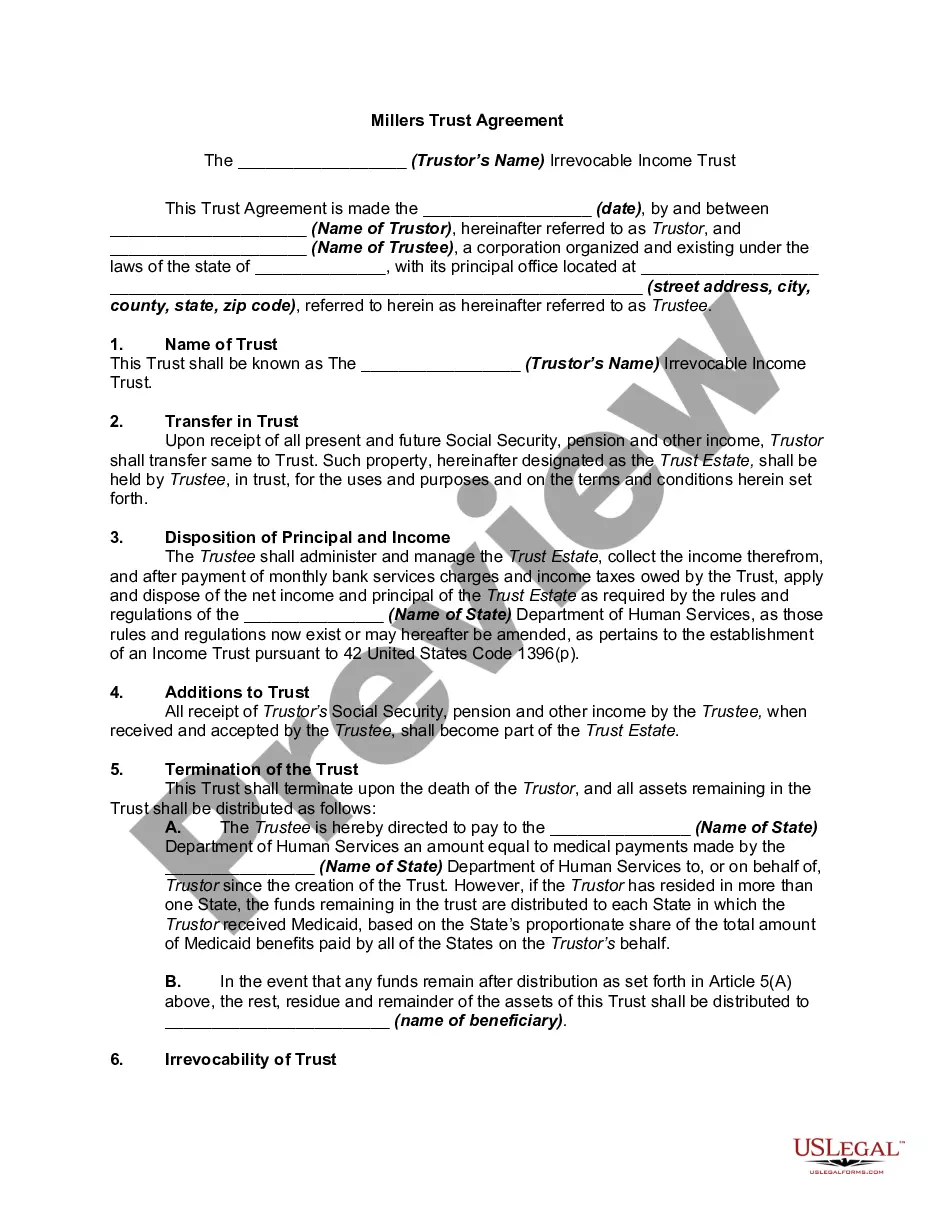
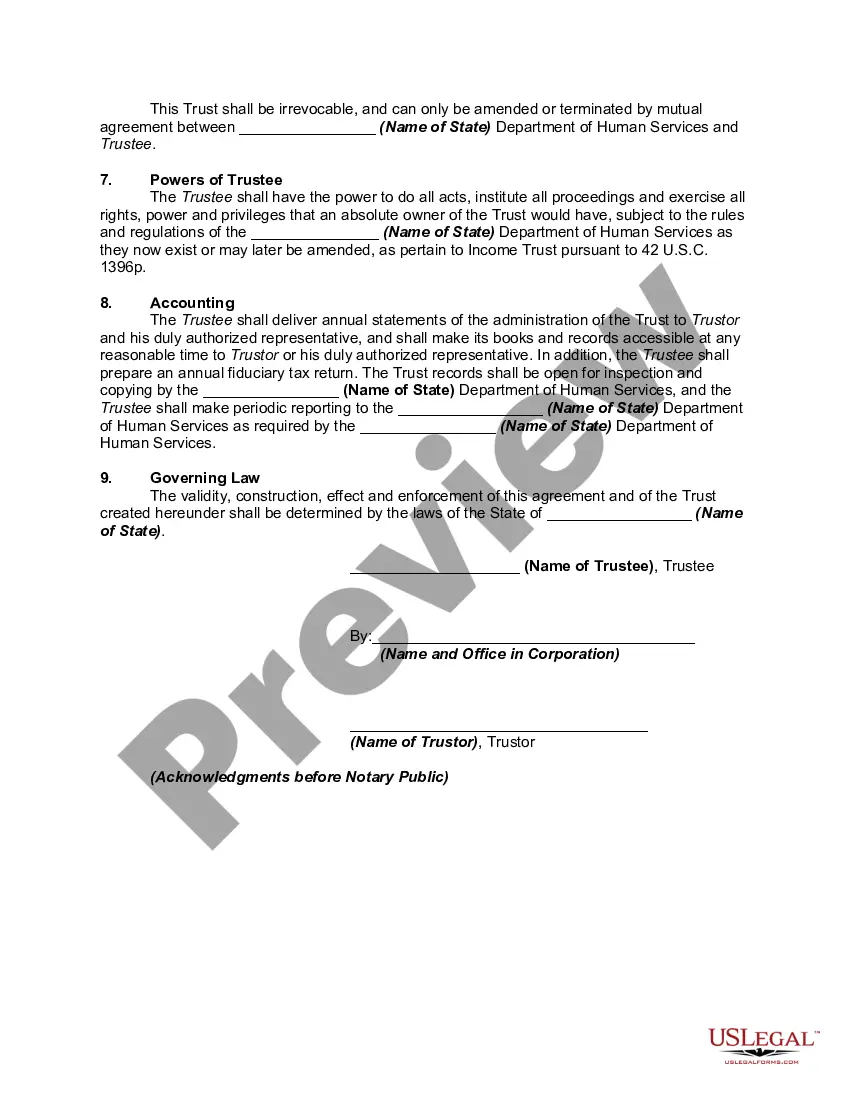
What Is A Medicaid Qualifying Trust
Description

Get your form ready online
Our built-in tools help you complete, sign, share, and store your documents in one place.
Make edits, fill in missing information, and update formatting in US Legal Forms—just like you would in MS Word.
Download a copy, print it, send it by email, or mail it via USPS—whatever works best for your next step.
Sign and collect signatures with our SignNow integration. Send to multiple recipients, set reminders, and more. Go Premium to unlock E-Sign.
If this form requires notarization, complete it online through a secure video call—no need to meet a notary in person or wait for an appointment.
We protect your documents and personal data by following strict security and privacy standards.

Make edits, fill in missing information, and update formatting in US Legal Forms—just like you would in MS Word.

Download a copy, print it, send it by email, or mail it via USPS—whatever works best for your next step.

Sign and collect signatures with our SignNow integration. Send to multiple recipients, set reminders, and more. Go Premium to unlock E-Sign.

If this form requires notarization, complete it online through a secure video call—no need to meet a notary in person or wait for an appointment.

We protect your documents and personal data by following strict security and privacy standards.
Looking for another form?









How to fill out Qualified Income Miller Trust?
- If you are a returning user, log in to your account and locate your desired form template. Click the Download button after confirming your subscription is active. If your subscription has expired, renew it according to your payment plan.
- For first-time users, start by exploring our comprehensive library. Use the Preview mode to review form descriptions and make sure you select the appropriate document that aligns with your local jurisdiction's requirements.
- If you find the initial template does not meet your needs, utilize the Search tab at the top of the page to discover additional forms. Once you find a suitable option, proceed to the next step.
- Purchase the document by clicking on the Buy Now button and selecting your desired subscription plan. You will need to register for an account to gain access to the full library.
- Complete your purchase by entering your credit card information or opting for PayPal to finalize your subscription payment.
- After your purchase, download your selected form and save it on your device. You can always retrieve it from the My Forms section of your profile.
US Legal Forms empowers individuals and attorneys to quickly execute legal documents with an extensive library of legal forms. With over 85,000 editable options, users can find exactly what they need without hassle.
Conclusion: By following these simple steps, you can efficiently access the necessary forms for your legal needs. Start your journey with US Legal Forms today and ensure your documents are completed accurately and legally.
Form popularity
FAQ
Placing your home in a Medicaid qualifying trust can offer some protection against Medicaid claims, but it requires careful planning. While the property may not be counted as an asset for Medicaid purposes, transferring it improperly could lead to penalties or disqualification. Therefore, it is crucial to set up the trust correctly and consult with a legal professional. Uslegalforms can provide assistance throughout this process.
The 5 year rule on trusts relates to the time frame in which assets placed in a Medicaid qualifying trust are examined. If you transfer assets into the trust within five years of applying for Medicaid, those assets may still be counted when determining your eligibility. Understanding this rule is vital for effective long-term planning. Consulting with experts can ensure that your trust complies with all regulations.
The major disadvantage of a Medicaid qualifying trust is its complexity and management requirements. You may find that ongoing administration is needed, and failing to comply with regulations can lead to severe penalties. Furthermore, if you do not understand the nuances of trust laws, you could face unexpected financial repercussions. Working with a knowledgeable provider, like uslegalforms, can help mitigate these risks.
A Medicaid qualifying trust may have several disadvantages. First, it limits your access to funds during your lifetime, which can create financial strain. Additionally, if not properly established, a Medicaid trust might not protect assets as intended, risking disqualification from Medicaid benefits. It's essential to consult with a specialist to navigate these complexities.
A Medicaid qualifying trust is designed to help individuals manage their assets while still qualifying for Medicaid benefits. Essentially, it allows you to place assets in a trust, keeping them out of your name and meeting asset limits for Medicaid eligibility. By using this type of trust, you can protect your property and ensure that you receive essential healthcare services. If you want to learn more about how this can work for you, consider exploring the resources available on the US Legal Forms platform.
To determine if a trust is qualified, you need to examine the terms of the trust and how it adheres to Medicaid rules. Factors include the control you retain over the trust assets and whether beneficiaries can access those assets under certain conditions. If a trust fails to meet these criteria, it is deemed nonqualified. Using the tools available through US Legal Forms simplifies the process of identifying qualified trusts.
A qualified trust typically meets specific criteria set by Medicaid regulations, ensuring that it can help you qualify for Medicaid benefits. These criteria often include provisions that prevent beneficiaries from accessing the trust assets until specific conditions are met. Understanding these regulations is essential when planning for Medicaid eligibility. For detailed guidance, refer to resources from US Legal Forms.
The three primary types of trusts are revocable trusts, irrevocable trusts, and testamentary trusts. Revocable trusts allow you to retain control over your assets during your lifetime, while irrevocable trusts protect assets from estate taxes. Testamentary trusts are established through a will and only take effect after your death. To explore how these may relate to your needs, US Legal Forms offers valuable insights.
A Medicaid qualifying trust is a specific type of trust designed to help individuals qualify for Medicaid benefits while protecting their assets. Essentially, it allows you to put your assets into trust, making them unavailable for Medicaid asset tests. This strategy is crucial for preserving wealth while gaining access to necessary healthcare services. US Legal Forms provides relevant resources to help you understand and establish this trust effectively.
When considering tax efficiency, irrevocable trusts often stand out. These trusts remove assets from your taxable estate, thus potentially reducing estate taxes. However, the best choice depends on your specific situation. Using resources like US Legal Forms can guide you in selecting the right trust to optimize tax outcomes.