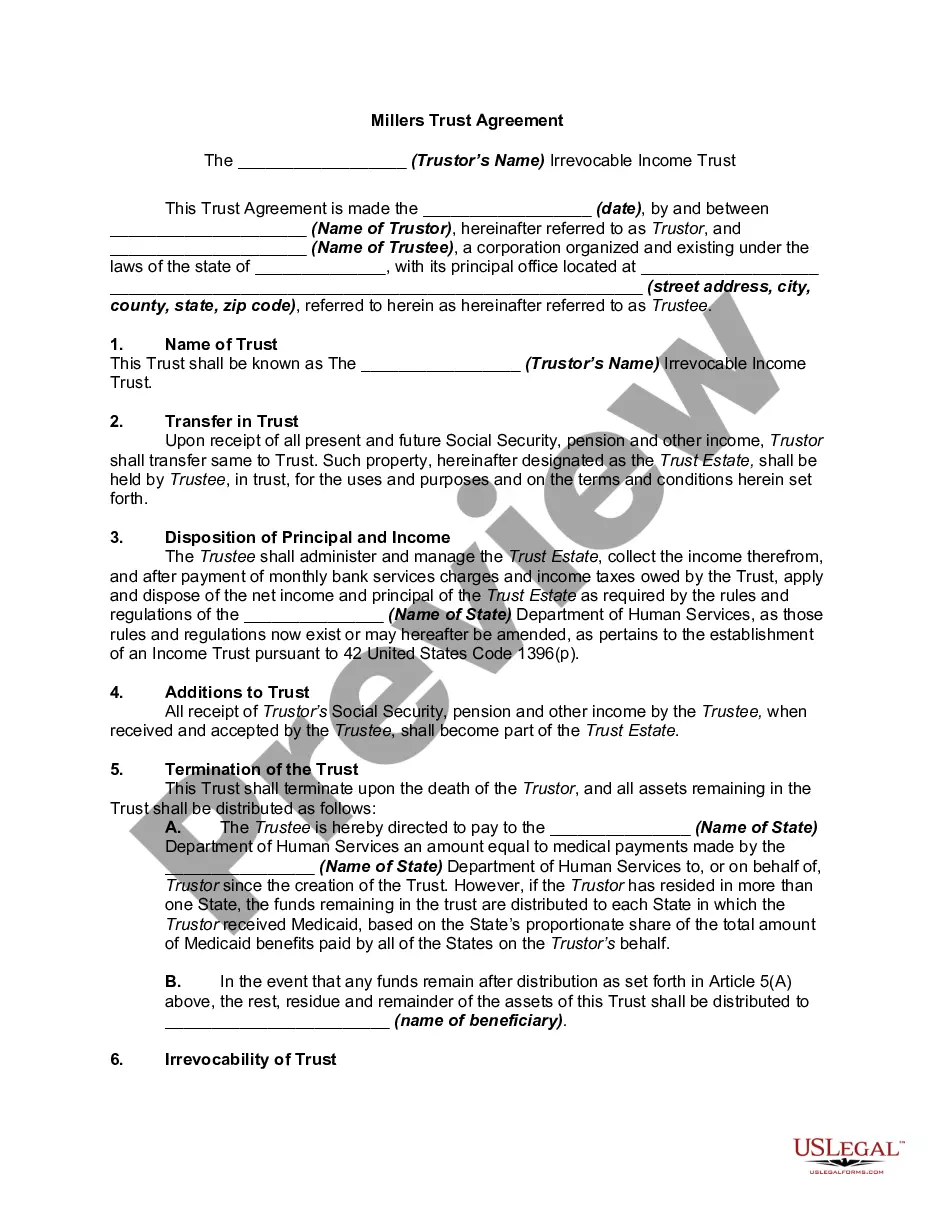
Qualified Income Trust Miller
Description
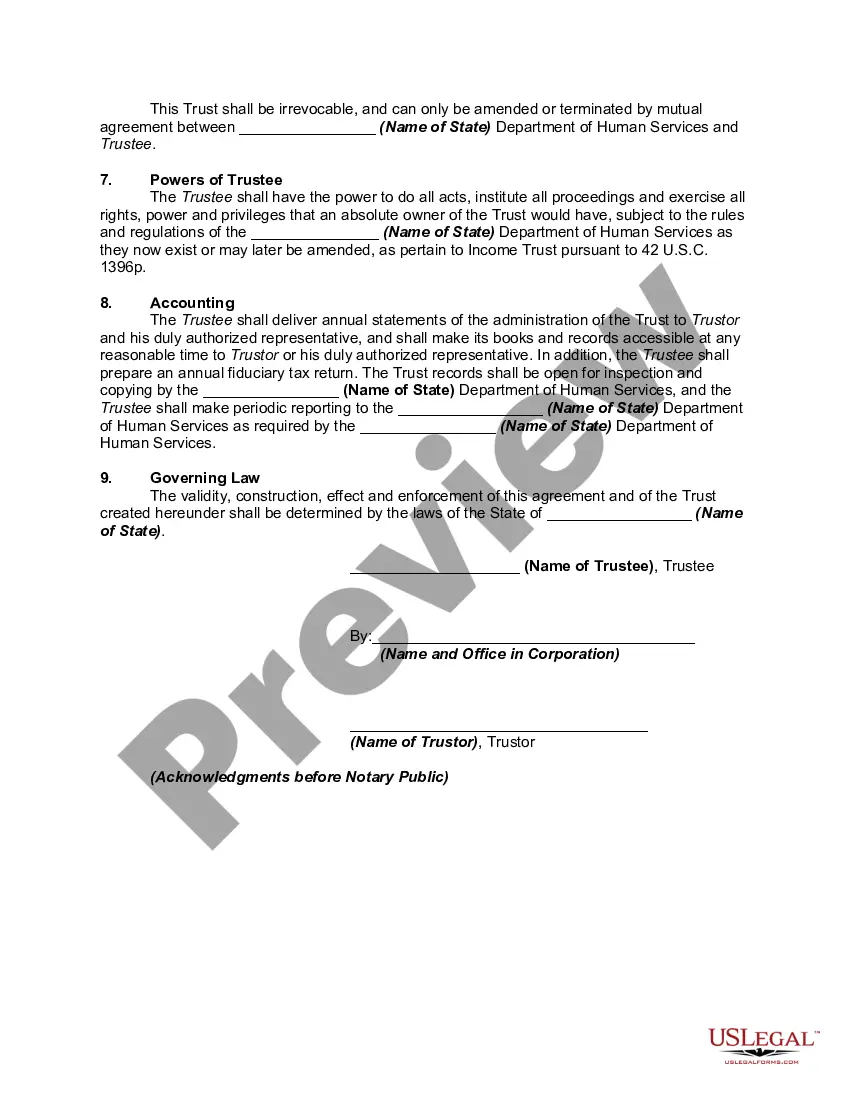
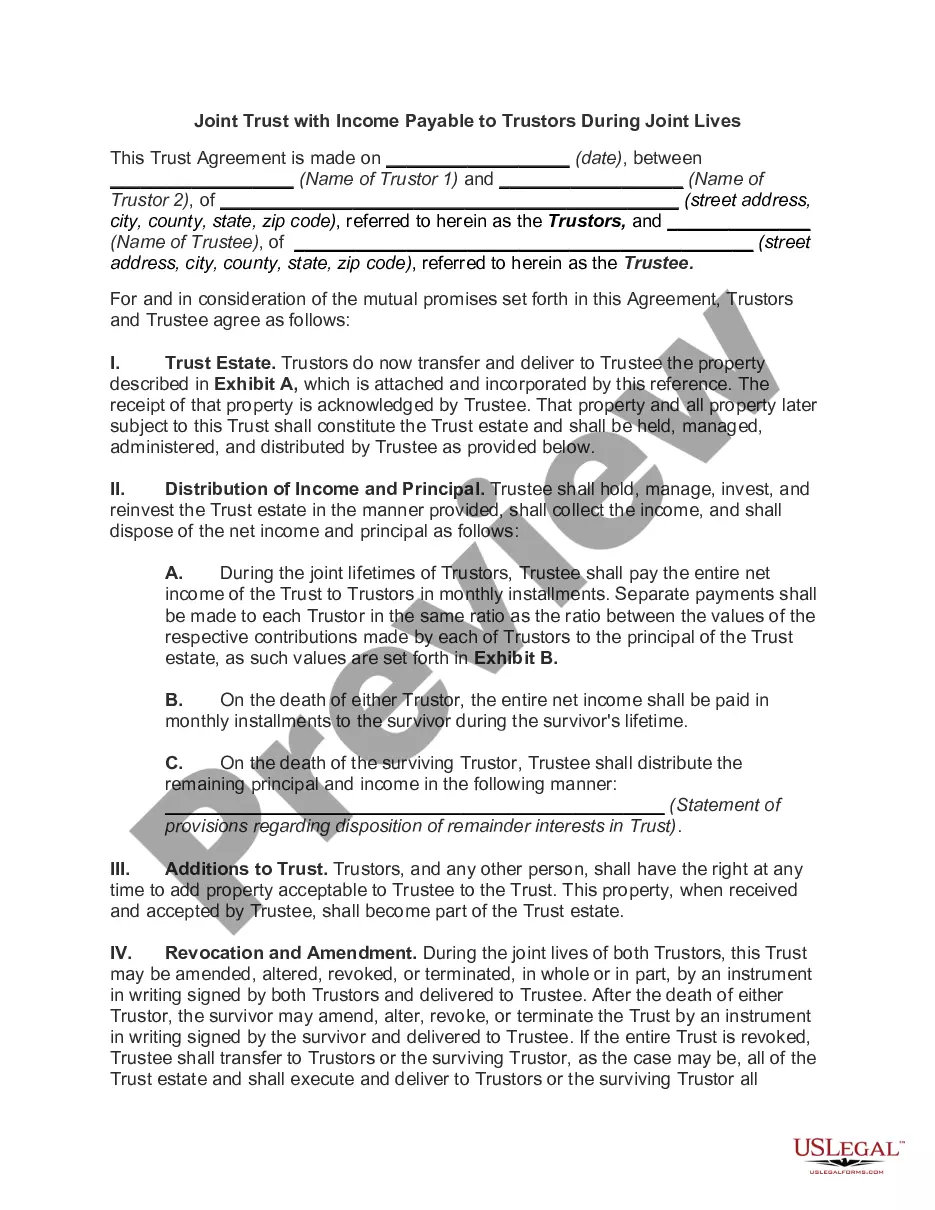

Get your form ready online
Our built-in tools help you complete, sign, share, and store your documents in one place.
Make edits, fill in missing information, and update formatting in US Legal Forms—just like you would in MS Word.
Download a copy, print it, send it by email, or mail it via USPS—whatever works best for your next step.
Sign and collect signatures with our SignNow integration. Send to multiple recipients, set reminders, and more. Go Premium to unlock E-Sign.
If this form requires notarization, complete it online through a secure video call—no need to meet a notary in person or wait for an appointment.
We protect your documents and personal data by following strict security and privacy standards.

Make edits, fill in missing information, and update formatting in US Legal Forms—just like you would in MS Word.

Download a copy, print it, send it by email, or mail it via USPS—whatever works best for your next step.

Sign and collect signatures with our SignNow integration. Send to multiple recipients, set reminders, and more. Go Premium to unlock E-Sign.

If this form requires notarization, complete it online through a secure video call—no need to meet a notary in person or wait for an appointment.

We protect your documents and personal data by following strict security and privacy standards.
Looking for another form?



How to fill out Qualified Income Miller Trust?
- If you are a returning user, log in to your US Legal Forms account and verify your subscription status to ensure it's active.
- Explore the Preview mode and read the form description thoroughly to confirm it meets your local jurisdiction's requirements.
- Need a different form? Use the Search tab to find the correct template tailored to your needs.
- Once you've identified the right document, click the 'Buy Now' button and select your preferred subscription plan.
- Complete your purchase by entering your credit card information or utilizing your PayPal account.
- Finally, download the document to your device and access it later in the 'My Forms' section of your profile.
With US Legal Forms, you gain access to a robust collection of over 85,000 legal forms, ensuring that you can find the precise template you need. This extensive library makes it easier to execute legal documents efficiently and effectively.
In conclusion, utilizing US Legal Forms grants you the ability to quickly and effectively gather your legal documents. Start exploring today to streamline your legal process and ensure accuracy in your filings!
Form popularity
FAQ
Setting up a qualified income trust involves several steps to ensure compliance with Medicaid regulations. First, you must draft the trust document, ensuring it meets all legal requirements specific to a qualified income trust Miller. Next, you will fund the trust with the appropriate income. For a seamless experience, consider using USLegalForms, which offers valuable resources and templates tailored for establishing these trusts.
Your trust may need to file a tax return if it has generated taxable income during the year. Specifically, a qualified income trust Miller often requires filing if the income surpasses the exempt amount. Not filing can lead to penalties, so it’s best to stay informed and consult tax professionals if you're uncertain. Platforms like USLegalForms can provide valuable guidance in these situations.
Filing income from a trust involves reporting this income on the appropriate tax forms. Typically, you will use Form 1041 for the federal return, detailing all income generated by the qualified income trust Miller. It is essential to document all sources of income accurately to avoid penalties. For assistance navigating this process, consider using resources from USLegalForms.
Yes, a Miller trust must file a tax return if it earns income. Specifically, when the income exceeds a certain threshold, the trust is responsible for reporting that income. However, the good news is that the income may be exempt from certain taxes under Medicaid rules. Engaging with platforms like USLegalForms can assist you in managing these tax obligations effectively.
To determine if a trust is qualified, evaluate its compliance with state and federal regulations relevant to Medicaid. A qualified income trust, or Miller trust, typically adheres to income limitations and designated beneficiary rules. If these criteria are not met, the trust may be deemed nonqualified, impacting eligibility for benefits.
Qualified income trusts are governed by specific rules, including income limitations and designated purposes. For instance, the trust must establish conditions for distributing income solely for the benefit of the individual it serves. Adhering to these rules is crucial for maintaining Medicaid eligibility, so understanding them is vital.
Creating a valid trust requires a clear purpose, identifiable beneficiaries, a trust document, a trustee, and a funded trust. Specifically for a qualified income trust, the trust must comply with Medicaid guidelines, including income limits. These elements help ensure your trust serves its intended function effectively.
To obtain a qualified income trust, start by researching your state's specific requirements for a Miller trust. You can draft one yourself or seek professional assistance. Platforms like USLegalForms provide guidance and templates that make it easier to set up a qualified income trust without missing essential legal elements.
One common mistake parents make involves underestimating the complexity of establishing a trust fund. They often overlook the necessity of proper documentation and fail to align their trust with current laws and regulations. Consulting resources that focus on qualified income trusts, like USLegalForms, can help avoid such pitfalls.
To set up a qualified income trust, start by identifying your eligibility and ensuring your income exceeds the limit set by Medicaid. You'll need to draft a trust document that adheres to state guidelines and appoint a trustee. Utilizing platforms like USLegalForms can simplify this process by providing templates tailored for creating a qualified income trust.