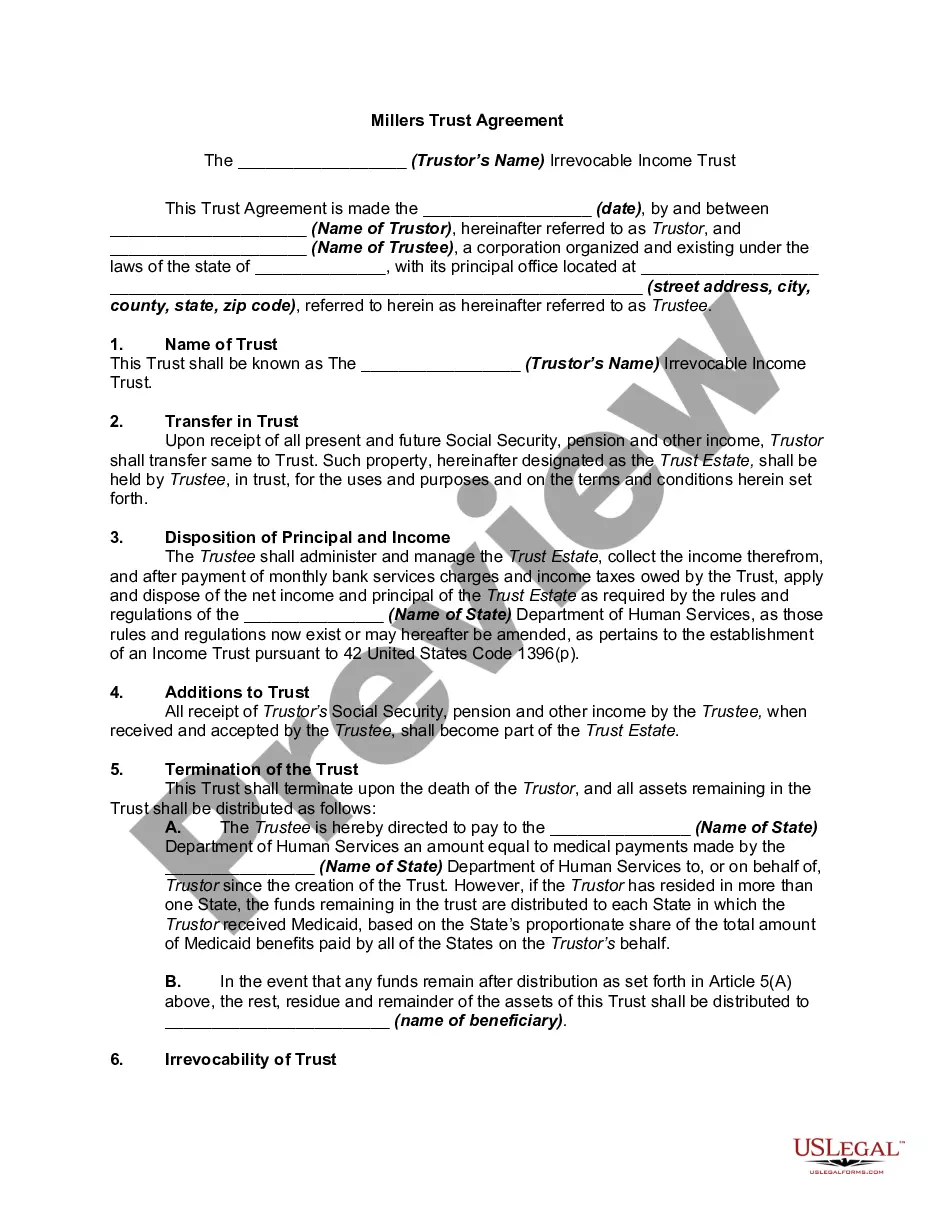
Qualified Income Trust Example
Description

Get your form ready online
Our built-in tools help you complete, sign, share, and store your documents in one place.
Make edits, fill in missing information, and update formatting in US Legal Forms—just like you would in MS Word.
Download a copy, print it, send it by email, or mail it via USPS—whatever works best for your next step.
Sign and collect signatures with our SignNow integration. Send to multiple recipients, set reminders, and more. Go Premium to unlock E-Sign.
If this form requires notarization, complete it online through a secure video call—no need to meet a notary in person or wait for an appointment.
We protect your documents and personal data by following strict security and privacy standards.

Make edits, fill in missing information, and update formatting in US Legal Forms—just like you would in MS Word.

Download a copy, print it, send it by email, or mail it via USPS—whatever works best for your next step.

Sign and collect signatures with our SignNow integration. Send to multiple recipients, set reminders, and more. Go Premium to unlock E-Sign.

If this form requires notarization, complete it online through a secure video call—no need to meet a notary in person or wait for an appointment.

We protect your documents and personal data by following strict security and privacy standards.
Looking for another form?





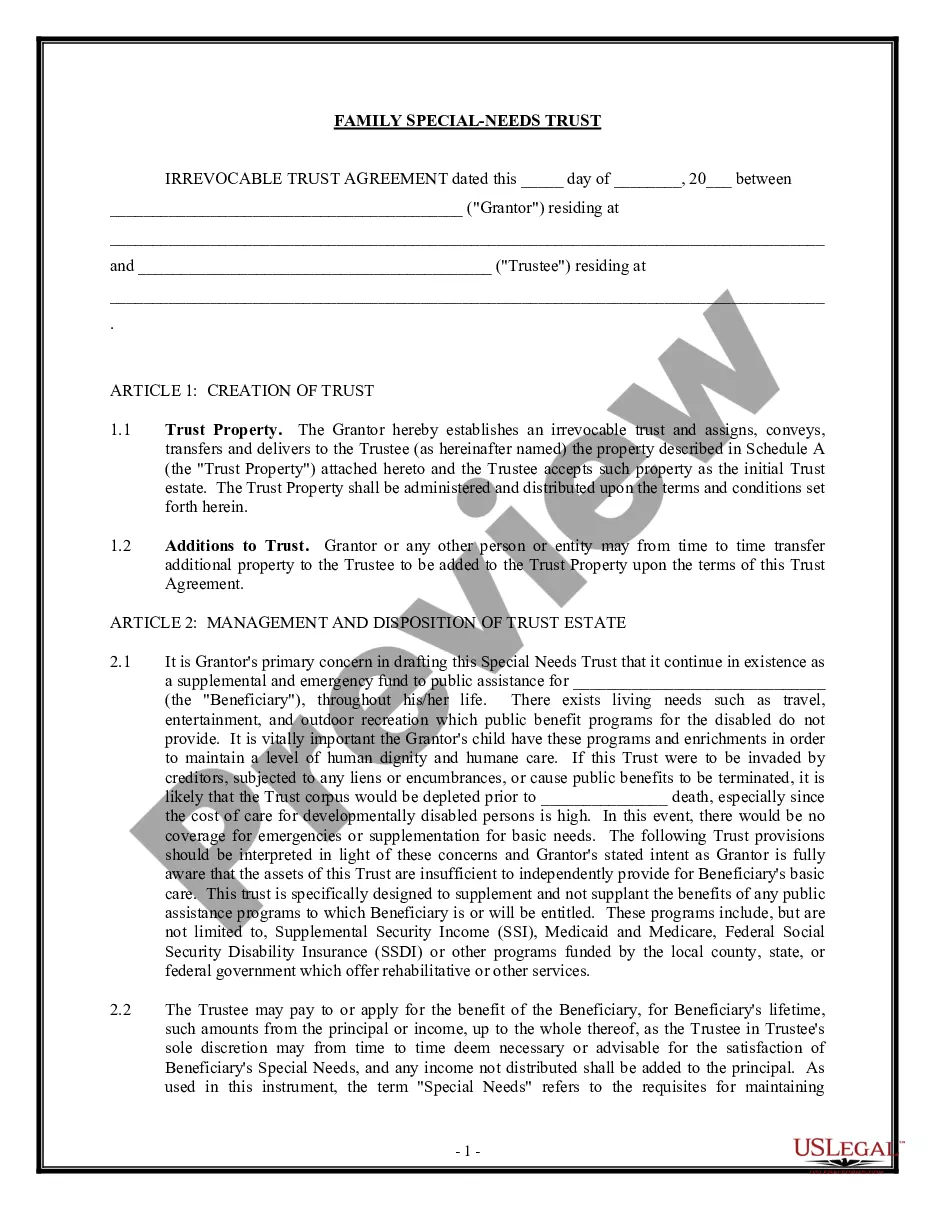


How to fill out Qualified Income Miller Trust?
- Log in to your US Legal Forms account if you've previously registered and ensure your subscription is active. Click the Download button for the desired form template.
- If this is your first time using our service, start by reviewing the Preview mode and form descriptions to select the template that best fits your legal needs and jurisdiction.
- Should you find inconsistencies or require a different template, utilize the Search tab to locate the appropriate document.
- Proceed to purchase the selected document by clicking the Buy Now button and choose your preferred subscription plan. Creating an account will grant you access to the full library.
- Finalize your transaction by entering your payment details via credit card or PayPal to secure your subscription.
- Once your payment is confirmed, download the form to your device. Access the document later through the My Forms section of your profile.
By following these steps, you’ll experience the convenience of accessing over 85,000 easily fillable and editable legal forms, ensuring your documents are not only accurate but also legally sound.
Don't hesitate! Start utilizing US Legal Forms today for a seamless legal documentation experience.
Form popularity
FAQ
Income examples in a trust can include rental payments, dividends from stock, and interest from savings or bonds. Each type of income serves to provide financial support to beneficiaries over time. By reviewing various qualified income trust examples, you can gain insights into how diverse income streams can work within a trust structure, enhancing financial security for families.
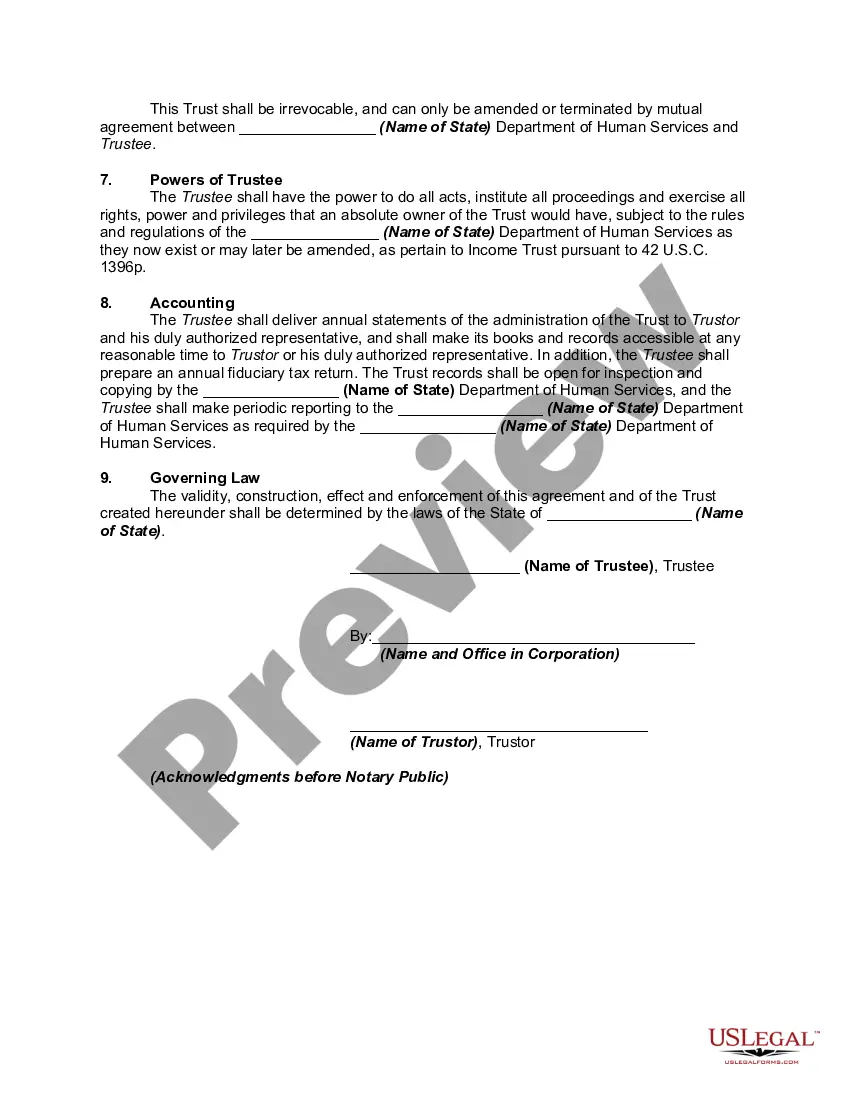
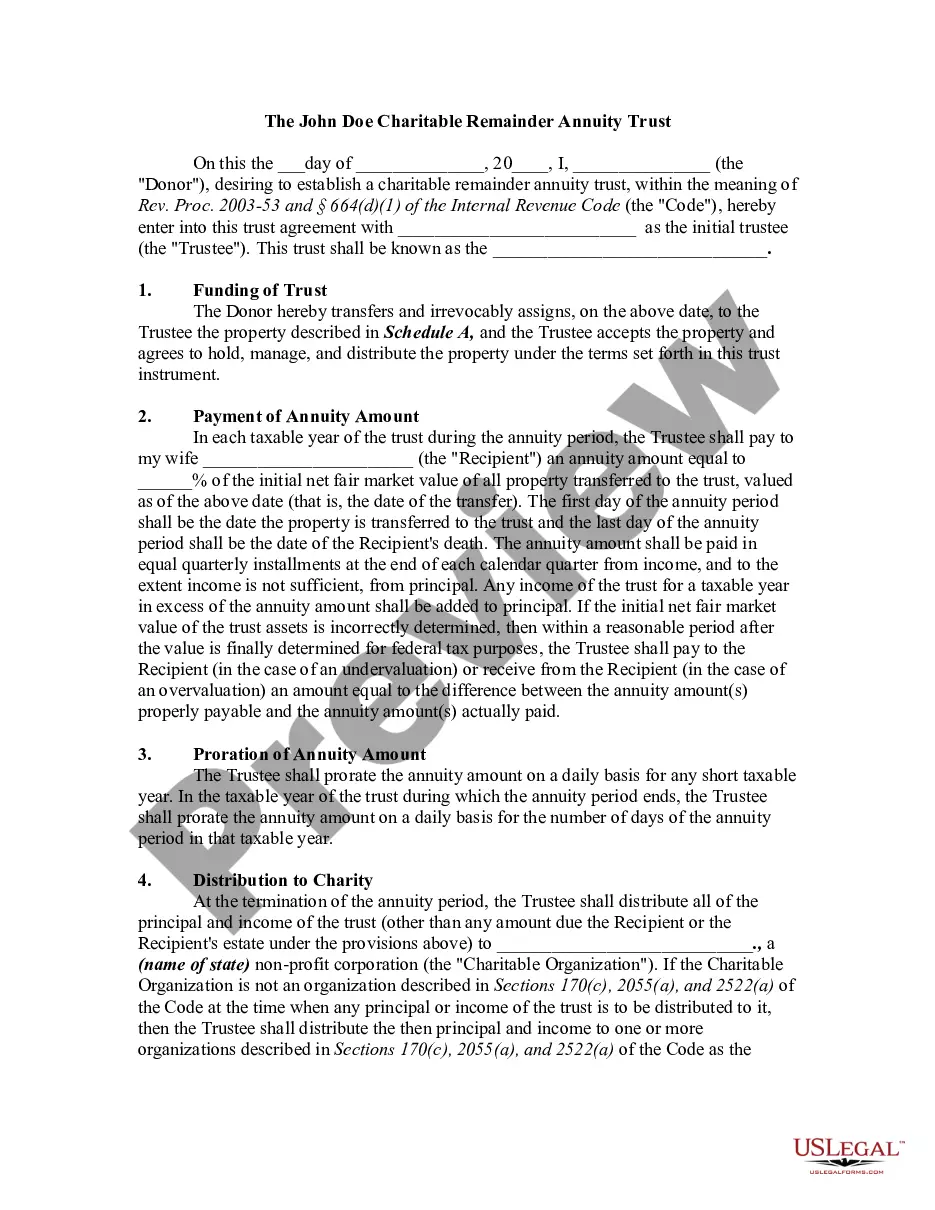
A qualified trust is a trust that meets specific IRS criteria, making it eligible for certain tax benefits. Typically, it has a defined beneficiary and follows regulations regarding distributions and asset management. Understanding a qualified income trust example can help illustrate how these trusts function within financial planning strategies, ensuring compliance while maximizing benefits.
Qualified income trusts are legal instruments that allow individuals to set aside a portion of their income to meet specific qualifying requirements for government assistance programs. This type of trust is essential in Medicaid planning, as it permits individuals to shield income from being counted in eligibility determinations. For a clear qualified income trust example, consider how these trusts help families maintain their financial health while securing necessary healthcare services.
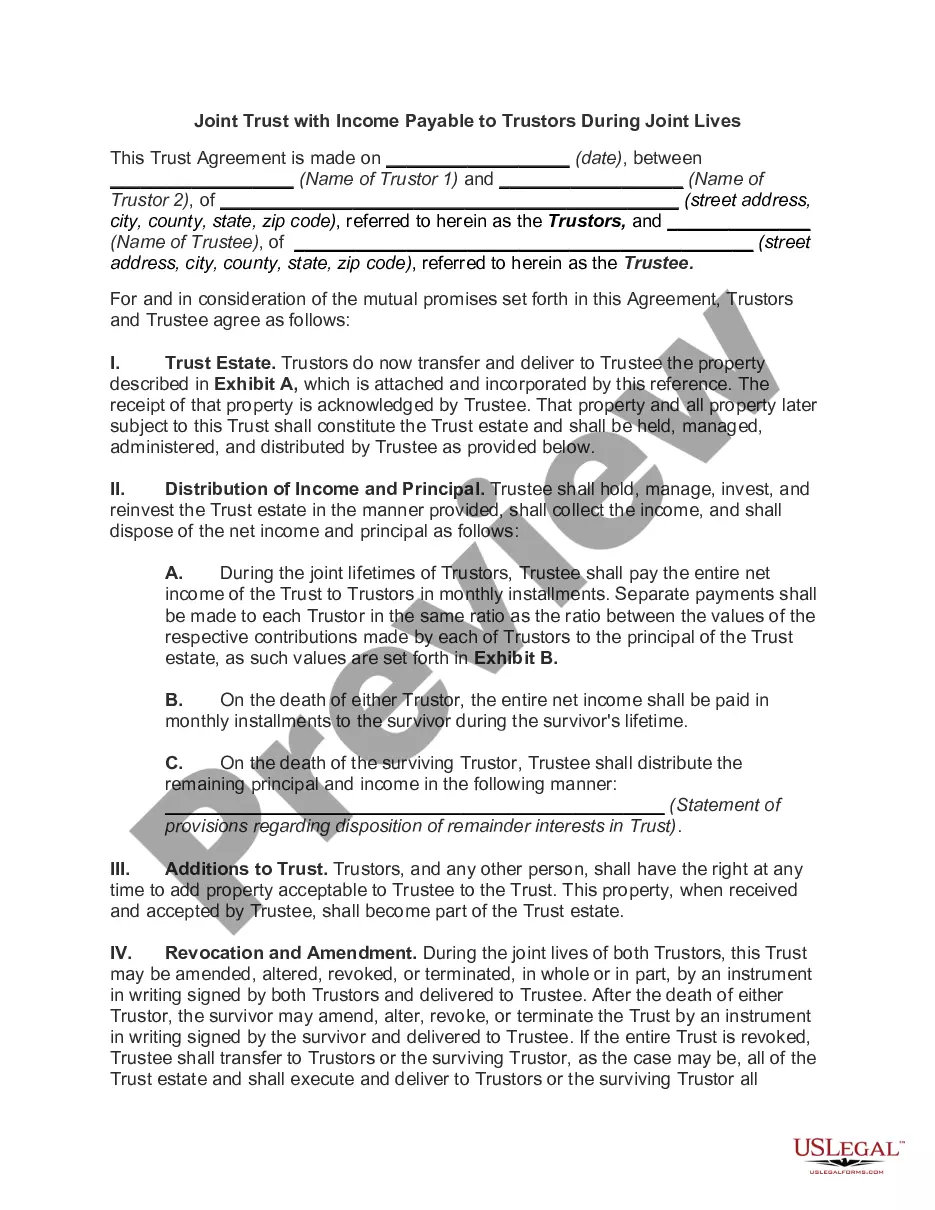
An income fund trust is an investment vehicle that pools capital to create a portfolio designed to yield consistent payouts to investors. This type of trust usually focuses on generating monthly or quarterly income rather than capital appreciation. By providing a qualified income trust example, individuals can see how income fund trusts can help secure financial stability for beneficiaries.
An income trust is a specific type of trust designed to generate income for beneficiaries. This type of trust often holds various assets, such as real estate or financial investments, to provide a steady stream of income. In the context of a qualified income trust example, it ensures the beneficiaries receive funds needed for their living expenses, while also adhering to legal requirements.
A qualified income trust indeed requires an EIN to manage its financial activities effectively. This EIN allows the trust to file taxes and report income independently, thereby safeguarding your personal information. Engaging with platforms like uslegalforms can streamline the EIN application process and ensure you have everything in place for your qualified income trust example.
To get a qualified income trust, you can start by evaluating your financial situation and determining how much income you want to protect. Next, consult with an attorney or use a service like uslegalforms to help you draft and establish the trust. They provide user-friendly templates and guidance to ensure your trust meets all legal requirements and achieves its intended purpose.
Irrevocable trusts typically require an EIN because they are considered separate entities for tax purposes. This means that they must file their own tax returns and report income generated by the trust assets. If you set up a qualified income trust example, use an EIN to maintain proper legal and tax compliance. Ensure you consult resources, like uslegalforms, to navigate this aspect smoothly.
Yes, you can have a trust without an EIN if it is a revocable trust that does not generate income. However, for a qualified income trust example, if the trust will earn income or must file tax returns, obtaining an EIN is necessary. It simplifies tax administration and protects your privacy by allowing the trust to operate under its own identification number instead of your Social Security number.
The trustee of the qualified income trust usually applies for the Employer Identification Number (EIN). This number is essential for tax reporting and managing assets within the trust. If you are the creator of the trust and also the trustee, you can apply for the EIN on behalf of the trust. Make sure to have the necessary documents ready to facilitate the process successfully.