Qualified Income Trust Complete With The Most
Description

Get your form ready online
Our built-in tools help you complete, sign, share, and store your documents in one place.
Make edits, fill in missing information, and update formatting in US Legal Forms—just like you would in MS Word.
Download a copy, print it, send it by email, or mail it via USPS—whatever works best for your next step.
Sign and collect signatures with our SignNow integration. Send to multiple recipients, set reminders, and more. Go Premium to unlock E-Sign.
If this form requires notarization, complete it online through a secure video call—no need to meet a notary in person or wait for an appointment.
We protect your documents and personal data by following strict security and privacy standards.

Make edits, fill in missing information, and update formatting in US Legal Forms—just like you would in MS Word.

Download a copy, print it, send it by email, or mail it via USPS—whatever works best for your next step.

Sign and collect signatures with our SignNow integration. Send to multiple recipients, set reminders, and more. Go Premium to unlock E-Sign.

If this form requires notarization, complete it online through a secure video call—no need to meet a notary in person or wait for an appointment.

We protect your documents and personal data by following strict security and privacy standards.
Looking for another form?






How to fill out Qualified Income Miller Trust?
- If you're a returning user, log in to your account and download the necessary form template easily. Ensure your subscription remains active to access your documents.
- For first-time users, begin by reviewing the Preview mode and form descriptions carefully. This ensures you select the right template for your needs and complies with your local jurisdiction's requirements.
- If the form doesn’t meet your needs, utilize the Search tab to find alternative templates. Once you locate a suitable option, proceed to the next step.
- Click the Buy Now button to purchase the document. Choose a subscription plan that aligns with your needs, and create your account to access additional resources.
- Complete your purchase by entering your credit card information or utilizing PayPal for a smooth transaction.
- Finally, download your form to your device. You’ll also find it accessible in the My Forms section of your profile for future reference.
In conclusion, US Legal Forms makes acquiring legal documents straightforward and efficient, offering an expansive selection that stands out from competitors. With expert assistance at hand, users can ensure their forms are accurate and legally compliant.
Start your journey towards hassle-free legal document processing today with US Legal Forms!
Form popularity
FAQ
Funding a qualified income trust typically involves transferring your excess income into the trust account monthly. You can fund the trust directly from your paycheck or other income sources, ensuring that your countable income remains below the Medicaid limit. It is important to keep detailed records of all transactions for transparency with Medicaid. Using services from USLegalForms can provide the tools necessary to streamline the funding and management of your QIT.
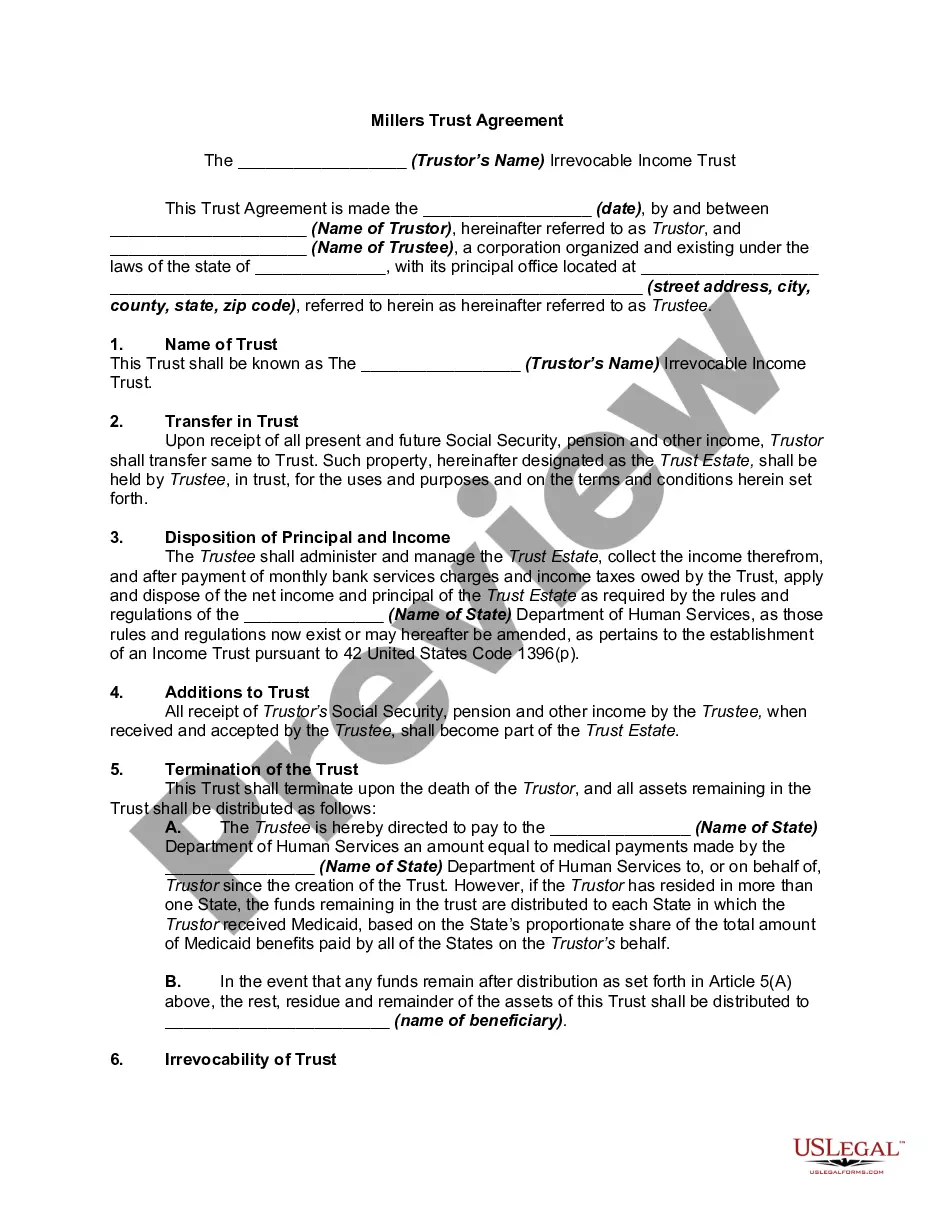
Setting up a qualified income trust involves several key steps, starting with defining your income and determining if a QIT is necessary. You will need to draft a trust document that outlines the terms and conditions for the fund, ensuring it meets Medicaid's requirements. It's beneficial to consult legal resources, like those available at USLegalForms, to ensure compliance and efficiency throughout the setup process. This way, you can create a qualified income trust complete with the most necessary legal backing.
In Ohio, a qualified income trust functions by diverting excess income into the trust to comply with Medicaid requirements. The state allows individuals to keep income above the limit by placing it into this trust, allowing eligibility for Medicaid benefits. The funds in the trust can be used for various medical expenses, providing a pathway to crucial healthcare services. USLegalForms offers guidance and templates to help you navigate the process of establishing a QIT in Ohio.
A qualified income trust, or QIT fund, is a financial arrangement designed to help individuals qualify for Medicaid benefits despite having income that exceeds the allowable limit. By placing excess income into this trust, you can effectively reduce your countable resources while retaining your ability to access necessary medical care. This trust allows you to allocate funds for specific expenses, ensuring that you maintain your financial stability while receiving essential health services. At USLegalForms, you can find resources to help you understand and set up a QIT fund effectively.
A qualified income trust offers significant advantages, particularly for those seeking Medicaid assistance. Firstly, it helps individuals manage their income, allowing them to qualify for essential benefits without the stress of asset loss. Additionally, it provides peace of mind, ensuring that you can receive necessary medical care and cover living expenses, thus improving overall financial stability. For those in need, USLegalForms offers resources to simplify the process of establishing a qualified income trust complete with the most helpful guidance available.
In New Jersey, a qualified income trust operates by holding the excess income of a Medicaid applicant. Essentially, the trust allows individuals to place their income into the trust, which helps them meet the income eligibility criteria for Medicaid. By reallocating income into the trust, you protect your assets, enabling you to access necessary healthcare services while remaining compliant with state regulations.
Setting up a qualified income trust requires a few straightforward steps. First, you will need to create the trust document that meets state requirements. Next, appoint a trustee who will manage the trust and collect income on behalf of the beneficiary. Finally, ensure that the trust is correctly funded with income, which helps your loved ones qualify for Medicaid benefits.
Upon the death of the beneficiary, the qualified income trust undergoes certain transitions. Generally, the trust may become part of the deceased's estate, and any remaining assets are distributed according to the trust's terms or state laws. It's crucial to maintain records and consult with an estate attorney to navigate these matters smoothly. This ensures that the qualified income trust remains complete with the most care and attention during this sensitive time.
To establish a qualified income trust, you typically start by consulting with a legal expert who specializes in this area. They can help you understand the requirements specific to your state, ensuring that your trust complies with all laws. It's essential to draft a formal agreement outlining how the income will be managed and distributed. Once your trust is in place, you can apply for benefits with confidence, knowing your qualified income trust is complete with the most effective strategies.
The requirements for a qualified trust typically include specific income limits, documentation that demonstrates compliance with regulatory guidelines, and a designated trustee responsible for managing the trust. A qualified income trust complete with the most must ensure all assets and distributions adhere to these criteria. Meeting these requirements is essential to ensure the trust's effectiveness in providing support for beneficiaries.