Qualified Income Trust Caps Complete With Florida
Description

Get your form ready online
Our built-in tools help you complete, sign, share, and store your documents in one place.
Make edits, fill in missing information, and update formatting in US Legal Forms—just like you would in MS Word.
Download a copy, print it, send it by email, or mail it via USPS—whatever works best for your next step.
Sign and collect signatures with our SignNow integration. Send to multiple recipients, set reminders, and more. Go Premium to unlock E-Sign.
If this form requires notarization, complete it online through a secure video call—no need to meet a notary in person or wait for an appointment.
We protect your documents and personal data by following strict security and privacy standards.

Make edits, fill in missing information, and update formatting in US Legal Forms—just like you would in MS Word.

Download a copy, print it, send it by email, or mail it via USPS—whatever works best for your next step.

Sign and collect signatures with our SignNow integration. Send to multiple recipients, set reminders, and more. Go Premium to unlock E-Sign.

If this form requires notarization, complete it online through a secure video call—no need to meet a notary in person or wait for an appointment.

We protect your documents and personal data by following strict security and privacy standards.
Looking for another form?










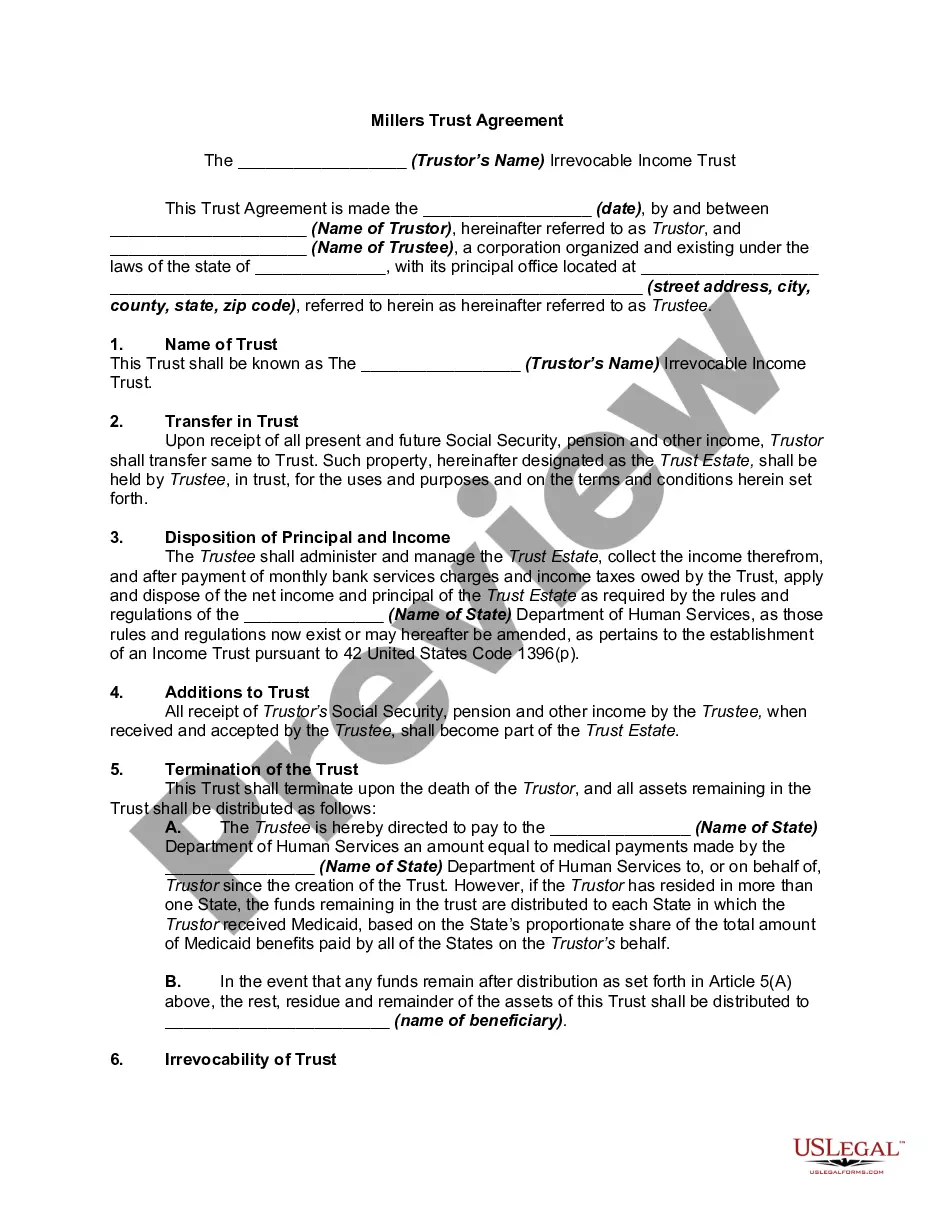
How to fill out Qualified Income Miller Trust?
- Log into your US Legal Forms account if you are a returning user. Ensure your subscription is active; renew if necessary.
- For new users, start by previewing the legal form you need to verify it complies with your local jurisdiction.
- Use the Search tab to find alternative templates if the current choice seems inadequate.
- Once found, click the 'Buy Now' button. Choose the subscription plan that suits you best and register for an account for seamless access.
- Proceed to checkout by entering your payment details, either through credit card or PayPal.
- Download the form directly to your device, and access it later from the 'My Forms' section in your profile.
US Legal Forms empowers users to streamline the execution of legal documents with its vast collection of over 85,000 easily fillable and editable legal forms. Their exceptional support ensures documents are completed accurately, giving users peace of mind.
Start simplifying your legal needs today by exploring the extensive offerings at US Legal Forms!
Form popularity
FAQ
Qualified income trust funds can be used for various essential expenses, such as medical care, housing costs, and living expenses. It's crucial that these expenditures comply with the guidelines set by qualified income trust caps complete with Florida to maintain eligibility for benefits. Managing these funds wisely ensures they support your needs effectively. For assistance in creating and managing your trust, UsLegalForms offers valuable resources and templates.
When a beneficiary of a qualified income trust passes away, the trust typically terminates. The remaining funds in the trust may be distributed according to the deceased beneficiary's estate plan or as directed in the trust document. It is important to understand how the qualified income trust caps complete with Florida may impact these distributions. Consulting with a legal professional can help clarify any potential tax implications.
To set up a qualified income trust, start by determining if you meet the eligibility requirements for the program. Next, gather the necessary documents, such as proof of income and financial statements. Then, draft a trust document that outlines the terms and conditions, ensuring it meets the qualified income trust caps complete with Florida. You might consider using a service like UsLegalForms to simplify the process and ensure compliance with state regulations.
Trusts are not registered with the state of Florida, making them private legal documents. However, if the trust holds real property, that property must be part of a recorded deed. When considering qualified income trust caps complete with Florida, remember that privacy can benefit individuals seeking to manage their assets discreetly. It’s beneficial to consult with a legal professional for tailored advice.
No, you do not have to file a trust with the court in Florida unless it becomes involved in litigation or needs probate. For your qualified income trust caps complete with Florida, it is vital to manage and maintain the trust document properly to avoid potential court involvement. Understanding the nuances of trust management can aid in keeping your assets secure. A legal expert can assist in navigating these matters.
To avoid the Medicaid 5-year look back in Florida, begin by creating a qualified income trust (QIT) to hold excess income. This strategic move protects your income while applying for Medicaid benefits. Additionally, timely transfers of assets, with careful planning, can mitigate issues related to this rule. Professional guidance can further strengthen your approach to asset protection.
In Florida, a trust typically does not need to be filed with the state. However, certain types of trusts may need to be reported for tax purposes. When managing qualified income trust caps complete with Florida, it is wise to maintain accurate records and consider potential tax implications. Engaging with an expert can provide insights tailored to your specific needs.
No, a trust does not need to be recorded in Florida. However, it is a good practice to keep a copy of the trust document in a safe place and share it with relevant parties, like family members or financial advisors. For qualified income trust caps complete with Florida, ensuring clarity and accessibility of the trust document can streamline Medicaid applications. This can be particularly important during critical times.
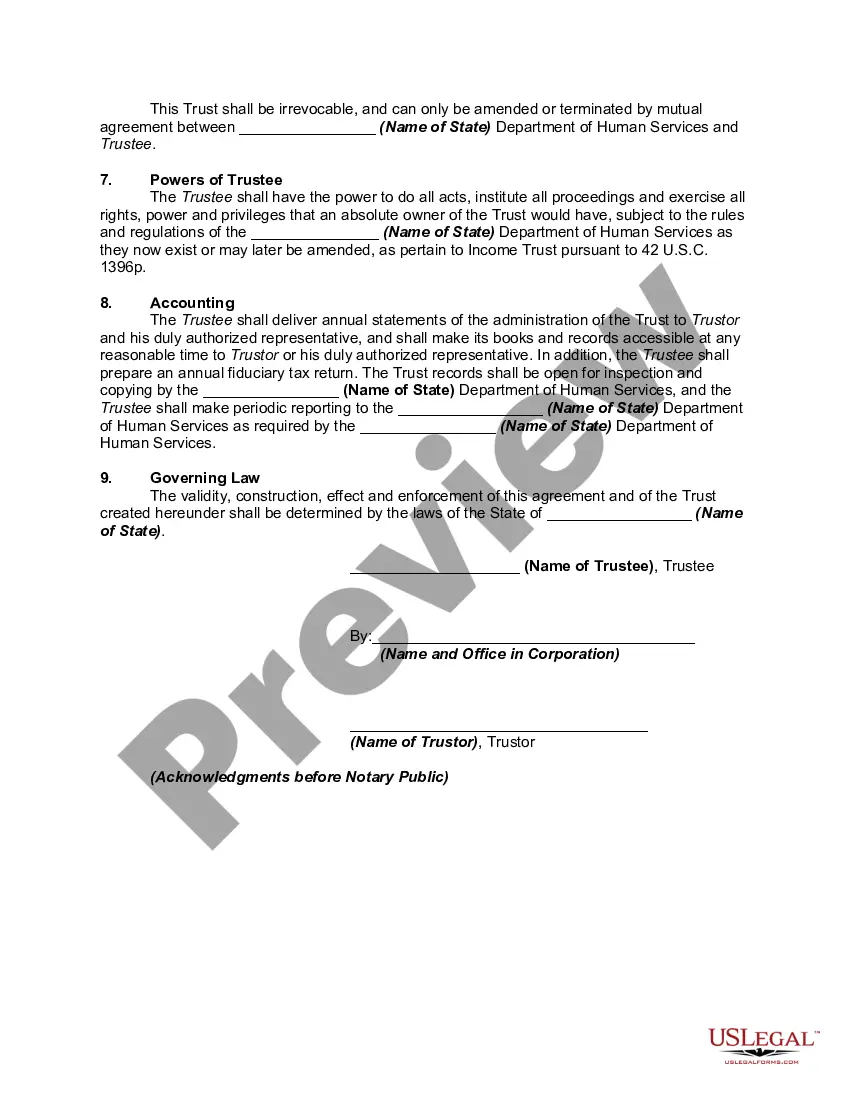
A qualified income trust (QIT) in Florida allows individuals to meet Medicaid eligibility requirements by setting aside excess income. This trust receives the income that exceeds the Medicaid limit, ensuring individuals can cover their basic monthly living expenses. By utilizing a QIT, you can protect assets while still qualifying for Medicaid benefits. It’s a practical solution for those facing high medical costs.
You should file a trust in the state where the trust's creator or grantor resides. In the case of qualified income trust caps complete with Florida, it's essential to follow Florida laws to ensure compliance. This guarantees that the trust meets state-specific requirements and avoids unnecessary complications in the future. Consulting with a professional familiar with Florida's trust laws can provide clarity.