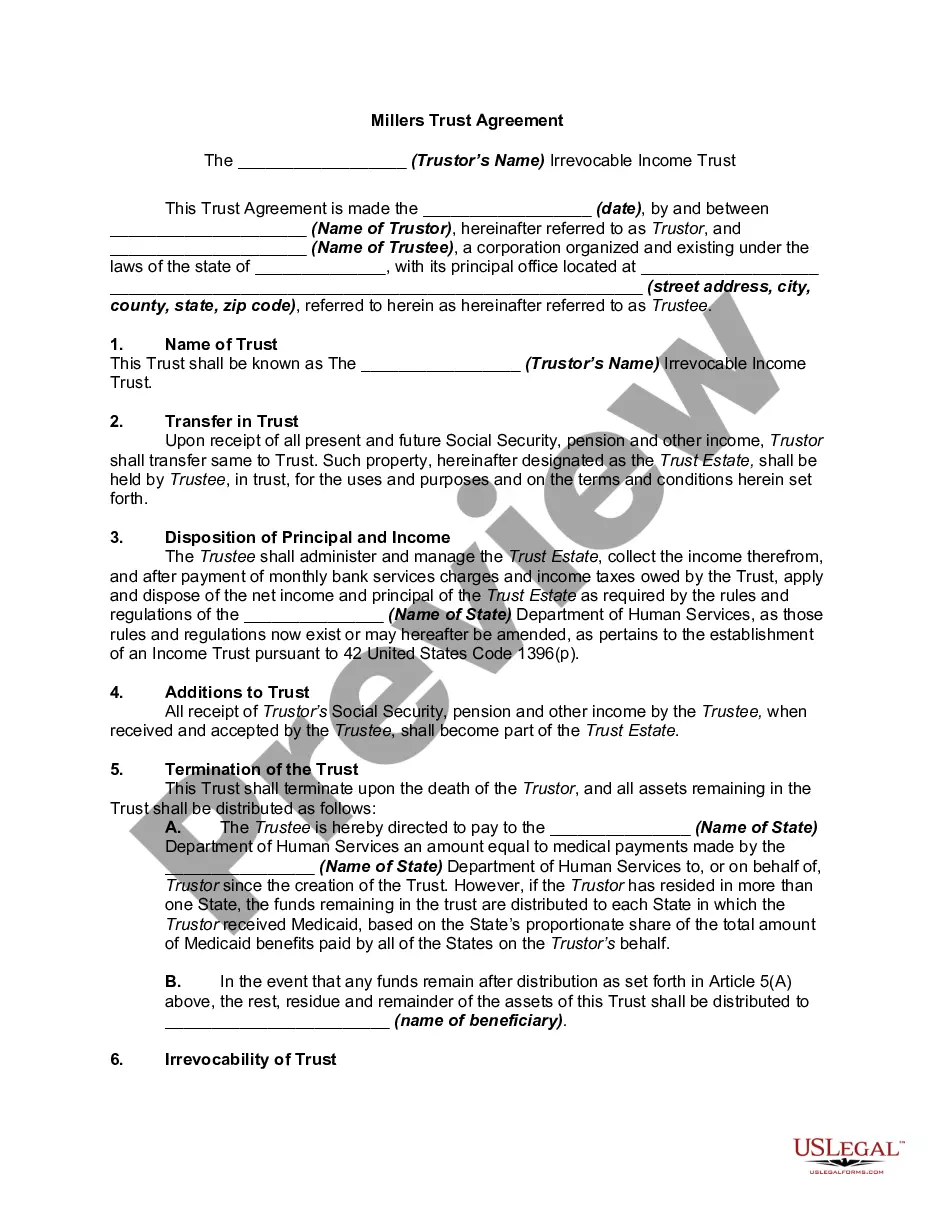
Is A Qualified Income Trust Revocable
Description

Get your form ready online
Our built-in tools help you complete, sign, share, and store your documents in one place.
Make edits, fill in missing information, and update formatting in US Legal Forms—just like you would in MS Word.
Download a copy, print it, send it by email, or mail it via USPS—whatever works best for your next step.
Sign and collect signatures with our SignNow integration. Send to multiple recipients, set reminders, and more. Go Premium to unlock E-Sign.
If this form requires notarization, complete it online through a secure video call—no need to meet a notary in person or wait for an appointment.
We protect your documents and personal data by following strict security and privacy standards.

Make edits, fill in missing information, and update formatting in US Legal Forms—just like you would in MS Word.

Download a copy, print it, send it by email, or mail it via USPS—whatever works best for your next step.

Sign and collect signatures with our SignNow integration. Send to multiple recipients, set reminders, and more. Go Premium to unlock E-Sign.

If this form requires notarization, complete it online through a secure video call—no need to meet a notary in person or wait for an appointment.

We protect your documents and personal data by following strict security and privacy standards.
Looking for another form?







How to fill out Qualified Income Miller Trust?
- If you're already a member, simply log in to your account and download your chosen template by clicking the Download button, ensuring your subscription is active.
- For new users, start by checking the Preview mode to verify that the form aligns with your needs and meets local regulations.
- Use the Search tab to find alternative templates if necessary, ensuring to select a fit that suits your requirements.
- Proceed by clicking the Buy Now button and selecting a suitable subscription plan. Remember to create an account for complete access.
- Finish your purchase by entering your payment details or utilizing PayPal for convenience.
- Finally, download your form and save it to your device. You can always revisit it later in the My Forms section.
In conclusion, US Legal Forms empowers you with a robust collection of legal documents tailored to your needs. Whether you're an attorney or an individual, our easy-to-navigate platform ensures that you can access the resources necessary for success.
Streamline your legal documentation today by exploring our library!
Form popularity
FAQ
A qualified personal residence trust is generally not revocable. Once you establish this type of trust, you typically cannot take back the assets placed in it. This feature aims to provide tax benefits and ensure that your home is excluded from your estate for tax purposes. If you're exploring options like this and want to understand the implications, US Legal Forms can guide you through the process to suit your needs.
To report trust income on a tax return, the trust must typically file IRS Form 1041, which is the income tax return for estates and trusts. Any distributions made to beneficiaries from the trust must be reported on their individual tax returns using Schedule K-1. Understanding how to report trust income is crucial to comply with tax regulations and avoid penalties. If you're unsure about the process, consider using US Legal Forms for templates and guidance.
An income trust is usually classified as a type of irrevocable trust, designed to manage and distribute income for specific beneficiaries. This trust allows for income to be used for qualified expenses while preserving eligibility for state and federal assistance programs. Learning about what type of trust you're dealing with can help you navigate the rules effectively. US Legal Forms can support you with the necessary documents to create an income trust correctly.
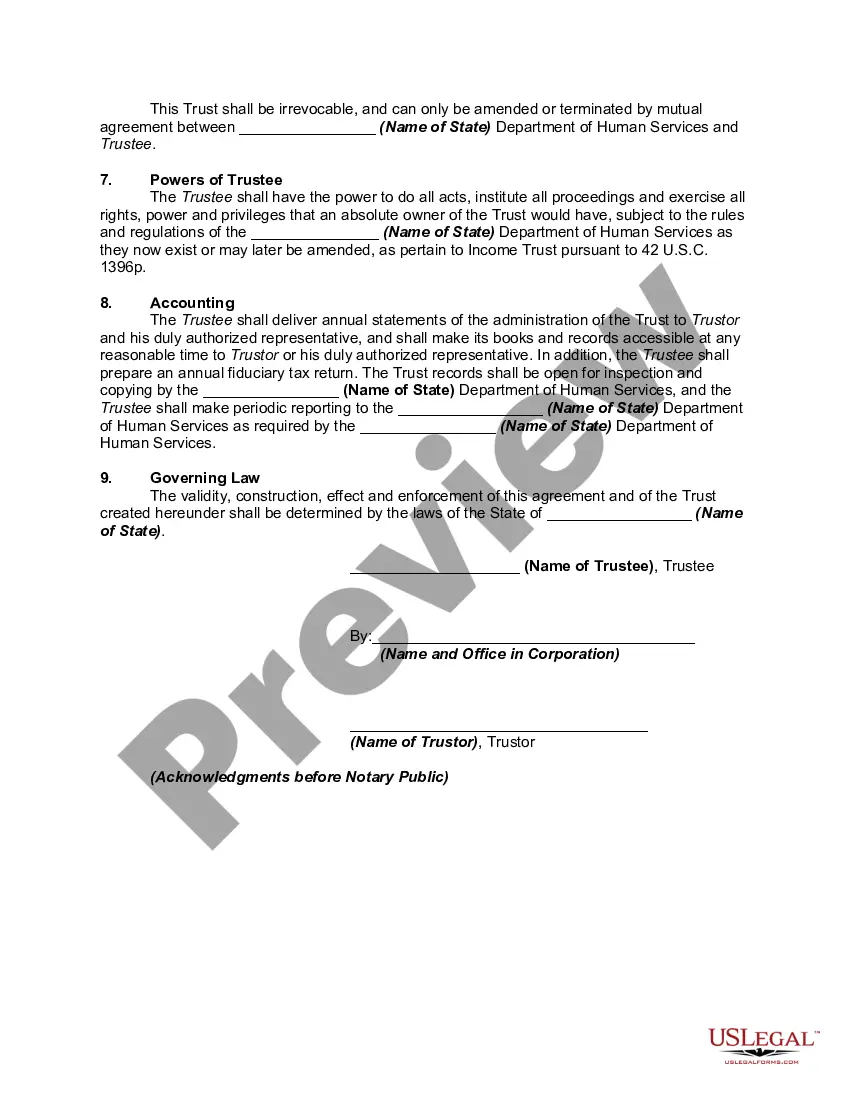
A qualified income trust is typically irrevocable. This characteristic helps eligible individuals maintain Medicaid benefits while placing certain income within the trust. When you ask, 'Is a qualified income trust revocable?', it’s essential to recognize that this classification is crucial for compliance with financial assistance regulations. To set up a QIT correctly, consider resources available at US Legal Forms.
A revocable trust is not inherently a qualified trust. A qualified income trust, to be effective, must meet specific legal requirements, which generally include being irrevocable to qualify for Medicaid assistance. So, if you're wondering, 'Is a qualified income trust revocable?', the answer is that it typically is irrevocable, ensuring funds are set aside for eligibility purposes. Consulting with a legal expert can provide clarity on these distinctions.
The grantor of a qualified income trust, or QIT, is the individual who establishes the trust and contributes assets to it. This person retains the right to manage the trust's affairs and determines how income is distributed. Understanding who the grantor is helps clarify the roles and responsibilities involved in a QIT. If you're navigating this process, US Legal Forms can provide valuable templates and guidance.
Upon the death of the trust's beneficiary, the assets within a Qualified Income Trust must be distributed according to the terms established in the trust document. Typically, the trust cannot continue, and the funds will revert to the estate of the deceased. This process can involve various complexities, depending on state laws, so seeking legal advice is advisable. Resources available through US Legal Forms can help clarify any questions regarding the trust's final distribution.
To qualify as a Qualified Income Trust, certain criteria must be met, such as designating the trust as irrevocable and naming a specific beneficiary. The income limits set by your state also play a significant role in eligibility. Additionally, the trust must have a documented structure, which often requires legal assistance for accurate setup. Using resources like US Legal Forms can simplify understanding these essential requirements.
A Qualified Income Trust is typically irrevocable, meaning that once established, you cannot simply change or dissolve it at will. This characteristic is crucial because it helps protect the funds within the trust from being counted toward Medicaid eligibility. To ensure that your trust meets its intended goals, it’s wise to consult with experts who can guide you through the specifics of whether a qualified income trust is revocable.
QIT funds can be utilized for various essential expenses, which may include medical costs, housing, and other necessary living expenses. However, it is essential to note that these funds should not be used for non-essential items or luxury expenses. This ensures that the trust remains compliant and serves its purpose effectively. Users often explore US Legal Forms for guidance and resources regarding permissible expenditures.