Firm Legal Law For The Environment
Description
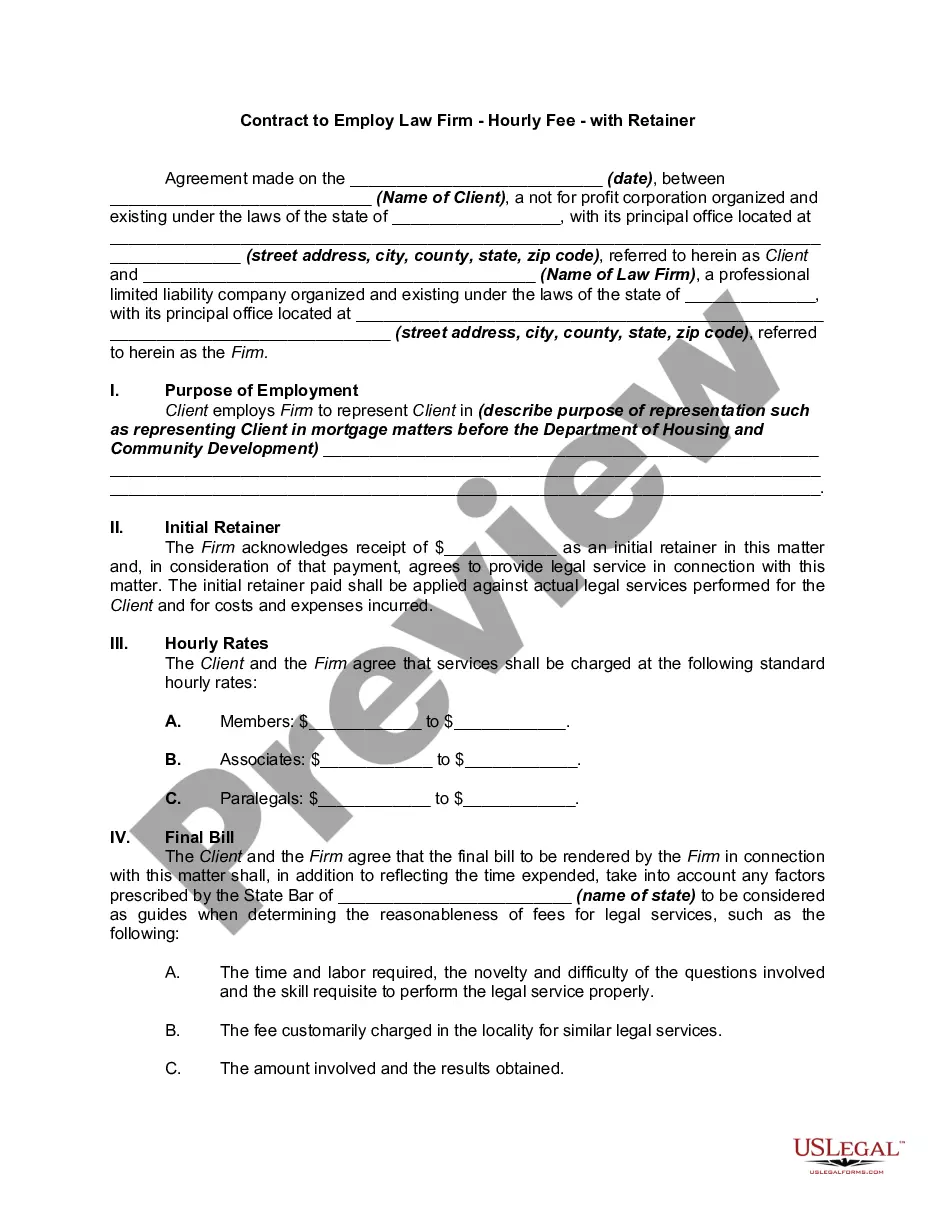
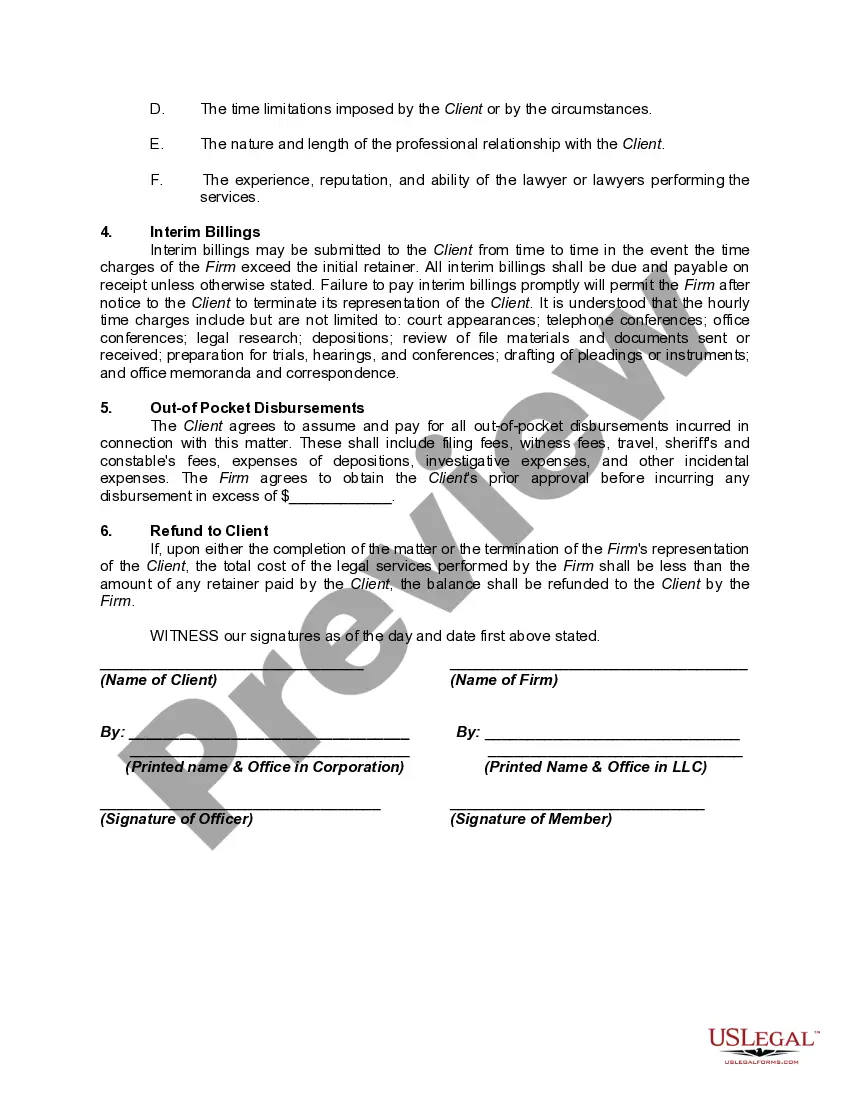





How to fill out Contract To Employ Law Firm - Hourly Fee - With Retainer?
- Begin by previewing the templates available to ensure you select one that aligns with your local jurisdiction and specific requirements.
- If you need a different template, utilize the search feature to find alternatives that suit your needs. Confirm you’ve found the right form before proceeding.
- Once you've identified your desired document, click the Buy Now button to select your preferred subscription plan. Registration for an account is necessary for access to additional resources.
- Complete your purchase by entering your payment details, whether through credit card or PayPal, to finalize your subscription.
- After processing your payment, download the necessary form. You can find it stored in the My Forms section of your profile for later access.
In conclusion, US Legal Forms provides a streamlined solution for obtaining essential legal documents required in environmental law. With a user-friendly interface and a vast library of over 85,000 templates, it gives users the confidence that their forms are complete and compliant.
Start your journey today with US Legal Forms and ensure your legal documentation is precise and effective!
Form popularity
FAQ
Five examples of environmental considerations include pollution control, waste management, conservation laws, habitat preservation, and climate change legislation. Each of these areas is crucial for sustainable development and involves complex legal frameworks. Addressing these issues requires specialized knowledge in environmental law. Thus, engaging a firm legal law for the environment is essential for effective navigation of these important topics.
An example of environmental law is the Endangered Species Act, which aims to protect threatened and endangered animals and plants. Under this law, actions that might jeopardize the survival of these species are regulated and monitored. Compliance with the Endangered Species Act can enhance conservation efforts and promote biodiversity. A firm legal law for the environment can assist in ensuring adherence to such laws.
The major for environmental law typically falls under legal studies or environmental science programs. Law schools often offer specialized courses focusing on environmental issues, policies, and regulations. Students learn about the intersection between law and environmental stewardship, equipping them to advocate for regulations that protect natural resources. A solid understanding of this major is vital for any aspiring firm legal law for the environment.
Prestigious environmental law firms are recognized for their expertise and impact in the field. Some of the top firms include Stanford Environmental Law Clinic, Earthjustice, and the Environmental Law Institute. These firms have distinguished records in litigation, policy advocacy, and advising clients on compliance with environmental regulations. Choosing a reputable firm legal law for the environment can elevate your case and ensure you receive trusted advice.
The three major environmental laws are the National Environmental Policy Act (NEPA), the Clean Air Act (CAA), and the Clean Water Act (CWA). NEPA requires federal agencies to assess the environmental effects of their proposed actions before making decisions. The CAA and CWA set standards for air and water quality, respectively, ensuring organizations operate within safe limits. Engaging a firm legal law for the environment ensures compliance with these critical regulations.
Environmental law in business law refers to the regulations that companies must abide by to protect the environment while conducting their operations. These laws ensure businesses minimize their ecological footprint, comply with pollution standards, and manage natural resources sustainably. Working with a firm legal law for the environment can help businesses navigate these complex regulations effectively.
Examples of environmental law include regulations that govern air quality, water quality, and waste management. Laws such as the Clean Air Act and the Clean Water Act fall into this category. Additionally, legislation aimed at protecting endangered species and habitats is also part of this legal framework. Understanding these laws is essential for a firm legal law for the environment.
Yes, the LSAT is a crucial step in gaining admission to law school, which sets the stage for a career in environmental law. Performance on the LSAT demonstrates your readiness for the rigors of legal education. Preparing well for this test will not only help you enter law school but will also lay the groundwork for specializing in firm legal law for the environment.
To become an environmental lawyer, you need to complete your law degree, pass the bar exam, and develop specialized knowledge in environmental law. Joining relevant legal organizations and attending workshops can also help you stay informed about current trends. Lastly, creating a professional network in the firm legal law for the environment can provide support and opportunities.
Getting into environmental law requires a strategic approach. Start by pursuing a JD with a focus on environmental law and seek out internships with organizations that address environmental issues. Engaging with community projects related to firm legal law for the environment can also build your experience and make you a more attractive candidate.