Website Privacy Laws
Description
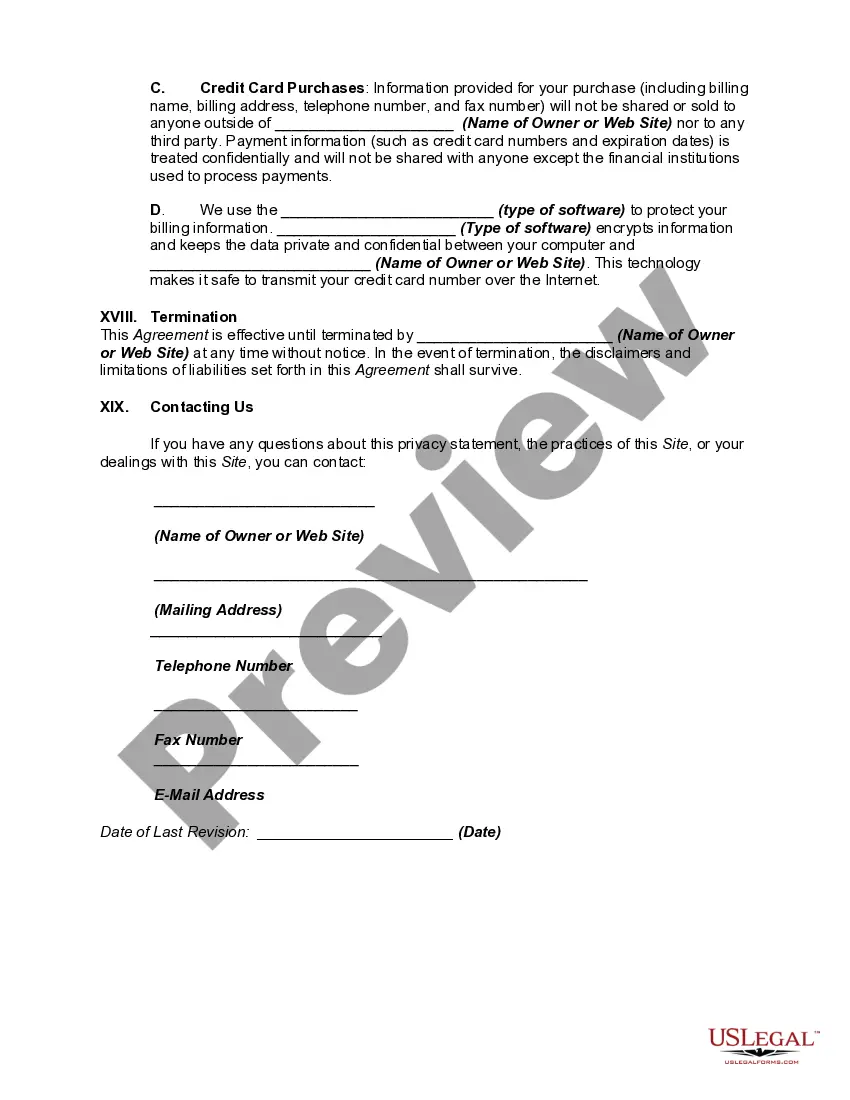
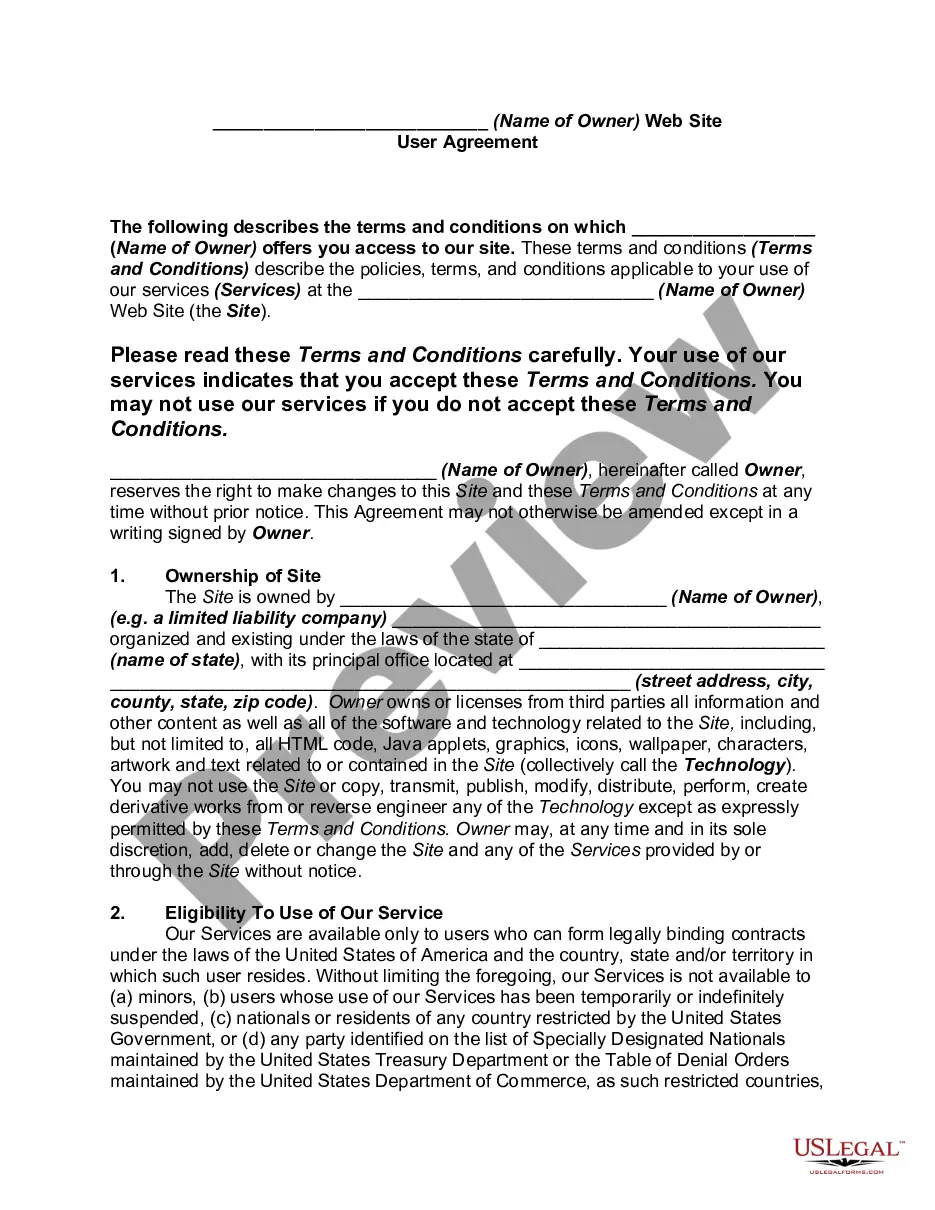
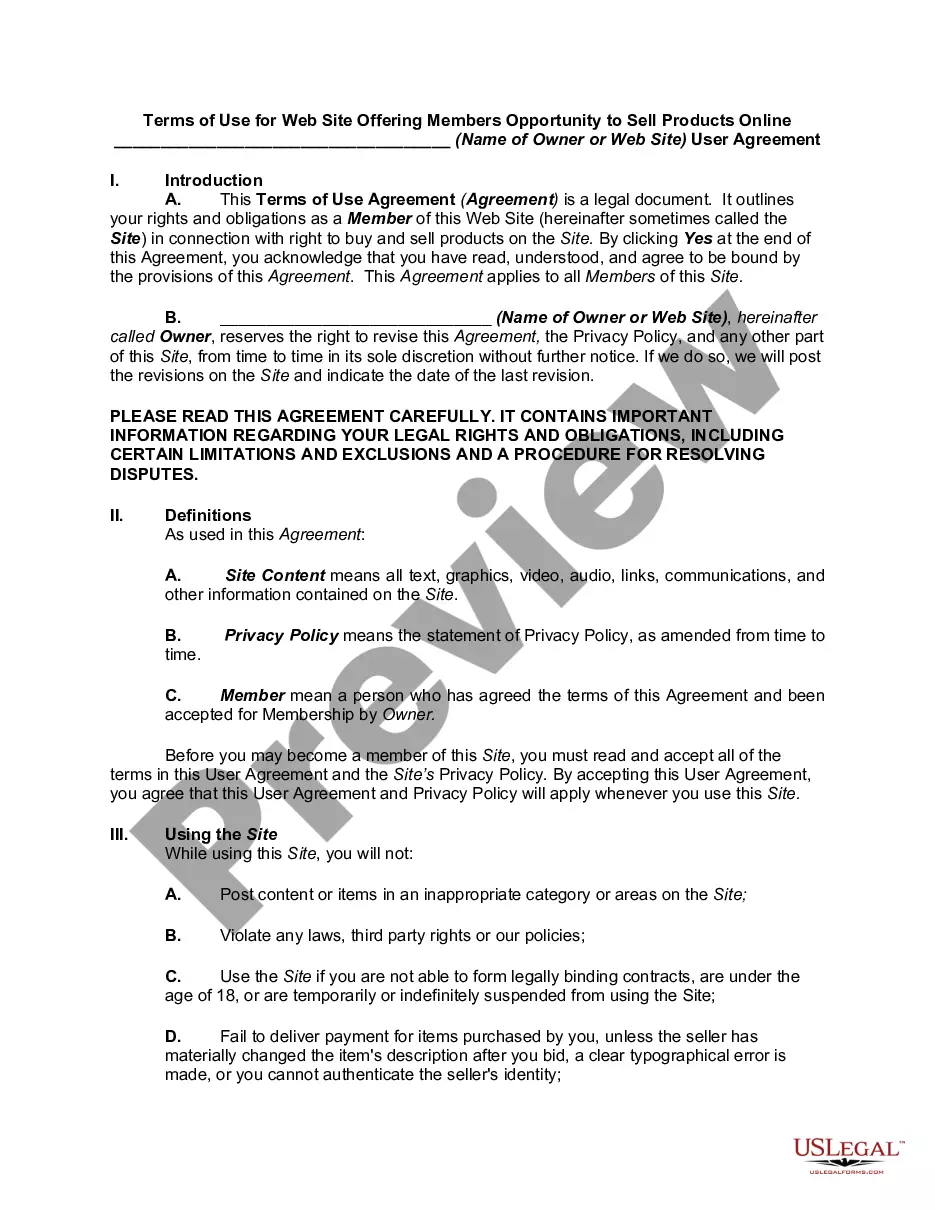
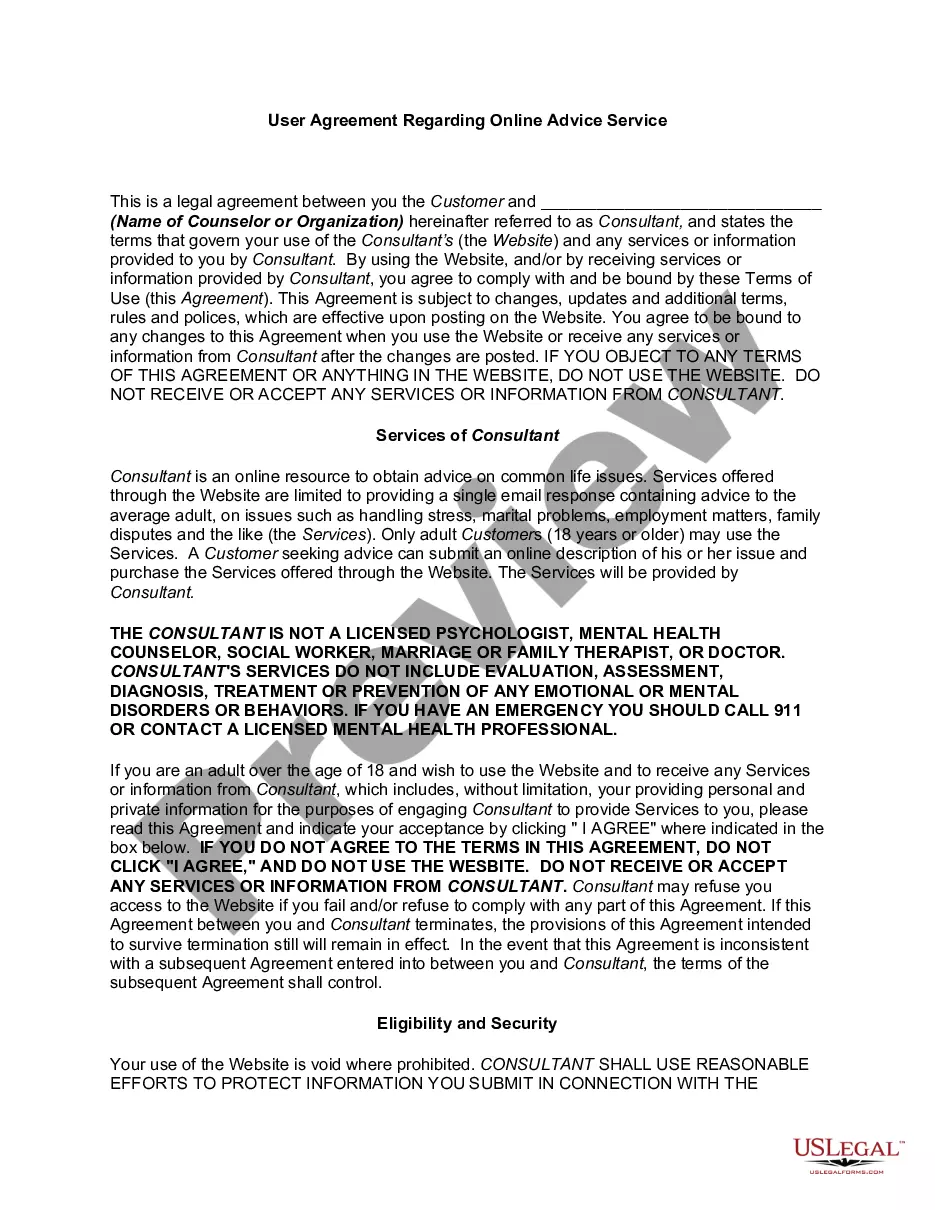
Get your form ready online
Our built-in tools help you complete, sign, share, and store your documents in one place.
Make edits, fill in missing information, and update formatting in US Legal Forms—just like you would in MS Word.
Download a copy, print it, send it by email, or mail it via USPS—whatever works best for your next step.
Sign and collect signatures with our SignNow integration. Send to multiple recipients, set reminders, and more. Go Premium to unlock E-Sign.
If this form requires notarization, complete it online through a secure video call—no need to meet a notary in person or wait for an appointment.
We protect your documents and personal data by following strict security and privacy standards.

Make edits, fill in missing information, and update formatting in US Legal Forms—just like you would in MS Word.

Download a copy, print it, send it by email, or mail it via USPS—whatever works best for your next step.

Sign and collect signatures with our SignNow integration. Send to multiple recipients, set reminders, and more. Go Premium to unlock E-Sign.

If this form requires notarization, complete it online through a secure video call—no need to meet a notary in person or wait for an appointment.

We protect your documents and personal data by following strict security and privacy standards.
Looking for another form?

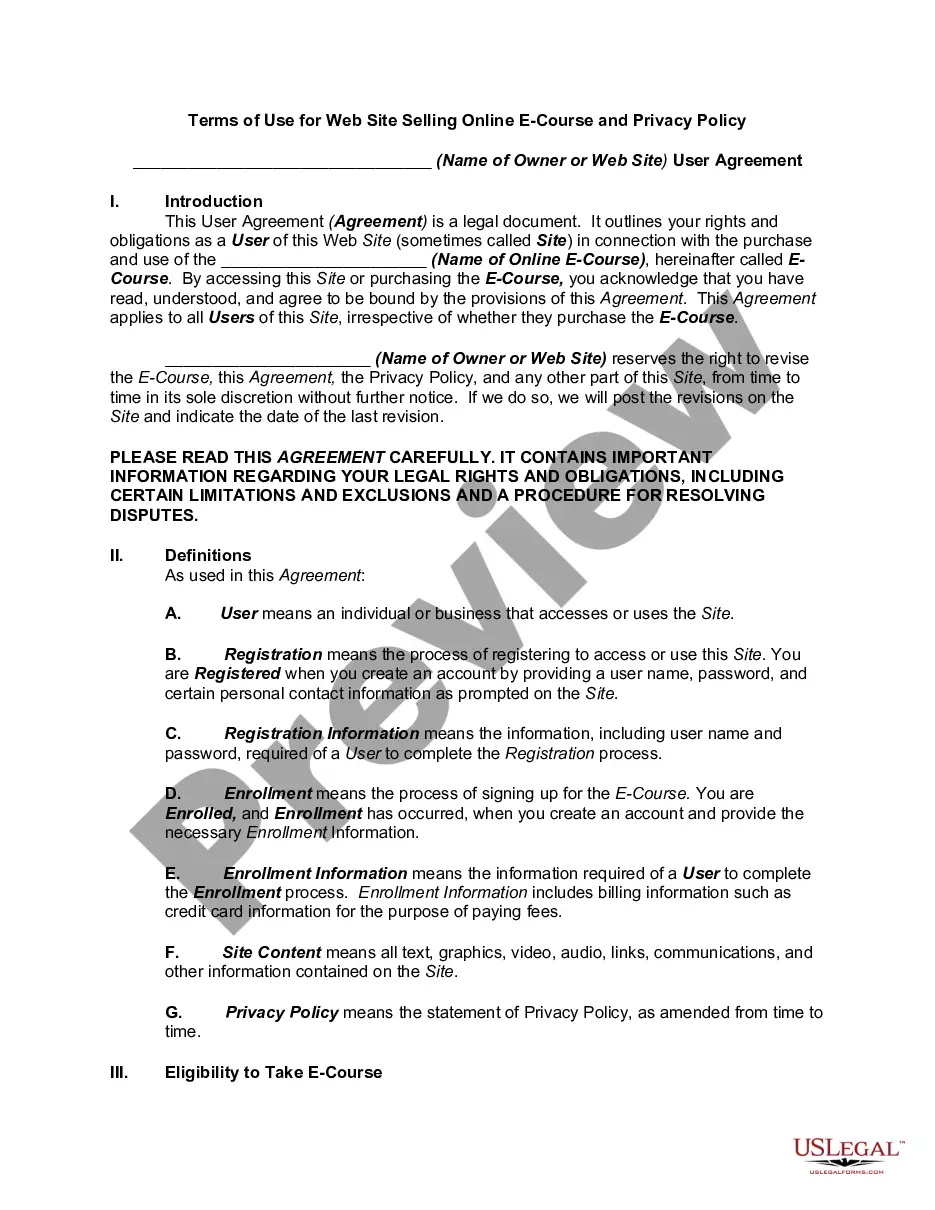
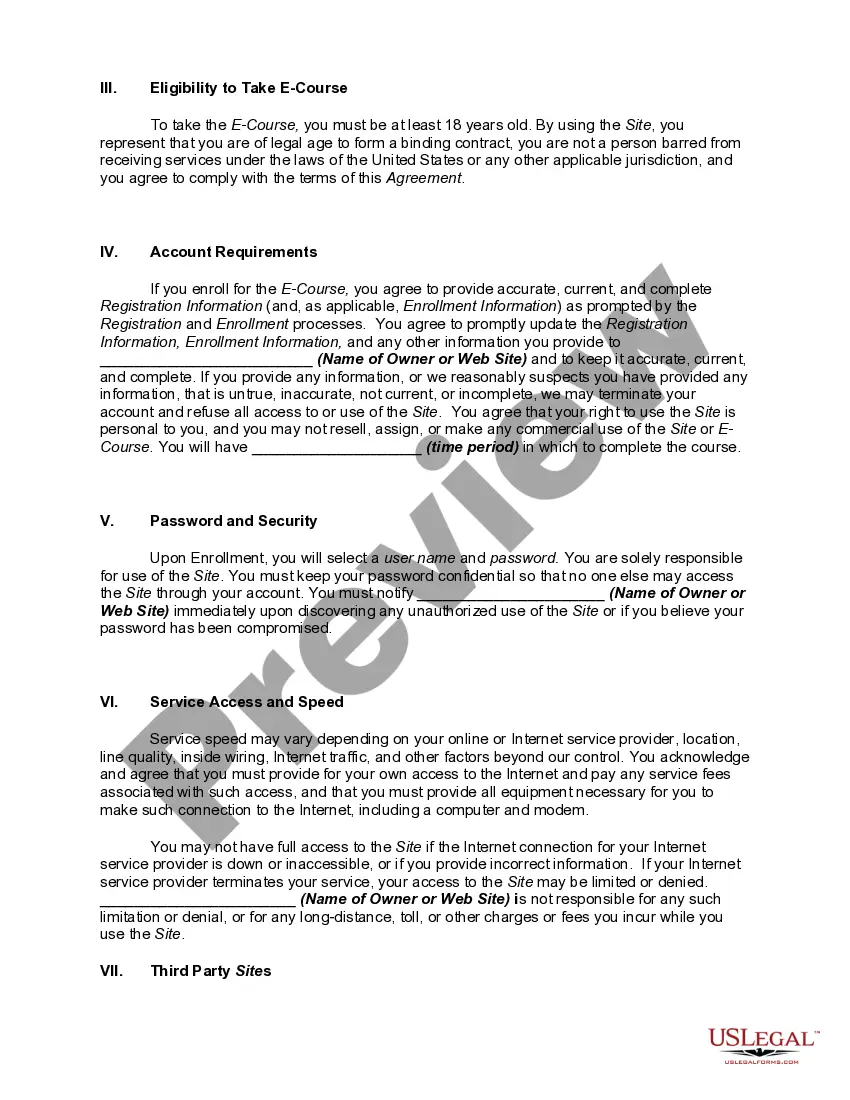
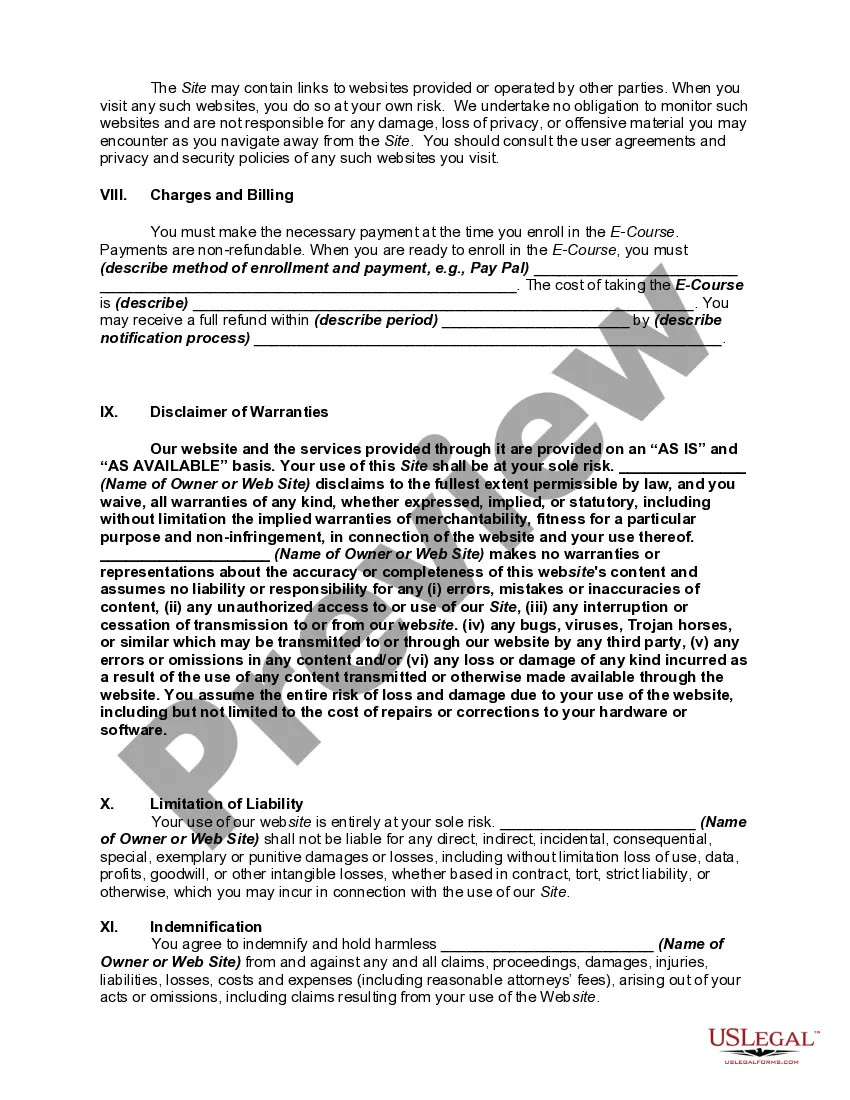
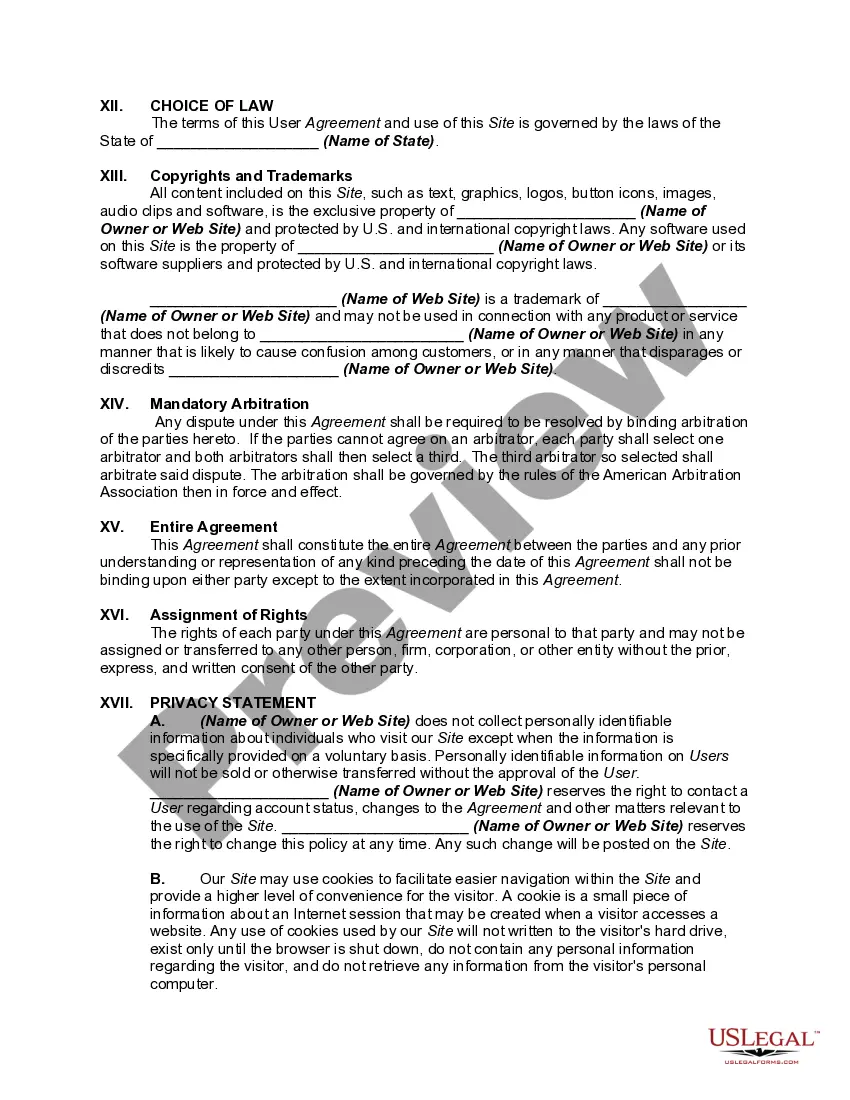
How to fill out Website Subscription User Agreement - Terms Of Use For Website Selling Online E-Course Privacy Policy?
Creating legal documentation from the ground up can occasionally be daunting.
Certain circumstances may require extensive research hours and substantial financial investment.
If you're in pursuit of a simpler and more cost-effective method for generating Website Privacy Laws or other documents without hassle, US Legal Forms is readily accessible.
Our online repository of over 85,000 current legal documents covers nearly every aspect of your financial, legal, and personal situations. With just a few clicks, you can quickly obtain state- and county-compliant forms carefully prepared for you by our legal experts.
Ensure the template you choose aligns with the regulations of your state and county. Select the appropriate subscription tier to obtain the Website Privacy Laws. Download the document, then fill it out, sign it, and print it. US Legal Forms boasts a solid reputation and over 25 years of experience. Join us today to make form completion effortless and efficient!
- Utilize our service whenever you require trustworthy and dependable solutions to swiftly locate and retrieve Website Privacy Laws.
- If you're already familiar with our website and have established an account, simply Log In, choose the form, and download it immediately or retrieve it later from the My documents section.
- Not yet registered? No problem. It only takes a few minutes to create an account and browse the library.
- Prior to directly downloading Website Privacy Laws, consider these guidelines.
- Examine the form preview and descriptions to ensure you are selecting the correct form.
Form popularity
FAQ
To get a URL for your privacy policy, you first need to create a dedicated page on your website that outlines your privacy practices. Once the page is published, simply copy the link from your website's address bar. This URL can then be shared in your footer or anywhere you need to direct users. Remember, having this readily accessible supports your compliance with website privacy laws.
What's Inside a Small Business Privacy Policy Template? The legal basis for collecting the information. Your legal business name. The business location. Your contact information. The type of information you collect. How you gather the information. How you keep the data secure and protected.
A data privacy policy is a legal document that lives on your website and details all the ways in which a website visitors' personal data may be used. At the very least, it needs to explain how your website collects data, what data you collect, and what you plan to do with that data.
Yes, you can write your own privacy policy. You don't need to hire a lawyer to write a policy for your website or app ? using a privacy policy template will help you include all the clauses necessary to explain your data-handling practices to users.
GDPR: 5 Best Privacy Policy Examples Data processing must be fair to the data subject. Data must only be processed for specific and legitimate purposes, outlined in your privacy policy. Don't collect more data than you need. Make sure the data you collect is accurate.
If you don't actually collect any personal information, you might not need a Privacy Policy. However, many third parties and app stores require one. Also, you may be collecting protected personal information without knowing it, such as with an Analytics service.