Summary For Judgment
Description
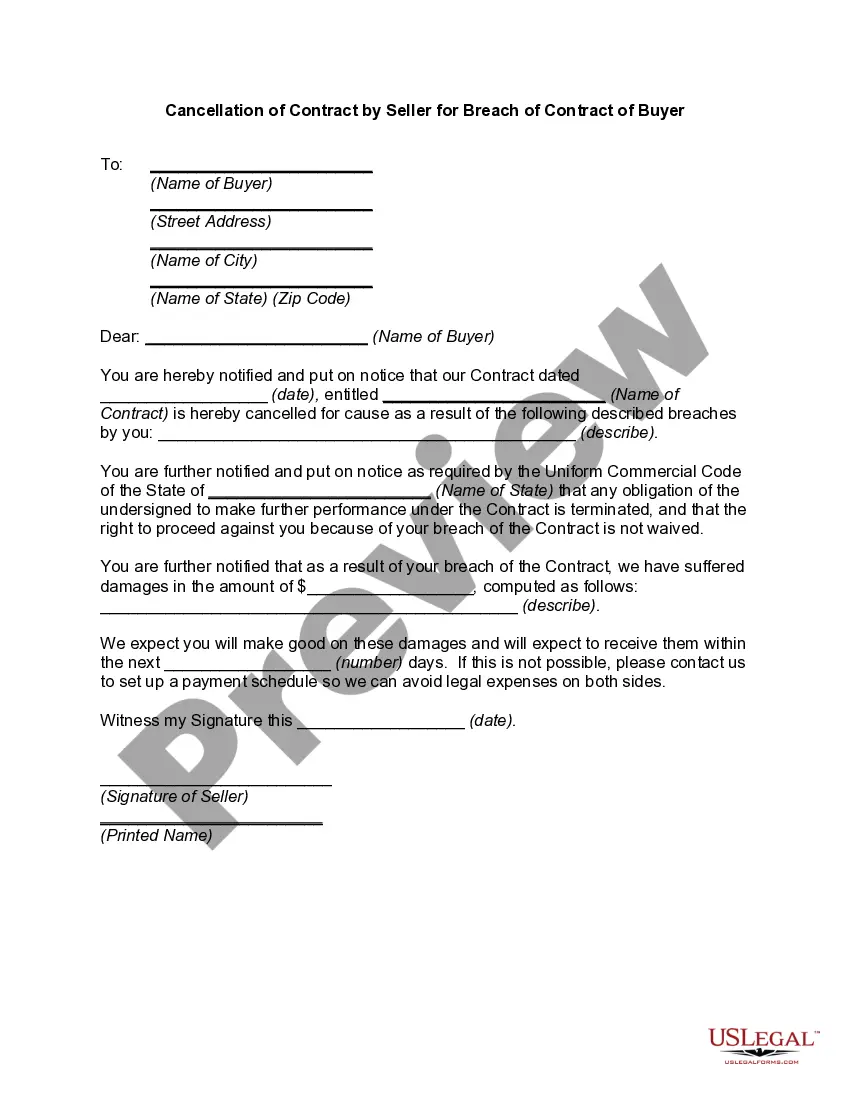
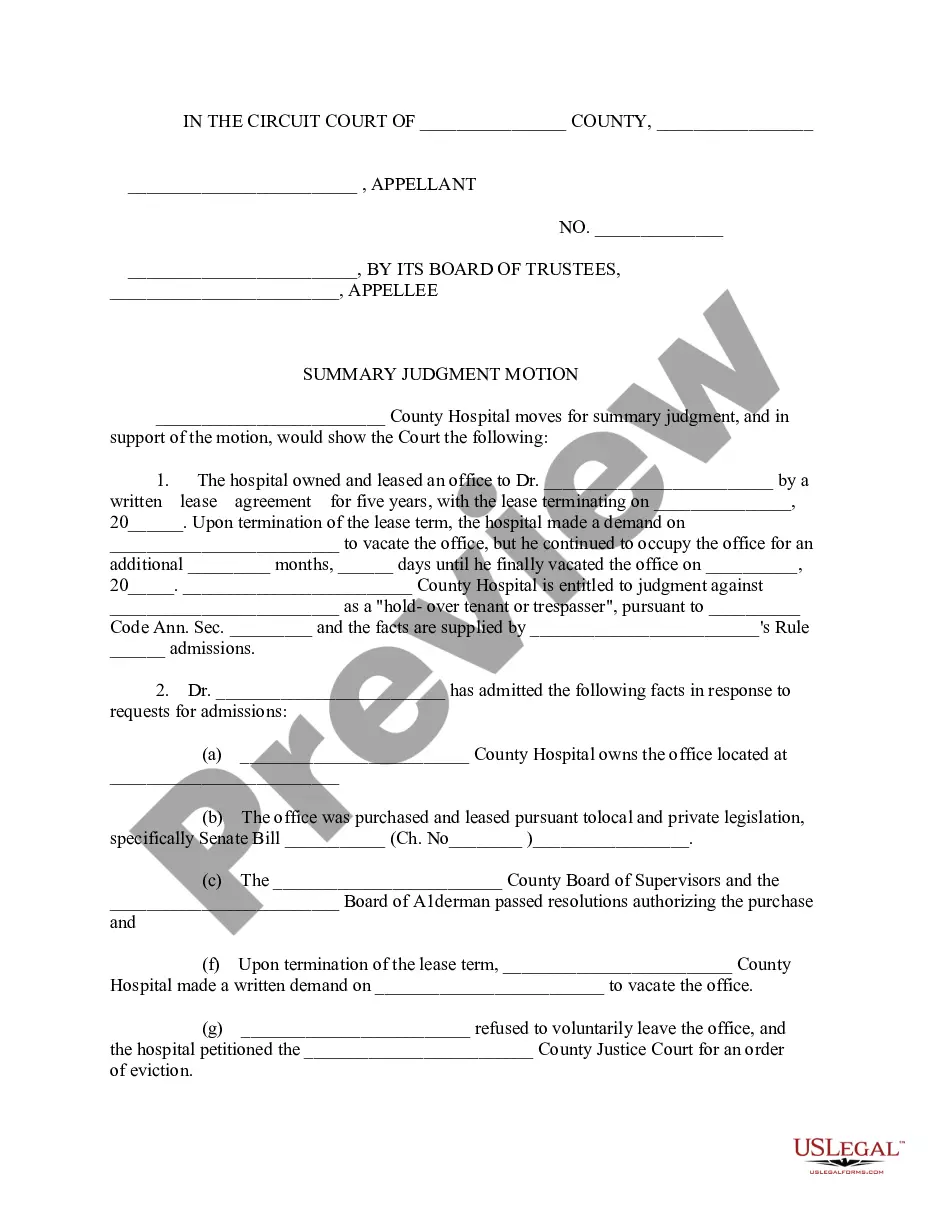
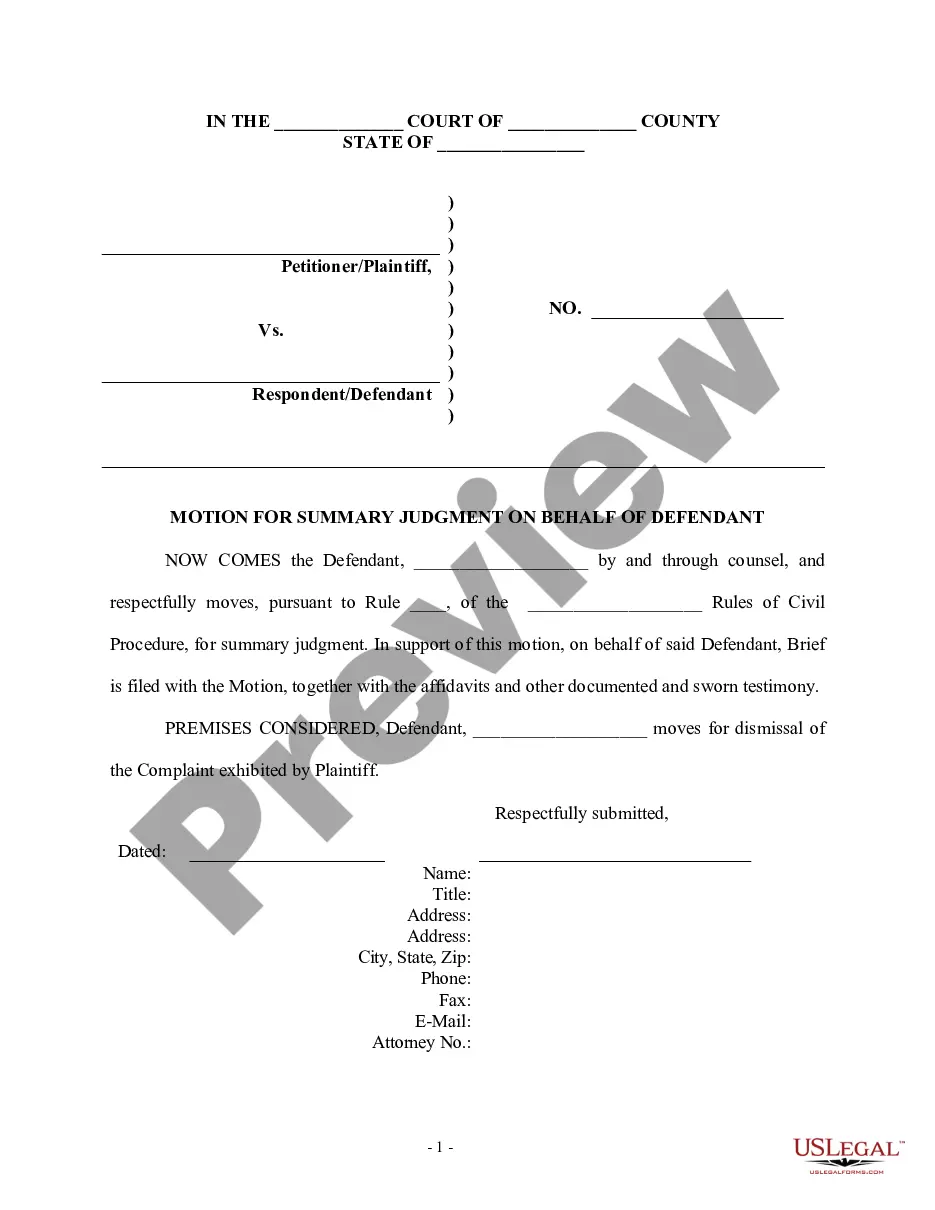
Get your form ready online
Our built-in tools help you complete, sign, share, and store your documents in one place.
Make edits, fill in missing information, and update formatting in US Legal Forms—just like you would in MS Word.
Download a copy, print it, send it by email, or mail it via USPS—whatever works best for your next step.
Sign and collect signatures with our SignNow integration. Send to multiple recipients, set reminders, and more. Go Premium to unlock E-Sign.
If this form requires notarization, complete it online through a secure video call—no need to meet a notary in person or wait for an appointment.
We protect your documents and personal data by following strict security and privacy standards.

Make edits, fill in missing information, and update formatting in US Legal Forms—just like you would in MS Word.

Download a copy, print it, send it by email, or mail it via USPS—whatever works best for your next step.

Sign and collect signatures with our SignNow integration. Send to multiple recipients, set reminders, and more. Go Premium to unlock E-Sign.

If this form requires notarization, complete it online through a secure video call—no need to meet a notary in person or wait for an appointment.

We protect your documents and personal data by following strict security and privacy standards.
Looking for another form?

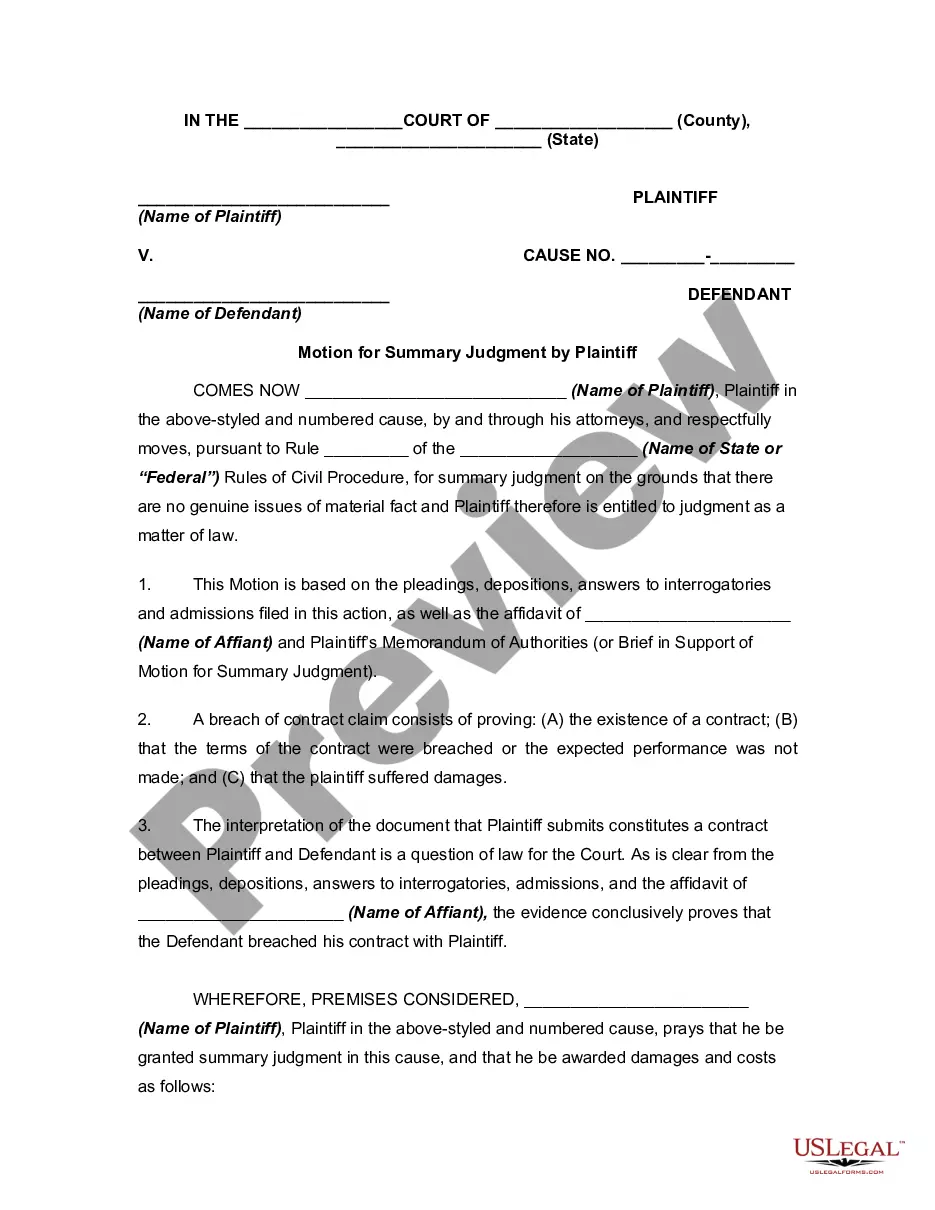
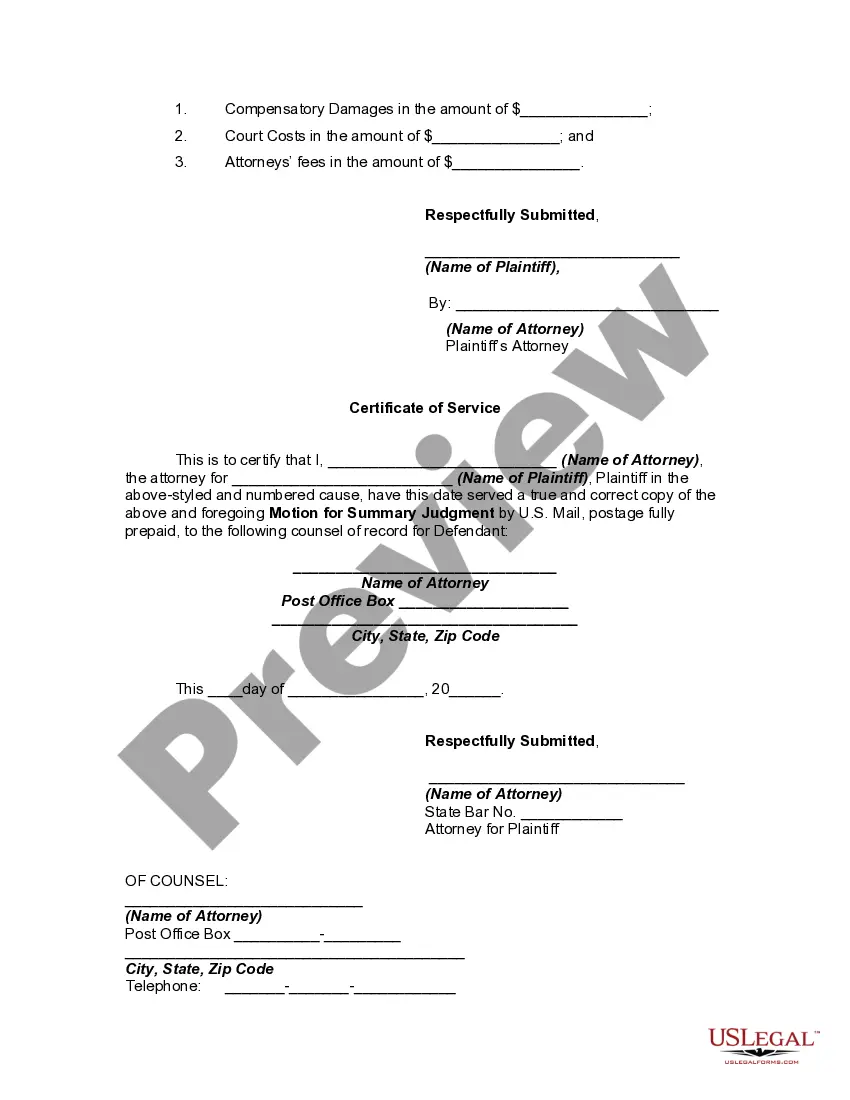
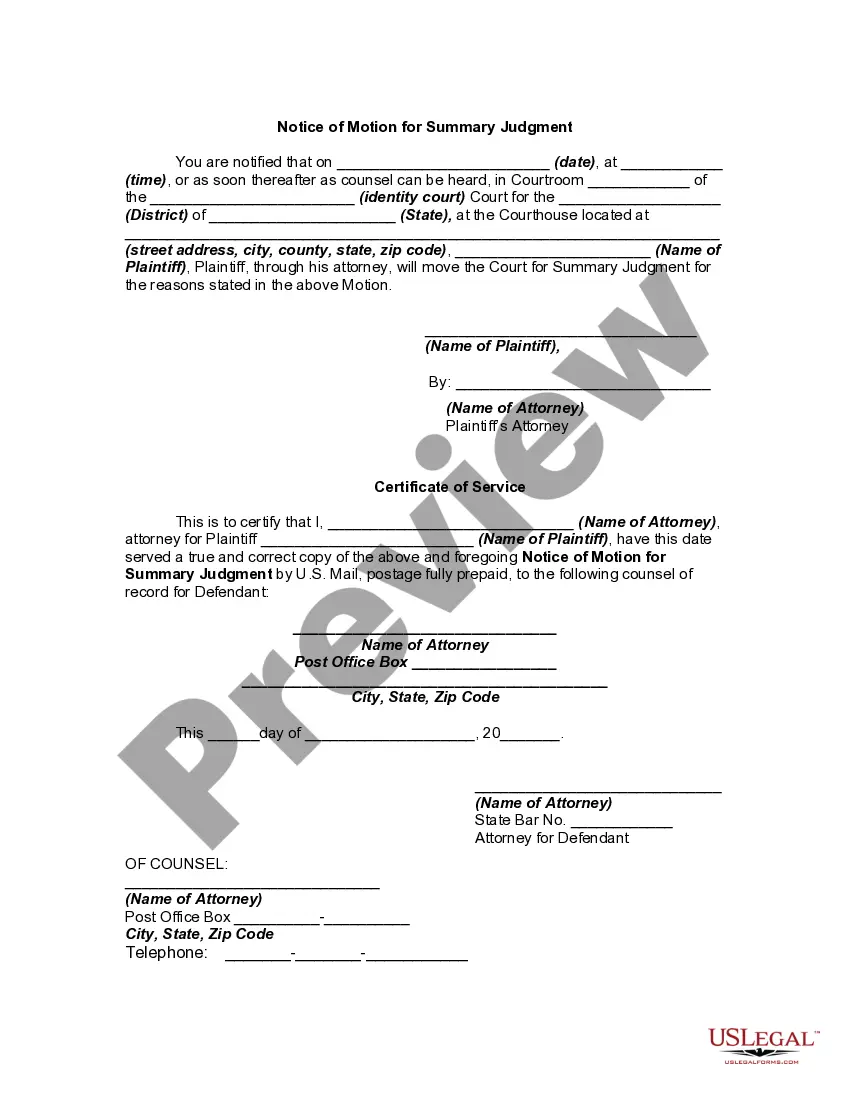
How to fill out Motion For Summary Judgment By Plaintiff For Breach Of Contract?
- Log in to your US Legal Forms account. Make sure your subscription is active. If necessary, renew your plan.
- Examine the Preview mode along with the form description to ensure it aligns with your local jurisdiction's requirements.
- Use the Search feature to find alternative templates if your initial choice does not meet your criteria.
- Purchase the selected document by clicking the Buy Now button and choosing your preferred subscription plan. You will need to create an account for access.
- Complete your transaction using your credit card or PayPal for a smooth purchase experience.
- Download and save the template to your device. You can access your documents anytime in the My Forms section of your profile.
In conclusion, US Legal Forms stands out for its robust collection of legal templates and expert assistance. By following this straightforward process, you can efficiently acquire necessary documents, including a summary for judgment. Why wait? Start enhancing your legal document experience today!
Form popularity
FAQ
Any party involved in a legal dispute can file for summary judgment, which includes both plaintiffs and defendants. The key factor is that the party must believe there are no significant factual disagreements that warrant a trial. It’s important to prepare a strong motion backed by evidence and legal precedents to support the request. For assistance, many turn to resources like uslegalforms to help them accurately file their summary judgment.
In summary judgment cases, the burden of proof lies primarily with the party filing the motion. They must show that there are no genuine disputes regarding essential facts and that they are entitled to judgment as a matter of law. Conversely, the opposing party must demonstrate any factual disputes that would require a trial. Understanding this burden is crucial for effectively navigating the summary for judgment process.
To file for summary judgment, you must prepare a motion that outlines the key facts of the case and cites relevant laws. This process includes submitting affidavits, documents, and a memorandum that supports your argument. Once your motion is filed with the court, the opposing party must be served with the documents. Utilizing platforms like uslegalforms can simplify this process, guiding you through the necessary steps and documentation.
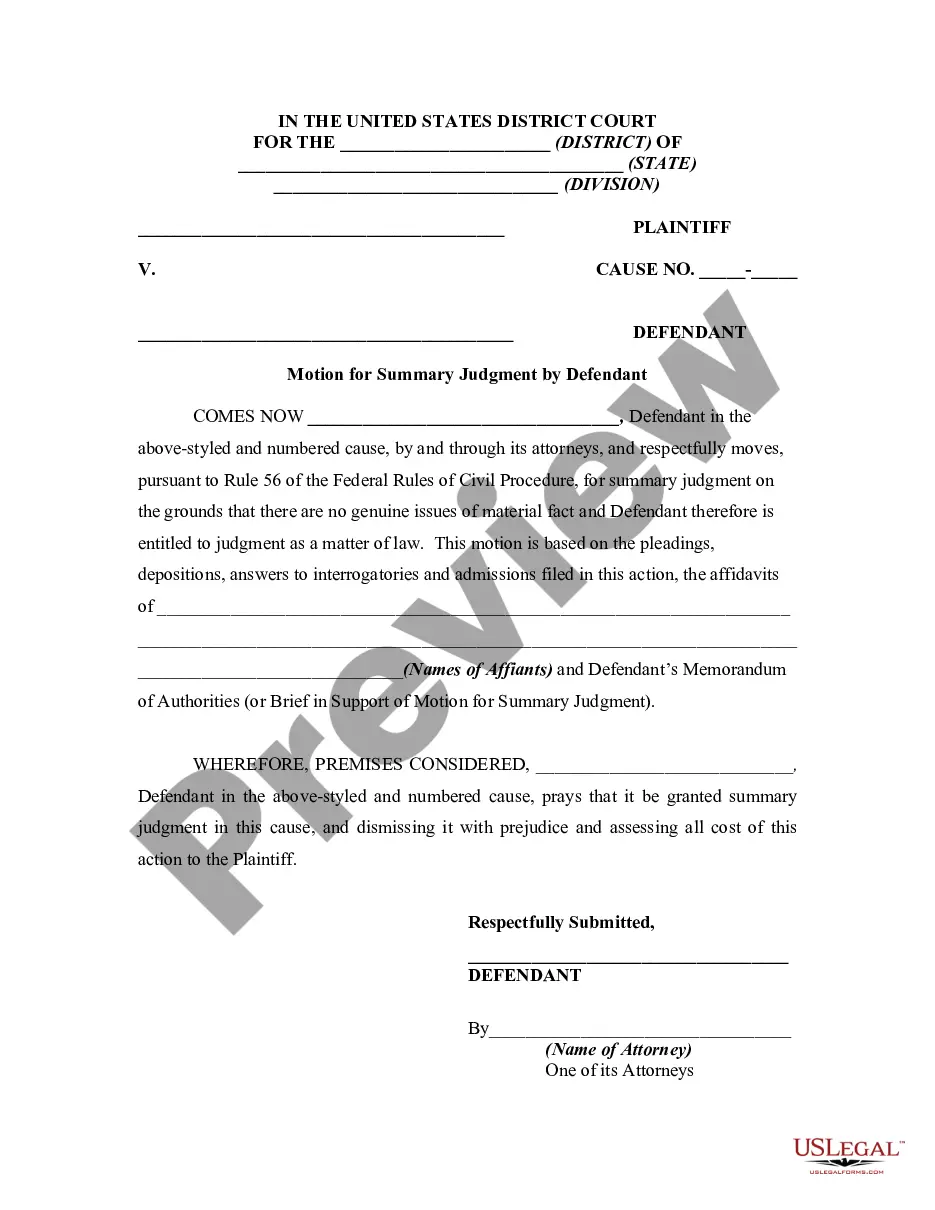
Typically, a party in a legal case who believes there is no dispute over the essential facts files for summary judgment. This motion is often filed by the defendant, but plaintiffs can also seek summary judgment. The intent is to obtain a ruling on the law without requiring a full trial. By using the summary for judgment process, parties can expedite resolution and reduce legal costs.
No, a summary for judgment is not a settlement. It is a court ruling that resolves a case based on legal grounds without going to trial. While settlements involve negotiations between parties to resolve disputes, summary judgment relies on judicial authority to decide based on the evidence presented.
After a summary for judgment, the next step typically involves either enforcing the judgment or, if the case is not in favor of the losing party, filing an appeal. It's important to consult with legal counsel to understand all available options and timelines. This transition can lead to either closure or further legal proceedings, depending on the situation.
The odds of winning a summary for judgment depend on the strength of the evidence and the arguments presented. Generally, parties with clear and convincing documentation stand a better chance of success. While outcomes can vary, knowing the legal standards can enhance your likelihood of prevailing.
The rule for summary for judgment typically requires that a party show no genuine dispute of material fact exists, allowing the court to issue a decision based solely on the law. Each jurisdiction has specific criteria that must be met, including relevant deadlines and procedural requirements. Understanding these rules is crucial for crafting a successful motion.
To write an effective summary for judgment, you should clearly outline the facts of your case, supported by documented evidence. Provide a concise argument that demonstrates the absence of genuine issues for trial. It's essential to follow the court's rules for formatting and filing to ensure your motion meets necessary legal standards.
A granted summary for judgment indicates that the court believes one party has a clear advantage based on the evidence presented. This ruling confirms that there are no factual disputes necessitating a trial. Essentially, it streamlines the legal process by allowing the prevailing party to move forward to enforce the judgment.