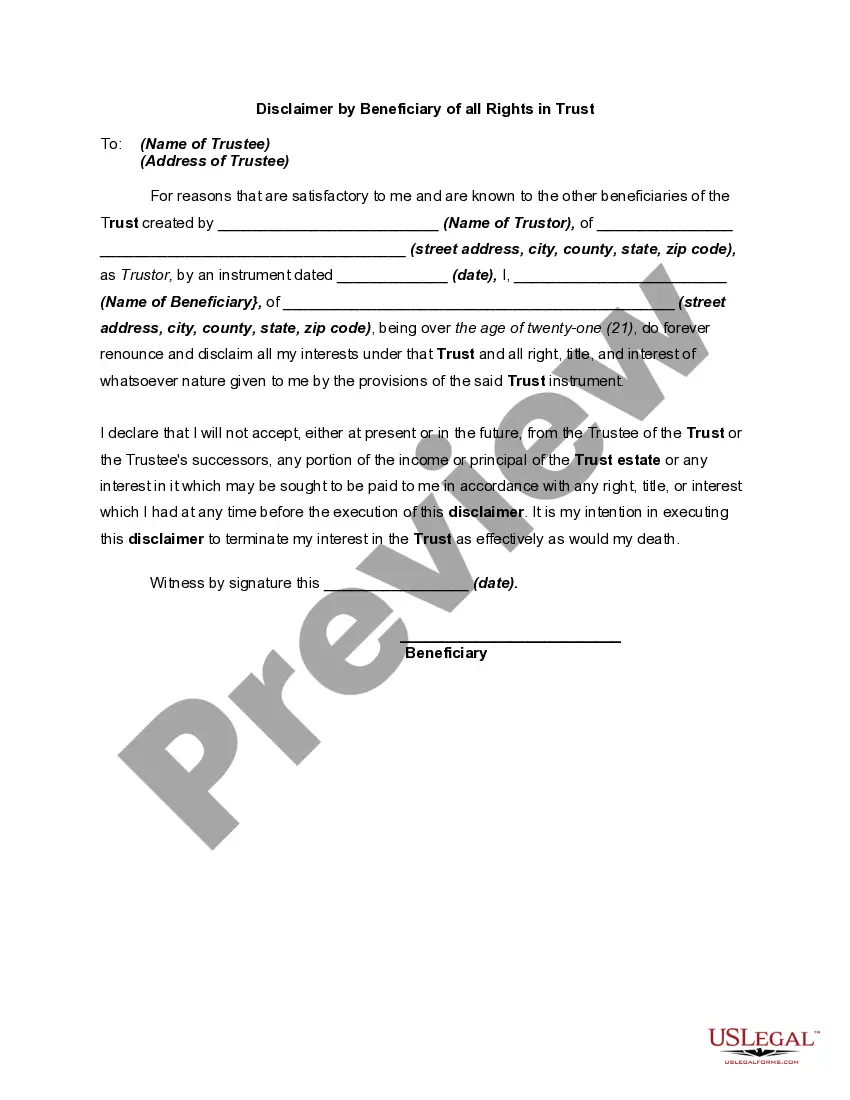
Sample Inheritance Disclaimer Form For Canada
Description
Get your form ready online
Our built-in tools help you complete, sign, share, and store your documents in one place.
Make edits, fill in missing information, and update formatting in US Legal Forms—just like you would in MS Word.
Download a copy, print it, send it by email, or mail it via USPS—whatever works best for your next step.
Sign and collect signatures with our SignNow integration. Send to multiple recipients, set reminders, and more. Go Premium to unlock E-Sign.
If this form requires notarization, complete it online through a secure video call—no need to meet a notary in person or wait for an appointment.
We protect your documents and personal data by following strict security and privacy standards.

Make edits, fill in missing information, and update formatting in US Legal Forms—just like you would in MS Word.

Download a copy, print it, send it by email, or mail it via USPS—whatever works best for your next step.

Sign and collect signatures with our SignNow integration. Send to multiple recipients, set reminders, and more. Go Premium to unlock E-Sign.

If this form requires notarization, complete it online through a secure video call—no need to meet a notary in person or wait for an appointment.

We protect your documents and personal data by following strict security and privacy standards.
Looking for another form?
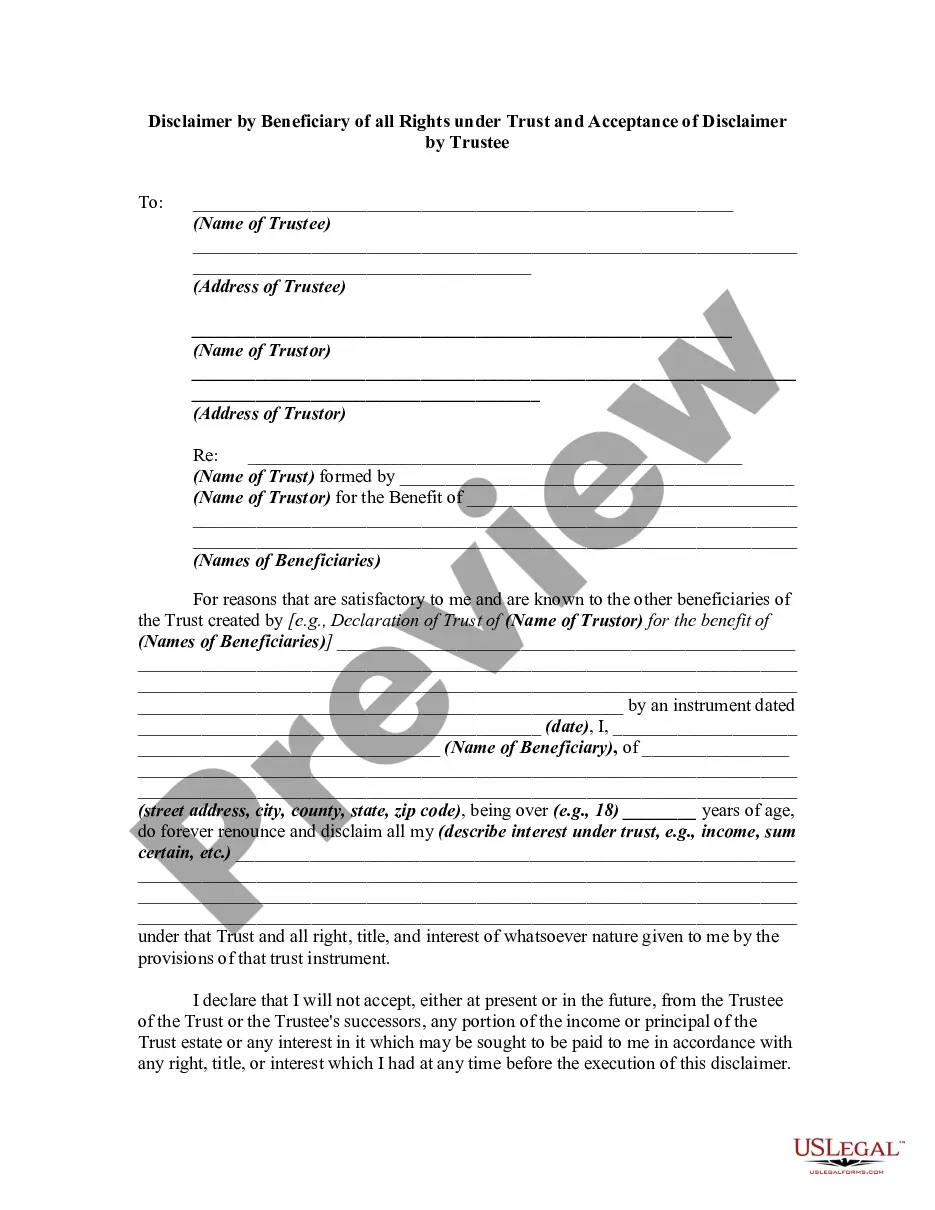
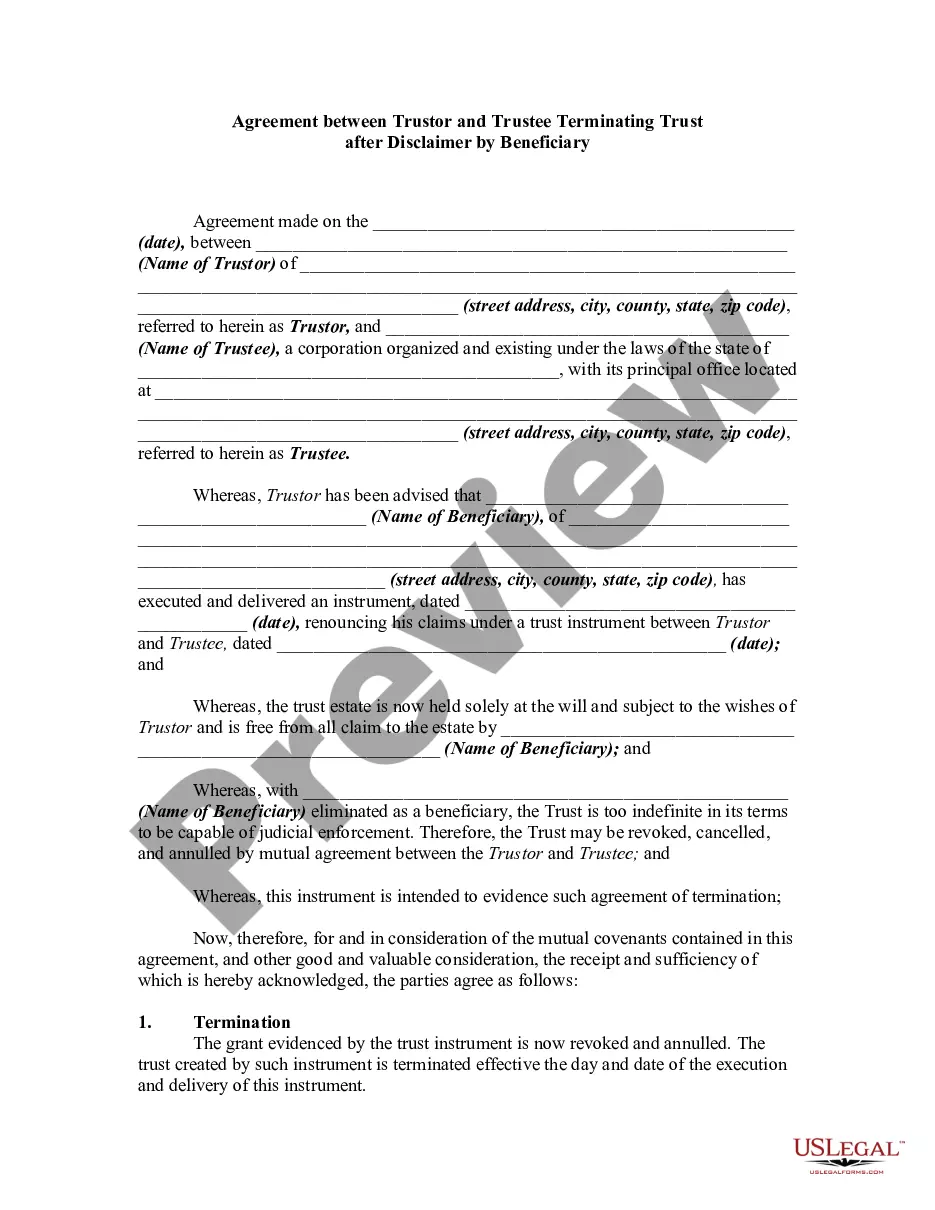
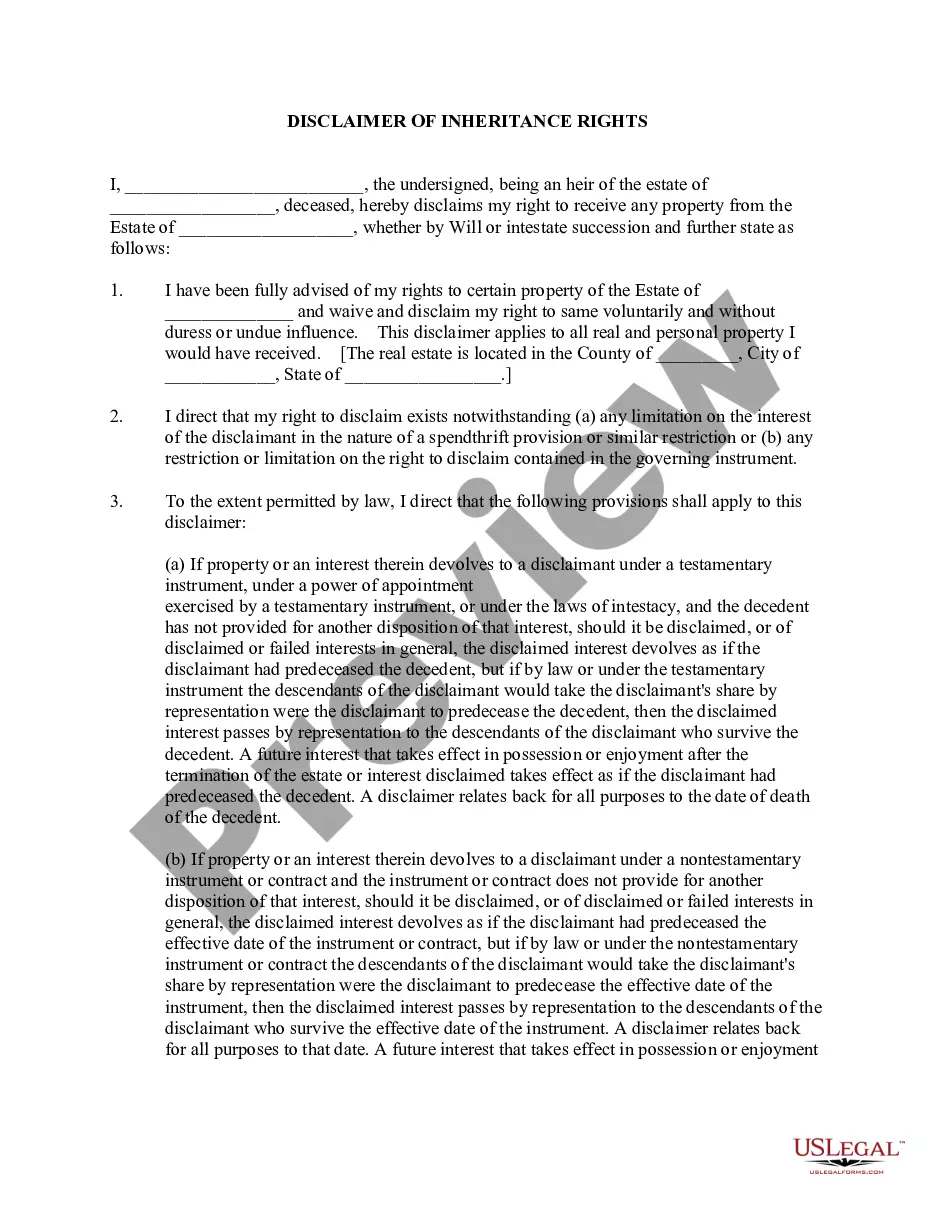
How to fill out Disclaimer By Beneficiary Of All Rights In Trust?
The Example Inheritance Disclaimer Template For Canada displayed on this site is a reusable legal document created by experienced attorneys in accordance with national and local laws.
For over 25 years, US Legal Forms has assisted individuals, companies, and lawyers with more than 85,000 affirmed, state-specific documents for various business and personal situations. It is the fastest, simplest, and most dependable method to acquire the forms you require, as the service ensures the utmost level of data protection and anti-virus measures.
Re-download your documents whenever needed. Access the My documents tab in your account profile to redownload any previously obtained documents.
- Search for the document you want and verify it.
- Browse through the document you found and preview it or read the form description to confirm it meets your requirements. If not, use the search function to find the right one. Press Buy Now when you have found the document you require.
- Register and sign in.
- Choose the pricing option that fits you and set up an account. Use PayPal or a credit card for a quick payment. If you already possess an account, Log In and review your subscription to proceed.
- Obtain the editable template.
- Select the format you desire for your Example Inheritance Disclaimer Template For Canada (PDF, Word, RTF) and download the document onto your device.
- Complete and endorse the forms.
- Print the document to fill it out physically. Alternatively, use an online versatile PDF editor to efficiently and accurately complete and sign your form digitally.
Form popularity
FAQ
Some common types of secured transactions include mortgage and car loans. When a debtor borrows money to purchase a car, the vehicle is the collateral for the loan. The creditor has a security interest in the vehicle and the creditor can repossess and sell the car if payments are not made.
To overly simplify the basic commercial transaction, the three documents necessary to create a secured transaction are: (1) the promissory note; (2) the security agreement and (3) the financing statement. The promissory note is the document that creates the obligation.
Under Article 9 of the UCC, the steps of a secured transaction are 1) getting collateral, 2) attachment, and 3) perfection and priority.
Article 9 contains a statute of frauds which requires a security agreement to be in writing unless it is pledged. See § 9-203(1) of the code. A pledged security agreement arises when the borrower transfers the collateral to the lender in exchange for a loan (e.g., a pawnbroker).
The place to file a UCC document is listed in I.C. 26-1-9.1-501. If you are unsure of the appropriate place to file, you should seek legal counsel. To record a new UCC with our office, fill out and submit the UCC Financing Statement form.
The law of secured transactions consists of five principal components: (1) the nature of property that can be the subject of a security interest; (2) the methods of creating the security interest; (3) the perfection of the security interest against claims of others; (4) priorities among secured and unsecured creditors? ...